
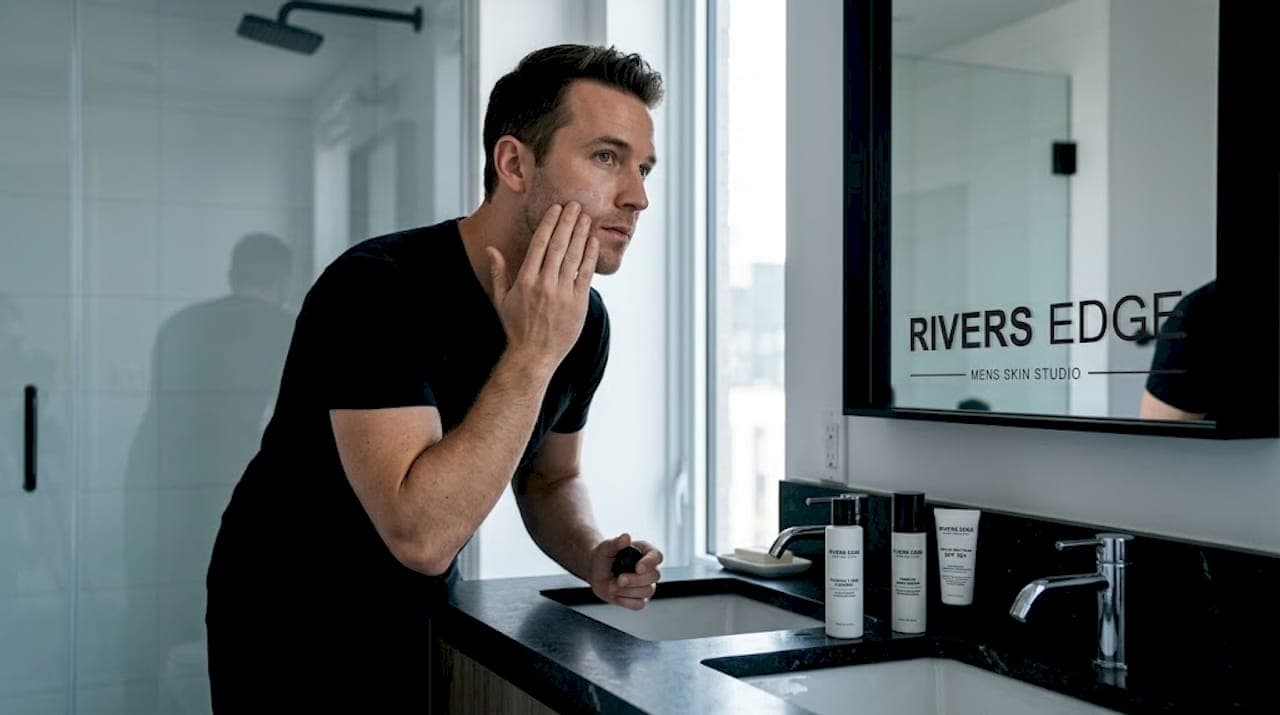
You have just had a HydraFacial, a chemical peel, or a microneedling session. Your skin feels raw, sensitive, and perhaps a little uncertain. What you do in the 48 to 72 hours that follow can either lock in your results or undo much of the work entirely. The post-treatment skincare steps men follow after aesthetic procedures are not optional extras. They are the difference between a treatment that delivers and one that disappoints. This guide cuts through the noise and gives you a specific, ordered approach to skin recovery based on real clinical insight and men's skin physiology.
Table of Contents
- Key takeaways
- 1. Know what your post-treatment skin actually needs
- 2. Choose the right cleanser
- 3. Moisturise strategically
- 4. Introduce serums at the right time
- 5. Apply SPF every morning without fail
- 6. Avoid the ingredients that will set you back
- 7. Handle post-shave care with precision
- 8. Build a simple, ordered daily routine
- 9. Adapt your routine to your skin type
- My honest take on post-treatment care for men
- How Riversedgeskinstudio supports your skin recovery
- FAQ
Key takeaways
| Point | Details |
|---|---|
| Gentle cleansing comes first | Use a fragrance-free, low-lather cleanser twice daily to avoid stripping already compromised skin. |
| SPF is non-negotiable | Apply broad-spectrum SPF 30+ every morning and reapply midday, including on your neck and ears. |
| Avoid active ingredients early | Skip retinoids, AHAs, and BHAs for at least five to seven days post-treatment to prevent irritation. |
| Match products to your skin type | Oily skin needs gel formulas; dry or sensitive skin benefits from richer, barrier-repairing creams. |
| Shaving timing matters | Wait a minimum of 24 to 48 hours post-treatment before shaving, and use a soothing balm immediately after. |
1. Know what your post-treatment skin actually needs
Before you open any product, understand what is happening to your skin after an aesthetic treatment. Procedures like microneedling, peels, and laser work by creating controlled injury or cellular turnover. Your skin barrier is temporarily compromised. Sensitivity spikes. Permeability increases. That last point matters because your skin will absorb more of whatever you put on it, for better or worse.
Men's skin is roughly 25% thicker than women's, with significantly higher sebum production. This means men often underestimate how much their skin still needs lightweight hydration after treatment, assuming oiliness equals moisture. It does not. A disrupted barrier on oily skin is still a disrupted barrier.
2. Choose the right cleanser
Your first post-treatment skincare step is choosing a cleanser that will not make the situation worse. Anything containing sulphates, fragrances, or alcohol will strip the skin and worsen sensitivity.
Look for a gentle, non-comedogenic formula designed for sensitive or post-procedure skin. Gel cleansers with minimal ingredients work well for normal to oily skin types. Cream or lotion cleansers suit drier or more sensitive skin better. Wash gently with cool or lukewarm water. Hot water increases inflammation.
Clean your face twice daily. Morning and night. No more. Over-cleansing is one of the most common mistakes men make post-treatment, and it slows recovery noticeably.
Pro Tip: If your skin feels tight after cleansing, your cleanser is too harsh. Switch immediately, even mid-treatment week.
3. Moisturise strategically
Moisturising after a treatment is not about slathering on the thickest cream you own. It is about selecting a formula that repairs without congesting. Because men produce two to three times more oil than women, heavy balms or occlusive creams can block pores and create post-treatment breakouts.
The best post-treatment products for men in this category are lightweight, hydrating moisturisers containing glycerin, ceramides, or hyaluronic acid. These ingredients draw moisture into the skin and support barrier repair without adding grease. Apply to slightly damp skin immediately after cleansing for better absorption. Morning and night.
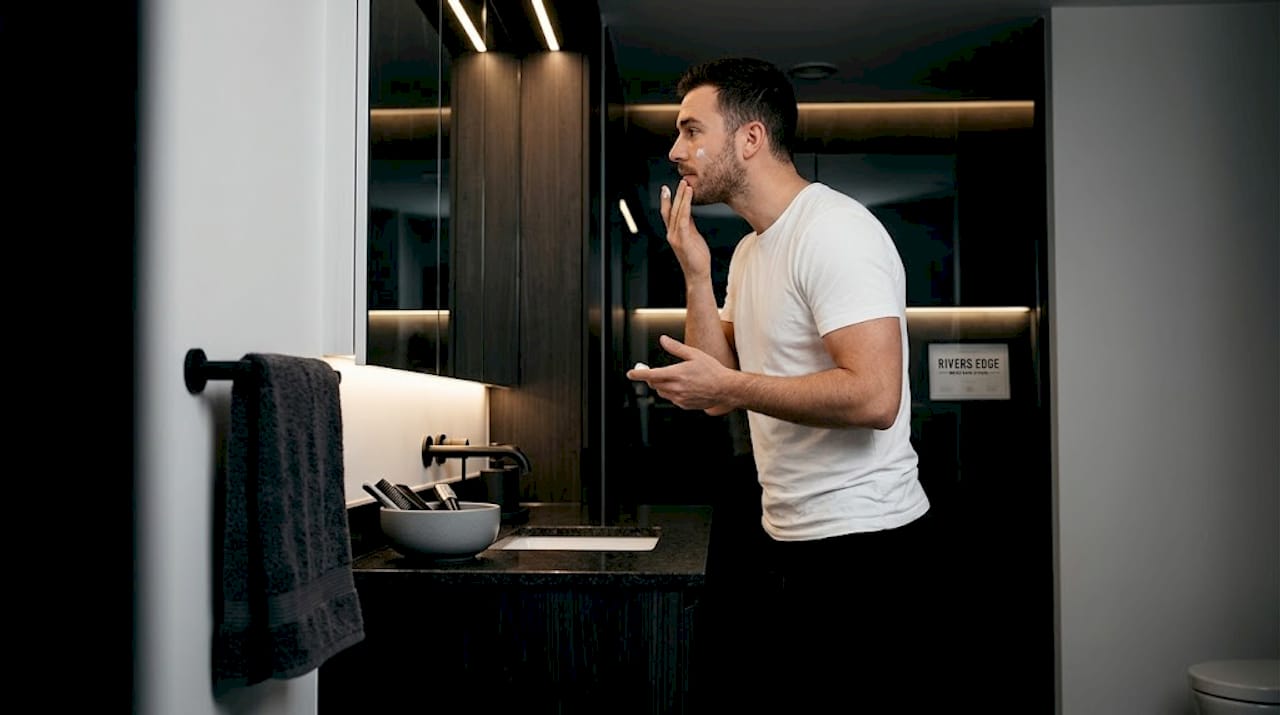
Avoid anything marketed as anti-ageing or exfoliating during the first week. Save the actives for when your skin has recovered.
4. Introduce serums at the right time
Serums are where men's skincare after treatment can go very well or very badly, depending on timing and ingredient choice. In the first 48 hours post-procedure, skip serums entirely. Your skin is too sensitive.
From day three onwards, you can introduce a hyaluronic acid serum to boost hydration, or a niacinamide serum to calm redness and regulate oil production. Both are well-tolerated and genuinely useful during recovery.
One critical note: applying active treatments to damp skin increases irritation. Always wait 20 to 30 minutes after cleansing before applying any serum. This small timing adjustment prevents a significant amount of unnecessary sensitivity.
Pro Tip: Adding one new product at a time is the most reliable way to monitor your skin's tolerance post-treatment. If something causes redness, you will know exactly what it is.
5. Apply SPF every morning without fail
This is the non-negotiable step of any men's skin recovery plan. Broad-spectrum SPF 30+ applied daily prevents up to 80% of visible skin ageing, and post-treatment skin is especially vulnerable to UV damage that can cause pigmentation, redness, and uneven healing.
Apply sunscreen as the final step of your morning routine, after moisturiser. Reapply at midday if you are outdoors or near windows. A common oversight: men often skip SPF on the neck and ears, both of which are high-risk areas for UV damage. Cover them every time.
Look for a mineral or hybrid SPF in a lightweight gel or fluid texture. These sit comfortably on oilier skin without a white cast or heaviness.
6. Avoid the ingredients that will set you back
Part of effective post-care skincare is knowing what to leave out. During the recovery phase, the following should stay off your face entirely:
- Retinoids and retinol (too aggressive for compromised skin)
- AHAs and BHAs such as glycolic acid and salicylic acid
- Alcohol-based toners or aftershaves
- Physical scrubs or exfoliating devices
- Heavily fragranced products of any kind
- Vitamin C serums in the first week (high concentrations can sting sensitised skin)
Giving your skin a week or more away from these ingredients is not a backwards step. It is what allows the treatment to actually work. Most men who experience poor results after procedures are applying actives too soon, not too few.
7. Handle post-shave care with precision
Shaving is where grooming and skincare intersect in a way most men have not thought about carefully. Shaving creates micro-cuts that disrupt the moisture barrier, and when this happens immediately after an aesthetic treatment, the combined effect can cause significant irritation or even infection risk.
Wait at least 24 to 48 hours after your treatment before picking up a razor. When you do shave, avoid anything alcohol-based. Alcohol-based aftershaves damage the skin barrier and worsen dryness compared to balms containing soothing agents like aloe vera or panthenol.
Here is something worth knowing: skin permeability increases immediately post-shave, which means the window right after shaving is actually optimal for serum absorption. Apply a non-irritating serum like hyaluronic acid within a few minutes of finishing, before your moisturiser.
8. Build a simple, ordered daily routine
The men's skin recovery steps that actually work are not complicated. What matters is consistency and correct sequencing. A simple cleanse, serum, moisturise, and protect approach is effective for the majority of men post-treatment.
Here is the order to follow, morning and night:
- Cleanse with a gentle, fragrance-free formula using cool water
- Wait 20 to 30 minutes, then apply your serum (from day three post-treatment)
- Moisturise with a lightweight, barrier-supporting formula
- Apply broad-spectrum SPF 30+ in the morning only
- At night, skip SPF and apply a slightly richer moisturiser if skin feels dry
That is it. Do not add more steps because you think more means better. In post-treatment recovery, less is consistently more effective.
9. Adapt your routine to your skin type
Men's skincare after treatment is not one-size-fits-all. The simple routines work best when adapted to what your skin actually does.
- Oily or acne-prone skin: Use gel-based cleansers and oil-free moisturisers. Choose niacinamide as your recovery serum. Avoid any balms or occlusive products, which can clog pores.
- Dry skin: Use a cream cleanser and a richer moisturiser containing ceramides or shea butter. Apply a hyaluronic acid serum while skin is still slightly damp.
- Sensitive skin: Strip your routine back to three steps maximum. Cleanser, moisturiser, SPF. Introduce serums only once redness has fully subsided.
- Combination skin: Zone-treat if needed. A lighter moisturiser on the T-zone and a richer one on drier cheek or jaw areas.
Pro Tip: Men with beards should apply moisturiser thoroughly beneath facial hair post-treatment. Skin under stubble is just as exposed and prone to dryness as bare skin.
My honest take on post-treatment care for men
I have worked with hundreds of male clients across a range of aesthetic treatments, and the pattern I see most consistently is this: men invest properly in the treatment itself, then treat the aftercare as an afterthought. They go home, wash their face with whatever soap is in the shower, skip sunscreen because it is cloudy, and wonder why their results are underwhelming or why their skin has reacted.
The truth is, the treatment is only half the equation. What you do at home in the days that follow either multiplies the results or neutralises them. I have seen clients with textbook-perfect microneedling sessions who barely improved, purely because they used an alcohol-based toner two days later and set their skin back by weeks.
What I have also found is that when men keep their post-care routine genuinely simple, they actually do it. A five-step routine sounds manageable in theory but falls apart on a Tuesday morning when you are running late. Three committed steps done correctly outperform five inconsistent ones every time.
The men who see the best long-term results from aesthetic treatments are not the ones with elaborate routines. They are the ones who cleanse gently, protect diligently, and give their skin the time it needs without interference.
— David
How Riversedgeskinstudio supports your skin recovery

At Riversedgeskinstudio, every treatment comes with a personalised aftercare plan. Not a generic leaflet. A specific set of instructions based on your procedure, your skin type, and the products you already use. The team takes post-treatment recovery seriously because protecting your results is part of delivering them.
If you are unsure whether your current routine is working for your skin after a procedure, or you want to book a consultation to discuss what treatments are right for you, the men's skin treatments at Riversedgeskinstudio are designed exactly for this. Whether you have had your first HydraFacial or you are managing a course of microneedling, the expert team will make sure your skin is supported every step of the way.
FAQ
How soon after treatment can I resume my normal skincare routine?
Most men can return to their usual routine after five to seven days, depending on the treatment. Avoid retinoids, AHAs, and alcohol-based products until any visible redness or sensitivity has completely resolved.
Which ingredients are safe to use immediately post-treatment?
Hyaluronic acid, niacinamide, panthenol, aloe vera, and ceramides are all well-tolerated immediately after most aesthetic procedures. Stick to these and avoid anything with active exfoliants or strong antioxidants in the first few days.
Do I really need sunscreen if I work indoors?
Yes. UV radiation passes through windows and contributes to pigmentation and uneven healing, particularly on post-treatment skin. Apply SPF 30+ daily, regardless of whether you plan to go outside.
When can I shave after a facial treatment?
Wait a minimum of 24 to 48 hours before shaving post-treatment. Use a sharp blade, avoid alcohol-based products afterwards, and apply a soothing balm with aloe vera or panthenol to support barrier repair.
How do post-treatment skincare steps differ for men with oily skin?
Men with oily skin should prioritise oil-free, non-comedogenic formulas throughout recovery. Gel cleansers and lightweight moisturisers are ideal, and niacinamide is an excellent serum choice as it regulates sebum without irritating compromised skin.