
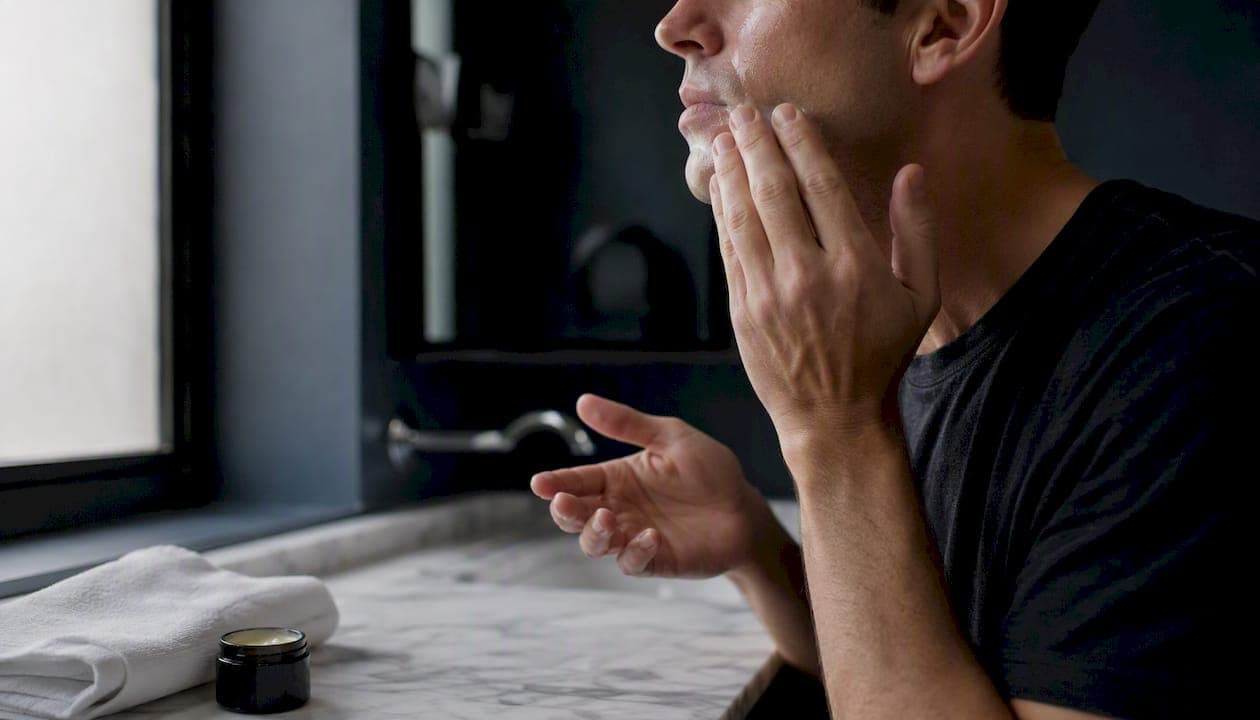
Keep the treated area clean and dry for the first 24 hours. After that, wash gently once daily with a mild, non-perfumed soap unless a medicated ointment has been prescribed. Those two rules cover the foundation of local skin treatment aftercare in Merseyside — everything else builds on those foundations.
Day-zero checklist:
- Leave the dressing undisturbed for the first 24 hours
- No greasy creams, no makeup, no touching the treated site
- Apply direct pressure for a sufficient duration if any bleeding occurs; seek help if it continues
- Keep the area out of direct sunlight
- Contact your clinic or local NHS service immediately if warning signs appear
Warning signs — act now if you notice:
- Spreading redness, heat, or swelling around the site
- Increased pain after the first day
- Smelly or purulent discharge
- Fever or feeling generally unwell
Local contacts: Riversedgeskinstudio is your first call for any concern after your procedure. For out-of-hours queries, NHS 111 connects you to a community nurse. For urgent wound issues, your nearest Merseyside walk-in centre or A&E is the right escalation.
Key takeaways
Proper skin treatment aftercare in Merseyside means clean and dry for 24 hours, then gentle daily washing, strict sun protection, and knowing exactly when to escalate to local NHS services.
| Point | Details |
|---|---|
| First 24 hours | Keep the treated area clean, dry, and undisturbed; no creams unless prescribed. |
| Sun protection | Use total sunblock for months after treatment; high-risk procedures require protection across the next two summers. |
| Barrier repair ingredients | Choose ceramide-rich moisturisers with niacinamide and humectants; avoid alcohol and fragrance. |
| Escalation ladder | Concern: clinic first, then GP or walk-in, then NHS 111 out-of-hours nurse, then A&E for urgent issues. |
| Riversedgeskinstudio | Provides personalised aftercare plans, follow-up appointments, and clear NHS escalation guidance for men in Merseyside. |
Table of Contents
- Only use prescribed ointments when directed
- Sun protection after treatment is non-negotiable
- How dressing and suture care works locally
- Aftercare varies by treatment type
- Diet and lifestyle that support skin healing
- Managing blistering, peeling, and itching
- Local Merseyside support and patient networks
- What good aftercare actually looks like in practice
- Riversedgeskinstudio aftercare support for men in Merseyside
- Sources
Only use prescribed ointments when directed
Chloramphenicol and other topical antibiotics are prescribed for specific reasons. Using them without instruction can disrupt the skin's natural healing process and encourage resistance. If your clinician has prescribed a medicated ointment, apply it exactly as directed and do not substitute it with over-the-counter alternatives. If no ointment was prescribed, plain gentle cleansing is sufficient for most procedures.
Sun protection after treatment is non-negotiable
Treated skin is highly vulnerable to UV damage. For photodynamic therapy and laser procedures, strict sun avoidance is required immediately after treatment, followed by total sunblock for an extended period of months and potentially across subsequent summers. Newly healed skin carries a significantly higher risk of hyperpigmentation and permanent discolouration when exposed to UV. Use a broad-spectrum SPF 30 minimum once healing is complete, and reapply every two hours outdoors.
How dressing and suture care works locally
Keep your dressing clean, dry, and undisturbed until your dressing clinic or community nurse advises otherwise. St Helens and Knowsley NHS Trust operates dedicated dressing clinics for suture removal and wound checks — your clinic will refer you with the relevant paperwork. Do not attempt to remove sutures yourself. If your dressing becomes soaked or falls off before your appointment, contact the dressing clinic directly for guidance.
Aftercare varies by treatment type
Different procedures need different approaches. Here is what to expect:
Laser treatments: Expect redness and mild swelling for 48–72 hours. Avoid heat, saunas, and strenuous exercise for at least 48 hours. Follow post-treatment skincare steps closely and reintroduce active ingredients only when the skin has fully settled.
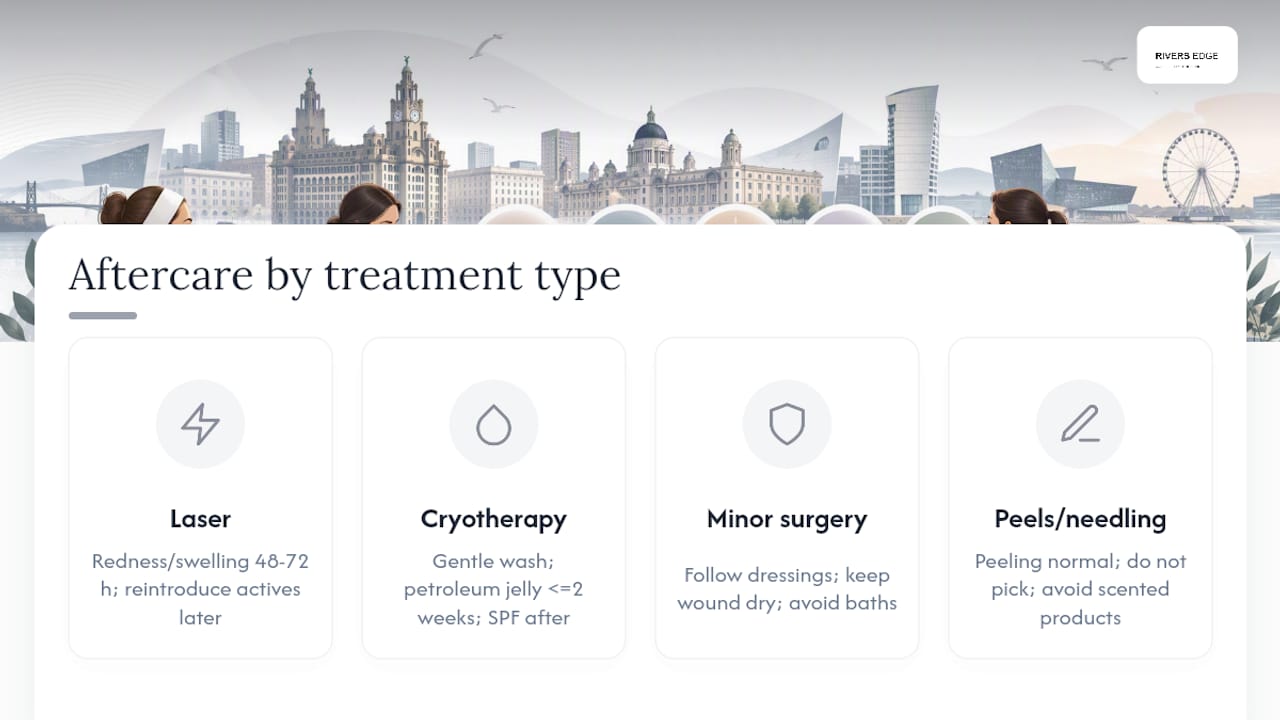
Cryotherapy: From the day after treatment, wash gently with fragrance-free soap and apply petroleum jelly (such as Vaseline) for up to two weeks to support healing. Avoid breaking any blisters that form. Cryotherapy typically heals within 7–10 days, after which broad-spectrum SPF 30 should be applied to the site.
Minor surgical procedures: Follow dressing clinic instructions precisely. Keep the wound dry between appointments and avoid submerging it in water (no baths or swimming) until sutures are removed.
Chemical peels and microneedling: Peeling and flaking are normal. Do not pick. Avoid common microneedling mistakes such as applying scented products or anti-acne actives during recovery.
Diet and lifestyle that support skin healing
Hydration matters more than most men realise. Lukewarm showers (not hot) reduce irritation and preserve the skin barrier. Moisturise while the skin is still slightly damp to lock in hydration. Alcohol and caffeine dehydrate the skin from within, so reducing both during the first week supports faster recovery. Protein-rich foods provide the amino acids the skin uses to rebuild collagen. Sleep is when most cellular repair happens, so prioritising rest in the first few nights after a procedure is genuinely useful, not just generic advice.
Managing blistering, peeling, and itching
Blistering after cryotherapy or laser is a normal part of the healing process. Do not burst blisters — they protect the tissue underneath. Peeling after chemical peels or laser is the skin shedding damaged cells; let it happen naturally. For itching, a fragrance-free moisturiser applied generously is usually sufficient. Antihistamines can help with persistent itch but check with your clinician first. Patients frequently worsen irritation by reaching for anti-acne or heavily scented products, mistaking redness for a breakout. Stick to calming, barrier-focused care.
Local Merseyside support and patient networks
Mersey Care NHS Foundation Trust operates a Liverpool skin-care service that accepts GP referrals for complex skin and wound issues across the region. If your GP feels your recovery needs specialist input, this is the appropriate escalation route. For peer support, the British Skin Foundation and Changing Faces both offer online communities and local signposting for people managing skin conditions or recovering from procedures. Your clinic team at Riversedgeskinstudio can also point you towards relevant local resources at your follow-up appointment.
What good aftercare actually looks like in practice
Most aftercare guides list the rules. Fewer explain why men in particular tend to skip the steps that matter most. In my experience, the two most common mistakes are applying the wrong product too soon — usually something with fragrance or an active ingredient left over from a previous skincare routine — and underestimating how long sun protection needs to continue. Two summers of diligent SPF sounds excessive until you see what UV does to skin that has been treated with laser or PDT.
The other thing worth saying plainly: the NHS dressing clinic pathway exists for a reason. Private treatment does not mean private complications. If your wound looks wrong outside clinic hours, the dressing clinic or NHS 111 is the right call, not waiting until your next appointment. Good clinics tell you this upfront.
Riversedgeskinstudio aftercare support for men in Merseyside
Men who've had a procedure at Riversedgeskinstudio leave with a clear aftercare plan, not a generic leaflet. The clinic offers post-procedure follow-up appointments, product recommendations tailored to your skin type, and direct access to the team for questions between visits.

When complications need NHS input, the team will tell you exactly which route to take — dressing clinic, GP, or A&E — rather than leaving you to work it out alone. For men in Merseyside looking for skin treatment booking guidance, the clinic's online booking system makes arranging a follow-up straightforward. Book your next appointment at riversedgeskinstudio.co.uk/services.
Sources
- St Helens & Knowsley: care after minor skin procedures
- Memorial Sloan Kettering: cryotherapy for skin lesions — aftercare
Local dressing clinic contacts (Merseyside): St Helens & Knowsley NHS Trust dressing clinics operate across the region. Contact your GP surgery or the trust's main switchboard to confirm your nearest clinic and appointment availability. For out-of-hours wound concerns, call NHS 111.
This article is general information, not a substitute for advice from a qualified doctor. Consult a qualified healthcare professional about your own circumstances before acting on anything here.