
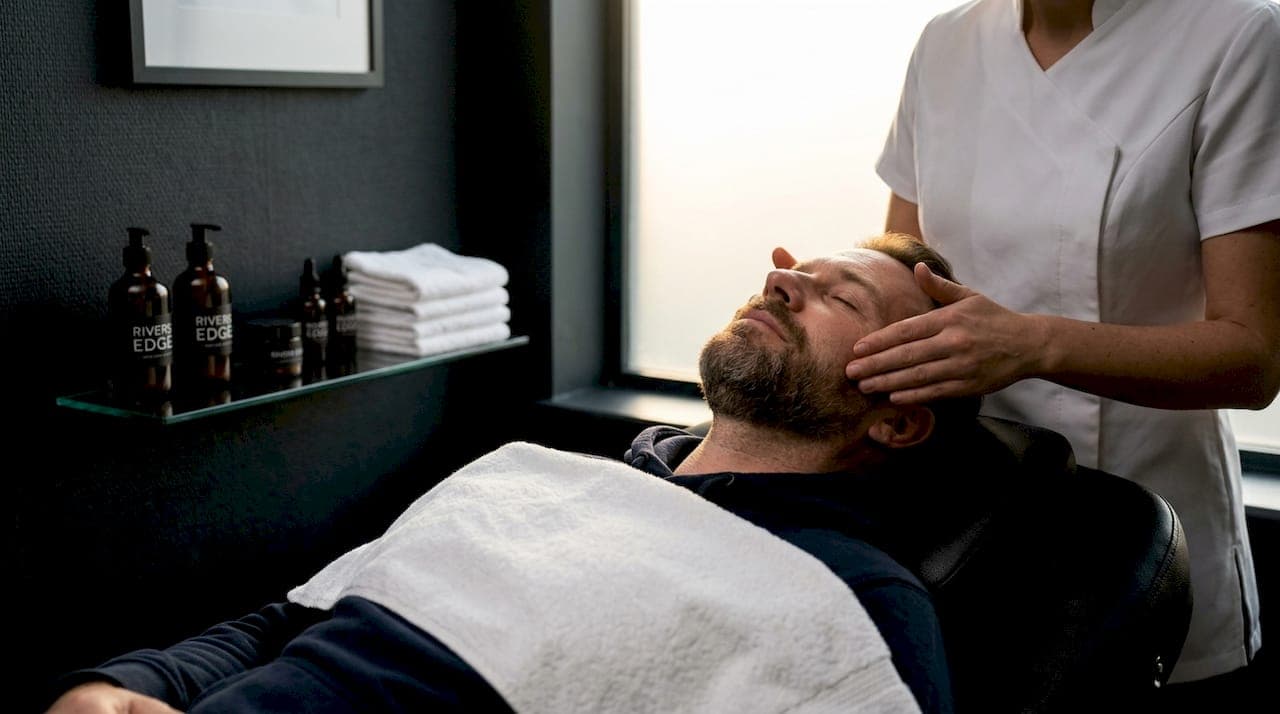
Walk into any clinic today and you'll face a menu of facial treatments long enough to make your eyes water. For men specifically, cutting through the noise to find the right option for your skin concerns, whether that's ageing, acne, or post-shave irritation, takes more than a quick Google. This guide covers the main types of men's facial treatments available right now, what each one actually does, and how to match a treatment to your skin goals. No padding, no fluff. Just a clear picture of what's available and what works.
Table of Contents
- Key takeaways
- How to choose the right facial treatment for men
- 1. Classic deep cleansing facials
- 2. Anti-ageing and skin rejuvenation facials
- 3. Acne, blemish, and post-shave facials
- 4. HydraFacial treatments
- 5. Microneedling for skin texture and scarring
- 6. Chemical peels for resurfacing and pigmentation
- 7. LED light therapy facials
- 8. Side-by-side comparison of key facial types
- My honest take on choosing facials for men
- Discover personalised facial treatments at Riversedgeskinstudio
- FAQ
Key takeaways
| Point | Details |
|---|---|
| Match treatment to concern | Choose your facial based on your specific skin problem, not general popularity. |
| Technology adds intensity | Advanced facials using devices or actives deliver deeper results than classic cleansing alone. |
| Frequency varies widely | Classic facials suit monthly visits; microneedling and peels need spacing over several weeks. |
| Professional guidance matters | A licensed aesthetician will match treatment to goals more accurately than self-diagnosis. |
| Men's skin has distinct needs | Thicker skin, regular shaving, and higher oil production change which treatments deliver best results. |
How to choose the right facial treatment for men
Before you book anything, it pays to get clear on what your skin actually needs. The benefits of men's facials span everything from deep pore cleansing to collagen stimulation, but the treatment that works brilliantly for one man can be entirely wrong for another.
Here are the main factors to weigh up before choosing:
- Skin concern. Are you dealing with oiliness and clogged pores, active acne, early signs of ageing, post-shave redness, or uneven skin tone? Each concern points toward a different category of facial.
- Skin type. Oily, dry, sensitive, or combination skin responds differently to ingredients and techniques. Salicylic acid facials, for example, are excellent for oily and acne-prone skin but can strip dry skin.
- Downtime tolerance. Classic facials require zero recovery time. Chemical peels and microneedling may leave skin red or sensitive for several days.
- Lifestyle and frequency. Some treatments demand a series of sessions spaced weeks apart. If your schedule is unpredictable, a more flexible option like a HydraFacial fits better.
- Professional vs. at-home care. A professional versus home skincare comparison shows that clinic-based treatments consistently outperform DIY for moderate to severe concerns, especially when actives and technology are involved.
Pro Tip: Write down your top two skin concerns before booking. Tell your aesthetician up front. Disclosing your primary concerns to providers yields significantly better targeted results than letting the clinic guess.
1. Classic deep cleansing facials
This is where most men start, and for good reason. A classic deep cleansing facial addresses the basics: congested pores, excess oil, surface dead skin cells, and dull complexion. It is the maintenance option, the equivalent of a full service for your car rather than an engine rebuild.
The multi-step facial process typically involves cleansing, exfoliation, steaming, extraction, a mask, moisturising, and SPF application. Steaming is particularly useful for men because male skin tends to be thicker and produce more sebum, meaning pores need more encouragement to open before extraction.
- Target concerns: Clogged pores, blackheads, oily skin, dull texture
- Typical ingredients: Kaolin clay, salicylic acid, glycolic acid, enzyme exfoliants
- Session duration: 45 to 60 minutes
- Recovery time: None. Mild redness settles within hours
- Ideal frequency: Every three to four weeks
Men who shave regularly often find that classic facials also reduce ingrown hair frequency, as the exfoliation process clears away dead skin that traps hairs beneath the surface.
2. Anti-ageing and skin rejuvenation facials
Anti-ageing facials are where treatments shift from maintenance into correction. These are designed for men who have started noticing fine lines around the eyes or forehead, loss of firmness along the jawline, or an overall dullness that sleep alone cannot fix.
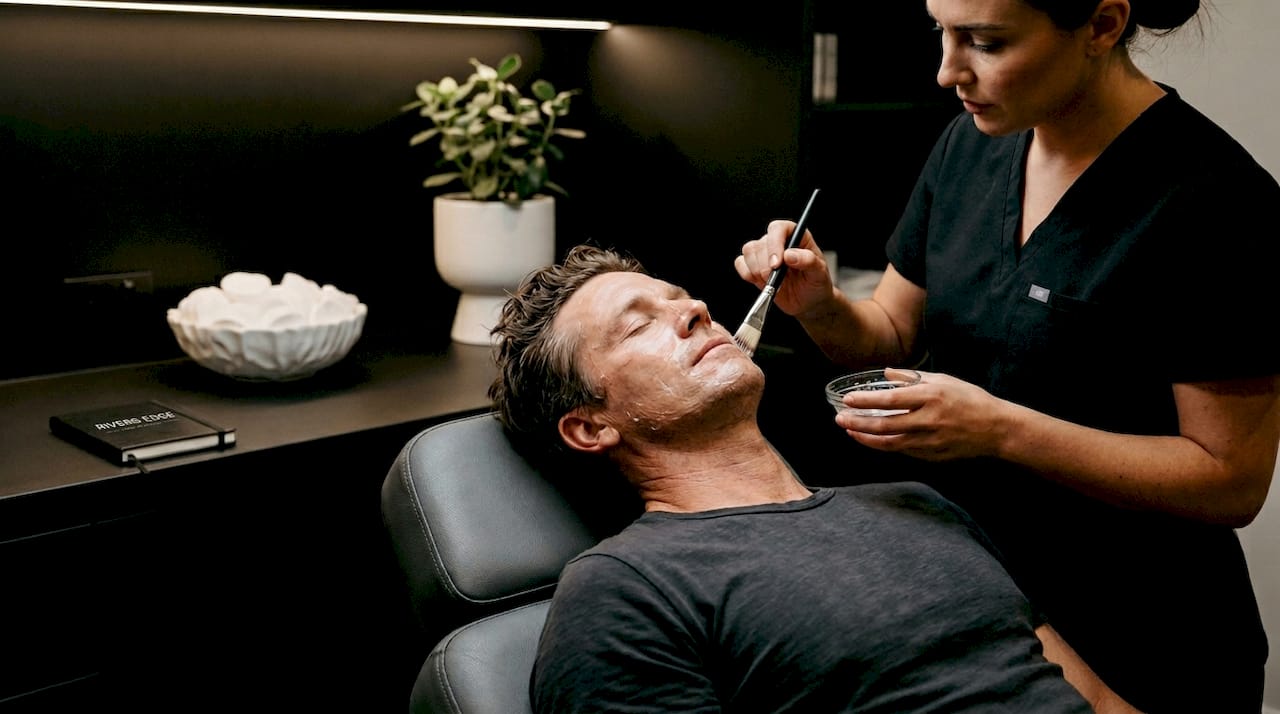
Anti-ageing facials use peptides, retinol, and hyaluronic acid alongside technologies such as LED light therapy and microcurrent to firm skin and reduce the appearance of fine lines. The ingredient list is deliberately more active, and sessions often run longer than classic facials because the protocol is more layered.
Men age differently from women. Male skin retains collagen longer in early adulthood but tends to show more structural change once decline begins. The deep furrows, heavier brow lines, and loss of definition around the jaw that many men develop respond well to microcurrent treatments, which use low-level electrical impulses to retrain facial muscles and lift contours without any needles.
- Target concerns: Fine lines, loss of firmness, dull complexion, uneven skin tone
- Key technologies: LED light therapy, microcurrent stimulation
- Key ingredients: Retinol, peptides, hyaluronic acid, vitamin C
- Recovery time: Minimal. Retinol facials may cause brief sensitivity to sunlight
- Ideal frequency: Monthly for maintenance; more intensive protocols every six to eight weeks
For men wanting a fuller picture of what rejuvenation actually means clinically, this guide to skin rejuvenation for men breaks it down in plain language.
Pro Tip: Start an anti-ageing facial protocol earlier than you think you need to. Prevention is dramatically easier than correction. Men in their early thirties who maintain rejuvenation facials tend to need fewer intensive procedures in their forties.
3. Acne, blemish, and post-shave facials
Few skin concerns cause as much day-to-day frustration for men as persistent breakouts and shaving-related irritation. These are often treated as separate problems, but a skilled aesthetician can address both within a single protocol.
Acne and blemish control facials incorporate salicylic acid, benzoyl peroxide, sulfur masks, and blue LED light therapy to target active breakouts, reduce bacterial load on the skin, and clear congested pores. Blue LED light, in particular, has solid evidence behind it for disrupting the acne-causing bacteria Cutibacterium acnes without any discomfort or downtime.
Post-shave facials address razor irritation using calming ingredients such as aloe vera, chamomile, and niacinamide. These treatments also include gentle exfoliation to free trapped hairs and reduce the cycle of ingrown hairs that many men with curly or coarse facial hair experience repeatedly.
- For acne-prone skin: Salicylic acid, benzoyl peroxide, sulfur, blue LED therapy
- For shaving irritation: Aloe vera, niacinamide, chamomile, gentle enzyme exfoliation
- Target concerns: Active breakouts, blackheads, razor burn, ingrown hairs, redness, sensitivity
- Recovery time: None to minimal. Active acne skin may show brief purging
- Ideal frequency: Every two to four weeks during active breakout periods
The distinction worth understanding here is that not all redness is the same. Razor burn responds to anti-inflammatory ingredients, while rosacea requires a completely different protocol. If your redness is persistent rather than post-shave, mention this to your practitioner before booking an acne facial.
4. HydraFacial treatments
The HydraFacial has become one of the most requested men's facial care options at clinics across the UK, and the reason is straightforward: it delivers visible results with zero downtime. The treatment uses vortex suction technology to simultaneously cleanse pores and infuse the skin with antioxidants, hyaluronic acid, and peptides.
HydraFacial uses vortex suction and antioxidant delivery to deeply cleanse and rejuvenate, making it particularly appealing to men who need presentable skin the following day. There is no peeling, no redness, no recovery window to plan around.
What makes HydraFacial particularly suited to male skin is its ability to address multiple concerns simultaneously. A single session can target oil control, hydration, fine lines, and uneven tone. You can also add boosters for specific concerns such as brightening or firming, depending on what your skin needs at that point.
Sessions typically run 30 to 45 minutes, making this one of the most time-efficient options available. Monthly treatments deliver ongoing cumulative benefit, with many men noticing a significant difference in skin texture and clarity within three sessions.
5. Microneedling for skin texture and scarring
Microneedling sits at the more intensive end of the facial treatment spectrum. It is not a relaxation treatment. It is a results-driven procedure for men dealing with acne scarring, enlarged pores, rough texture, or established fine lines that topical products cannot reach.
Microneedling uses tiny needles to induce collagen production and improve scars, wrinkles, and skin texture, typically performed in a series of sessions. The principle is controlled micro-injury: creating thousands of tiny channels in the skin that trigger the body's natural repair response, producing new collagen and elastin over the following weeks.
The microneedling guide for men at Riversedgeskinstudio covers the procedure step by step, but the key facts to know are these: expect mild redness for 24 to 48 hours post-treatment, plan for a series of three to six sessions spaced four weeks apart, and understand that results continue improving for up to three months after your final session.
Men with darker skin tones benefit particularly from microneedling over certain chemical peels, as it carries a lower risk of post-inflammatory hyperpigmentation when performed correctly.
6. Chemical peels for resurfacing and pigmentation
Chemical peels use acid solutions, typically glycolic, lactic, mandelic, or TCA, to remove damaged outer layers of skin and stimulate fresh cell turnover underneath. The result is smoother texture, reduced pigmentation, and a noticeably brighter complexion.
Peels are graded by depth: superficial, medium, and deep. Most men receiving their first peel will start with a superficial or medium option. Superficial peels require little to no downtime and can be repeated monthly. Medium peels may cause several days of peeling and sensitivity but deliver more significant correction for sun damage, uneven tone, and early scarring.
Treatment frequency for chemical peels depends heavily on the depth chosen, with more intensive peels requiring sessions spaced several weeks apart to allow full skin recovery. Men with sun-damaged skin from years of outdoor activity often find that a course of medium-depth peels produces more visible rejuvenation than any other single treatment.
One important note for men specifically: avoid booking a medium or deep peel within two weeks of an event requiring presentable skin. The peeling phase is not subtle.
7. LED light therapy facials
LED light therapy stands out because it is entirely non-invasive, painless, and can be combined with almost any other facial treatment to amplify results. Different wavelengths target different skin concerns, making it one of the most flexible tools in a clinic's treatment menu.
Red light (around 630 to 700nm) stimulates collagen production and reduces inflammation, making it excellent for anti-ageing and post-procedure recovery. Blue light (around 415nm) targets acne-causing bacteria, as mentioned in the acne section above. Near-infrared light penetrates deeper to support tissue repair and reduce redness from conditions like rosacea.
LED facials on their own are typically used as a booster or add-on. As a standalone treatment, they suit men who want gradual improvement with zero risk or downtime, or those in the middle of a more intensive treatment course who want to accelerate recovery between sessions.
8. Side-by-side comparison of key facial types
Choosing between options is easier when you can see them in one place.
| Facial type | Main concern | Key technology or ingredient | Session time | Downtime | Frequency |
|---|---|---|---|---|---|
| Classic deep cleanse | Oily skin, pores | Kaolin, glycolic acid | 45-60 mins | None | Every 3-4 weeks |
| Anti-ageing | Fine lines, firmness | Retinol, microcurrent, LED | 60-75 mins | Minimal | Every 4-8 weeks |
| Acne/blemish | Breakouts, redness | Salicylic acid, blue LED | 45-60 mins | Minimal | Every 2-4 weeks |
| HydraFacial | Multiple concerns | Vortex suction, antioxidants | 30-45 mins | None | Monthly |
| Microneedling | Scarring, texture | Micro-needles, collagen | 60-90 mins | 1-2 days | Every 4-6 weeks |
| Chemical peel | Pigmentation, texture | Glycolic/TCA acids | 30-60 mins | 0-5 days | Every 4-8 weeks |
| LED therapy | Acne, anti-ageing | Light wavelengths | 20-30 mins | None | Weekly or as add-on |
Pro Tip: If your budget is limited, start with a HydraFacial or classic deep cleanse to establish a baseline, then introduce more intensive treatments once you understand how your skin responds. Investing in a professional consultation first saves money in the long run by avoiding treatments that don't suit your skin type.
My honest take on choosing facials for men
I've seen men walk into consultations having already decided they want a specific treatment based on something they read online, and walk out with a completely different recommendation once their actual skin is assessed. That gap between what men think they need and what their skin actually needs is where most disappointment with facials originates.
The biggest misconception I encounter is that facials are primarily about relaxation. Some are. But the types of men's facial treatments that produce real, lasting change are concern-based protocols with specific actives and technologies built around what your skin is doing right now. Telling your practitioner "I want to look less tired" is not enough. Tell them about your shaving routine, your diet, your sleep, your current products. The more context you give, the more targeted the treatment plan becomes.
I also think men underestimate how much their lifestyle shows up in their skin. Stress, alcohol, poor sleep, and sun exposure without protection will undo even the best clinical treatment within weeks. The men who get the most from facial treatments are the ones who treat the clinic visit as one part of a wider habit, not a one-off fix.
Embracing facial care is not about vanity. It is about maintaining the skin you live in, addressing concerns before they become entrenched, and feeling confident in your appearance without it requiring constant effort.
— David
Discover personalised facial treatments at Riversedgeskinstudio
Finding the right facial treatment from a list is one thing. Having a specialist assess your skin in person and build a plan around your specific concerns is another entirely.

Riversedgeskinstudio specialises exclusively in men's aesthetics and skin treatments, offering everything from classic deep cleanse facials and HydraFacials to microneedling, chemical peels, and anti-ageing protocols. Every treatment plan is tailored to your skin type, lifestyle, and goals, with no generic packages and no guesswork. The clinic's practitioners understand male skin inside out, and the environment is built to make the experience straightforward rather than intimidating. Browse the full range of men's facial care options available, or book a consultation to get a clear recommendation based on what your skin actually needs.
FAQ
What are the main types of men's facial treatments?
The main types include classic deep cleansing facials, anti-ageing and rejuvenation facials, acne and blemish control facials, HydraFacials, microneedling, chemical peels, and LED light therapy. Each targets different skin concerns and varies in intensity and recovery time.
How often should men get a facial treatment?
Frequency depends on the treatment type. Classic and HydraFacials suit monthly visits, while microneedling and chemical peels require sessions spaced several weeks apart to allow the skin to recover and respond fully.
Are facial treatments safe for men with sensitive skin?
Yes, provided the correct treatment is selected. Men with sensitive or post-shave irritated skin benefit most from calming facials using ingredients such as niacinamide, aloe vera, and chamomile, while avoiding strong acids or abrasive exfoliation until sensitivity is managed.
What is the best men's facial for anti-ageing?
Anti-ageing facials using microcurrent, LED light therapy, retinol, and peptides are the most targeted option for reducing fine lines and firming skin. Microneedling is also highly effective for more established texture changes and structural collagen loss.
Should men consult a professional before booking a facial?
Consulting a licensed aesthetician before booking means your treatment is matched to your actual skin concerns rather than a generic menu option, which significantly improves outcomes and reduces the risk of an unsuitable treatment causing irritation.