
After an aesthetic procedure, most men assume the hard work is done. It isn't. What is post-treatment skin care, really? It is the active, evidence-based phase of recovery that determines whether your results look exceptional or fall flat. Known clinically as postprocedural skin care, this stage goes far beyond basic moisturising. It directly influences how your skin barrier repairs itself, how quickly inflammation resolves, and whether your treatment results last. This article walks you through the science, the right products, timing, and the daily habits that protect your investment.
Table of Contents
- Key takeaways
- What is post-treatment skin care and why your barrier matters
- Choosing the right products for your recovery routine
- Tailoring your routine to the procedure you had
- Daily habits that protect your results
- My perspective on getting post-care right
- Get expert aftercare support at Riversedgeskinstudio
- FAQ
Key takeaways
| Point | Details |
|---|---|
| Barrier repair comes first | Focus on soothing and hydrating immediately after treatment, not on active ingredients. |
| Product choice matters greatly | Use gentle, fragrance-free cleansers and ceramide-rich moisturisers twice daily to support healing. |
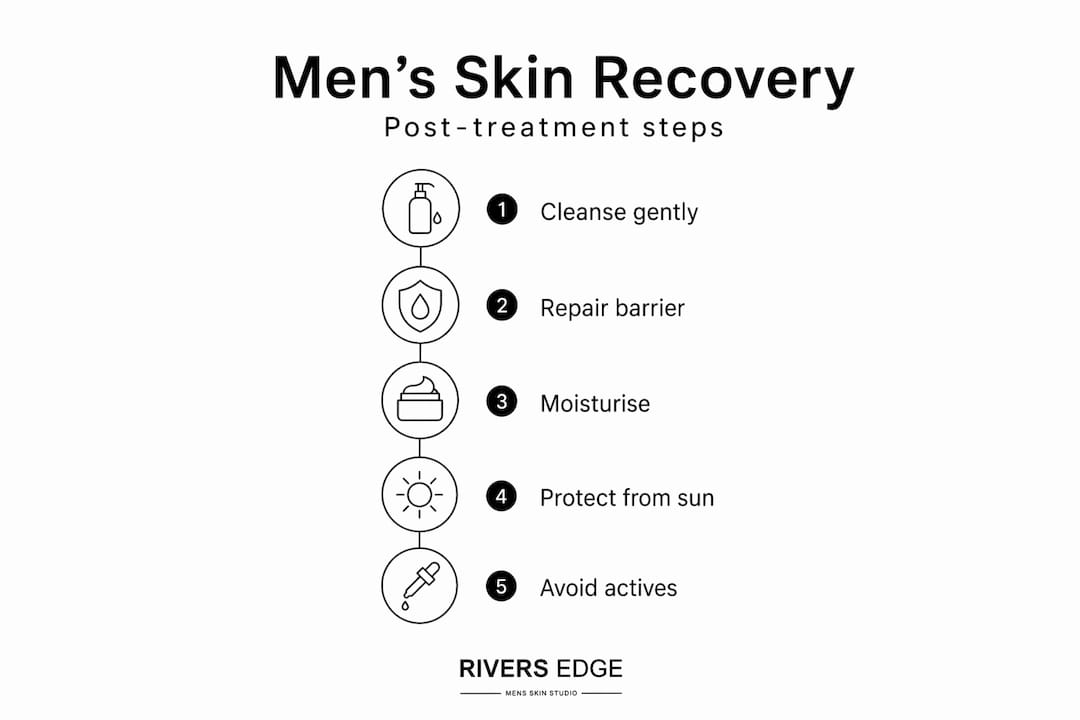
| Avoid actives during recovery | Retinoids, acids, and fragrances should be paused until skin is sufficiently healed. |
| Sun protection is non-negotiable | Apply mineral SPF 50+ daily once re-epithelialisation occurs, and avoid direct sun before that point. |
| Aftercare varies by procedure | More invasive treatments require occlusive products and longer avoidance of makeup and strong actives. |
What is post-treatment skin care and why your barrier matters
The term "postprocedural skin care" is the clinical standard for what most people call aftercare for skin treatments. Both phrases refer to the same thing: a deliberately structured routine designed to support your skin through the recovery process following an aesthetic procedure.
Here is what most men do not realise. Many procedures temporarily disrupt the skin's protective barrier, which is the outermost layer responsible for keeping moisture in and irritants out. When that barrier is compromised, your skin becomes significantly more vulnerable. Redness, tightness, sensitivity, and dryness are all signs of barrier disruption, not signs that something went wrong.
Treatments like microneedling, chemical peels, and laser resurfacing intentionally create controlled injury to stimulate collagen and skin renewal. That process is the point. But once you leave the clinic, the quality of your recovery depends almost entirely on what you apply and what you avoid.
The consequences of ignoring this phase are real:
- Prolonged redness and inflammation
- Compromised treatment results due to premature irritation
- Risk of post-inflammatory hyperpigmentation, particularly in darker skin tones
- Delayed healing or, in worse cases, scarring
The good news? Proper care determines whether skin heals beautifully or becomes reactive. The first 48 to 72 hours are the most critical window. During this time, every product decision either supports your barrier or undermines it.
Pro Tip: Resist the urge to use anything "extra" on your skin in the first two days post-procedure. More is not better here. A plain, unfragranced moisturiser applied consistently will outperform a complex five-step routine every time.
Choosing the right products for your recovery routine
The clinical guidance on postprocedural skincare is clear and consistent. Gentle cleansers and moisturisers create a supportive environment for skin restoration by reducing inflammation and maintaining barrier function. For men used to stripping cleansers and strong actives, this requires a real mindset shift.
Cleansing
Opt for a syndet (synthetic detergent) bar or a mild, non-foaming liquid cleanser. Syndet cleansers have a pH closer to that of healthy skin, which means they cleanse without disturbing the barrier further. Avoid anything that leaves your skin feeling tight or squeaky clean after rinsing. That sensation is your barrier signalling distress, not cleanliness. A gentle cleansing approach is one of the most underrated parts of any healing skin routine.
Moisturising
Moisturise at least twice daily. Look for ingredients that are known barrier-restorers:
- Ceramides: Replenish the lipid structure of the skin barrier directly
- Glycerin: Draws water into the skin and holds it there
- Panthenol (Vitamin B5): Supports skin healing and reduces inflammation
- Bisabolol: Calms redness and irritation with minimal risk of reaction
- Centella asiatica: Supports wound healing and collagen synthesis
Regular moisturising with barrier-supportive ingredients produces faster recovery than simply washing and waiting. That comparison sounds obvious, but a surprising number of men default to minimal product use precisely when their skin needs the most support.
What to avoid and when to reintroduce actives
| Ingredient | Post-treatment status | When to reintroduce |
|---|---|---|
| Retinoids | Avoid completely | 2 to 4 weeks post-procedure, as directed |
| Exfoliating acids (AHAs/BHAs) | Avoid completely | 2 to 4 weeks, once skin is fully healed |
| Fragrances and alcohol | Avoid throughout recovery | Minimise ongoing |
| Vitamin C (L-ascorbic acid) | Pause initially | 1 to 2 weeks, low concentration first |
| Peptides and antioxidants | Usually safe after 48 to 72 hours | Reintroduce gradually |
Retinoids and exfoliating acids should be avoided during the acute healing phase without exception. They are potent enough to destabilise healing skin and push it into a reactive state.
Pro Tip: When in doubt about whether an ingredient is safe post-procedure, check the INCI (International Nomenclature of Cosmetic Ingredients) list for alcohols, acids, and fragrance compounds. If you see them, put the product back on the shelf for now.
Sun protection timing
Mineral (physical) sunscreens with SPF 50+ are the only sunscreen category suitable for healing skin. Chemical sunscreens rely on UV-absorbing compounds that can irritate compromised skin. However, timing matters more than most people appreciate. Premature sunscreen application on healing skin may cause irritation, so physical sun avoidance is recommended first. Stay indoors during peak hours, use hats and protective clothing, and only transition to mineral SPF once your clinician confirms your skin has re-epithelialised.
Tailoring your routine to the procedure you had
Not all treatments are equal in terms of how much they disrupt your skin. Different aesthetic treatments cause varying degrees of barrier disruption, and this directly affects what your aftercare should look like.
Here is how to think about it by procedure type:
-
Anti-wrinkle injections (Botulinum toxin): Minimal barrier disruption. Avoid touching or massaging the area for 24 hours. Standard cleansing and moisturising can usually resume the same day. No significant product restrictions apply.
-
Skin booster injections: Moderate disruption at injection sites. Avoid makeup on treated areas for 24 hours. Keep the area clean and moisturised. Review our skin booster guide for men for specifics on what these treatments involve.
-
Microneedling: Creates multiple micro-channels in the skin. Avoid all actives for a minimum of 48 to 72 hours. Use plain, occluding moisturisers. No makeup for at least 24 to 48 hours. Mineral SPF as soon as your skin can tolerate it.
-
Chemical peels (medium to deep): Significant barrier disruption. Petrolatum-based ointments or occlusive balms may be necessary initially to prevent moisture loss. Expect peeling and avoid picking at all costs. Actives should stay off the shelf for two to four weeks or longer.
-
Laser resurfacing: The most intensive in terms of barrier disruption. Occlusive aftercare is standard in the first few days. Full recovery can take one to three weeks depending on depth. Mineral SPF protection for at least six weeks post-treatment is standard clinical guidance.
Post-care should be tailored to procedure type and individual skin characteristics. Men with a predisposition to hyperpigmentation, for example, need earlier and more consistent sun avoidance. Those with naturally sensitive skin may need a longer actives-free period. Your clinician's specific guidance takes precedence over any general advice, including this article.
Daily habits that protect your results
Product choice is only part of the equation. The practical habits you build around your skin care after procedures determine how well everything holds together.
- Stay out of direct sun. UV radiation triggers inflammation, damages healing cells, and breaks down the collagen your treatment just stimulated. Plan procedures during lower-sun seasons when possible, or be disciplined about shade, hats, and SPF.
- Do not touch, pick, or scratch. Following routines diligently and avoiding picking are key to preventing scarring. Peeling skin after a chemical peel or microneedling is normal. Removing it prematurely creates risk.
- Hydrate internally. Water intake supports the skin's ability to manage inflammation and transport nutrients to healing tissue. It is not a replacement for topical care, but it genuinely supports it.
- Be consistent, not reactive. Healing skin goes through stages: initial redness, possible swelling, peeling or flaking, and then gradual improvement. Each stage is normal. The men who get the best results are those who stick to their routine without panic-buying new products mid-recovery.
- Know when to call the clinic. Excessive swelling, significant pain, discharge, or fever are not normal parts of recovery. These warrant professional assessment promptly.
Pro Tip: Take photos of your skin on days one, three, seven, and fourteen post-procedure. You will have an objective record of progress, which is far more useful than relying on memory when you are concerned about how your skin looks mid-recovery.
Following the post-treatment skincare steps that your clinic provides is not optional, it is the continuation of your treatment.
My perspective on getting post-care right
I have seen it more times than I can count. A man invests in a quality procedure, sees the results starting to emerge, and then undoes them by reaching for a strong vitamin C serum too soon or skipping SPF because the weather "seemed overcast." Post-treatment care is not the boring part of the process. It is the part where your results are either cemented or compromised.
What I have learned is that the men who struggle most with recovery are those who try to do too much. They read about peptides and antioxidants, and they assume that more beneficial ingredients must mean faster healing. In practice, the opposite is true immediately after treatment. Simplicity wins in those first critical days.
The other mistake I see regularly is treating professional skincare advice as optional. There is a significant difference between professional and home skincare approaches, and understanding that distinction matters most during recovery. Your clinician has seen your skin, assessed your procedure depth, and knows your personal risk profile. Generic advice from the internet, including well-written articles, cannot replace that.
My honest advice: treat your post-care routine with the same seriousness you gave the decision to book your treatment. Protect what you paid for.
— David
Get expert aftercare support at Riversedgeskinstudio

At Riversedgeskinstudio, every treatment comes with personalised aftercare guidance designed specifically for your skin type, your procedure, and your lifestyle. Whether you have had microneedling, a HydraFacial, a chemical peel, or anti-wrinkle injections, the team provides clear, specific protocols so you know exactly what to use and what to avoid. Explore the full range of men's skin treatments available at the studio, and book a consultation to receive a post-care plan built around your results.
FAQ
What does post-treatment skin care actually involve?
Post-treatment skin care, or postprocedural skin care, is a structured routine of gentle cleansing, barrier-restoring moisturising, and targeted sun protection designed to support healing and protect aesthetic results after a procedure.
How long should I avoid actives after a skin treatment?
For most procedures, retinoids and exfoliating acids should be paused for two to four weeks. More invasive treatments such as laser resurfacing may require a longer pause, guided by your clinician.
Why is mineral sunscreen recommended after procedures?
Mineral sunscreens are less irritating than chemical alternatives on healing skin and should be applied diligently for at least six weeks after treatment once re-epithelialisation has occurred.
Can I wear makeup after my skin treatment?
This depends on the procedure. After injectables, makeup is often acceptable within 24 hours. After microneedling or peels, you should wait at least 24 to 48 hours, and sometimes longer, to avoid introducing bacteria or irritants to open skin channels.
When should I be concerned about my skin post-procedure?
Normal recovery includes redness, peeling, and mild sensitivity. Seek professional advice if you experience excessive swelling, significant pain, discharge, or fever, as these may indicate a complication requiring treatment.