
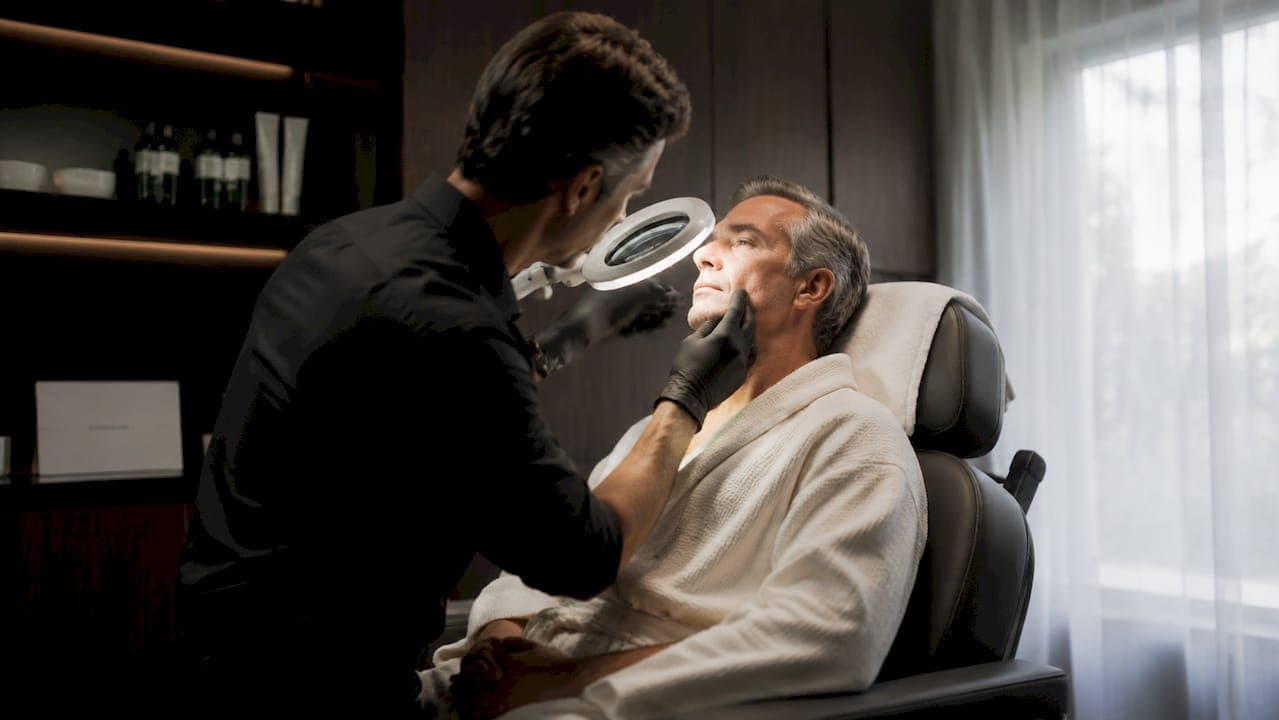
Professional skin analysis is a detailed, expert-led evaluation of your skin's true condition, not just its surface appearance. It assesses skin type, hydration levels, pigmentation, elasticity, pore size, and early signs of ageing using specialised tools and clinical observation. For men, this kind of assessment is the difference between a skincare routine that actually works and one that wastes money or causes irritation. Riversedgeskinstudio offers this service as the foundation of every personalised treatment plan, ensuring that what goes on your skin is chosen with accuracy, not guesswork.
What does a professional skin analysis involve?
A professional skin assessment evaluates your skin's true condition using expert judgement and specialised tools, going well beyond what you can see in a bathroom mirror. The process starts with a structured intake conversation. Your practitioner will ask about your current skincare products, any known allergies, your sun exposure habits, your diet, and your specific concerns. This context shapes everything that follows.
The physical examination comes next. A trained clinician uses magnification, controlled lighting, and tactile assessment to examine your skin up close. They look at:
- Oiliness and dryness across different facial zones, since men often have an oily T-zone with dry cheeks
- Pore size and congestion, which affects product absorption and breakout risk
- Redness and sensitivity, including signs of rosacea or post-shave irritation
- Pigmentation, including sun spots, uneven tone, and post-inflammatory marks
- Elasticity and firmness, which indicate collagen health and early ageing
- Hydration levels, which differ from oiliness and are frequently misread at home
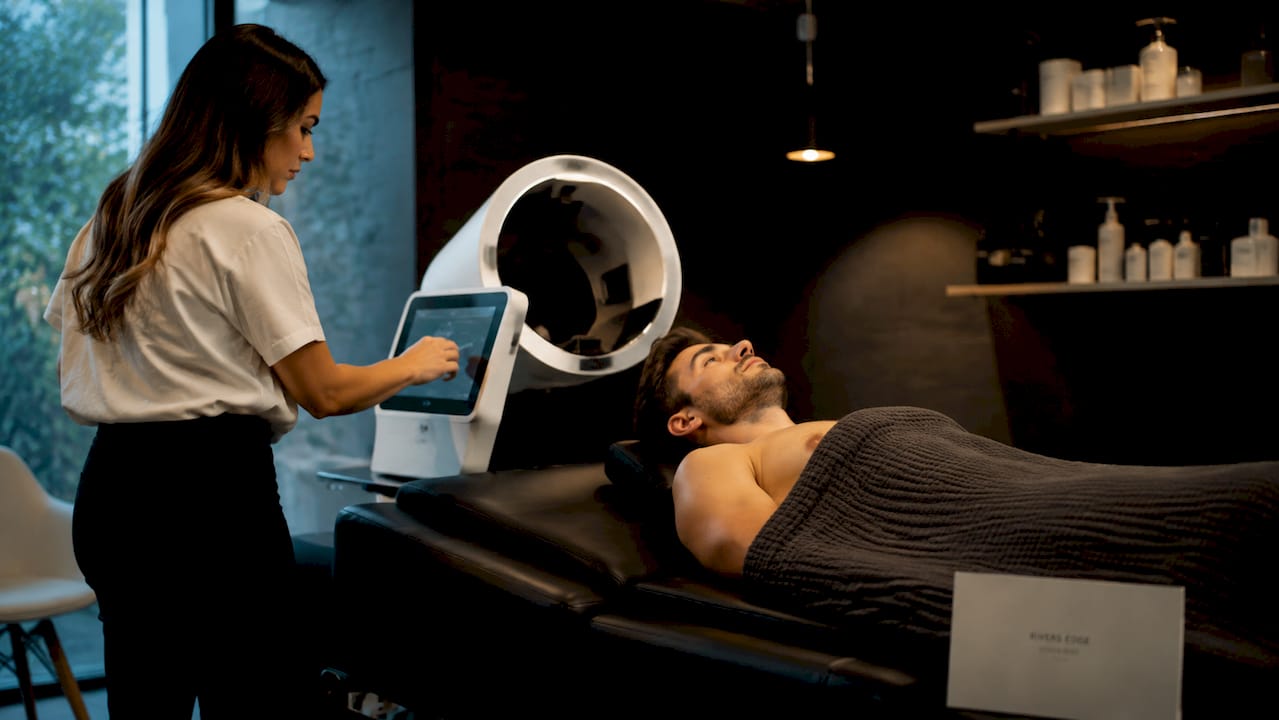
Many clinics now layer in AI-powered imaging and multi-spectrum lighting to detect damage beneath the skin's surface that is invisible to the naked eye. A thorough assessment typically takes only a few minutes and concludes with a personalised skincare plan built directly from the findings.
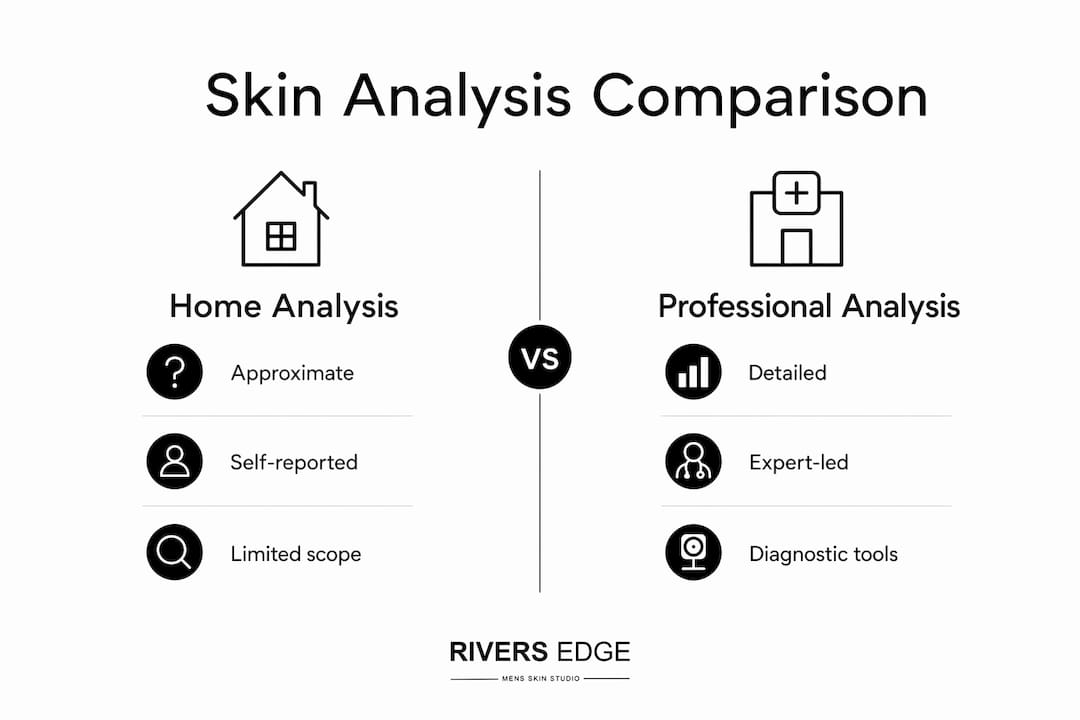
App-based tools and online quizzes offer approximate skin type results, but they rely on photo uploads or self-reported answers. They cannot replicate the clinical depth of a hands-on professional evaluation.
Pro Tip: Arrive to your skin analysis appointment with a clean, product-free face. Moisturiser, SPF, and especially foundation will obscure the readings and reduce the accuracy of the assessment.
How does professional skin analysis benefit men's skincare routines?
Accurate skin type identification prevents product mismatches. Using a heavy moisturiser on oily skin, or a harsh exfoliant on a sensitised barrier, causes more problems than it solves. A professional assessment tells you exactly what your skin needs, so you stop buying products based on marketing and start choosing based on evidence.
Early detection of underlying damage is one of the most underrated benefits. Sun damage, chronic dehydration, and early collagen loss often develop silently for years before they become visible. A professional evaluation catches these changes before they become harder to address.
"The primary goal of regular professional skin assessments is to establish a baseline of normal skin behaviour, facilitating early detection of changes and appropriate care pathway selection." — Aesthetics Unique
Personalised skincare plans are another clear advantage. Generic routines built around skin type alone ignore the specific concerns that make your skin yours. A professional assessment accounts for your lifestyle, your environment, and your goals, producing a plan that is specific rather than approximate.
Tracking skin changes over time is equally valuable. Your skin in your twenties behaves differently from your skin in your forties. Regular professional assessments create a record of how your skin evolves, allowing your practitioner to adapt your routine before problems escalate.
| Outcome | Without professional analysis | With professional analysis |
|---|---|---|
| Product selection | Based on guesswork or marketing | Based on confirmed skin type and condition |
| Sensitivity risk | Higher, due to unsuitable ingredients | Lower, with targeted formulations |
| Early damage detection | Missed until visible | Identified before surface signs appear |
| Routine adaptation | Reactive, after problems arise | Proactive, based on tracked changes |
| Treatment effectiveness | Variable and inconsistent | Measurably improved over time |
The benefits of skin analysis extend to safety as well. Using the wrong products before a professional treatment such as a chemical peel or microneedling session can compromise results or cause reactions. A professional assessment removes that risk entirely.
What technologies and tools enhance professional skin analysis today?
AI-powered skin imaging systems are the most significant advance in professional skin evaluation in recent years. These systems use standardised scoring models to quantify pigmentation, texture, hydration, and ageing signs, producing reproducible data rather than subjective impressions. The Skin Quality Index (SQI) is one such framework. It replaces the practitioner's subjective grading with objective metrics that can be compared across appointments.
Multi-spectrum and high-definition imaging tools reveal subsurface damage, including UV-induced pigmentation and vascular irregularities, that standard lighting cannot detect. This matters for men who have spent years outdoors without adequate sun protection. The damage is often already present long before it becomes visible.
Traditional assessment relies on the practitioner's trained eye and tactile examination. That expertise remains essential. AI imaging adds a layer of objectivity and consistency on top of it. The two approaches work together rather than replacing each other.
| Feature | Traditional assessment | AI-enabled assessment |
|---|---|---|
| Pigmentation detection | Surface level, visible only | Subsurface, including UV damage |
| Hydration measurement | Estimated by touch and appearance | Quantified with imaging data |
| Ageing sign tracking | Subjective, practitioner-dependent | Scored and comparable over time |
| Reproducibility | Variable between appointments | Consistent, standardised metrics |
| Treatment planning | Experience-based | Data-informed and trackable |
App-based tools use photo uploads for approximate skin type results. They are useful for general guidance but are not a substitute for clinical diagnosis. They cannot detect subsurface damage, measure hydration accurately, or assess elasticity.
Pro Tip: Before your appointment, ask the clinic which imaging or diagnostic tools they use. A practitioner who can explain their technology and what it measures is one who takes the assessment seriously.
How to interpret and act on your skin analysis results
Your skin analysis report will use specific descriptors. Understanding them turns findings into action. Common terms include:
- Oiliness level: rated by zone, this tells you where sebum production is highest and which products will clog pores
- Pigmentation score: identifies areas of uneven tone, sun damage, or post-inflammatory hyperpigmentation
- Elasticity rating: reflects collagen and hydration health, guiding decisions about firming treatments or retinoids
- Hydration index: separate from oiliness, this shows whether your skin barrier is functioning correctly
- Sensitivity markers: flags redness, reactivity, or compromised barrier function that rules out certain ingredients
Once you have your results, product selection becomes straightforward. Oily, congested skin benefits from lightweight, non-comedogenic formulations and regular exfoliation. Dehydrated skin needs barrier-supporting ingredients such as hyaluronic acid and ceramides. Pigmentation concerns respond to vitamin C serums and consistent SPF use.
Understanding the difference between professional and home skincare is critical at this stage. Home routines maintain the results that professional treatments create. They do not replace clinical intervention for established concerns.
Avoid the common mistake of self-diagnosing and switching products frequently. Skin takes time to respond. A professional assessment gives you a stable starting point so you can measure whether a routine is working rather than abandoning it too early.
Seek dermatologist advice when your assessment flags conditions beyond cosmetic care. Persistent redness, unusual pigmentation changes, or lesions that do not respond to treatment require medical evaluation, not a new serum.
How often should men have a professional skin analysis?
Men's skin changes with age, lifestyle, and environment, which means a single assessment is never the complete picture. Annual or biannual assessments are standard practice in professional clinics. Men in their twenties with stable, low-concern skin can manage with once-yearly reviews. Men over forty, or those undergoing active treatment programmes, benefit from assessments every four to six months.
The baseline established at your first assessment is the most valuable reference point you will have. Every subsequent assessment measures change against that baseline. This is how practitioners detect whether a treatment is working, whether a new concern has emerged, or whether your routine needs updating.
Lifestyle changes are a reliable trigger for reassessment. A new job with significant outdoor exposure, a change in diet, a period of high stress, or a new medication can all shift your skin's behaviour. Waiting for your annual appointment in those circumstances means missing the window for early intervention.
A skin consultation for men is also the right step before starting any new treatment, whether that is microneedling, a chemical peel, or anti-wrinkle injections. Beginning a treatment without a current assessment is like starting a training programme without knowing your fitness baseline.
Pro Tip: Keep a brief monthly photo log of your skin under consistent lighting. When you return for your next professional assessment, these images give your practitioner additional context about how your skin has changed between appointments.
Key takeaways
Professional skin analysis is the most reliable starting point for any men's skincare routine because it replaces assumption with clinical evidence.
| Point | Details |
|---|---|
| Definition and scope | Professional skin analysis evaluates skin type, hydration, pigmentation, elasticity, and subsurface damage using expert tools. |
| Technology advantage | AI-enabled scoring models like the SQI produce objective, reproducible data that tracks treatment results over time. |
| Personalised outcomes | Analysis replaces generic routines with plans built around your specific skin condition and lifestyle. |
| Assessment frequency | Annual or biannual assessments are standard; more frequent reviews suit men over forty or those in active treatment. |
| Baseline value | A first assessment creates a reference point that makes every future change detectable and measurable. |
Why I think most men are starting skincare in the wrong place
Men come to Riversedgeskinstudio having already spent money on products that did not work. The frustration is consistent. They tried a routine recommended by a friend, or picked up something from a pharmacy shelf, and saw little to no result. The problem is almost never the products themselves. The problem is that they were chosen without any real knowledge of what the skin actually needed.
Professional skin analysis addresses that directly. What surprises most men is how different their skin is from what they assumed. Men who believe they have oily skin often have a dehydrated barrier that is overproducing sebum as a compensatory response. Men who think they have sensitive skin sometimes have congestion and inflammation driven by the wrong products. The assessment does not just confirm what you suspect. It frequently corrects it.
The technology available now makes this more accurate than ever. AI imaging and standardised scoring remove the subjectivity that used to make skin assessments feel vague. You leave with data, not just impressions.
My honest view is that a professional skin assessment is not a luxury for men who are serious about their skin. It is the prerequisite. Everything else, the products, the treatments, the routine, works better when it is built on accurate information.
— David
Men's skin treatments and analysis at Riversedgeskinstudio
Riversedgeskinstudio specialises exclusively in men's skin health, which means every assessment and treatment is designed around how male skin actually behaves.
The clinic combines advanced diagnostic tools with experienced practitioners to produce personalised treatment plans that address your specific concerns, whether that is oiliness, pigmentation, early ageing, or post-shave sensitivity. Services include HydraFacials, chemical peels, microneedling, and anti-wrinkle treatments, all guided by a thorough skin evaluation before any procedure begins. Explore the full range of men's skin treatments and book a consultation to start with an assessment that actually tells you what your skin needs.
FAQ
What is professional skin analysis?
Professional skin analysis is a clinical evaluation of your skin's condition using expert observation, magnification, and diagnostic tools. It assesses skin type, hydration, pigmentation, elasticity, and underlying damage to inform a personalised skincare plan.
How long does a skin analysis take?
A thorough professional skin assessment typically takes a few minutes and concludes with a personalised plan based on the findings. The intake conversation and imaging review may extend the session slightly depending on the clinic.
Is professional skin analysis different from an app-based skin quiz?
App-based tools provide approximate skin type results from photo uploads or self-reported answers. They lack the clinical depth, tactile assessment, and subsurface imaging that a professional evaluation provides.
How often should men get a professional skin assessment?
Annual or biannual assessments are standard for most men. Those over forty or undergoing active treatment programmes benefit from reviews every four to six months to track changes and adapt their routines.
Can professional skin analysis prevent skin problems?
Regular professional assessments establish a baseline of normal skin behaviour, enabling early detection of changes before they become visible or difficult to treat. This makes preventative care significantly more effective than reactive product switching.