
You follow a routine, use decent products, and still wonder why your skin isn't responding the way you expected. You're not alone. Understanding why skincare results vary for men goes beyond simply picking the right moisturiser. Your skin's biology, how it ages, the products you choose, and whether you stick to a routine consistently all play a role in what you actually see in the mirror. This article breaks down every major factor so you can stop guessing and start making decisions that genuinely work for your skin.
Table of Contents
- Key takeaways
- Why skincare results vary men: biology comes first
- How age changes what your skin needs
- Product choice: formulation over gender marketing
- Consistency: the factor most men underestimate
- Personalising your routine based on your skin
- My honest take on men's skincare expectations
- Your next step towards better skin results
- FAQ
Key takeaways
| Point | Details |
|---|---|
| Male biology changes everything | Men's skin is thicker and oilier, which directly affects how products absorb and perform. |
| Ageing hits differently for men | Collagen decline is steady but can drop suddenly in your 40s, making early prevention worth the effort. |
| Products matter less than formulation | Active ingredients work for all men, but choosing the wrong texture can undermine even the best product. |
| Consistency beats complexity | Most visible improvements take 6 to 12 weeks; simple routines outperform complicated ones you abandon. |
| Personalisation is the difference-maker | Tailoring your routine to your skin type, age, and shaving habits produces far better outcomes. |
Why skincare results vary men: biology comes first
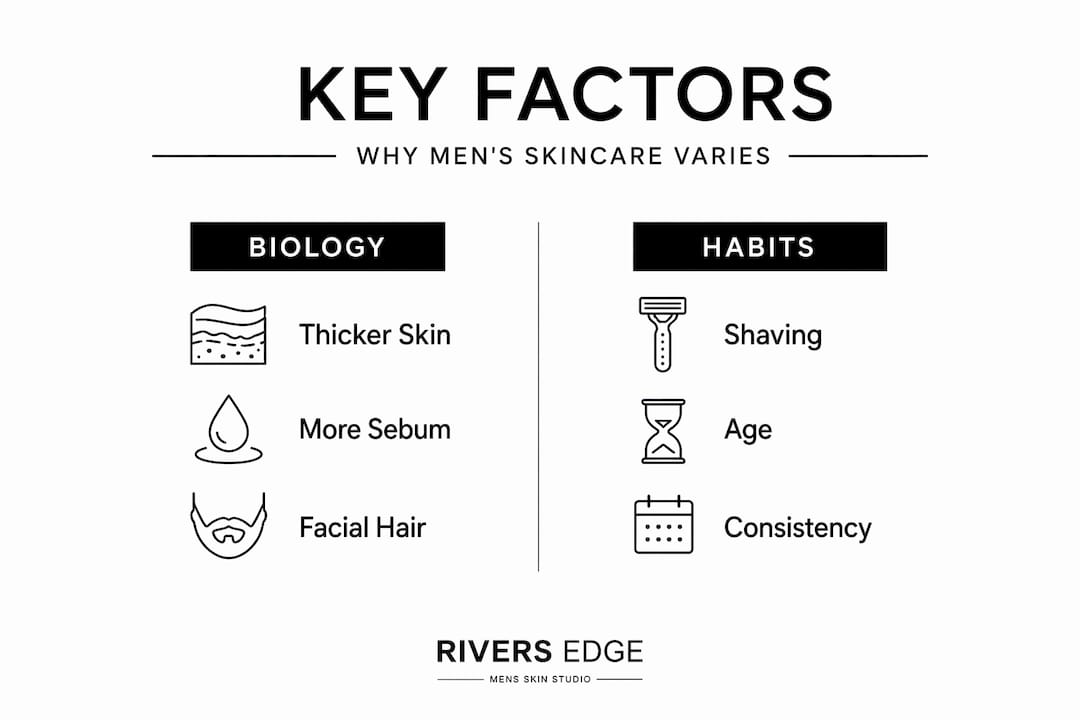
The single biggest reason men's skincare effectiveness differs from person to person starts with biology. Male skin is 20 to 25% thicker and produces roughly twice as much sebum compared to female skin, driven primarily by testosterone. That combination shapes everything from how deeply an ingredient penetrates to how quickly your skin rebounds after irritation.
Thicker skin means ingredients sometimes need more time, or a higher concentration, to reach the layers where they do their best work. It also means collagen density is naturally higher in younger men, which is why many men look relatively unlined well into their 30s. That sounds like a win, and it is, but it creates a false sense of security we will come back to shortly.
Higher sebum production creates its own set of variables. If your skin overproduces oil, a heavy cream-based moisturiser sits on the surface rather than absorbing properly. Two men using the exact same product can see completely different results simply because one has oilier skin than the other.
Facial hair adds another layer of complexity. Larger pores around the beard area can trap product, reduce even application, and change how your skin responds to actives like retinoids or vitamin C serums. Then there is shaving itself. Daily shaving creates chronic micro-trauma to the skin barrier, which means your skin is frequently in a mild state of repair. Apply the wrong product on a freshly shaved face and you are compounding irritation, not treating your skin.
Pro Tip: On shaving days, reach for products containing ceramides or niacinamide. These ingredients actively support barrier repair rather than stripping or aggravating skin that is already compromised.
How age changes what your skin needs
Men's skin ages differently to women's, and that pattern directly explains why skincare results differences between men become more pronounced with age. Men's collagen declines steadily from around age 20 in a linear fashion, unlike women who experience a sharper post-menopausal drop. That might sound like men have the better deal, but the reality is more complicated.
Because men start with higher collagen density, visible ageing is often delayed. The problem is that collagen decline around 40 to 50 can become sudden and rapid, catching many men off guard after years of apparent stability. Lines, sagging, and loss of firmness can appear to emerge almost overnight when the cumulative decline finally becomes visible.

| Age range | Typical skin changes in men | Recommended focus |
|---|---|---|
| 20s | High sebum, delayed ageing signs | SPF, gentle cleansing |
| 30s | Slight slowdown in cell turnover | Antioxidants, retinoids |
| 40s | Collagen decline accelerates | Peptides, professional treatments |
| 50s+ | Dryness increases, pores appear larger | Hydration, barrier repair |
Oil production also shifts with age. Men who struggled with oiliness in their 20s often find their skin becomes drier through their 40s and 50s, which means a routine that worked well for years may suddenly feel inadequate or tight. This is one of the core reasons why men react differently to skincare at different life stages. What worked at 28 will not necessarily work at 45.
Early sun protection habits are critical for preventing the kind of sudden collagen collapse that catches men out mid-life. SPF is not a cosmetic preference. It is the most evidence-backed tool available for slowing visible ageing in men.
Pro Tip: If you are in your 30s and have never used SPF consistently, start now. The benefits compound over years, not weeks, and you will thank yourself in your 50s.
Product choice: formulation over gender marketing
One of the most persistent myths in men's skincare is that men need entirely different products to women. They do not, at least not in terms of active ingredients. Retinoids, vitamin C, and hyaluronic acid work equally well regardless of gender. The chemistry does not change based on who is using it.
What does matter is formulation texture. Men generally benefit from lightweight gels rather than rich creams, precisely because of higher sebum levels. A heavy cream on oily skin can block pores, cause breakouts, and leave a residue that interferes with how your skin breathes throughout the day.
Here is where men's skincare product results often go wrong in practice:
- Over-cleansing. Washing your face three or four times a day strips the skin's natural oils. The skin responds by overproducing sebum, leaving you oilier than when you started.
- Alcohol-heavy toners. These produce the same dehydration response. Rebound oiliness from harsh cleansing is a well-documented mechanism that undermines everything else in your routine.
- Fragrance-heavy products. Fragrances are a leading cause of contact dermatitis, particularly on post-shave skin. They feel premium but increase the risk of chronic low-grade irritation.
- Skipping SPF because it feels greasy. There are now plenty of lightweight, matte-finish SPF formulations designed for oilier skin. Finding one you like removes the biggest excuse.
The principle here is straightforward. Choose products based on how skin type affects your specific concerns, not on whether the packaging says it is designed for men. A fragrance-free, gel-based moisturiser with hyaluronic acid will outperform a branded "men's" cream that leaves your face greasy by midday.
Consistency: the factor most men underestimate
You could have the perfect product selection and still see minimal results if you do not use those products consistently. This is where the biggest gap in men's skincare effectiveness lies, not in biology or product quality, but in follow-through.
Skincare improvements are generally visible between 6 and 12 weeks with consistent use. That timeline exists because skin cell renewal takes approximately 28 days per cycle. You need at least two to three full cycles before you can meaningfully judge whether a product is working. Most men abandon routines far earlier than that.
Building a routine that actually sticks comes down to these steps:
- Start with the minimum. Cleanser, moisturiser, and SPF in the morning. That is a complete and effective routine. Add actives only once those three are habitual.
- Adapt for shaving days. Post-shave skin is compromised. On days you shave, swap any active serum for something barrier-focused. Introduce retinoids on non-shaving days to reduce the risk of irritation.
- Track your skin, not your mirror. Instead of assessing your skin daily, take a photo every two weeks in consistent lighting. Gradual improvements are nearly invisible day to day but clear over months.
- Resist the urge to switch products early. Most men's skincare routines fail not because the products are wrong but because they are changed too quickly. Give each addition at least six weeks before deciding.
- Treat it like any other habit. Attach your routine to something you already do daily, such as brushing your teeth. Remove any friction in the process by keeping products somewhere visible and accessible.
Sebum-regulating treatments can reduce foreheads sebum production by over 21% within 28 days of consistent twice-daily use. That kind of measurable improvement is only possible if the routine is actually followed.
Pro Tip: The 'all-or-nothing' mindset is the number one reason men quit skincare. If you miss a day, it does not mean the routine has failed. Just continue the next morning.
Personalising your routine based on your skin
Understanding the factors affecting men's skincare puts you in a much stronger position to build something that actually works for you specifically. Here is how to approach that process practically:
- Identify your skin type honestly. Oily through the T-zone, dry on the cheeks, and tight after cleansing suggests combination skin. That means you likely need a gel cleanser, a lightweight moisturiser, and potentially different products for different zones.
- Assess how your skin behaves after shaving. Redness, tightness, or breakouts post-shave are signs your barrier is struggling. Prioritise ceramides and niacinamide over anything with acids or fragrance on those days.
- Introduce new products one at a time. Adding three new products simultaneously makes it impossible to know which one is helping or causing irritation. Wait at least four weeks before adding anything new.
- Consider professional guidance for persistent concerns. Acne, hyperpigmentation, and significant signs of ageing often need more than over-the-counter products. A professional assessment can identify what your skin actually needs rather than what you assume it needs. You can find a useful overview of your options in this professional vs home skincare guide.
- Revisit your routine seasonally. Your skin in winter is a different thing to your skin in summer. Humidity, central heating, and UV levels all shift your skin's behaviour across the year.
My honest take on men's skincare expectations
I've spent a long time helping men understand why their skin isn't responding the way they hoped, and the pattern I keep seeing comes down to one thing: unrealistic expectations combined with over-complicated routines.
The myth that men need a completely separate category of skincare is largely a marketing invention. What men need is gender-neutral ingredient science applied in formulations that suit thicker, oilier skin. That is a much simpler problem to solve than most men realise.
What I've found genuinely moves the needle is addressing shaving-related barrier damage first. Most men I've worked with haven't even considered that their daily shave is actively undermining their skincare. Once that is sorted, everything else starts to work better.
Consistency is less exciting to talk about than the latest active ingredient, but it is what separates men who see results from those who don't. I've seen men transform their skin with a three-step routine they actually follow. And I've seen men with twelve-step routines they abandon after three weeks show no improvement at all. Patience and simplicity win every time.
— David
Your next step towards better skin results
Understanding the biology behind your skin is only part of the picture. If you have been consistent with your routine and still feel stuck, or if you want to address concerns like ageing, acne, or uneven texture more directly, professional treatment can make a significant difference.

At Riversedgeskinstudio, every treatment is designed specifically for men's skin. Whether you are looking at HydraFacials to clear congestion, microneedling to address fine lines and texture, or a thorough skin assessment to build a personalised plan, the focus is always on results that fit your skin's actual biology and lifestyle. The team understands that men's skin has specific challenges and that a one-size approach simply does not hold up.
Explore the full range of men's skin treatments available at Riversedgeskinstudio and take the next step with a proper skin consultation. Your routine at home will always perform better when it is built on the right professional foundation.
FAQ
Why do skincare results differ between men?
Men's skin differs significantly in thickness, sebum production, and the impact of shaving, all of which change how products absorb and perform. Individual factors like skin type, age, and routine consistency compound those differences further.
How long should men wait to see skincare results?
Most men see visible improvements between 6 and 12 weeks of consistent use, reflecting the skin's natural cell renewal cycle of approximately 28 days. Changing products before that window closes is one of the most common reasons results never appear.
Do men need different skincare products to women?
The active ingredients in most skincare products work equally well for men and women. What men often benefit from is adjusting the formulation texture, favouring lightweight gels over rich creams to suit higher sebum levels.
How does shaving affect skincare effectiveness?
Daily shaving creates micro-trauma to the skin barrier, leaving skin more reactive and sensitive. Using barrier-supportive ingredients like ceramides and niacinamide on shaving days helps reduce chronic irritation that can otherwise interfere with treatment results.
When should men consider professional skin treatments?
If a consistent home routine has not improved persistent concerns such as acne, pigmentation, or visible ageing after several months, professional treatments offer targeted solutions that over-the-counter products cannot match. A specialist assessment helps identify the right approach for your specific skin.