
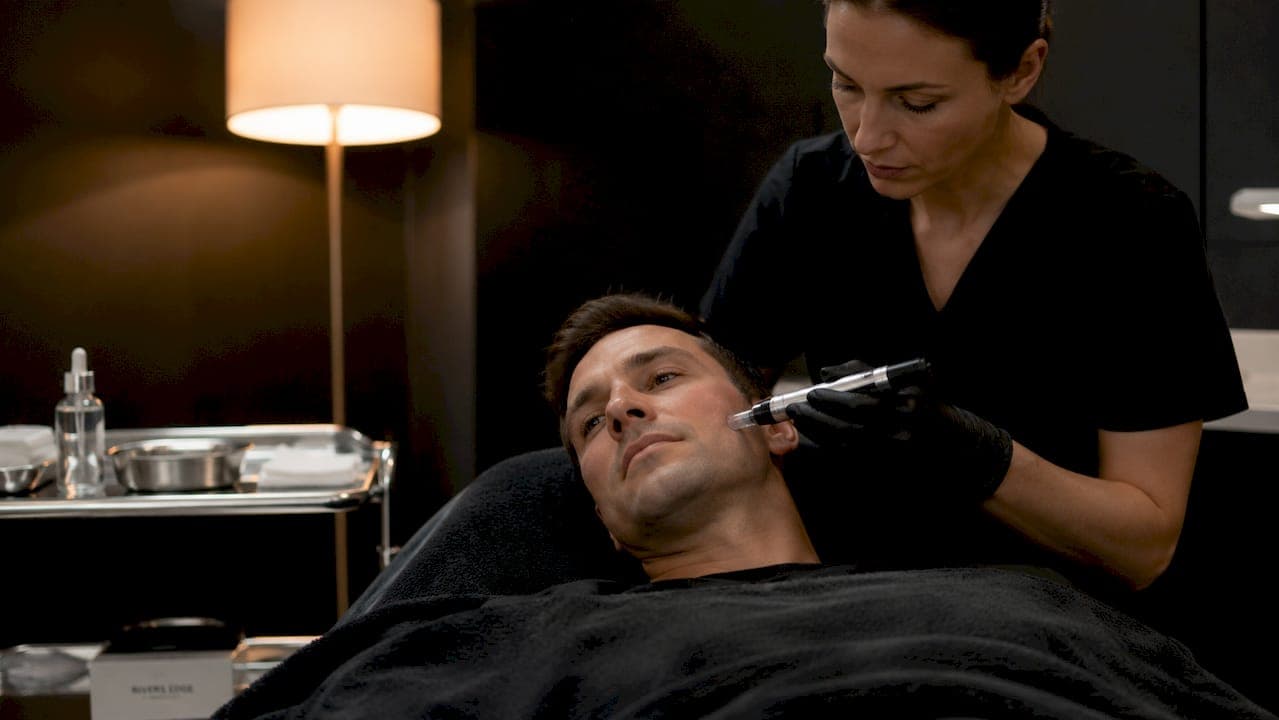
Microneedling is a minimally invasive skin treatment that triggers collagen and elastin production by creating controlled micro-injuries in the skin, making it one of the most evidence-backed options for men seeking real improvements in texture, scarring, and hair density. The procedure, clinically known as collagen induction therapy, works by prompting the skin's natural repair response. For men aged 25 to 50, this translates to firmer skin, reduced acne scarring, and measurable support for thinning hair. The benefits of microneedling for men extend well beyond basic skincare, and the science behind each application is worth understanding before you book your first session.
1. What are the primary benefits of microneedling for men's skin?
Collagen induction therapy improves skin firmness, reduces fine lines, and addresses the uneven texture that affects many men from their late twenties onwards. Men's skin is typically 25% thicker than women's and produces more sebum, which means it is more prone to enlarged pores, acne scarring, and a rough surface texture. Microneedling targets all three directly.
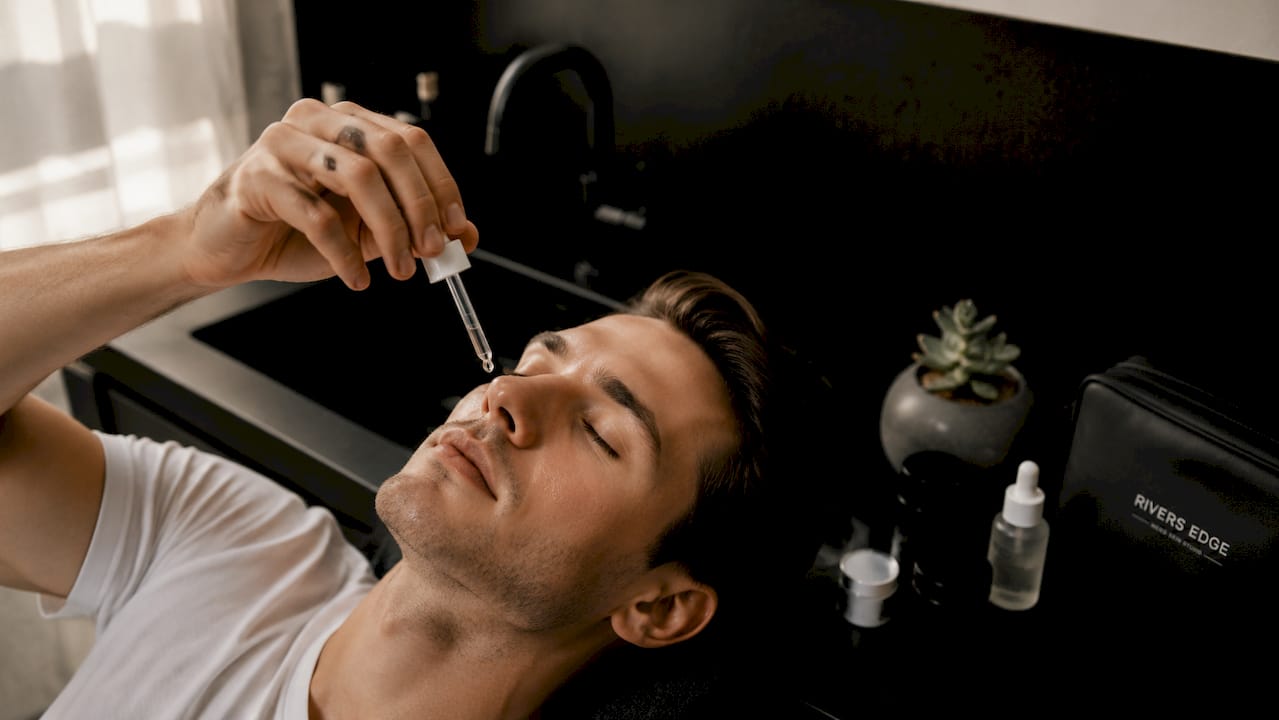
The procedure creates thousands of microchannels in the dermis, stimulating fibroblast activity and increasing collagen and elastin output. Over a course of three to six sessions, this translates to visibly smoother skin, reduced hyperpigmentation, and a more even tone. Clinicians tailor needle depth to concerns such as atrophic scars versus fine lines, which means the treatment is genuinely customisable rather than one-size-fits-all.
The microchannels also serve a secondary function. They allow topical actives applied immediately after treatment to penetrate far deeper than they would on intact skin. Products containing hyaluronic acid, peptides, and antioxidants deliver significantly better results post-microneedling than when applied to untreated skin. This means your existing skincare routine becomes more effective with each session.
- Collagen and elastin production increases with each session, improving skin firmness over time
- Acne scars and texture irregularities are progressively reduced through controlled dermal remodelling
- Fine lines and early wrinkles respond well, particularly around the eyes and forehead
- Hyperpigmentation and dullness are addressed as new skin cells replace damaged ones
- Topical product absorption is dramatically enhanced through the microchannel effect
Pro Tip: Apply a hyaluronic acid serum immediately after your session while the microchannels are still open. The absorption rate at this point is substantially higher than at any other time in your skincare routine.
2. How microneedling supports hair health and fights male-pattern baldness
Scalp microneedling activates stem cells and growth factors at the hair follicle level, making it a clinically supported adjunct for men dealing with androgenetic alopecia. The micro-injuries trigger a healing cascade that increases blood flow and follicular stem cell activity, creating conditions that support hair regrowth.
The benefits of scalp microneedling for men are most pronounced when the treatment is combined with topical minoxidil. Clinical evidence shows that the combination increases total hair density beyond what minoxidil achieves alone. The microchannels created during the procedure allow minoxidil to penetrate the scalp more effectively, amplifying its effect on dormant follicles. Scalp microneedling does not replace medical therapies for androgenetic alopecia, but it enhances topical absorption and follicle stimulation when used alongside existing treatments.
Realistic expectations matter here. Hair density improvements typically become visible after three to four monthly sessions. Consistency is the defining factor. Men who commit to a structured programme of monthly treatments alongside minoxidil see the most meaningful results. Those expecting a single session to reverse years of thinning will be disappointed.
- Follicle stimulation through micro-injury activates dormant hair growth pathways
- Minoxidil synergy is the most evidence-supported combination for androgenetic alopecia
- Monthly sessions are the standard treatment interval for scalp applications
- Hair density and thickness improve progressively over three to six months
- Platelet-rich plasma (PRP) can be added to scalp sessions for enhanced growth factor delivery
3. Microneedling plus PRP: what the evidence says
Platelet-rich plasma combined with microneedling produces significantly better outcomes for atrophic acne scars than microneedling alone. A 2026 meta-analysis found that combined treatment achieved over three times the odds of excellent outcomes compared to microneedling as a standalone procedure. For men with post-acne scarring, this is a meaningful clinical distinction.
PRP works by concentrating growth factors from your own blood and applying them directly to the treated area. These growth factors accelerate collagen remodelling and tissue repair, compounding the effects of the micro-injuries. The result is faster, more pronounced improvement in scar depth and skin texture.
The trade-off is a modest increase in short-term side effects. Erythema and swelling are more common with combination therapy than with microneedling alone, though both resolve within 24 to 72 hours in most cases. The safety profiles of both approaches are comparable overall.
| Treatment option | Primary benefit | Side effect profile | Best suited for |
|---|---|---|---|
| Microneedling alone | Texture, fine lines, pores | Mild erythema, low downtime | General skin rejuvenation |
| Microneedling plus PRP | Acne scars, deeper remodelling | Slightly increased redness and swelling | Moderate to severe scarring |
| Scalp microneedling plus minoxidil | Hair density and thickness | Mild scalp sensitivity | Androgenetic alopecia |
Pro Tip: If you are considering PRP, schedule your session at least five days before any important event. The additional redness from combination therapy is temporary but noticeable in the first 48 hours.
4. What to expect from microneedling results for men
Microneedling is well-tolerated and minimally invasive, with most men reporting mild redness and sensitivity for 24 to 48 hours post-treatment. There is no significant downtime, which makes it practical for men with demanding schedules. Unlike injectable treatments, there is no bruising or swelling that requires days of recovery.
Visible results from facial microneedling typically emerge two to four weeks after the first session, as collagen synthesis takes time to produce surface-level changes. A full course of three to six sessions, spaced four to six weeks apart, delivers the most significant and lasting improvements. Single sessions produce noticeable but temporary results.
For scalp treatments, the timeline is longer. Hair density changes become measurable after three to four months of consistent monthly sessions. Photography at baseline and at each session is the most reliable way to track progress, as gradual changes are easy to underestimate without a visual reference.
5. Safety, eligibility, and what to check before your first session
Microneedling must be performed by a trained practitioner following strict infection control protocols to prevent complications. In the UK, the Dermalogica and BABTAC 'Sharp Standards' guidance requires that practitioners hold relevant qualifications, follow infection prevention protocols, and comply with local council licensing under the Public Health (Wales) Act 2017. This is not a treatment to receive from an unregulated provider.
Eligibility screening is non-negotiable. Microneedling should be avoided if you have active inflammatory skin conditions, are currently using isotretinoin, or have a history of keloid scarring. Contraindication screening by an experienced practitioner is the step that separates safe, effective treatment from avoidable complications.
Aftercare is where many men lose the gains they have paid for. The skin is temporarily more vulnerable after treatment, and the wrong products or behaviours can cause irritation or infection.
- Avoid sun exposure for at least 48 hours post-treatment and apply SPF 30 or higher daily
- Skip active ingredients such as retinoids, AHAs, and BHAs for 72 hours after each session
- Use gentle, fragrance-free products to support healing without triggering inflammation
- Do not exercise heavily for 24 hours, as sweat can introduce bacteria to open microchannels
- Follow your practitioner's aftercare plan rather than improvising. The post-treatment steps you follow in the first 72 hours directly affect your results
6. Facial vs scalp microneedling: a direct comparison
Facial and scalp microneedling share the same core mechanism but differ substantially in goals, needle depth, and treatment frequency. Understanding these differences helps you plan a treatment programme that addresses your specific concerns without overlap or wasted sessions.
| Factor | Facial microneedling | Scalp microneedling |
|---|---|---|
| Primary goal | Skin texture, scarring, fine lines | Hair density, follicle stimulation |
| Needle depth | 0.5mm to 2.5mm depending on concern | 0.5mm to 1.5mm |
| Session frequency | Every 4 to 6 weeks | Monthly |
| Typical course length | 3 to 6 sessions | 4 to 6 months minimum |
| Common adjuncts | PRP, hyaluronic acid, peptides | Minoxidil, PRP |
| Downtime | 24 to 48 hours of redness | 24 to 48 hours of scalp sensitivity |
Men dealing with both skin texture concerns and hair thinning can combine both treatments, though they are typically performed in separate sessions. A men's skin clinic with experience in both applications will build a sequenced plan rather than treating both areas simultaneously, which reduces the overall stress on the skin and scalp.
Key takeaways
Microneedling delivers measurable benefits for men's skin and scalp by stimulating collagen production, enhancing product absorption, and supporting hair follicle activity when combined with treatments like minoxidil or PRP.
| Point | Details |
|---|---|
| Collagen induction is the core mechanism | Micro-injuries trigger collagen and elastin production, improving firmness and texture over multiple sessions. |
| PRP combination triples scar outcomes | A 2026 meta-analysis found combined microneedling and PRP achieved over three times the odds of excellent results for atrophic scars. |
| Scalp microneedling amplifies minoxidil | Microchannels increase minoxidil absorption, improving hair density beyond what the topical achieves alone. |
| Safety depends on practitioner standards | UK Sharp Standards require qualified practitioners, infection control compliance, and contraindication screening before treatment. |
| Consistency drives results | A structured course of three to six sessions, not a single appointment, produces lasting improvements. |
Why I think microneedling is the most underrated treatment in men's skincare
Most men I speak with have heard of microneedling but assume it is either too aggressive or too cosmetic for them. Both assumptions are wrong. The procedure is minimally invasive and the downtime is genuinely minimal. A day of mild redness is not a barrier for most men with normal schedules.
What I find more interesting is the compounding effect. Men who commit to a full course do not just see one benefit. They see improved texture, better product absorption, reduced scarring, and in many cases, meaningful progress on scalp health. That breadth of outcome from a single treatment modality is rare.
The combination with PRP is where I see the most dramatic results for men with post-acne scarring. The evidence is clear and the improvement in scar depth over three to four sessions is the kind of change that genuinely affects how a man feels about his skin. It is not subtle.
My honest observation is that men who approach microneedling with realistic expectations and commit to the full course consistently report satisfaction. Those who book one session and expect a transformation are the ones who walk away underwhelmed. Consistency is not optional here. It is the treatment.
— David
Explore microneedling treatments at Riversedgeskinstudio
Riversedgeskinstudio offers professional microneedling and scalp treatments designed specifically for men, delivered by practitioners trained to current UK safety and infection control standards.

Whether you are addressing acne scarring, uneven texture, or early hair thinning, the team at Riversedgeskinstudio builds a personalised treatment plan around your specific concerns. Combination options including PRP are available for men seeking accelerated results. Every session is carried out in a clinical environment with full contraindication screening and structured aftercare guidance. Explore the full range of men's skin treatments and book a consultation to find out which protocol suits your skin and scalp goals.
FAQ
What does microneedling actually do for men's skin?
Microneedling creates controlled micro-injuries that stimulate collagen and elastin production, improving skin firmness, reducing acne scars, and smoothing uneven texture over a course of sessions.
How many sessions do men typically need?
Most men require three to six facial sessions spaced four to six weeks apart for lasting results. Scalp treatments for hair loss typically require four to six monthly sessions before measurable density improvements appear.
Is scalp microneedling effective for male-pattern baldness?
Scalp microneedling is effective as an adjunct to topical minoxidil, increasing hair density beyond what minoxidil achieves alone. It does not replace medical therapies but enhances their absorption and follicle stimulation.
Is microneedling safe for men with sensitive or acne-prone skin?
Microneedling is safe for most men when performed by a qualified practitioner who screens for contraindications. Active inflammatory skin conditions and current isotretinoin use are reasons to postpone treatment until the skin stabilises.
What is the aftercare routine following a microneedling session?
Avoid sun exposure, retinoids, and heavy exercise for 48 to 72 hours post-treatment. Use gentle, fragrance-free products and apply SPF daily. Following your practitioner's specific aftercare plan is the most reliable way to protect your results.