
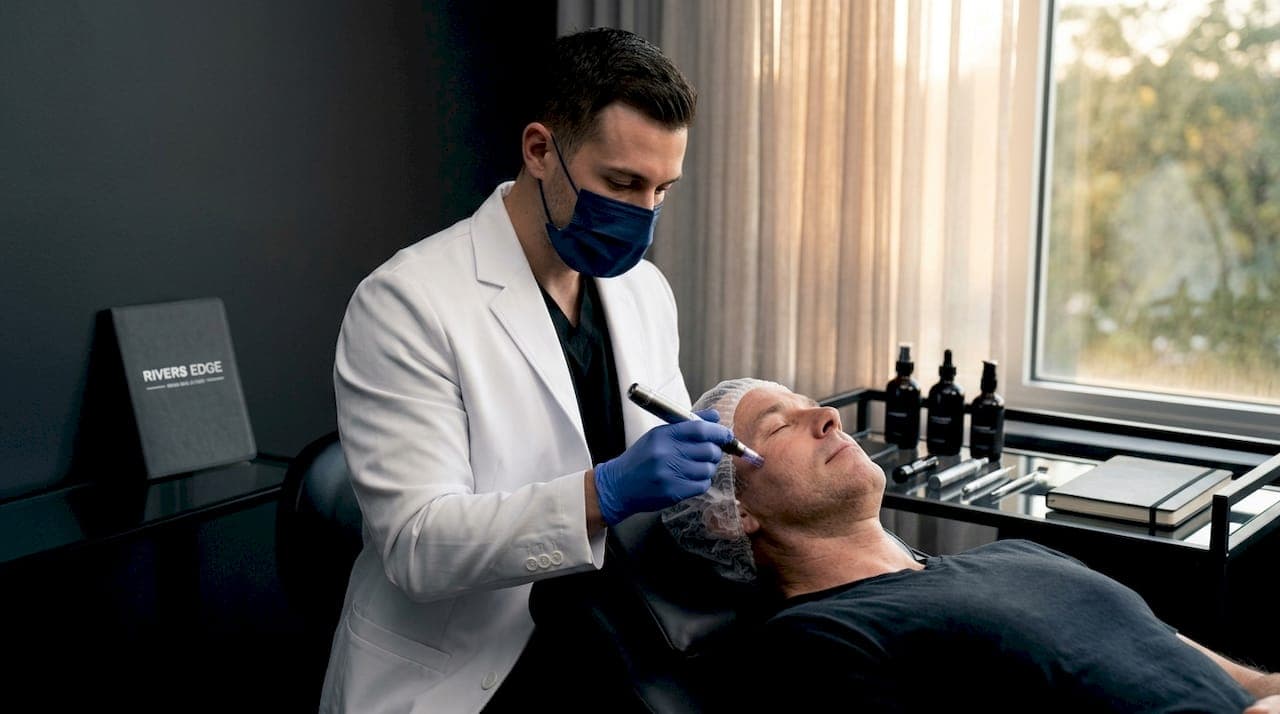
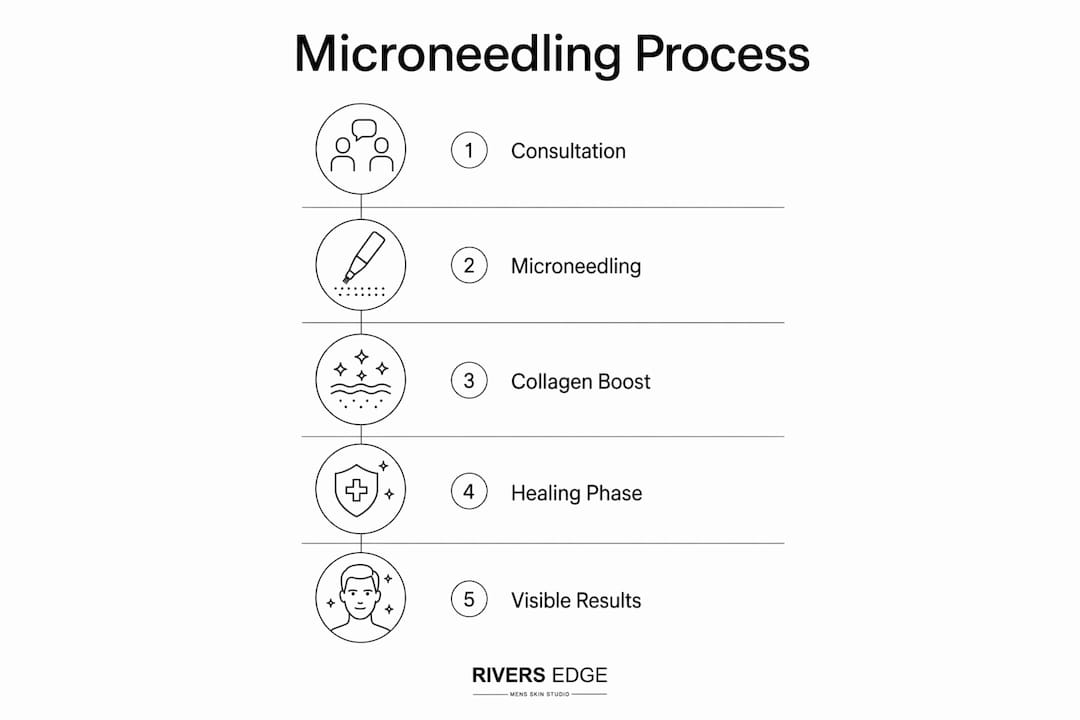
Microneedling treatment, clinically known as collagen induction therapy, is a minimally invasive cosmetic procedure that creates controlled micro-injuries in the skin using fine needles to trigger the body's natural healing response. Endorsed by dermatologists at institutions including the Cleveland Clinic and the British College of Aesthetic Medicine, the technique stimulates collagen and elastin production, improving skin texture, reducing scarring, and supporting hair regrowth. Whether you are addressing acne scars, early signs of ageing, or thinning on the scalp, understanding how this procedure works is the first step toward deciding if it is right for you. For a broader look at men's skin treatments, the evidence behind microneedling is compelling.
How does microneedling treatment work on the skin and scalp?
Microneedling works by passing a device fitted with fine needles across the skin's surface, creating thousands of microscopic channels in the dermis. These controlled punctures are not damage in the destructive sense. They are precise signals that tell the body to begin a repair cascade, releasing growth factors and activating fibroblasts to produce fresh collagen and elastin fibres.
The biological process involves three overlapping phases: inflammation, proliferation, and remodelling. During proliferation, the body lays down new collagen to fill the micro-injuries. Over weeks and months, this remodelling phase visibly tightens and smooths the skin. Micro-injuries stimulate collagen and elastin alongside stem cell activation, which is why results continue improving for up to six months after a course of treatment.
Needle depth and its effect on results
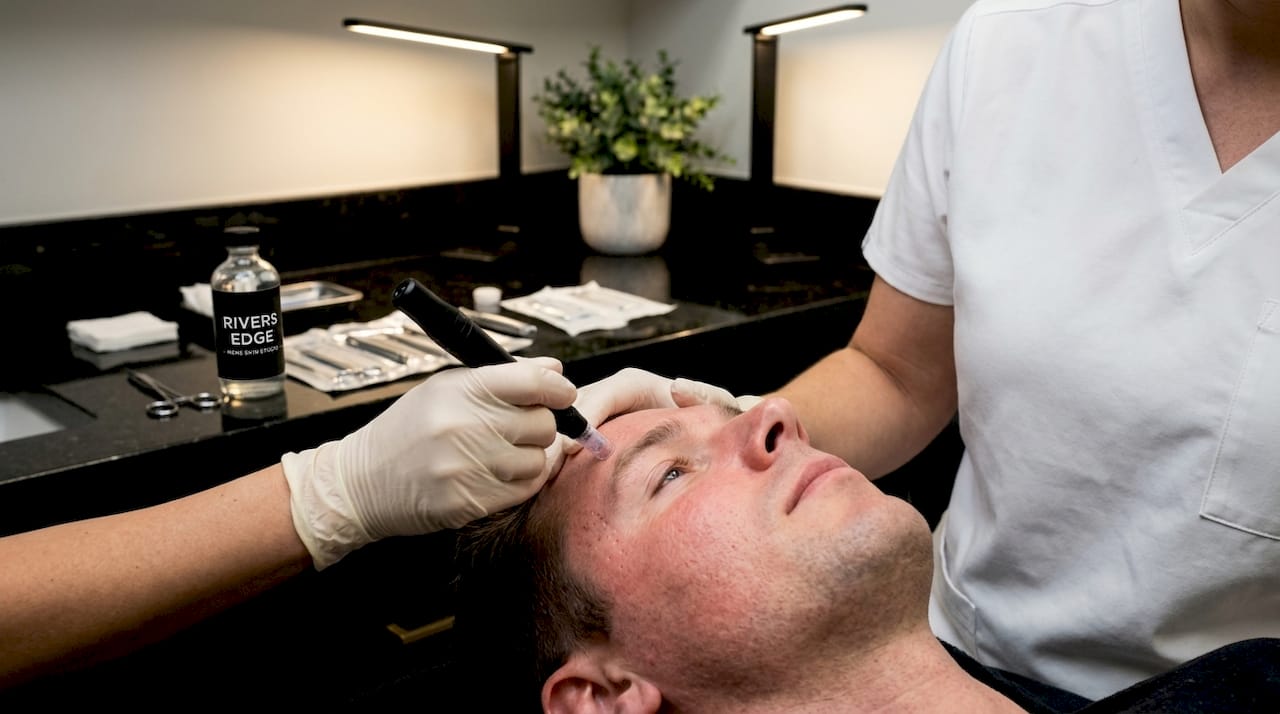
Needle depths range from 0.25mm to 1.5mm for scalp applications, with efficacy varying by condition. Shallower passes at 0.25mm to 0.5mm improve surface texture and product absorption. Deeper passes at 0.6mm to 1.5mm reach the dermis and hair follicle level. Counterintuitively, deeper is not always better. Research shows that moderate depths of around 0.6mm may outperform deeper penetrations of 1.6mm for hair follicle stimulation, because they optimise activation of dermal papilla cells without causing excessive trauma.
For scalp microneedling specifically, the needles reach hair follicle stem cells and the dermal papilla, the structure that controls hair growth cycles. This is the biological basis for using microneedling to address androgenetic alopecia and other forms of hair thinning.
Pro Tip: The 24-hour absorption window created by open microchannels is your best opportunity to apply active ingredients. Use a growth factor serum or a minoxidil solution immediately after a scalp session for maximum uptake.
Key mechanisms at work during a microneedling session include:
- Creation of microchannels that temporarily increase skin permeability
- Release of platelet-derived growth factor and transforming growth factor beta
- Activation of hair follicle stem cells and dermal papilla cells on the scalp
- Stimulation of fibroblasts to produce type I and type III collagen
- Improved penetration of topical actives such as minoxidil, peptides, and hyaluronic acid
What are the key microneedling benefits and ideal uses?
Microneedling addresses a wider range of skin and hair concerns than most people realise. Effective for acne scars, rhytides, melasma, and skin texture improvements, the procedure has a strong evidence base across dermatology literature. This breadth of application is what distinguishes it from single-purpose treatments.
For skin concerns, the documented benefits include:
- Reduction of atrophic acne scars by stimulating new dermal matrix
- Softening of fine lines and wrinkles through collagen remodelling
- Improvement of dyschromia, melasma, and post-inflammatory hyperpigmentation
- Reduction of enlarged pores and uneven skin texture
- Fading of stretch marks on the body
For hair and scalp concerns, the benefits are equally significant. Microneedling has demonstrated results in androgenetic alopecia (male pattern baldness), alopecia areata, telogen effluvium, and hormonally driven thinning. A 2025 systematic review found that combined microneedling therapy enhanced hair count significantly compared to topical treatment alone. This means pairing microneedling with minoxidil or finasteride produces measurably better outcomes than either approach in isolation.
The safety profile is another reason clinicians recommend this procedure. Minimal side effects such as mild redness and transient hyperpigmentation are the most commonly reported adverse events, and these typically resolve within 24 to 72 hours. Compared to ablative laser resurfacing or deep chemical peels, the recovery burden is considerably lower, making microneedling accessible for men who cannot afford significant downtime.
One underappreciated benefit is the enhanced absorption of topical products applied after treatment. The microchannels remain open for approximately 24 hours, creating a window during which active ingredients penetrate far deeper than they would through intact skin. This makes post-treatment skincare not just helpful but genuinely transformative for outcomes.
What does the microneedling procedure involve?
A professional microneedling session at a clinic like Riversedgeskinstudio begins with a thorough consultation and skin assessment. A topical numbing cream is applied and left for 20 to 30 minutes before treatment begins. The clinician then passes a medical-grade device, typically a dermapen or similar automated needling tool, across the treatment area in overlapping passes. The full procedure takes 45 to 90 minutes depending on the area covered.
Professional sessions typically cost £100 to £300 per treatment, and most skin concerns require between three and six sessions spaced four to six weeks apart. Hair loss protocols often extend to six to twelve sessions. Results are cumulative, meaning each session builds on the last.
| Feature | Professional microneedling | At-home dermarolling |
|---|---|---|
| Needle depth | 0.5mm to 2.5mm | 0.25mm to 0.5mm |
| Precision | Automated, consistent pressure | Manual, variable pressure |
| Numbing | Topical anaesthetic applied | Not typically used |
| Results | Clinically significant | Mild to moderate improvement |
| Hygiene | Single-use sterile cartridges | Risk of contamination if not replaced |
| Cost per session | £100 to £300 | £20 to £60 per device |
At-home devices with shallower needles of 0.25mm to 0.5mm can deliver measurable results when used consistently, but they do not reach the dermal depth required for significant collagen remodelling or follicle stimulation. For a detailed comparison of professional versus home skincare, the clinical environment offers advantages that go beyond needle depth alone.
Aftercare for microneedling
Post-treatment care directly determines how well your skin heals and how good your results will be. Protecting and rebuilding the skin barrier with ingredients like ceramides and hyaluronic acid is critical in the 24 to 48 hours following treatment. Avoid active ingredients such as retinol, AHAs, and vitamin C for at least 48 hours, as these can irritate compromised skin. Sun protection with SPF 30 or above is non-negotiable for the first week. For a full breakdown of post-treatment skincare steps, the recovery protocol matters as much as the procedure itself.
Pro Tip: Apply a cooling gel containing aloe vera or centella asiatica immediately after treatment to calm inflammation and support barrier recovery. Avoid touching the treated area with unwashed hands for the first 12 hours.
Who is suitable for microneedling and when to avoid it?
Microneedling suits a broad range of skin types and ages, which is one of its practical advantages over treatments like laser resurfacing that carry higher risks for darker skin tones. Men with Fitzpatrick skin types I through VI can generally undergo microneedling safely, provided the correct needle depth and post-care protocol are followed.
Conditions that respond well to microneedling include:
- Atrophic or rolling acne scars on the face or back
- Early to moderate androgenetic alopecia with follicles still present
- Uneven skin texture, enlarged pores, and mild to moderate wrinkles
- Post-inflammatory hyperpigmentation and melasma
- Stretch marks on the abdomen, shoulders, or thighs
There are clear contraindications that rule out treatment for some individuals. Active acne breakouts, open wounds, or skin infections in the treatment area require the session to be postponed. Scarring alopecia, where follicles have been permanently destroyed by fibrosis, will not respond to microneedling because there are no viable follicles left to stimulate. Untreated nutritional deficiencies, particularly low ferritin or vitamin D, can impair the healing response and reduce results significantly.
Microneedling is not a standalone cure for genetic hair loss. Most effective as part of a combined treatment plan with topical or oral therapies, it works best when integrated with minoxidil, finasteride, or platelet-rich plasma. Men on blood thinners, those with a history of keloid scarring, or those undergoing active chemotherapy should consult a dermatologist before proceeding. A professional consultation at a specialist clinic removes the guesswork and ensures the treatment plan matches your specific condition and goals.
Key takeaways
Microneedling treatment delivers measurable results for skin rejuvenation and hair regrowth by triggering collagen induction, but outcomes depend on needle depth, session frequency, and the quality of post-treatment care.
| Point | Details |
|---|---|
| Core mechanism | Micro-injuries stimulate collagen, elastin, and stem cell activation for skin and hair repair. |
| Needle depth matters | Moderate depths around 0.6mm optimise follicle stimulation without causing excessive trauma. |
| Combined therapy wins | Pairing microneedling with minoxidil or finasteride produces significantly better hair count results. |
| Post-care is critical | The 24-hour microchannel window makes immediate aftercare with ceramides and hyaluronic acid essential. |
| Know the contraindications | Scarring alopecia, active infections, and keloid history rule out treatment entirely. |
What I have learned from watching men commit to microneedling
The most common misconception I encounter is that microneedling is a one-session fix. Men book a single appointment, see mild redness for two days, and then expect a transformation by the following week. That is not how collagen remodelling works. The visible improvement from a single session is modest. The compounding effect of three to six sessions, spaced correctly, is where the real change happens.
What genuinely surprises clients is how much the post-treatment window matters. I have seen men invest in a quality clinical session and then apply nothing to their skin for 24 hours because they were worried about irritation. That is the opposite of what the biology calls for. Those open microchannels are an opportunity that closes within a day. Using the right serums in that window is not optional if you want the best outcome.
The other thing worth saying plainly: microneedling for hair loss works, but not in isolation. Men who combine it with a proven topical or oral therapy see results that neither approach achieves alone. If you are relying on microneedling to reverse significant hair loss by itself, you will be disappointed. If you treat it as a powerful amplifier for an existing protocol, you will likely be impressed.
— David
Start your microneedling journey at Riversedgeskinstudio
Riversedgeskinstudio offers professional microneedling treatments designed specifically for men, with personalised protocols for both facial skin concerns and scalp hair loss. Every session uses medical-grade equipment in a clinical environment, with aftercare guidance built into the treatment plan from the start.

Whether you are targeting acne scarring, skin texture, or thinning hair, the team at Riversedgeskinstudio builds a treatment plan around your specific goals rather than a generic protocol. Explore the full range of men's skin treatments available at the studio and book a consultation to find out which approach suits your skin and timeline.
FAQ
What is microneedling treatment used for?
Microneedling treatment is used to improve acne scars, wrinkles, enlarged pores, pigmentation, stretch marks, and hair thinning by stimulating collagen production through controlled micro-injuries. It is effective across a wide range of skin types and conditions when performed correctly.
How many microneedling sessions do you need?
Most skin concerns require three to six sessions spaced four to six weeks apart, while hair loss protocols typically involve six to twelve sessions. Results are cumulative, with the most significant improvements visible two to three months after completing a course.
Is microneedling safe for all skin types?
Microneedling is generally safe for Fitzpatrick skin types I through VI, with a low rate of adverse events that typically include mild redness and transient hyperpigmentation resolving within 72 hours. It is not suitable for those with active infections, keloid scarring history, or scarring alopecia.
What is scalp microneedling and does it work for hair loss?
Scalp microneedling uses fine needles to stimulate hair follicle stem cells and the dermal papilla, promoting hair regrowth in conditions like androgenetic alopecia and alopecia areata. A 2025 systematic review confirmed that combining scalp microneedling with topical treatments significantly enhances hair count compared to topical therapy alone.
How does microneedling differ from dermarolling at home?
Professional microneedling uses automated devices reaching depths of 0.5mm to 2.5mm with consistent pressure and sterile single-use cartridges, while at-home dermarolling uses manual rollers with needles of 0.25mm to 0.5mm. Clinical sessions produce more significant collagen remodelling and follicle stimulation than at-home devices can achieve.