
Most men walk past the skincare aisle and assume anything beyond a basic face wash is unnecessary, overpriced, or simply not made for them. That assumption is wrong, and it's costing them. What is men's luxury skincare, exactly? It's not a relabelled women's product in darker packaging. It's a category of high-performance formulations built around the specific biology of male skin, designed to deliver visible results without complicated routines. The UK men's skincare market is growing at 7–10% CAGR, and premium tiers are leading that growth.
Table of Contents
- Key takeaways
- What is men's luxury skincare, really?
- Male skin biology and what it demands
- Ingredients that define high-end men's skincare
- Building an effective luxury regimen
- Comparing luxury brands and product types
- Common pitfalls in luxury skincare for men
- My honest take on luxury skincare for men
- Take your skincare further with Riversedgeskinstudio
- FAQ
Key takeaways
| Point | Details |
|---|---|
| Male skin needs tailored formulas | Men's skin is thicker and oilier, requiring non-greasy, fast-absorbing formulations for real results. |
| Ingredients beat branding every time | Clinically proven actives like niacinamide and retinoids matter far more than gender-targeted packaging. |
| Four steps is all you need | A cleanser, active serum, SPF moisturiser, and night repair treatment covers most male skincare concerns. |
| Luxury means efficiency, not complexity | The best premium routines take under five minutes and work synergistically across a small product set. |
| Professional treatments amplify home care | In-clinic procedures can address what daily products cannot, making them a smart complement to any regimen. |
What is men's luxury skincare, really?
The honest answer is that luxury skincare for men is less about the price tag and more about formulation quality. Premium and luxury tiers account for 28–35% of market value in 2026, and that figure is rising sharply. What separates a genuinely high-end product from a cleverly marketed one comes down to two things: the concentration of active ingredients and whether those ingredients were chosen with male skin biology in mind.
Men aged 25 to 45 are the driving force behind this growth, particularly in anti-ageing and daily cleansing categories. That makes sense. You are at the point in life where the choices you make about your skin start showing up visibly, and where you have enough disposable income to invest properly. The question is what you are actually investing in.
Understanding this well means you stop paying a premium for cologne-scented moisturisers and start paying for formulas that actually change what your skin does over time.
Male skin biology and what it demands
Male skin is 20–25% thicker than female skin, which changes everything about how skincare products need to be made. Thicker dermis means slower collagen loss in early decades, but it also means active ingredients need higher concentrations to reach the layers where they actually do something.
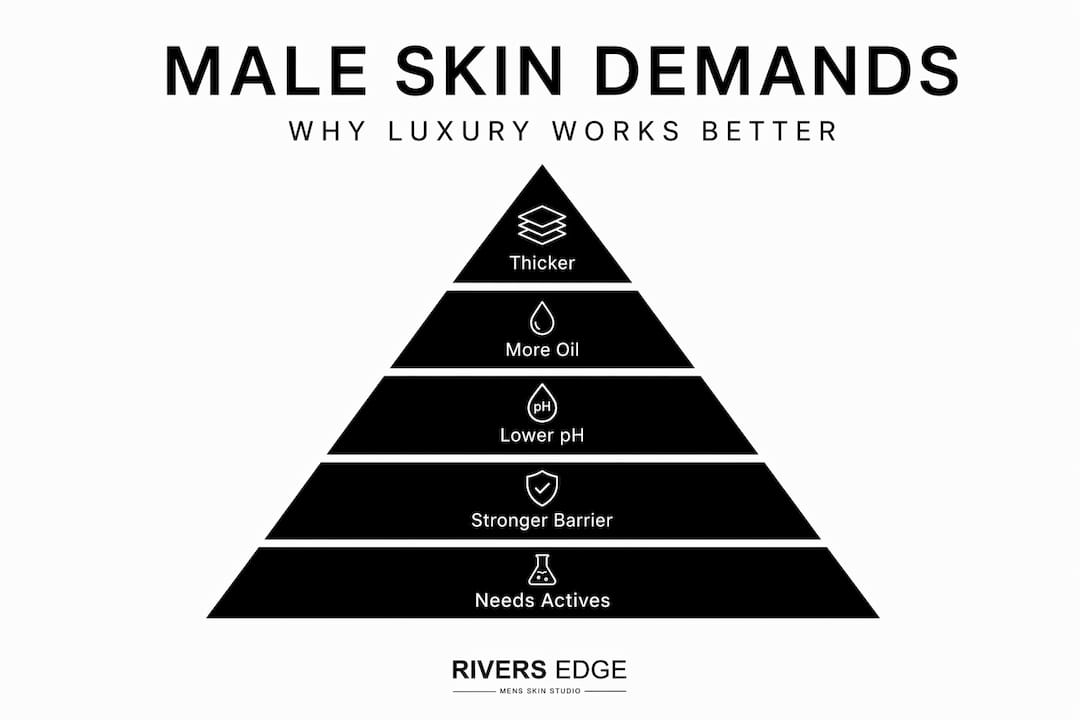
Beyond thickness, male skin produces significantly more sebum, sits at a lower pH, and responds to inflammation more aggressively. Daily shaving compounds this by stripping the skin barrier repeatedly. When you consider all of this together, male skin biology requires formulations built for deep penetration, effective oil regulation, and barrier repair that works overnight.
Here is what that means practically for how you choose products:
- Texture matters. Thick creams designed for drier female skin sit on top of male skin and feel greasy all day. Look for gel-cream hybrids or lightweight fluid textures.
- pH alignment. Products formulated at a pH close to 4.5–5.5 absorb more effectively on male skin and cause less irritation.
- Barrier-first thinking. Because shaving removes the outer skin layer, barrier-supportive ingredients are not optional. They are foundational.
- Higher active concentrations. Thicker skin requires formulas that do not water down their key ingredients just to hit a gentler price point.
Pro Tip: If a moisturiser still feels heavy two minutes after application, it was not formulated for male skin. That residue sits on the surface rather than absorbing, which does nothing for hydration at the dermal level.
Ingredients that define high-end men's skincare
The best men's skincare products share a common trait. They use active ingredients at clinically meaningful concentrations rather than trace amounts included purely to appear on the label. Knowing which ingredients to look for turns you from a passive buyer into an informed one.
Here are the most important actives in premium skincare for men and what each one does:
- Niacinamide (Vitamin B3). Regulates sebum production, repairs the skin barrier, and reduces redness. Particularly effective on male skin given its tendency towards oiliness and post-shave inflammation. Look for 4–10% concentrations.
- Retinoids. Retinol and its derivatives stimulate collagen production and accelerate cell turnover, making them the most clinically backed ingredients for anti-ageing. Start at 0.25–0.5% and build tolerance gradually.
- Vitamin C (L-ascorbic acid). Neutralises environmental damage, brightens uneven tone, and boosts collagen synthesis. Most effective at 10–20% in an anhydrous or low-water formula for stability.
- Hyaluronic acid and sodium hyaluronate. These draw moisture from the air into the skin. Sodium hyaluronate has a smaller molecular weight, meaning it penetrates more deeply into thicker male skin.
- Ceramides and peptides. Ceramides restore the skin barrier. Peptides signal the skin to produce more collagen. Both work best in a night repair formula when skin is in recovery mode.
- Microalgae and adaptive botanicals. These newer ingredients are showing strong results in managing the excess sebum that makes male skin prone to enlarged pores and breakouts in the T-zone area.
Experts consistently advise choosing products based on ingredient profiles rather than whether packaging says "for men." A well-formulated retinol serum is effective regardless of gender-targeted branding. What actually matters is the formula itself.
Pro Tip: Check the ingredient list rather than the marketing copy on the front of any product. If the first five ingredients are mostly water, glycerin, and emollients without a single recognised active, you are paying luxury prices for a basic moisturiser.
Building an effective luxury regimen
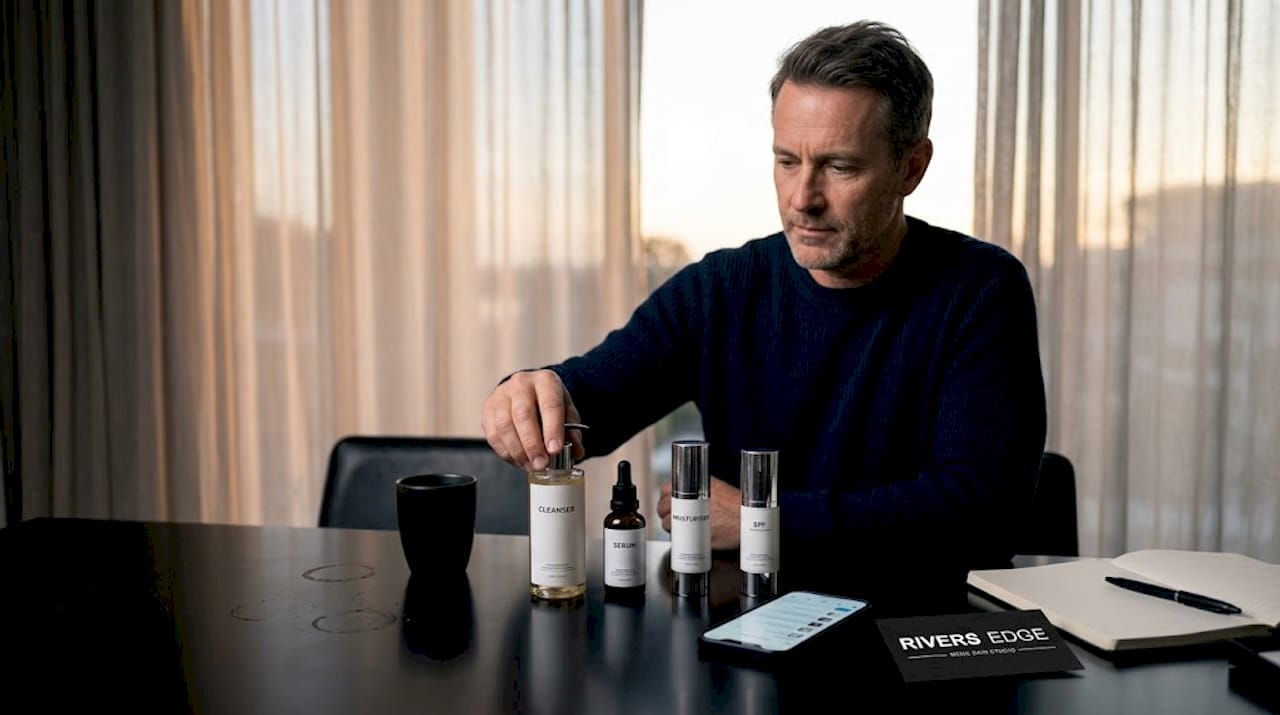
Consistent use of a four-step routine delivers measurably better outcomes than applying premium products sporadically. The good news is that four steps takes under five minutes once you know what you are doing.
Here is the sequence that works:
- Cleanser (morning and evening). Choose a gentle cream or gel cleanser that removes oil and debris without stripping the barrier. Avoid anything with sodium lauryl sulphate at high concentrations. This is the step most men skip at night and later regret.
- Active serum (morning or evening, depending on the active). Vitamin C goes on in the morning before sun exposure. Retinol goes on at night. Apply to clean, slightly damp skin for better absorption. A small amount covers the entire face.
- SPF moisturiser (morning only). This is the single most important anti-ageing step available over the counter. SPF 30 is the floor. SPF 50 in a lightweight, non-greasy formula is the standard for high-end men's skincare. Apply as the final step before leaving the house.
- Night repair treatment (evening only). This is where ceramides, peptides, and heavier hydrating ingredients earn their place. Skin cell turnover is most active at night, meaning well-formulated night products work with your body rather than against it.
Luxury skincare's real value lies in this kind of efficient, results-driven approach rather than in elaborate twelve-step rituals. For men with demanding schedules, a routine that actually gets done every day beats a perfect routine that gets skipped three times a week.
Optional additions worth considering once you have the core routine in place: an eye cream targeting crow's feet and dark circles, and a weekly gentle exfoliant to improve serum absorption. Neither is urgent. Both help.
Comparing luxury brands and product types
Not all high-end men's skincare brands approach formulation the same way. Understanding the distinctions helps you spend money where it actually delivers.
| Brand type | Ingredient focus | Texture profile | Price point | Best suited for |
|---|---|---|---|---|
| Men-specific luxury | High-active, barrier-focused, post-shave | Lightweight gel-cream | £50–£150 per product | Men who shave daily and want targeted formulas |
| Gender-neutral prestige | Clinically backed actives, broad spectrum | Variable | £40–£200 per product | Men who prefer ingredient-led buying over branding |
| Dermatologist-developed | Medical-grade concentrations, minimal fragrance | Functional, less luxurious feel | £30–£120 per product | Men with specific concerns like acne or pigmentation |
| Curated system brands | Products designed to work together | Cohesive, synergistic | £100–£300 per system | Men who want a simplified, no-decision routine |
One important distinction worth making: men-specific products are not automatically better formulated than gender-neutral ones. Dermatologists consistently point out that ingredient efficacy does not change based on packaging. Where men-specific brands genuinely earn their positioning is in texture, scent profile, and post-shave compatibility. These are real benefits, but they are about fit and experience rather than superiority of the actives themselves.
Buying a curated system from one brand offers one underrated advantage: formulation compatibility. You remove the risk of ingredient conflicts that comes from building a routine from multiple brands. For men who want simplicity alongside quality, this is often the smarter starting point. You can read more about how professional and home skincare compare when building a complete approach.
Common pitfalls in luxury skincare for men
Spending serious money on premium skincare does not guarantee serious results. Most of the men who are disappointed with high-end products made one of a few predictable errors.
- Mixing too many high-active products at once. Combining multiple potent actives from different brands, particularly retinoids with strong acids or high-dose Vitamin C, causes irritation that undoes any benefit. This problem is worse for men because shaving has already compromised the skin barrier before a single product is applied.
- Treating luxury as a substitute for consistency. An expensive serum used twice a week does less than a mid-range serum applied every morning without fail. Frequency and regularity drive results, not the price of the product alone.
- Confusing scent and texture for quality. A product that smells premium and feels luxurious at application is not necessarily working at a cellular level. Fragrance in skincare can actually increase skin sensitivity over time, particularly in men who shave.
- Expecting immediate results from anti-ageing actives. Retinoids and peptides work over weeks and months, not days. Most men who give up on luxury skincare do so before the formulas have had adequate time to demonstrate their effects.
Pro Tip: When starting any new luxury skincare product, introduce one item at a time with at least two weeks between additions. This is how you identify what is working and what is causing any adverse reaction, without guesswork.
My honest take on luxury skincare for men
I have worked with enough male clients to know that the biggest barrier to good skincare is not money or motivation. It is information. Men spend on quality in every other area of their lives, from footwear to nutrition to gym memberships, yet somehow skincare still carries a stigma of being either unnecessary or overly complicated.
What I have found is that once men understand the biology behind why their skin needs different things, the whole category starts to make sense. It stops feeling like marketing and starts feeling like logic. Your skin is thicker, oilier, and recovering from a blade every two days. Of course it needs specific formulas.
My view on what actually works long term: focus on four well-chosen products that work together rather than building a shelf full of competing actives. The men who get the best results from premium skincare are not using the most products. They are using the right ones, consistently, with realistic expectations about timelines.
The other thing I always tell clients: do not let gendered branding dictate your decisions. Some of the best formulas for male skin are not labelled for men at all. What you are shopping for is the ingredient list, the concentration, and whether the texture works for your skin type. Everything else is marketing.
— David
Take your skincare further with Riversedgeskinstudio
Home skincare, even the best of it, has a ceiling. Premium products address daily maintenance and slow down visible ageing. They do not resurface, tighten, or correct concerns that have already developed over years.

At Riversedgeskinstudio, every treatment is designed specifically for male skin. From HydraFacials and chemical peels to microneedling and anti-wrinkle injections, the clinic uses clinical-grade procedures that work at a depth no serum can reach. Each plan is built around your individual skin concerns, not a generic template. If you are serious about what high-end men's skincare can achieve, explore the full range of men's skin treatments available and book a consultation. What you learn in that conversation will change how you approach your skincare for good.
FAQ
What is men's luxury skincare and how does it differ from standard products?
Men's luxury skincare refers to high-performance formulations built around male skin biology, with higher concentrations of clinically proven actives and textures designed for thicker, oilier skin. Standard products often use lower active concentrations and are not formulated for post-shave barrier repair.
Do men need different skincare products from women?
Male skin is 20–25% thicker with higher oil production and a lower pH, meaning formulations designed for these characteristics will outperform generic products for most male skin concerns.
What are the best men's skincare products to start with?
A gentle cleanser, a Vitamin C or retinol serum, an SPF 30+ moisturiser, and a ceramide-rich night cream cover the four core concerns of cleansing, anti-ageing, sun protection, and overnight repair.
Is luxury men's skincare worth the investment?
Yes, when the products contain clinically backed actives at effective concentrations. Efficient, results-driven formulas built for busy lifestyles deliver measurable improvements in skin texture, tone, and resilience over time.
How do I avoid irritation when using multiple luxury skincare products?
Introduce products one at a time, wait at least two weeks between new additions, and avoid layering retinoids with strong acids on the same evening. Sticking to a curated system from one brand reduces the risk of conflicting formulations causing irritation.