
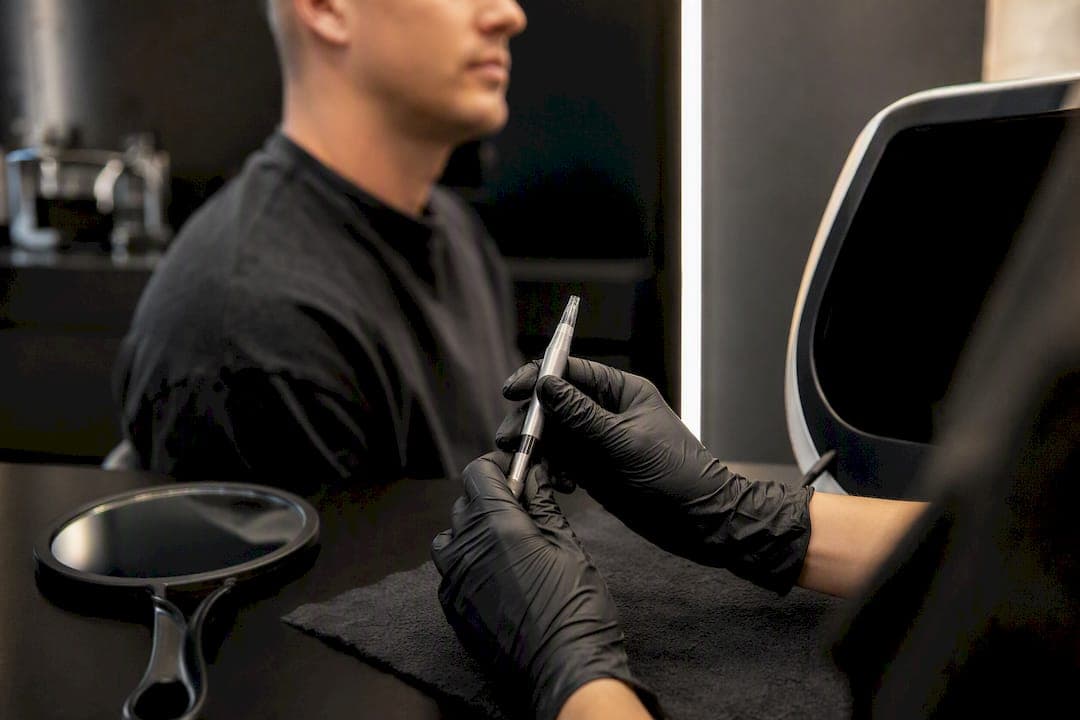
Before you book anything, ask five things: what qualifies the practitioner to treat men, exactly which product or device they will use, the realistic risks and recovery time, the total cost including maintenance, and what they would refuse to do for you. These are the questions that separate a proper aesthetic consultation from a sales pitch, and BCAM lists them as the essential baseline before any anti-wrinkle injection, HydraFacial, or microneedling session goes ahead.
Print this list. Take it with you.
- Qualifications: What's your registration, and how much experience do you have treating men specifically?
- Product/device: Which exact brand or device will you use, and why that one for me?
- Risks and recovery: What can go wrong, and how long until I look normal again?
- Total cost: What's the full price, including any follow-up or top-up sessions?
- What you wouldn't do: Is there anything about my face or goals that makes this the wrong treatment?
At Rivers Edge Skin Studio, these questions map directly onto what a proper consultation should cover, and checking a practitioner against Save Face's register confirms they're accountable to a recognised standard.
Pro Tip: Ask to see male before-and-after photos specifically. A provider who only has female examples hasn't necessarily treated the male face, jawline, or brow the way you need.
Key Takeaways
A Merseyside aesthetic consultation should function as a diagnostic appointment where qualifications, product transparency, realistic risk, total cost, and honest refusal all get addressed before treatment begins.
| Point | Details |
|---|---|
| Ask the five core questions | Cover qualifications, exact product or device, risks and recovery, total cost, and what wouldn't be recommended. |
| Confirm registration first | Check the practitioner against a recognised body such as Save Face before booking anything. |
| Expect a written plan | A proper consultation ends with a documented treatment plan, pricing, and a follow-up schedule, not a verbal promise. |
| Alternatives should be offered | A practitioner unwilling to recommend a different approach when yours is unsuitable is a red flag. |
| Rivers Edge Skin Studio treats men only | Consultations are diagnostic first, with male-specific portfolios and written aftercare as standard. |
Table of Contents
- How often will I need follow-up appointments?
- What if the treatment I want isn't right for me?
- How is my personal and medical information handled?
- Why the "just book in" approach fails men specifically
- If you want a men-only specialist, here's how Rivers Edge Skin Studio runs consultations
- Frequently asked questions
- Sources
How often will I need follow-up appointments?
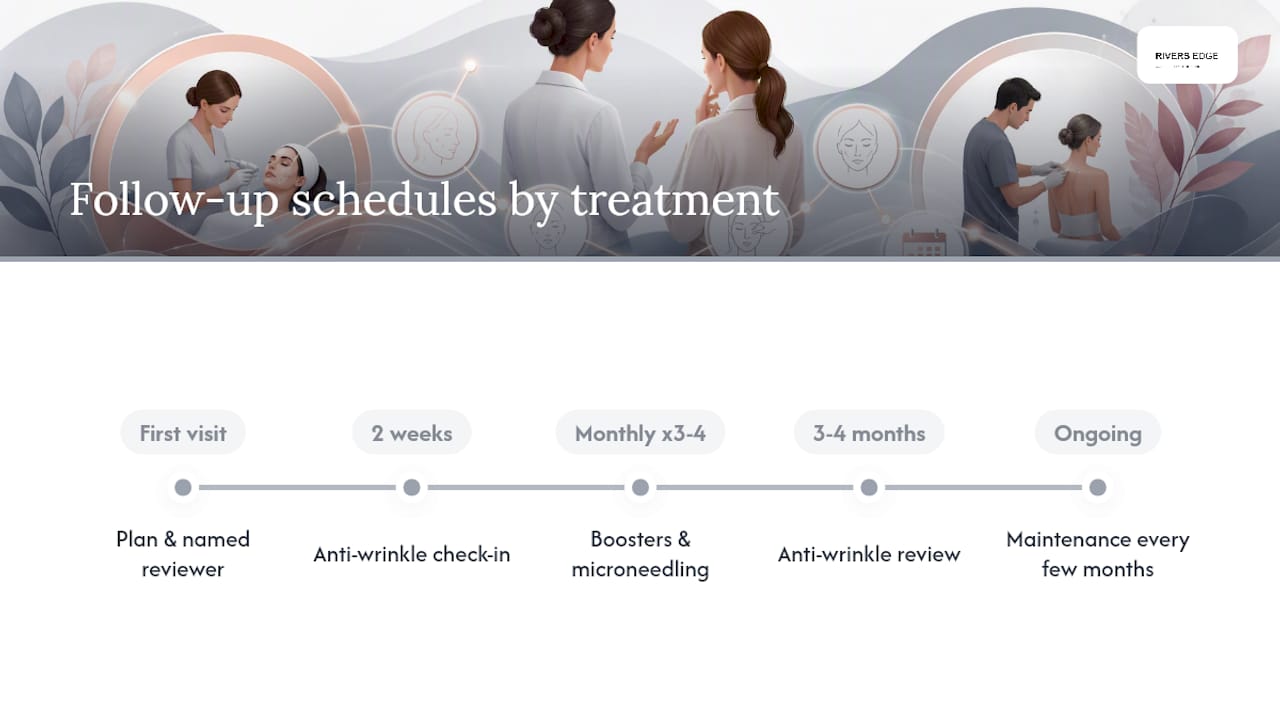
Follow-up frequency depends entirely on what you've had done, and a specialist worth seeing will tell you the schedule before you pay for anything. Anti-wrinkle injections typically need a check-in at two weeks to assess how the product has settled, then a review at three to four months when the effect starts to fade. Skin boosters and microneedling usually run on a course, often three to four sessions spaced a month apart, followed by maintenance every few months.
Ask specifically who reviews you, not just when. Some clinics book you back with a different practitioner, which makes it harder to track subtle changes in your skin or muscle response over time. A clinic offering continuity, the same person seeing you at every stage, tends to spot problems earlier and adjust future sessions more precisely. This matters more for men than the marketing suggests, since facial fat distribution and skin thickness differ enough from female anatomy that dosing often needs fine-tuning after the first result is visible.
Before you leave your first appointment, get the follow-up date in writing, not a vague "come back if you need to." A proper consultation includes a clear plan for what happens next, and that plan should specify roughly when you'll be seen again and what that visit will assess. If a clinic can't tell you this upfront, treat it as a gap worth questioning rather than assuming it will sort itself out later.
What if the treatment I want isn't right for me?
A good specialist will sometimes tell you no, and that's not a failure of the consultation, it's the point of it. Save Face's guidance for practitioners treats the first visit as diagnostic and planning-focused rather than an automatic booking for treatment, which means walking out with nothing scheduled is a legitimate outcome if your anatomy or goals don't align with what you asked for.
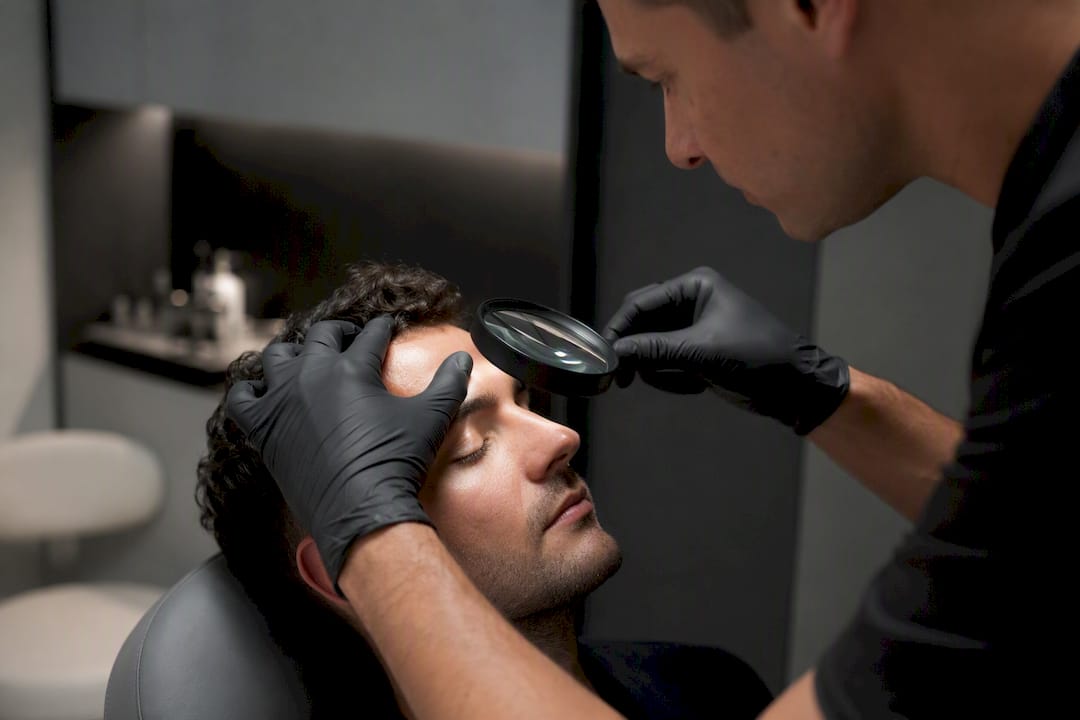
Common alternatives exist for most requests. If anti-wrinkle injections aren't suitable, a chemical peel or course of microneedling might address the same surface concern without touching muscle movement. If you're chasing jawline definition but filler placement risks looking unnatural on your bone structure, a practitioner might suggest a different volume or technique, or recommend against filler entirely in favour of skin tightening. Hair loss concerns sometimes point toward scalp microneedling or polynucleotide treatments rather than a more invasive route, particularly for men catching thinning early.
Ask directly: "if this isn't right, what would you suggest instead?" The answer separates genuine expertise from a menu of services applied regardless of fit. A specialist without a second option, or who pushes you toward the original booking anyway, is showing you exactly how they'll handle every future appointment too.
How is my personal and medical information handled?
Any clinic offering anti-wrinkle injections, wellness injections, or hair-loss treatments is handling sensitive medical data, and you're entitled to a straight answer on how that's stored and who sees it. Ask whether your medical history, clinical photographs, and treatment notes are kept on a secure system, who has access to them, and whether photographs are ever used for marketing without separate, explicit consent.
This isn't a formality. Clinical photographs are a standard part of a thorough consultation, used to document facial symmetry, skin quality, and how your face changes over successive sessions. That's legitimate and useful for your own record. What matters is whether the clinic separates clinical use from promotional use, and whether you're asked before, not after, any image appears on a website or Instagram feed.
Ask, too, how long records are retained and what happens if you stop being a patient. A clinic that answers these questions without hesitation is usually one that has built proper data handling into its process rather than bolting it on. If a practitioner seems unsure or brushes the question off, that's worth noting alongside any other red flags from the visit, since data handling tends to reflect the same attention to detail applied everywhere else in the clinic.
Why the "just book in" approach fails men specifically
Most advice about aesthetic consultations gets written for a general audience and then quietly assumes female anatomy, female concerns, and female before-and-afters. That's the gap worth naming. Men have different bone structure, fat distribution, and skin thickness, and a dosing pattern that produces a natural result on one face can feminise another entirely.
The conventional wisdom, "find someone qualified and book in," undersells what qualified actually needs to mean here. A practitioner can hold every relevant registration and still have never adjusted a treatment plan for a heavier brow or a squarer jaw. That's why the male-specific portfolio question matters more than people expect. It's not vanity. It's evidence the practitioner has actually solved the problem you're bringing them, not a version of it.
If you prioritise one thing from this checklist, prioritise the willingness to say no. Anyone can say yes to a booking. Far fewer will tell you honestly that the treatment you asked for isn't the right one, and that single answer tells you more about a clinic than any before-and-after gallery.
If you want a men-only specialist, here's how Rivers Edge Skin Studio runs consultations
Rivers Edge Skin Studio treats men exclusively, covering anti-wrinkle injections, HydraFacials, chemical peels, microneedling, skin boosters, scalp microneedling, and hair-loss therapies, all built around male anatomy rather than adapted from a general treatment menu.
Every consultation starts with an assessment, not a booking form. Expect clinical photographs, a discussion of what's realistic for your face, and a written treatment plan with clear pricing before anything is agreed, including where maintenance sessions fit into the cost. If the right answer for you is no treatment, or a different one to what you came in asking for, that's what you'll hear.
Before your visit, check the practitioner's registration and ask to see male-specific results, request the aftercare instructions in writing, and confirm what products or devices they use and why. If you're ready to see what's realistic for your skin, the full range of men's treatments is a good place to start, and booking a consultation costs you nothing but honest answers.
Frequently asked questions
What's the single most important question to ask a Merseyside skin specialist? Ask what they would not recommend for you and why. A willingness to say no reveals more about competence than any list of qualifications.
How do I check if a practitioner is properly registered? Search their name on the Save Face register, which lists accredited practitioners who meet recognised safety and training standards.
Should men expect different treatment to women for the same procedure? Yes. Facial bone structure, fat distribution, and skin thickness differ enough that dosing and placement need adjusting to avoid feminising results.
What should I bring to my first consultation? Bring a list of current medications, any relevant medical history, and photos of results you like or dislike, so the practitioner can plan around your goals accurately.
Is a consultation the same as booking treatment? No. A consultation is a diagnostic and planning appointment, and a proper one can end with no treatment recommended if that's the right outcome for you.
This article is general information, not a substitute for advice from a qualified doctor. Consult a qualified healthcare professional about your own circumstances before acting on anything here.