

Skin laxity treatment is defined as any procedure designed to tighten loose or sagging skin by stimulating collagen and elastin production, or by physically removing excess tissue. For men aged 30–55, this is one of the most common aesthetic concerns, yet one of the least discussed. The skin on your jaw, neck, and abdomen can begin to lose firmness from your early thirties onward, driven by collagen loss, sun exposure, and natural ageing. Riversedgeskinstudio specialises in men's skin treatments and sees this concern regularly. Understanding your options is the first step toward doing something about it.
What causes skin laxity in men?
Skin laxity is the clinical term for skin that has lost its structural support and begun to sag or loosen. It happens when collagen and elastin fibres in the dermis break down faster than the body can replace them. After the age of 25, collagen production declines steadily each year. That decline accelerates with UV exposure, smoking, rapid weight loss, and genetics.
Men's skin is structurally different from women's. It is typically thicker, with a higher collagen density and more sebaceous activity. This means men often show visible signs of ageing slightly later, but when laxity does appear, it tends to be more pronounced in specific areas such as the jawline, neck, and abdomen.
The signs of skin laxity fall into two broad categories:
- Mild laxity: Subtle softening of the jawline, early jowling, slight looseness around the eyes or neck. Skin still has reasonable elasticity and responds well to non-surgical treatments.
- Moderate laxity: Visible sagging along the jaw and neck, deeper nasolabial folds, and noticeable looseness on the body. Non-surgical options can still help, but results are more limited.
- Severe laxity: Hanging or excess skin, often following significant weight loss or advanced ageing. This category typically requires surgical intervention.
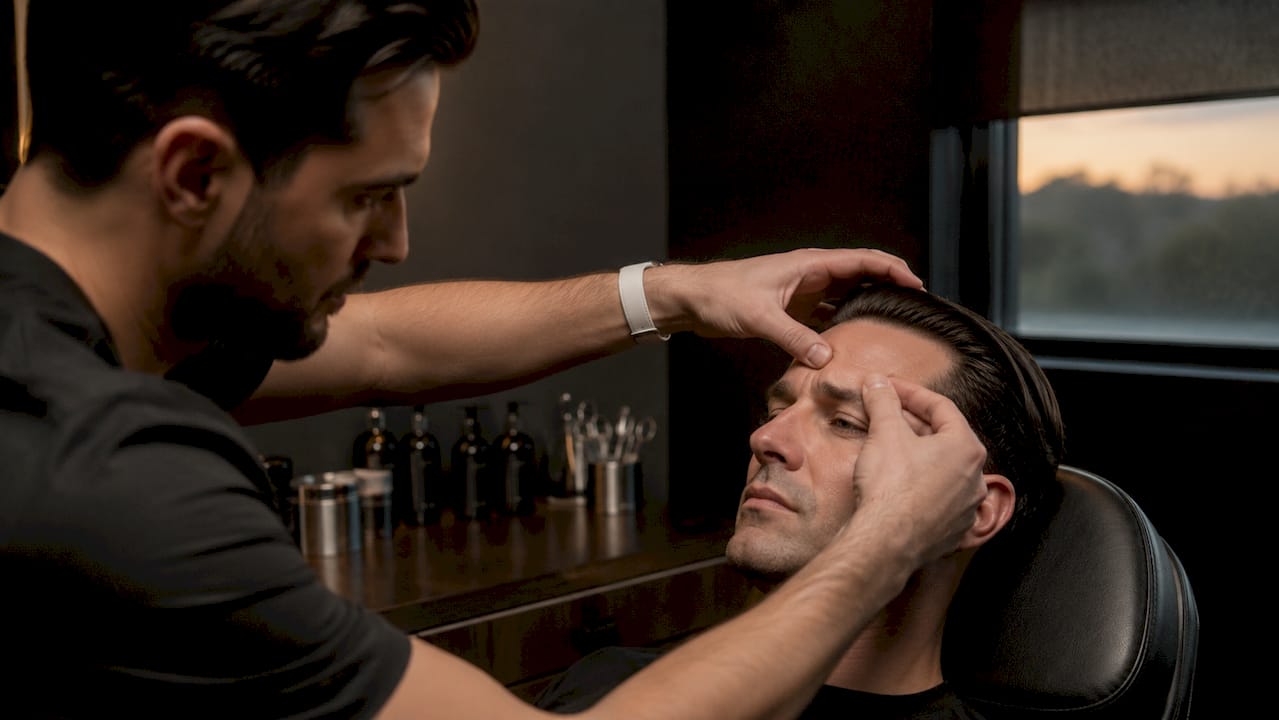
Pro Tip: Press two fingers gently against your cheekbone and lift slightly. If that movement noticeably improves your jawline, you have some degree of skin laxity. The more dramatic the change, the more advanced the laxity.
What is skin laxity treatment without surgery?
Non-surgical skin laxity treatment covers a range of energy-based technologies that deliver controlled heat or sound energy into the deeper layers of the skin. The goal is to trigger the body's natural wound-healing response, which produces new collagen and elastin over the weeks and months following treatment.
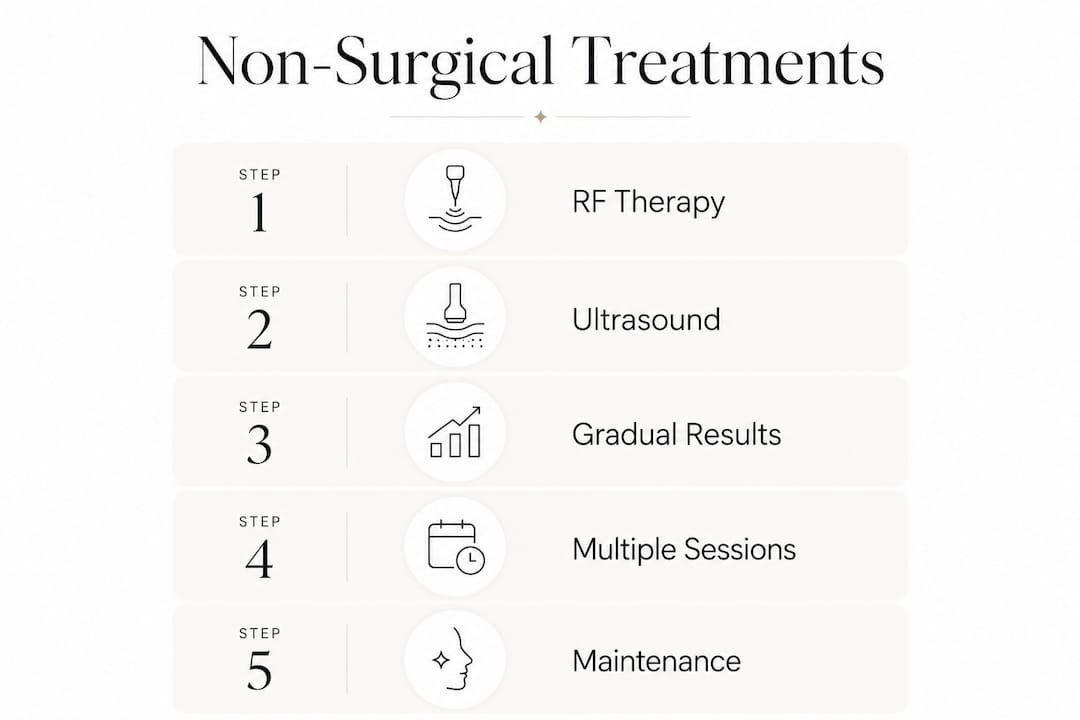
Monopolar radiofrequency (RF) treatment increases collagen and elastic fibres in the dermis, as confirmed by histological analysis. That means the structural improvement is measurable at a tissue level, not just cosmetic. RF also reduces sebum production and dermal inflammation, contributing to overall skin quality alongside firming effects.
Microfocused ultrasound, used in devices such as Ultherapy PRIME, works differently. It delivers energy at precise depths below the skin surface, targeting the same tissue layer addressed in surgical facelifts. Ultherapy PRIME stimulates collagen and elastin production with no downtime, and results can last six months or more, making it well suited to mild or moderate laxity on the face, neck, arms, and abdomen.
Laser therapies, including fractional resurfacing, work primarily on the upper and mid dermis. They are particularly effective for improving skin texture and tone alongside mild tightening. They work best as part of a combined treatment plan rather than as a standalone solution for significant laxity.
The key benefits of non-surgical skin firming treatments are:
- Minimal downtime: Most men return to work the same day or within 48 hours.
- Gradual, natural-looking results: Collagen remodelling takes 8–12 weeks, so changes appear progressively rather than suddenly.
- Skin quality improvement: Beyond tightening, RF and laser treatments improve texture, tone, and pore appearance.
- Preventative value: Starting treatment at the first signs of laxity slows further degradation.
Non-surgical treatments are best suited to men with mild to moderate laxity who want gradual improvement rather than immediate dramatic change. Multiple sessions are typically required, spaced over several weeks.
Pro Tip: A single RF or ultrasound session will not deliver the full result. Most treatment protocols involve 3–6 sessions. Commit to the full course before assessing the outcome.
When does skin laxity require surgery?
Non-surgical treatments improve skin quality, but they cannot remove skin. That distinction matters enormously when you are assessing your options. Non-surgical skin tightening cannot remove excess skin or reshape underlying structures. It improves what is already there. It does not reduce the quantity of skin.
Surgery becomes the appropriate choice when:
- Excess or hanging skin is present. This is most common after significant weight loss or in men over 50 with advanced facial ageing. No energy-based device can tighten skin that has genuinely stretched beyond its elastic limit.
- Structural repositioning is needed. A surgical facelift or neck lift physically repositions the underlying muscle and fascia layer, not just the skin surface. Non-surgical devices do not reach that depth with sufficient force to reposition tissue.
- Immediate, dramatic results are the goal. Surgery delivers correction in a single procedure. Non-surgical treatments require months of gradual improvement.
- Previous non-surgical treatments have plateaued. If you have completed multiple RF or ultrasound courses and results have stalled, surgery may be the next logical step.
Visible hanging or excess skin indicates surgery as the effective option for definitive correction. Non-surgical methods serve better as maintenance and early intervention tools, not as replacements for structural procedures.
Recovery from surgical skin tightening varies by procedure. A neck lift typically involves 1–2 weeks of visible bruising and swelling, with full results visible at 3–6 months. The results are long-lasting, but they do not stop the ageing process. Maintenance treatments post-surgery can extend and preserve the outcome.
Pro Tip: If you are considering surgery, complete a course of non-surgical treatment first. It improves skin quality before the procedure and supports healing and longevity of results afterward.
How to choose the right skin laxity treatment
Choosing the right treatment for sagging skin starts with an honest assessment of where you are. The severity of your laxity, your skin quality, your lifestyle, and your expectations all shape which approach will serve you best.
Ideal candidates for non-surgical skin tightening are men with early signs of ageing who want gradual improvement without downtime. If your laxity is mild, starting with RF or microfocused ultrasound is the right call. You get real results, no recovery time, and you preserve the option of surgery later if needed.
When evaluating your options, consider these factors:
- Severity of laxity. Mild and moderate laxity respond well to non-surgical methods. Severe or excess skin does not.
- Skin quality. Thicker, well-hydrated skin with good baseline elasticity responds better to energy-based treatments.
- Downtime tolerance. Non-surgical treatments allow you to carry on with work and daily life. Surgery requires planned recovery time.
- Budget and commitment. Non-surgical courses involve multiple sessions over months. Surgery is a single larger investment with longer-lasting structural change.
- Realistic expectations. Non-surgical treatments improve skin quality and firmness gradually. They do not replicate surgical results. Understanding that distinction prevents disappointment.
A professional skin analysis is the most reliable starting point. A specialist can assess your laxity grade, skin thickness, and tissue quality, then recommend a treatment plan matched to your actual condition rather than a generic protocol. Riversedgeskinstudio offers personalised consultations for men that cover exactly this assessment process. You can read more about men's facial rejuvenation options to understand how energy-based devices fit into a broader treatment plan.
Maintenance matters as much as the initial treatment. Collagen continues to degrade with age. A single course of RF or ultrasound is not a permanent fix. Scheduling maintenance sessions every 6–12 months preserves the results and slows further laxity progression.
Key takeaways
Skin laxity treatment works best when the method matches the severity of laxity: non-surgical energy-based treatments for mild to moderate cases, and surgery for excess or hanging skin that cannot be corrected otherwise.
| Point | Details |
|---|---|
| Define your laxity grade | Mild and moderate laxity respond to non-surgical treatments; severe or hanging skin requires surgery. |
| RF and ultrasound stimulate collagen | Monopolar RF increases collagen and elastic fibres in the dermis, improving firmness over 8–12 weeks. |
| Surgery removes, devices improve | Non-surgical treatments cannot remove excess skin; surgery is the only method that physically corrects it. |
| Multiple sessions are standard | Non-surgical treatment courses typically require 3–6 sessions for full results. |
| Maintenance extends results | Scheduling sessions every 6–12 months preserves firmness and slows further collagen loss. |
My honest view on non-surgical versus surgical skin tightening
The most common mistake I see men make is waiting too long. They notice the early signs of laxity in their mid-thirties, dismiss it, and then arrive in their late forties with significantly more advanced sagging that requires a much larger intervention. Non-surgical treatments are genuinely effective at the early and middle stages. They are not a consolation prize for men who cannot face surgery. They are the right clinical tool for the right stage of ageing.
Energy-based treatments are best viewed as complementary tools to surgery, not replacements for it. That framing is important. If you start RF or ultrasound treatment in your early thirties, you may never need surgery at all, or at least delay it by a decade. That is a meaningful outcome.
The other misconception worth addressing is that non-surgical results look subtle because the technology is weak. They look subtle because collagen remodelling is a biological process that takes time. RF treatment produces measurable histological changes in the dermis. The improvement is real. It just does not happen overnight.
My advice to any man in the 30–55 age range is this: get a professional skin assessment before you decide anything. The treatment plan that suits a 34-year-old with mild jaw softening is completely different from the plan that suits a 52-year-old with moderate neck laxity. Personalised assessment is not a luxury. It is the difference between a treatment that works and money spent on the wrong approach. If you want to understand why a specialist clinic matters for this kind of decision, the article on why local skincare clinics beat chains for men is worth your time.
— David
Riversedgeskinstudio: men's skin laxity treatments in one place
Riversedgeskinstudio is a specialist men's skin clinic offering a full range of skin firming treatments, from RF and microneedling to personalised anti-ageing programmes designed around your skin condition and goals.

Every treatment plan at Riversedgeskinstudio starts with a thorough skin assessment. The team works exclusively with male clients, which means the protocols, the environment, and the advice are built around how men's skin actually ages. Whether you are dealing with early jaw softening or more advanced neck laxity, the clinic offers men's skin treatments matched to your specific grade of laxity. Book a consultation and get a clear picture of where your skin is and what will genuinely move it forward.
FAQ
What is skin laxity treatment?
Skin laxity treatment refers to procedures that tighten loose or sagging skin by stimulating collagen and elastin production or by surgically removing excess tissue. The right approach depends on the severity of laxity and the individual's skin condition.
Can non-surgical treatments replace a facelift?
Non-surgical treatments cannot remove excess skin or reposition underlying tissue in the way surgery does. They are effective for mild to moderate laxity but do not replicate surgical results for advanced sagging.
How long does it take to see results from RF treatment?
Collagen remodelling following monopolar RF treatment takes approximately 8–12 weeks. Full results from a treatment course become visible gradually, with improvements continuing for several months after the final session.
At what age should men start skin laxity treatment?
Men can begin preventative non-surgical treatment from their early thirties when the first signs of collagen loss appear. Starting early produces better long-term outcomes and may reduce the need for more invasive procedures later.
How many sessions does non-surgical skin tightening require?
Most non-surgical skin tightening protocols involve 3–6 sessions spaced over several weeks, followed by maintenance treatments every 6–12 months to preserve results.