
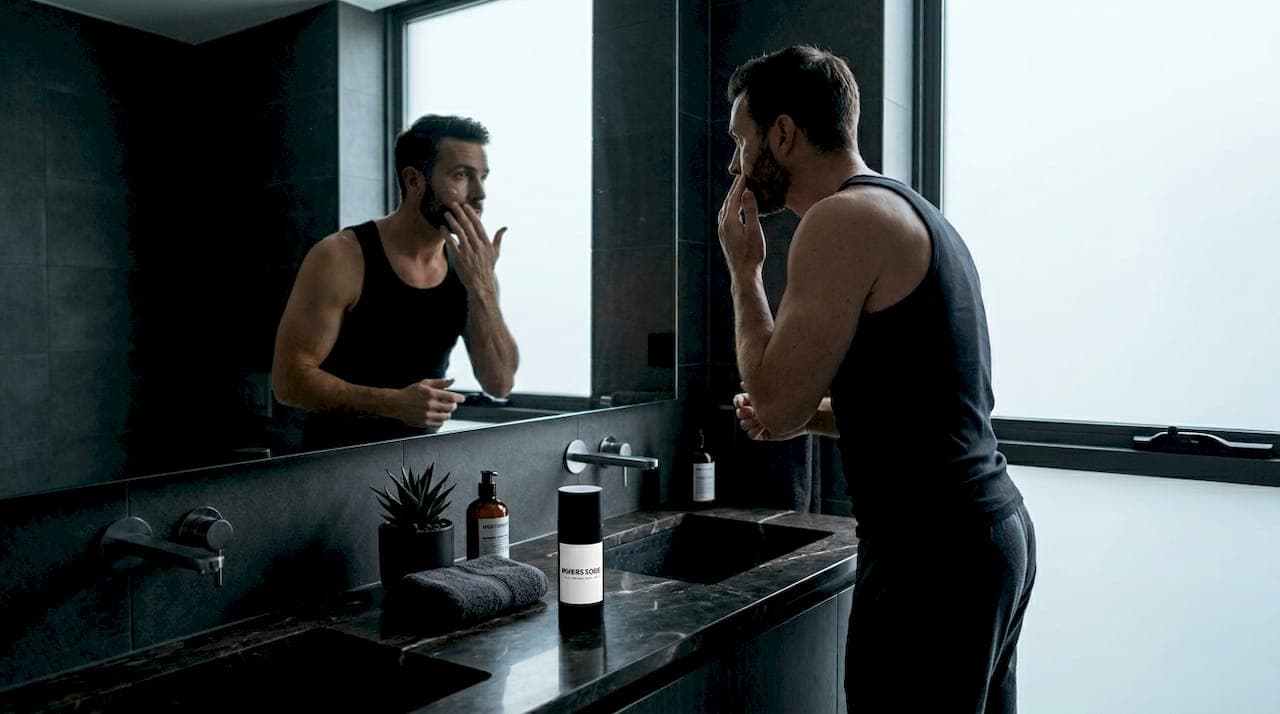
Men's skin gets written off as low-maintenance, but that assumption costs you. If you've ever wondered what local treatments suit men's skin, the answer starts with understanding that male skin is biologically distinct, not just a tougher version of women's. Higher testosterone drives thicker dermis, more sebaceous activity, and a compromised barrier from daily shaving. Those differences mean the treatments that work best for you are not the same ones your partner uses. This guide cuts through the noise and gives you a clear, practical picture of the local skincare treatments worth your time and money.
Table of Contents
- Key takeaways
- Why men's skin biology shapes treatment choices
- Top local treatments for anti-ageing and rejuvenation
- Managing excessive sweating and other common concerns
- Building a practical daily and clinic routine
- My honest view on men's local skin treatments
- Riversedgeskinstudio: men's skin treatments near you
- FAQ
Key takeaways
| Point | Details |
|---|---|
| Men's skin biology matters | Thicker, oilier skin and shaving stress mean off-the-shelf routines rarely deliver results without adaptation. |
| Retinol is your strongest anti-ageing tool | Start at 0.25% and build over three months for visible improvement in fine lines and skin texture. |
| Clinic treatments offer real rejuvenation | Chemical peels, microneedling, and liquid facelifts provide results that home products cannot replicate. |
| Hyperhidrosis has targeted solutions | Botulinum toxin injections and miraDry are clinically proven options for managing excessive sweating. |
| SPF is non-negotiable | UV exposure drives the majority of visible premature ageing, making daily sunscreen the single most important step. |
Why men's skin biology shapes treatment choices
Before you spend a penny on any product or clinic visit, you need to understand why your skin behaves the way it does. Men's skin is approximately 25% thicker than women's, and testosterone keeps sebaceous glands producing more oil throughout life. That means men retain moisture more easily when young, but the skin's structure also means ageing tends to accelerate visibly in your late 30s and 40s rather than gradually across decades.
Daily shaving compounds this. Dragging a blade across your face repeatedly strips the skin's lipid barrier, causing low-grade chronic inflammation even when there are no visible symptoms. Post-shave sensitivity, redness, and ingrown hairs are all signs of a disrupted barrier. Any treatment you apply to compromised skin will either underperform or cause irritation unless you address the barrier first.
Here's what that means practically for choosing skin treatments for men:
- Oil control matters. Oily skin is not a reason to skip moisturiser. It's a reason to choose gel-based, non-comedogenic formulas.
- Barrier repair comes first. Active treatments like retinol or peels will work better and cause less irritation once the barrier is healthy.
- Ingredient compatibility counts. Niacinamide repairs the lipid barrier, regulates oil production, and reduces shaving-related sensitivity, making it one of the most useful actives in any man's routine.
- Formulation matters as much as ingredient. Men's skin requires formulations that account for its unique thickness and oil profile to absorb and work correctly.
Pro Tip: If your skin feels tight or looks dull within 30 minutes of washing, your cleanser is stripping the barrier. Switch to a gentle, pH-balanced cleanser before adding any active treatments.
Top local treatments for anti-ageing and rejuvenation
This is where most men in their 30s, 40s, and 50s start asking the right questions. Ageing in male skin tends to show up as deeper set lines, loss of jaw definition, and uneven texture from cumulative sun damage. The good news is that both at-home protocols and clinic-based treatments have advanced considerably.
Retinol: the backbone of any anti-ageing routine
Retinol remains the most evidence-backed topical treatment available without a prescription. The key is starting slow. Begin at 0.25% two to three nights per week and increase to 0.5% over three months. You'll see fine line reduction and improved skin texture within eight to twelve weeks of consistent use. Jumping straight to a high concentration causes peeling, redness, and often leads men to abandon the product before seeing any benefit.
For a deeper look at how bioactive ingredients like retinol work at the cellular level, this breakdown of bioactive skincare is worth reading alongside your product choices.
Vitamin C and brightening treatments
A stable vitamin C serum applied in the morning neutralises free radical damage and fades post-shave hyperpigmentation and sun spots. Look for L-ascorbic acid at 10-20% concentration, stored in opaque or dark packaging. It pairs well with SPF and actually boosts UV protection when layered correctly.
Chemical peels and microneedling
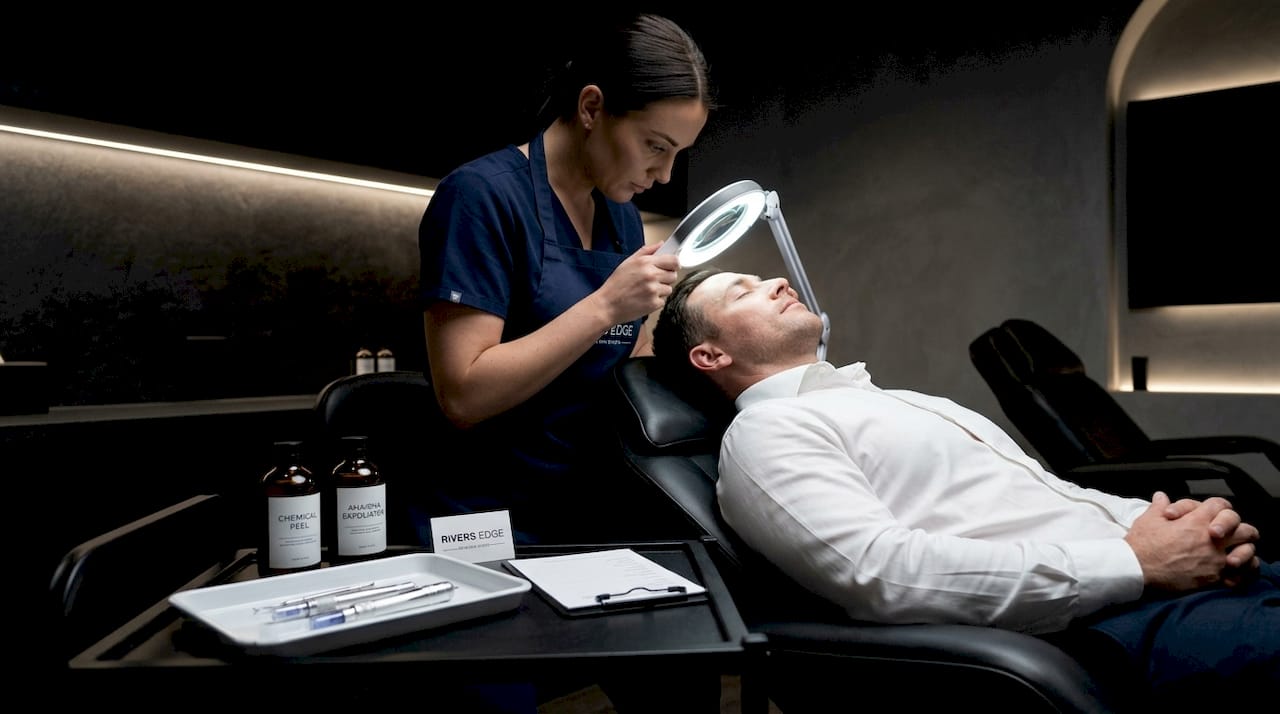
These are where local skincare treatments shift from incremental to genuinely transformative. Chemical peels and microneedling offer high return on investment for men in their 40s and beyond, stimulating collagen production and correcting deeper wrinkles and sun damage that topical products cannot reach. Microneedling in particular suits male skin well because the thicker dermis can handle the treatment effectively while delivering strong collagen remodelling results. Read the full microneedling guide for men if you're considering this route.
The male liquid facelift
One of the fastest-growing procedures among men is the liquid facelift. Combining dermal fillers and neuromodulators addresses volume loss and facial hollowing with minimal downtime. Critically, injection strategies for men prioritise masculine structure support at the jawline and chin rather than volume-heavy filling, which keeps results looking natural rather than treated. This is the distinction that separates a good clinic from a generic one.
Pro Tip: Ask any clinic specifically about their experience treating male patients. Injection technique for men differs from female patients, and practitioners without this experience will default to approaches that do not suit masculine facial structure.
| Treatment | Best for | Frequency | Downtime |
|---|---|---|---|
| Retinol (0.25-0.5%) | Fine lines, skin texture | 2-3 nights per week | Minimal (initial flaking possible) |
| Vitamin C serum | Brightening, sun damage | Daily (AM) | None |
| Chemical peel | Deeper wrinkles, uneven tone | Every 4-6 weeks | 3-5 days |
| Microneedling | Collagen renewal, scarring | Every 4-6 weeks | 24-48 hours |
| Liquid facelift | Volume loss, jaw definition | Every 6-18 months | Minimal |
Managing excessive sweating and other common concerns
Excessive sweating, known clinically as hyperhidrosis, affects a significant number of men and is not simply a hygiene issue. It's a physiological condition that can cause real discomfort and knock confidence in professional and social settings. The practical gap many men experience is not knowing that effective local clinical options exist.
Botulinum toxin injections and miraDry are both clinically proven approaches that reduce sweat production safely. Botulinum toxin is injected into the underarm, palms, or soles and works by blocking the nerve signals that trigger sweat glands. Results typically last four to six months. miraDry uses thermal energy to permanently reduce underarm sweat glands, offering a longer-term solution for men who find the maintenance of repeat injections inconvenient.
Beyond hyperhidrosis, several other concerns come up consistently in men's skin care:
- Post-shave irritation. A fragrance-free, alcohol-free aftershave balm with centella asiatica or allantoin calms inflammation without stripping the barrier.
- Oiliness and enlarged pores. Salicylic acid cleansers used two to three times per week help clear congestion without over-drying.
- Ingrown hairs. Glycolic acid toner applied after shaving reduces the frequency of ingrown hairs by accelerating surface cell turnover.
- Dull, tired skin. A skin rejuvenation treatment such as a HydraFacial offers rapid brightening and hydration with zero downtime, making it practical for men with busy schedules.
The common thread across all these concerns is that targeted, locally available treatments exist for each one. You do not need to accept these issues as permanent features of male skin.
Building a practical daily and clinic routine
Knowing which treatments exist is one thing. Knowing how to fit them into your actual life is where most men either succeed or quietly give up after a week. The answer is a routine that is simple enough to do consistently and sequenced correctly so products actually work.
Here's a practical framework:
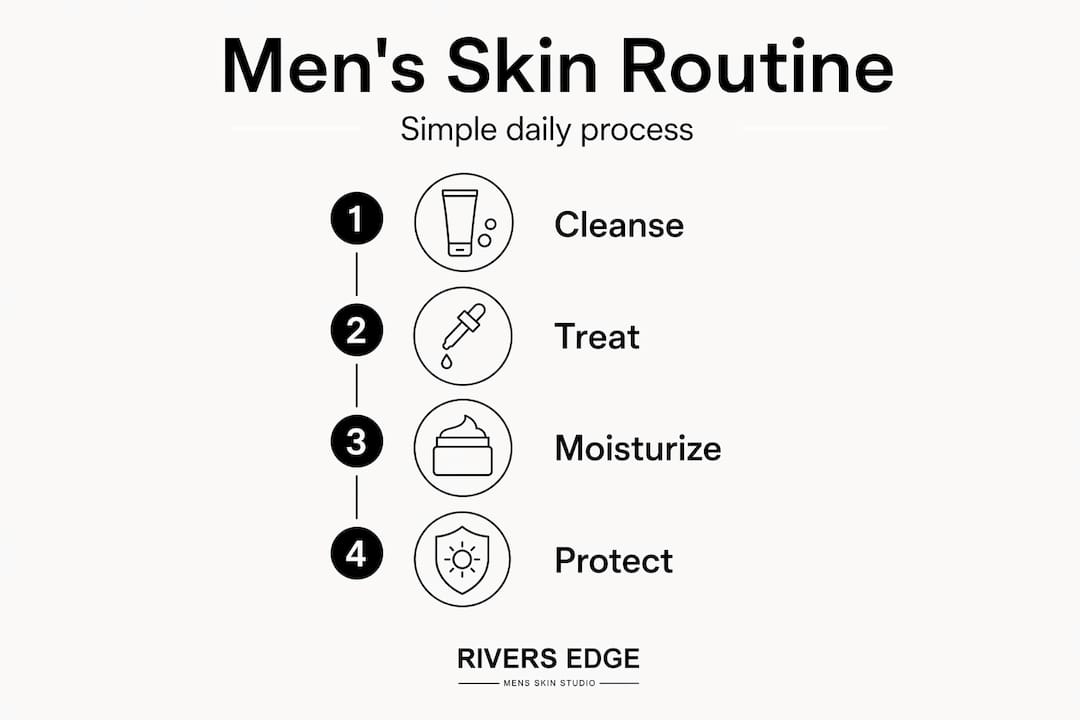
- Morning. Cleanse with a gentle, pH-balanced wash. Apply vitamin C serum. Follow with a lightweight moisturiser. Finish with SPF 30 or higher. Daily SPF prevents 80% of visible premature ageing caused by UV radiation, making it the single step you cannot skip.
- Evening. Cleanse. Apply niacinamide serum if your skin is oily or sensitised from shaving. Apply retinol on your designated nights. Finish with a slightly richer moisturiser than your morning one.
- Wait between layers. Apply products thinnest to thickest and wait sixty seconds between applications. Skipping this step causes pilling and reduces SPF effectiveness significantly.
- Clinic visits. For maintenance, one to two professional treatments per quarter keeps your skin in genuinely good condition. Think of it as a service interval rather than a luxury.
Pro Tip: Keep your routine to five products or fewer. Complexity is the enemy of consistency, and a three-step routine done every day outperforms a ten-step routine done twice a week every time.
Common mistakes to avoid include mixing retinol with vitamin C in the same application (use vitamin C in the morning and retinol at night), skipping moisturiser because your skin feels oily, and using alcohol-based toners that disrupt the very barrier you're trying to repair. For a deeper look at how to combine home and professional care, the professional vs home skincare comparison is a useful reference.
My honest view on men's local skin treatments
I've worked with men across a wide age range, and the pattern I see most often is not that they don't care about their skin. It's that they've been given advice that wasn't designed for them, tried it, got poor results, and concluded that skincare simply doesn't work for them.
What I've found is that subtle, structurally focused treatments consistently produce the best outcomes for male clients. Men don't want to look treated. They want to look well-rested, sharp, and their age rather than ten years past it. The liquid facelift trend reflects this shift. Men are choosing procedures that reinforce what's already there rather than dramatically change it.
In my experience, the men who get the best results are not those who throw money at every new treatment. They're the ones who commit to a simple home routine and make professional treatments a regular habit rather than an emergency measure. Consistency is the ingredient nobody sells you but everybody needs.
If you're in your 20s and reading this, start with SPF and a barrier-supportive routine now. If you're in your 40s or 50s, there are professional treatments available locally that can genuinely turn back visible ageing without anyone knowing you've had anything done. The gap between "doing nothing" and "doing the right things" is smaller than you think. It just requires choosing the right guidance.
— David
Riversedgeskinstudio: men's skin treatments near you
If this guide has made one thing clear, it's that generic skincare advice rarely cuts it for male skin. You need treatments designed around your biology, your lifestyle, and your specific concerns, whether that's deeper lines, excessive sweating, or skin that simply hasn't responded to anything you've tried at home.

Riversedgeskinstudio specialises exclusively in men's aesthetic and skin treatments. From anti-ageing and rejuvenation services including microneedling, chemical peels, and HydraFacials, to botulinum toxin for hyperhidrosis and liquid facelifts, every treatment is planned around what male skin actually needs. The clinic operates with a personalised consultation process, so you won't be handed a one-size-fits-all package. You'll leave with a clear plan suited to your skin type, age, and goals. To explore the full range of men's treatments available and book your consultation, visit Riversedgeskinstudio today.
FAQ
What local treatments suit men's skin best?
Chemical peels, microneedling, HydraFacials, and botulinum toxin injections are among the top local treatments for men, addressing ageing, rejuvenation, and excessive sweating with clinically proven results.
How often should men book professional skin treatments?
One to two professional treatments per quarter maintains skin health consistently, though the exact frequency depends on the treatment type and your specific concerns.
Can botulinum toxin really stop excessive sweating?
Yes. Botulinum toxin injections block the nerve signals that trigger sweat glands and typically reduce sweating for four to six months per treatment session.
At what age should men start using retinol?
You can introduce retinol in your late 20s as a preventive measure. Start at 0.25% two to three nights per week and increase concentration gradually over three months.
Is SPF really that important for men's skin?
UV radiation causes approximately 80% of visible premature ageing, making daily SPF 30 or higher the single most impactful step in any men's skincare routine.