

Men's facial rejuvenation options in 2026 are more effective, more targeted, and more accessible than at any previous point in aesthetic medicine. The field now covers four distinct treatment categories: injectables such as botulinum toxin and dermal fillers, energy-based devices like Ultherapy and fractional CO2 lasers, regenerative therapies including PDGF and exosome treatments, and specialist facials such as HydraFacial. Each category addresses different concerns, timelines, and budgets. This guide covers the top options available to men aged 30–55 who want natural, masculine results without dramatic or feminising changes.
1. What are the most effective non-surgical injectable treatments?
Botulinum toxin (commonly known by the brand name Botox) is the most widely used injectable for men seeking to reduce dynamic wrinkles around the forehead, eyes, and brow. It works by relaxing the specific muscles that create expression lines, producing a refreshed appearance without altering the fundamental structure of the face. For men, the goal is softening rather than freezing, and an experienced practitioner will calibrate dosage to preserve masculine facial movement.
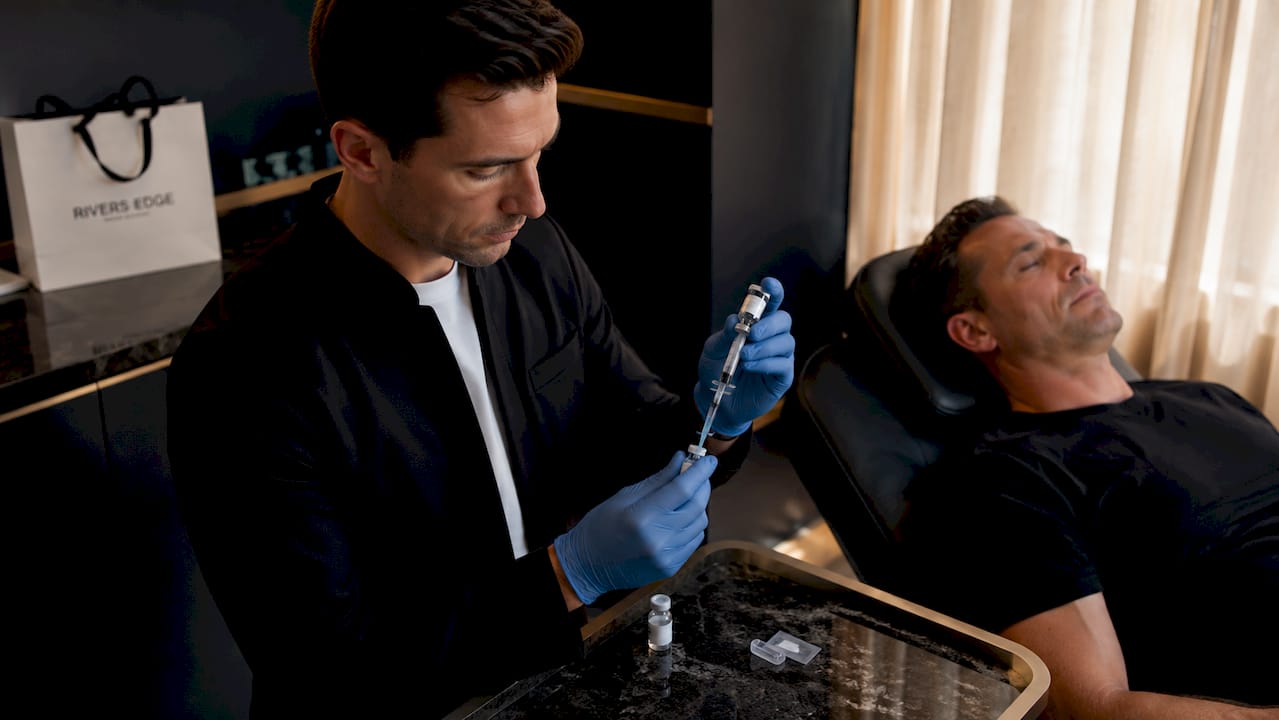
Dermal fillers serve a different purpose. They restore volume lost through ageing and can contour the jawline, chin, and temples. The male liquid facelift uses injectables precisely in these areas to sharpen masculine features without feminising the face. Hyaluronic acid fillers deliver immediate results, while biostimulators like Sculptra and Radiesse take a different approach.
Sculptra and Radiesse stimulate the body's own collagen production rather than simply adding volume. Results develop gradually over several months, which suits men who want changes that look natural rather than sudden. Two syringes of a biostimulator typically cost between £950 and £1,600, depending on the product and clinic.
- Botulinum toxin: Reduces forehead lines, crow's feet, and frown lines. Results last 3–4 months.
- Hyaluronic acid fillers: Immediate volume and contouring. Results last 9–18 months.
- Sculptra / Radiesse: Gradual collagen stimulation. Results develop over months and last up to 2 years.
- Polynucleotide injections: Skin quality improvement through cellular repair. Costs start around £950 per session.
Session costs for injectables generally range from £350 to £950 per session, with polynucleotide treatments and biostimulators at the higher end. That range reflects both the complexity of the treatment and the expertise required to achieve masculine, natural-looking outcomes.
Pro Tip: Book a consultation before committing to any injectable. A practitioner who asks about your aesthetic goals rather than immediately recommending a product is the one worth trusting.
2. How do energy-based devices improve men's skin?
Energy-based treatments address concerns that injectables cannot: skin laxity, uneven texture, sun damage, and redness. Men's skin is approximately 25% thicker than women's, which means it responds well to device-based treatments but may require adjusted settings and slightly longer recovery windows.
Ultherapy, fractional CO2 lasers, and IPL are the three most clinically established options in this category. Each targets a different layer of the skin and a different concern.
- Ultherapy (focused ultrasound): Lifts and tightens by stimulating collagen in the deep tissue layers. No surface damage. One session produces gradual improvement over 3–6 months.
- Fractional CO2 laser: Resurfaces the outer skin layers to reduce wrinkles, acne scarring, and sun damage. Requires 3–5 days of downtime. Results are significant after a single session.
- Intense Pulsed Light (IPL): Targets pigmentation, redness, and broken capillaries. Minimal downtime. Typically requires 3–5 sessions for full effect.
- Radiofrequency microneedling (e.g., Morpheus8): Combines microneedling with radiofrequency energy to tighten skin and stimulate collagen simultaneously. Particularly effective for jawline laxity in men aged 40 and above.
Combining Ultherapy with a fractional laser in the same treatment plan produces results that neither achieves alone. Ultherapy addresses structural laxity deep in the tissue while the laser refines the surface. This layered approach is increasingly standard in men's advanced aesthetic treatments at specialist clinics.
3. Which regenerative treatments work best for men under 50?
Regenerative aesthetic treatments are the most significant development in men's skincare in recent years. Unlike injectables or lasers, they work by activating the skin's own repair mechanisms rather than adding a foreign substance or removing tissue.
PDGF (platelet-derived growth factor) therapy and exosome therapy are the two leading options. PDGF therapy uses concentrated growth factors derived from platelets to stimulate fibroblast activity, which increases collagen and elastin production. Exosome therapy delivers cell-signalling molecules that instruct skin cells to behave as they did in younger tissue. Both treatments produce gradual, structural improvements rather than immediate visible changes.
Regenerative treatments work best for men under 50 who are noticing the first signs of ageing: mild laxity, dullness, fine lines, and loss of skin density. The recommended protocol is 2–3 sessions spaced several months apart. That spacing allows the collagen remodelling process to complete before the next session builds on it.
Think of regenerative therapy as exercise for the skin. A single session produces some benefit, but a consistent programme over 12–18 months produces structural changes that last. This is why experts recommend starting in your 30s rather than waiting until correction becomes necessary.
- Book an initial consultation to assess skin density, laxity, and early ageing markers.
- Complete a baseline course of 2–3 sessions spaced 6–8 weeks apart.
- Allow 3–6 months for collagen remodelling to produce visible results.
- Maintain with annual top-up sessions to sustain structural integrity.
PDGF therapy costs typically range from £350 to £800 per session. That investment makes most sense as a preventative measure rather than a corrective one. Men who start at 35 will spend less over a decade than those who wait until 50 and require more intensive correction.
Pro Tip: Ask your practitioner whether exosome therapy is available as an add-on to microneedling. The combination significantly increases the depth of cellular signalling and produces faster visible improvement.
4. What are the best facials for men's skin in 2026?
Professional facials are not a luxury add-on. For men with thicker, oilier skin prone to congestion and razor irritation, a targeted facial is a clinical tool that prepares the skin for other treatments and maintains results between sessions.
HydraFacial and vitamin C facials are the most popular choices for men in 2026. HydraFacial combines deep cleansing, exfoliation, and hydration in a single 30-minute session with no downtime. Vitamin C facials deliver antioxidant protection and brightening while calming post-shave inflammation. Both are suitable for monthly maintenance.
The daily skincare routine that supports these treatments is straightforward: cleanser, SPF, retinol, niacinamide, and vitamin C serum. Daily SPF use alone reduces visible ageing by 80% by age 40. That single statistic makes SPF the highest-return product in any man's routine.
| Concern | Recommended facial | Supporting daily product |
|---|---|---|
| Dullness and uneven tone | Vitamin C facial | Vitamin C serum |
| Congestion and oiliness | HydraFacial | Niacinamide serum |
| Fine lines and texture | Collagen-boosting facial | Retinol (start at 0.25%) |
| Razor burn and redness | Calming / anti-inflammatory facial | Fragrance-free moisturiser with SPF |
Consistent skincare amplifies the results of every professional treatment you invest in. A practitioner can resurface your skin with a laser, but if you return to a routine that strips and dehydrates it, the results will fade faster than they should. For a structured starting point, the guide on starting a men's skincare routine covers the fundamentals clearly.
5. How do you choose the right treatment for your goals and budget?
Combination treatment plans tailored to individual goals produce better results than any single treatment in isolation. The right starting point depends on your age, primary concern, available downtime, and budget.
| Treatment | Invasiveness | Downtime | Cost per session | Results duration |
|---|---|---|---|---|
| Botulinum toxin | Very low | None | £200–£450 | 3–4 months |
| Dermal fillers | Low | 1–2 days | £350–£700 | 9–18 months |
| HydraFacial | None | None | £100–£180 | 4–6 weeks |
| Fractional CO2 laser | Moderate | 3–5 days | £500–£1,200 | 12–24 months |
| PDGF / exosome therapy | Low | None | £350–£800 | 12–18 months |
| Ultherapy | Low | None | £800–£2,000 | 12–18 months |
Men in their 30s with early signs of ageing get the most value from regenerative therapies combined with a daily SPF and retinol routine. Men in their 40s typically benefit from adding botulinum toxin for dynamic lines and a biostimulator for volume. Men in their 50s often see the greatest improvement from a combination of Ultherapy, fillers, and a resurfacing laser.
A skin consultation with a qualified practitioner removes the guesswork. It maps your specific concerns to the treatments most likely to address them, within a budget and timeline that suits your life.
Key takeaways
The most effective approach to men's facial rejuvenation in 2026 combines professional treatments with a consistent daily skincare routine, starting as early as your 30s for long-term structural benefit.
| Point | Details |
|---|---|
| Start regenerative treatments early | PDGF and exosome therapy produce the best results when started in the 30s as prevention. |
| Injectables require male-specific technique | Botulinum toxin and fillers must be calibrated to preserve masculine facial structure. |
| Daily SPF is non-negotiable | SPF use reduces visible ageing by 80% by age 40, making it the highest-return daily product. |
| Combination plans outperform single treatments | Layering injectables, devices, and facials produces results no single treatment achieves alone. |
| Consultation determines the right path | Age, skin condition, budget, and lifestyle all affect which treatments deliver the best outcome. |
What I've learned about men and aesthetic treatments
The biggest shift I've observed over the past few years is not in the treatments themselves. It's in the men walking through the door. They are better informed, more specific about what they want, and far less likely to be swayed by trends. That is a good thing. It means the conversation in the consultation room has become more honest.
43% of men report being not open at all to cosmetic procedures. That figure tells you something important: the barrier is not awareness, it is trust. Men who do seek treatment want to feel that the practitioner understands masculine aesthetics, not just aesthetics in general. The difference matters enormously in outcomes.
What I find genuinely exciting about 2026 is the rise of prevention-focused regenerative therapies. For the first time, men in their 30s have a credible reason to engage with professional skincare before they have anything to correct. That changes the entire relationship with aesthetic medicine. It stops being about fixing a problem and starts being about maintaining what you have.
My honest advice: do not wait until the lines are deep or the laxity is pronounced. The men who get the best results are those who start early, stay consistent, and treat professional treatments as part of a broader health routine rather than a one-off fix.
— David
Riversedgeskinstudio: specialist men's skin treatments
Riversedgeskinstudio is a specialist men's skin clinic offering the full range of treatments covered in this guide, from anti-wrinkle injections and dermal fillers to HydraFacials, microneedling, and regenerative therapies. Every treatment plan is built around your specific concerns, skin type, and goals, with natural, masculine results as the standard.

The clinic's practitioners understand male skin and male aesthetics. You will not be offered a generic protocol. If you are ready to find out which treatments suit you, explore the full range of men's skin treatments at Riversedgeskinstudio and book a consultation that puts your goals first.
FAQ
What is the most popular facial rejuvenation treatment for men in 2026?
Botulinum toxin remains the most widely used treatment, followed by HydraFacial for maintenance and PDGF therapy for men seeking regenerative, prevention-focused results.
How much do men's facial rejuvenation treatments cost?
Costs range from approximately £100 per HydraFacial session to over £2,000 for a single Ultherapy treatment. Most men spend between £300 and £800 per session depending on the treatment chosen.
At what age should men start facial rejuvenation treatments?
Regenerative therapies like PDGF and exosome treatments are most effective when started in the 30s as a preventative measure, before significant ageing signs appear.
Do men's facial treatments look natural?
Yes, when performed by a practitioner experienced in male aesthetics. The focus is on preserving masculine facial structure while softening lines and restoring volume, not on dramatic transformation.
How do I combine professional treatments with a home skincare routine?
Daily use of SPF, retinol, and niacinamide forms the foundation. Professional treatments build on that base, and combining skincare treatments correctly significantly extends the results of every clinic visit.