
A men's skincare routine is defined as a daily sequence of cleansing, moisturising, and sun protection that takes under five minutes and works for every skin type. The foundational three-step routine of a gentle cleanser, moisturiser, and broad-spectrum SPF 30+ is the most evidence-backed starting point for men aged 18 to 45. Whether your concern is early ageing, oily skin, or excessive sweating, the same core principles apply. This guide walks you through every step, from choosing your first products to safely adding treatments like retinol, with practical advice for men who sweat heavily or have sensitive skin.
What products do you need to start a men's skincare routine?
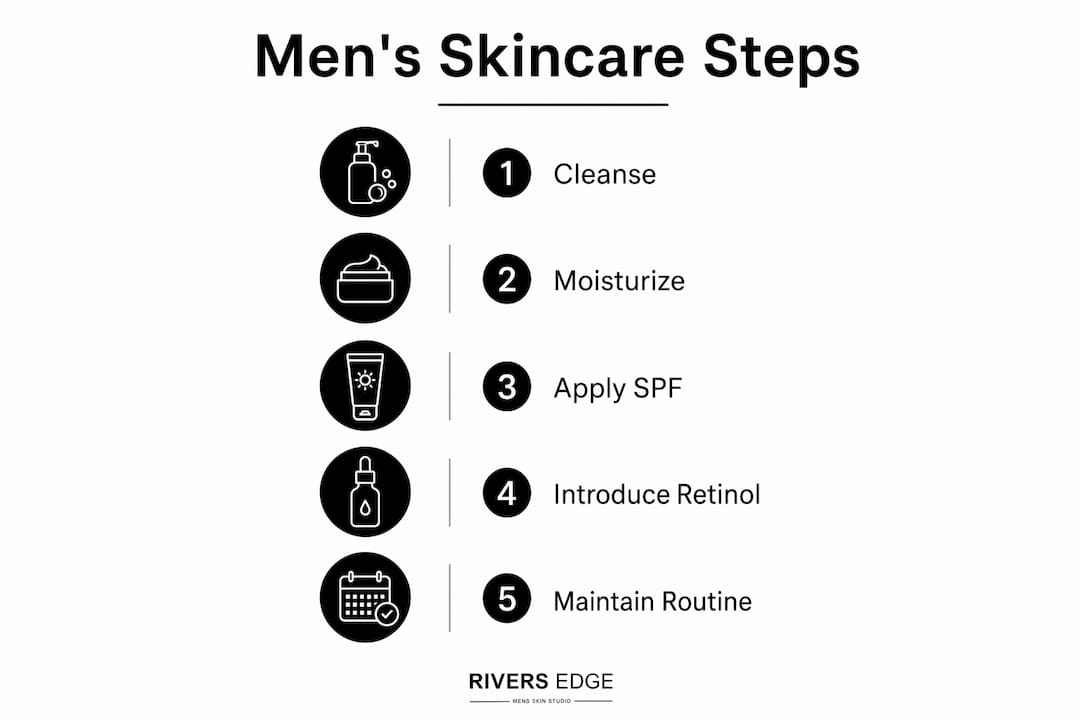
The right products do not need to be expensive or complicated. Three categories cover everything a beginner needs: a cleanser, a moisturiser, and a sunscreen.
Choosing a cleanser
A gentle, pH-balanced cleanser removes dirt, oil, and pollution without stripping the skin barrier. Fragrance-free formulas are the safest starting point because fragrance is one of the most common causes of contact irritation in men with reactive skin. Gel cleansers suit oily or combination skin, while cream or milk cleansers work better for dry or sensitive types. CeraVe Hydrating Cleanser and La Roche-Posay Toleriane Hydrating Gentle Cleanser are two widely available options that meet these criteria.
Selecting a moisturiser by skin type
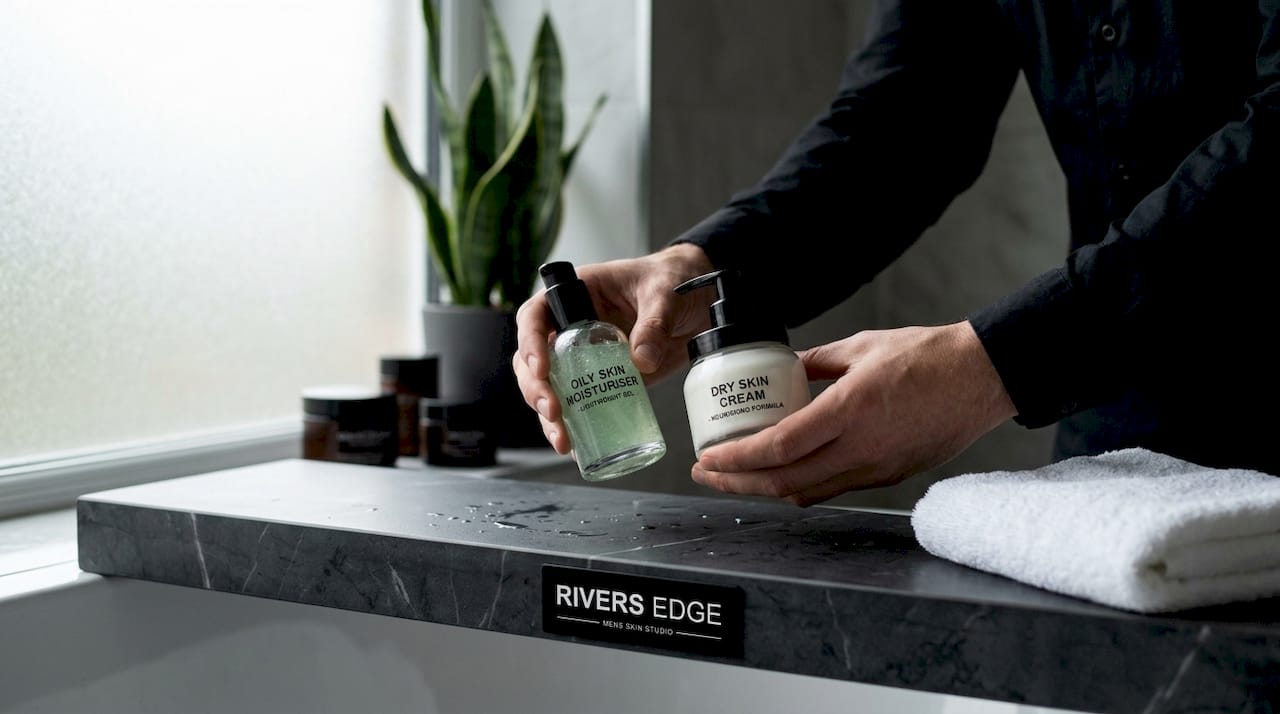
Moisturiser is non-negotiable regardless of skin type. Oily skin benefits from lightweight, oil-free gels containing hyaluronic acid or niacinamide. Dry skin responds better to thicker creams with ceramides or shea butter. Sensitive skin does best with fragrance-free, minimal-ingredient formulas. For men starting out, a single moisturiser used consistently morning and night delivers more benefit than rotating between several products. You can find detailed guidance on men's skin formulations to match your specific skin type.
Sunscreen: the most skipped step
SPF is the single product with the most evidence behind it for preventing premature ageing and skin damage. Apply a broad-spectrum SPF 30+ every morning as the final step in your routine, using roughly a teaspoon for the face and neck. Lightweight fluid formulas from brands like Altruist, Bondi Sands SPF 50 Fragrance Free, or Eucerin Sun Oil Control sit well under stubble and do not leave a white cast. Skipping SPF while using any active treatment, including retinol, accelerates the skin damage you are trying to reverse.
| Product type | Key ingredients to look for | Best for |
|---|---|---|
| Gentle cleanser | Ceramides, glycerin, no fragrance | All skin types |
| Lightweight moisturiser | Hyaluronic acid, niacinamide | Oily or combination skin |
| Rich moisturiser | Ceramides, shea butter, squalane | Dry or sensitive skin |
| Broad-spectrum sunscreen | SPF 30+, zinc oxide or chemical filters | Daily use, all skin types |
| Optional serum | Retinol, vitamin C, niacinamide | Targeted concerns (ageing, pigmentation) |
Pro Tip: Start with the cleanser and moisturiser for the first week before adding SPF. This lets you identify any reactions before introducing a new product.
How do you build daily skincare habits that actually stick?
Consistency is the variable that separates men who see results from those who give up after two weeks. Skin turnover takes approximately 28 days, which means you need at least four weeks of daily use before judging whether a product is working. Expecting results in three days is the most common reason men abandon routines that would have worked.
The most reliable method for building a skincare habit is habit stacking. Attach your routine to something you already do without thinking, such as brushing your teeth. Place your cleanser next to your toothbrush. The proximity cue removes the decision-making friction that causes most routines to collapse.
Here is a practical morning and evening schedule that takes under five minutes:
- Morning: Rinse face with cool water or use your cleanser if you exercised or sweated overnight. Apply moisturiser while skin is still slightly damp. Finish with SPF 30+ as the final step.
- Evening: Cleanse to remove SPF, pollution, and sebum. Apply moisturiser. Once your skin is stable after four weeks, this is where you add any active treatment.
- Weekly check-in: Assess how your skin feels. Tightness means your cleanser is too harsh. Persistent shine by midday suggests you need a lighter moisturiser or a mattifying formula.
A common mistake is underapplying sunscreen. Most men use roughly half the recommended amount, which cuts the effective SPF protection significantly. A full teaspoon for the face and neck is the correct quantity. Understanding why skincare results vary helps set realistic expectations and prevents premature product switching.
Pro Tip: Keep your skincare products on the bathroom counter, not in a drawer. Visibility is one of the strongest habit triggers.
How do you safely introduce retinol and advanced treatments?
Retinol is the most clinically supported over-the-counter ingredient for reducing fine lines, improving skin texture, and addressing uneven tone. The mistake most men make is starting too strong, too fast. Retinol introduction should begin at 0.025 to 0.03% once per week, building gradually to nightly use over approximately 12 weeks. Rushing this process causes redness, peeling, and barrier damage that sets your skin back rather than forward.
The sandwich method is the most effective technique for reducing retinol irritation during the first months of use. Apply your moisturiser first, wait two minutes, apply a pea-sized amount of retinol, then apply moisturiser again on top. This buffered application reduces irritation by 30 to 40% without meaningfully reducing the ingredient's effectiveness. It is the approach most dermatologists recommend for men with sensitive or reactive skin.
Key points to follow when introducing retinol:
- Use retinol in the evening only. UV exposure degrades the molecule and increases photosensitivity.
- Apply SPF every morning without exception. Tretinoin and retinol require strict sun protection to avoid worsening the skin damage they are designed to treat.
- Expect a purging phase of two to four weeks where skin may look temporarily worse. This is normal and resolves.
- Do not add niacinamide, vitamin C, or acids in the same week you start retinol. Introduce one active at a time, with four weeks between additions.
Retinol irritation is almost always a dosing and frequency problem, not an incompatibility with your skin. Slow the schedule down before you abandon the product entirely.
Adding multiple actives at once is the single most common reason men experience irritation and quit. Fix your three-step baseline routine for four weeks first, then add one targeted treatment. This approach also makes it far easier to identify which product caused a reaction if one occurs. For men considering prescription-strength retinoids, a guide to local treatments for men's skin covers what to expect from clinical options.
Pro Tip: Write the date on your retinol bottle when you open it. Tracking your escalation schedule removes guesswork and keeps you on the 12-week plan.
How do men with excessive sweating manage their skincare routine?
Hyperhidrosis, the clinical term for excessive sweating, affects roughly 3% of the population and creates specific challenges for skincare. Sweat dilutes and displaces products before they can absorb, making SPF application particularly unreliable. The good news is that targeted adjustments to your routine solve most of these problems without requiring a completely different product set.
Antiperspirant management comes first. Aluminium chloride at 20 to 25% applied to completely dry skin at night, then washed off in the morning, reduces sweating within up to six weeks of consistent use. Clinical-strength antiperspirants such as Driclor or Odaban are available without prescription and represent the first step in the medical management ladder for hyperhidrosis. Applying to damp skin reduces efficacy and increases the risk of irritation.
For sunscreen specifically, sweat-resistant gel or fluid formulas improve both tolerability and staying power on sweaty skin. Apply sunscreen to cool, dry skin, ideally after blotting the face with a clean tissue. Reapplication mid-day is more important for men with hyperhidrosis than for those with normal sweat levels, as perspiration physically removes SPF from the skin surface.
| Challenge | Recommended approach |
|---|---|
| SPF sliding off sweaty skin | Use gel or fluid SPF 50, apply to blotted dry skin |
| Antiperspirant irritation | Apply to completely dry skin at night, wash off in morning |
| Moisturiser pilling | Use a lightweight gel moisturiser, allow full absorption before SPF |
| Reapplication during the day | Carry SPF powder or blotting SPF spray for top-ups |
Integrating sweat management with your anti-ageing steps is straightforward once the sequence is correct. Apply antiperspirant the night before. In the morning: blot, cleanse lightly if needed, apply lightweight moisturiser, wait two minutes, then apply sweat-resistant SPF. This sequence keeps each product in contact with the skin long enough to function. For men combining skin rejuvenation treatments with hyperhidrosis management, post-treatment skincare guidance covers how to protect treated skin while managing sweat.
Key takeaways
A men's skincare routine built on cleansing, moisturising, and daily SPF delivers measurable improvements in skin health within four weeks, with targeted treatments added progressively for lasting results.
| Point | Details |
|---|---|
| Start with three steps | Cleanser, moisturiser, and SPF 30+ form the non-negotiable foundation for all skin types. |
| Allow four weeks before judging | Skin turnover takes 28 days, so results require consistent daily use before switching products. |
| Introduce retinol slowly | Begin at 0.025% once weekly, use the sandwich method, and always apply SPF the following morning. |
| Adapt for hyperhidrosis | Apply aluminium chloride antiperspirant to dry skin at night and use sweat-resistant gel SPF in the morning. |
| Add one active at a time | Introducing multiple treatments simultaneously causes irritation and makes it impossible to identify the trigger. |
What I have learned from working with men starting their first routine
The men who get the best results are almost never the ones who spend the most money or buy the most products. They are the ones who do three simple steps every single day without skipping. That observation, repeated across hundreds of consultations, is the most useful thing I can share.
The second pattern I see constantly is impatience. A man starts a retinol, sees some dryness at week two, and concludes it is not working for him. In most cases, he is three weeks away from the adaptation phase ending and the real results beginning. Slowing the schedule down, not stopping entirely, is almost always the right call.
For men with specific concerns like hyperhidrosis or visible ageing, professional advice genuinely changes the outcome. Not because home routines are inadequate, but because a trained clinician can identify whether your skin barrier is compromised, whether your SPF application is actually sufficient, and whether a prescription-strength retinoid would serve you better than an over-the-counter option. The gap between a well-chosen professional treatment and a self-managed routine is significant once you move beyond the basics.
My honest advice: commit to the three-step routine for 30 days before you add anything else. Track how your skin feels each week. Use that information to make one small adjustment at a time. Skincare is not complicated. It just requires patience that most men are not told they will need.
— David
How Riversedgeskinstudio supports men starting their skincare journey
Riversedgeskinstudio is a specialist men's skin clinic offering treatments designed to complement and accelerate the results of your home routine.

Whether you are dealing with early signs of ageing, persistent skin concerns, or excessive sweating, the team at Riversedgeskinstudio builds personalised treatment plans around your specific skin goals. Services include HydraFacials, microneedling, chemical peels, anti-wrinkle injections, and wellness treatments tailored exclusively for male clients. Every plan is results-focused and designed to work alongside the daily habits you are already building. Book a consultation to get a professional assessment of your skin and a clear plan for what comes next.
FAQ
What are the first steps to start a men's skincare routine?
The first steps are a gentle cleanser, a moisturiser suited to your skin type, and a broad-spectrum SPF 30+ applied every morning. This three-step foundation works for all skin types and takes under five minutes.
How long before a men's skincare routine shows results?
Allow at least four weeks before assessing results, as skin cell turnover takes approximately 28 days. Switching products before this window closes is the most common reason routines fail.
When should men add retinol to their routine?
Add retinol only after your three-step routine has been stable for four weeks. Start at 0.025 to 0.03% once per week and build gradually over 12 weeks, always pairing it with daily SPF.
Can men with hyperhidrosis use sunscreen effectively?
Yes. Select a sweat-resistant gel SPF and apply it to blotted, dry skin after your moisturiser has fully absorbed. Reapply mid-day if you sweat heavily, using a powder or spray SPF for convenience.
Do men need different skincare products to women?
Men's skin is on average 25% thicker and produces more sebum, which means lighter textures and oil-controlling ingredients often perform better. That said, the core ingredients, ceramides, hyaluronic acid, retinol, and SPF, work the same way regardless of gender.