
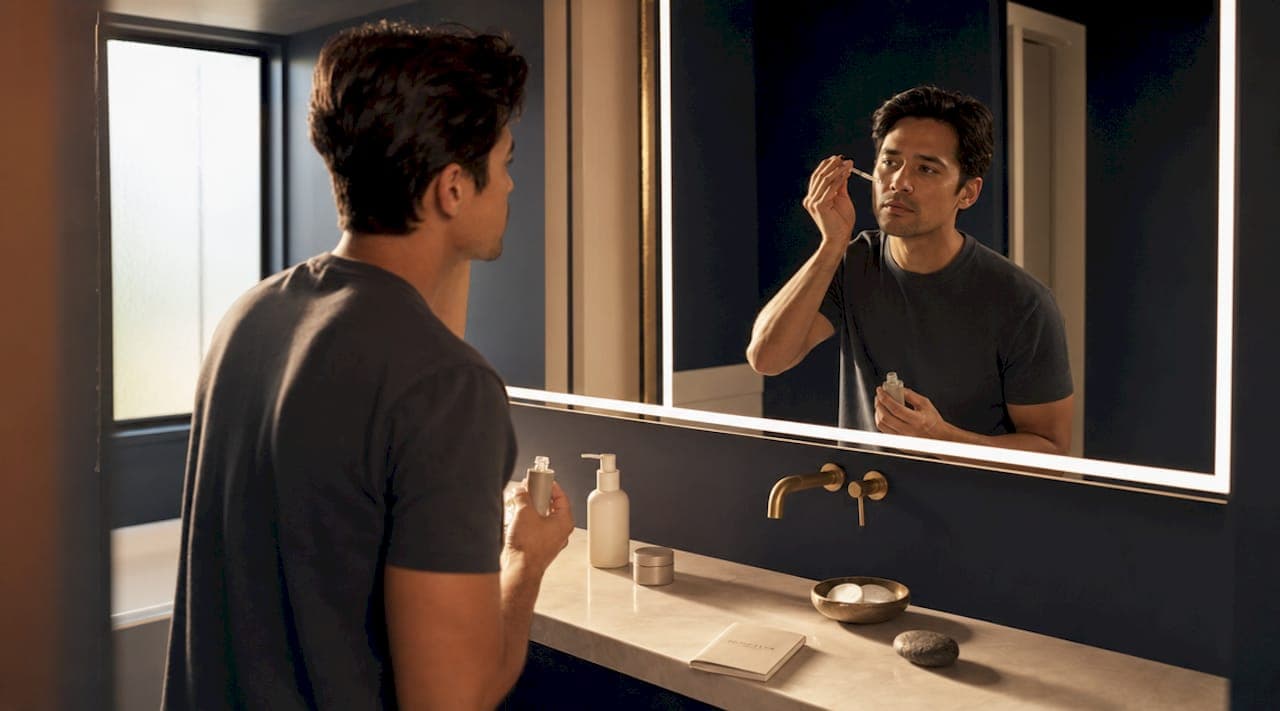
Combining skincare treatments for men means building a consistent core routine of cleansing, moisturising, and SPF, then adding actives like vitamin C and retinoids at the right times to maximise benefits and reduce irritation. The industry term for this process is treatment layering, and it is the difference between a routine that delivers results and one that causes breakouts, redness, or wasted product. Men's skin is generally thicker and oilier than women's, which means it responds well to targeted actives but also tolerates abuse more readily, making it easy to overdo things. The key is sequencing. Get the order and timing right, and you can address ageing, hydration, and overall skin health without irritation.
What is the foundational skincare routine men should build first?
The core routine for men is a three-step daily framework that prepares your skin for any additional treatments you want to layer on top. Without this foundation, adding actives like retinoids or vitamin C serums will either underperform or cause unnecessary irritation. Think of it as the platform everything else runs on.
The three steps are:
- Cleanse. Use a gentle, non-stripping cleanser morning and evening to remove sweat, oil, and environmental debris. Men who shave should cleanse after shaving to clear residue and calm the skin barrier before applying anything else.
- Moisturise. A moisturiser containing ceramides or hyaluronic acid supports the skin barrier and locks in hydration. This step is non-negotiable, even for oily skin types. A compromised barrier makes every active ingredient you apply afterwards more likely to irritate.
- Apply broad-spectrum SPF 30 or higher. Daily UV protection is the single most effective anti-ageing step available without a prescription. Apply it as the final step every morning, after your moisturiser, to form a protective film over everything underneath.
Vogue's men's routine frames the approach as cleanse, serum for specific concerns, moisturiser, then SPF. That structure is worth memorising. Once you can follow it consistently for four to six weeks, your skin is ready for additional treatments.
Pro Tip: Do not add a new active ingredient until the three-step core routine feels automatic. Consistency with the basics produces more visible results than an elaborate routine you follow sporadically.
How to layer active ingredients like vitamin C, retinoids, and niacinamide
Treatment layering is where most men either get great results or create problems for themselves. The three actives you will encounter most often in the best skincare for men are vitamin C, retinoids, and niacinamide. Each has a specific role, a preferred time of day, and rules about what it can sit alongside.
Timing and placement of each active
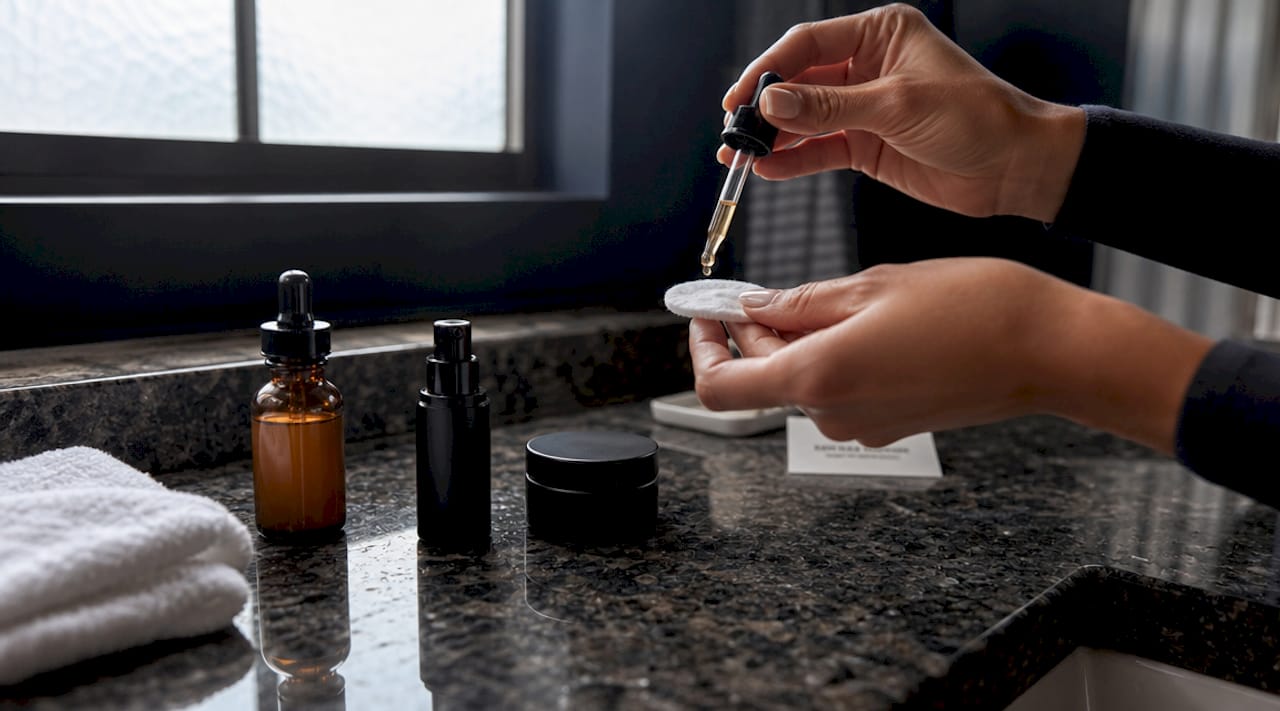
Vitamin C belongs in the morning, applied after cleansing and before moisturiser. It neutralises free radicals generated by UV exposure and pollution, and when paired with SPF it provides synergistic environmental protection that neither ingredient achieves alone. Retinoids, by contrast, are reserved for the evening. They are photosensitive and can cause irritation when exposed to sunlight, so applying them at night and following up with SPF the next morning is the evidence-based approach.
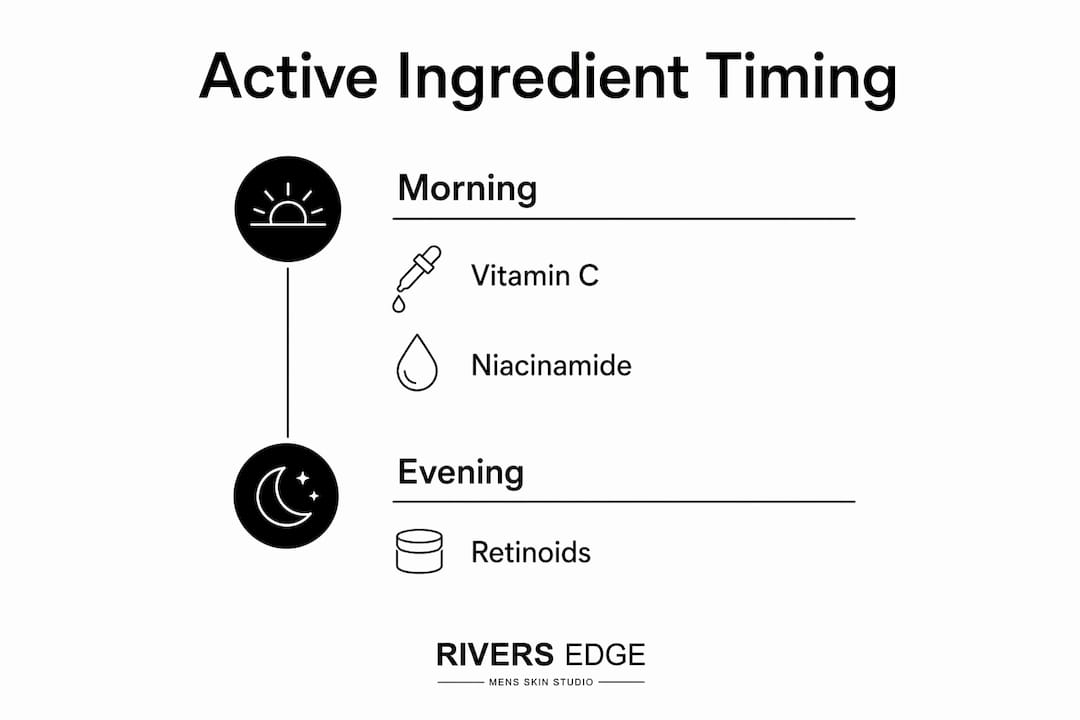
Niacinamide is the most versatile active in any layering routine. It works morning or evening, sits comfortably alongside both vitamin C and retinoids, and delivers benefits including oil control, reduced redness, and improved skin texture. If you are new to actives, niacinamide is the safest starting point.
The table below shows how to schedule these three actives across a typical day:
| Active | Time of day | Apply after | Key benefit |
|---|---|---|---|
| Vitamin C serum | Morning | Cleanser | Antioxidant protection, brightening |
| Niacinamide | AM or PM | Cleanser or vitamin C | Oil control, barrier support |
| Retinoid | Evening only | Cleanser | Collagen support, skin renewal |
| SPF 30+ | Morning (last step) | Moisturiser | UV protection, photoageing defence |
Order of application: thinnest to thickest
Products go on from thinnest to thickest consistency, with SPF always last in the morning. A typical morning sequence runs: cleanser, vitamin C serum, niacinamide serum (if using both), moisturiser, SPF. In the evening: cleanser, retinoid, moisturiser. This order allows each product to absorb properly without the thicker textures blocking lighter ones from reaching the skin.
Pro Tip: Wait 60 to 90 seconds between applying a serum and your moisturiser. This is not about absorption myths. It simply prevents dilution of the active before it has had a chance to settle.
- Apply vitamin C to dry skin for maximum stability
- Use retinoids on dry skin too, as damp skin increases penetration and irritation risk
- Niacinamide can go on slightly damp skin without issue
- Never apply SPF before your moisturiser, as it needs to sit on top to function correctly
How to address specific concerns: ageing, moisture, and skin health
Once your core routine is solid and you have introduced one active without issue, you can start tailoring your combined routine to specific concerns. This is where layering skincare for men becomes genuinely powerful.
For ageing and collagen support, retinoids are the most clinically supported option available without a prescription. Introduce retinoids gradually over an 8 to 12 week ramp-up schedule. Start once weekly for the first two weeks, then move to twice weekly, then every other night, before attempting nightly use. This low-and-slow approach is not optional. It is the method that separates men who stick with retinoids long-term from those who quit after two weeks of peeling.
- Week 1 to 2: Apply retinoid once per week, using a pea-sized amount for the entire face.
- Week 3 to 4: Increase to twice per week if no significant irritation has occurred.
- Week 5 to 8: Move to every other night, monitoring for dryness or redness.
- Week 9 onwards: Attempt nightly use only if your skin has adapted without persistent irritation.
For hydration and barrier repair, pair a ceramide-rich moisturiser with a hyaluronic acid serum applied to damp skin. Hyaluronic acid draws moisture into the skin, while ceramides seal it in. This combination is particularly useful for men who use retinoids, as both actives can temporarily compromise the skin barrier during the adjustment period.
For environmental defence and brightening, the vitamin C and SPF pairing is the most effective morning combination available. SPF blocks UV radiation while vitamin C neutralises oxidative stress from free radicals. Together they form a comprehensive shield against photoageing. This is not a luxury addition. For men spending time outdoors, it is the most practical anti-ageing investment in the routine.
For oil control and overall skin health, niacinamide applied morning or evening reduces sebum production and calms post-shave redness. It also makes the skin more tolerant of other actives, which is why practitioners often recommend it as a buffer ingredient when introducing retinoids.
Occasional treatments like clay masks or chemical exfoliants (glycolic or lactic acid) can be added once or twice weekly, but never on the same night as a retinoid. Alternate nights is the standard protocol.
What are the most common mistakes when combining skincare products?
The most frequent error men make when they start combining treatments is adding too many actives at once. Introducing multiple actives simultaneously increases irritation risk and makes it impossible to identify which product caused a reaction. Add one new ingredient at a time, wait two to three weeks, then assess before adding the next.
- Signs of over-irritation: persistent redness, stinging after application, flaking that does not resolve, or a tight, uncomfortable feeling after cleansing
- What to do: drop back to the three-step core routine for one week, then reintroduce the active at a lower frequency
- Patch testing: apply any new product to the inner forearm for three to five days before using it on your face
- Incompatible pairings to avoid: retinoids and exfoliating acids (glycolic, salicylic) on the same evening; high-concentration vitamin C and retinoids in the same application
"Retinoid irritation is the most common failure point in combined routines. A low-and-slow approach combined with strong barrier support is the method that produces long-term success." Retinoid starting protocol
Patience is not a soft recommendation here. Men who rush the introduction of retinoids or stack too many actives in the first month almost always abandon their routine entirely. The men who see genuine results at the six-month mark are the ones who spent the first eight weeks doing very little beyond cleanse, moisturise, and SPF.
For a detailed breakdown of what to do after professional treatments, the post-treatment skincare steps guide from Riversedgeskinstudio covers the recovery protocols that protect your results.
Key takeaways
Effective treatment layering for men requires a solid three-step foundation, correct timing of actives, and a patient, gradual introduction of stronger ingredients like retinoids.
| Point | Details |
|---|---|
| Build the foundation first | Cleanse, moisturise, and apply SPF daily before adding any active ingredients. |
| Time your actives correctly | Use vitamin C in the morning and retinoids in the evening to maximise each ingredient's benefit. |
| Introduce one active at a time | Adding multiple actives simultaneously increases irritation risk and makes reactions harder to diagnose. |
| Use niacinamide as a buffer | Niacinamide is compatible with most actives and reduces irritation when transitioning to retinoids. |
| Ramp up retinoids slowly | Follow an 8 to 12 week schedule starting at once weekly to build tolerance and avoid contact dermatitis. |
What I have learned from watching men build skincare routines
The men who get the best results from combining treatments are almost never the ones who start with the most products. They are the ones who commit to the boring part first. Cleanser, moisturiser, SPF, done consistently for six weeks, produces more visible improvement than a shelf full of serums used inconsistently.
My honest view is that the skincare industry sells complexity because complexity sells products. But the science-backed approach is straightforward: master the foundation, introduce one active at a time, and give each change at least four weeks before judging it. Most men abandon routines not because the products failed, but because they added too much too fast and got discouraged by irritation or confusion.
Retinoids are worth the effort. The evidence for their role in collagen support and skin renewal is stronger than for almost any other over-the-counter ingredient. But they require patience. I have seen men use a pea-sized amount nightly from week one and wonder why their skin is raw by week three. The gradual frequency increase is not a suggestion. It is the protocol.
The other thing I would say is that professional advice changes the outcome. A skin analysis from a qualified practitioner tells you which actives your skin actually needs, rather than which ones are trending. That personalised starting point saves months of trial and error and, more importantly, protects your skin barrier while you work out what works for you.
— David
Tailored skin treatments for men at Riversedgeskinstudio

Riversedgeskinstudio specialises in men's skin treatments designed around your specific concerns, whether that is ageing, hydration, or overall skin health. The clinic offers expert skin analysis, HydraFacials, chemical peels, microneedling, and personalised treatment plans that complement the at-home routine you are building. Rather than guessing which actives your skin needs, a consultation with the Riversedgeskinstudio team gives you a clear, evidence-based starting point. If you are ready to take your routine beyond the basics, explore the full range of men's skin treatments available at the clinic and book a skin analysis today.
FAQ
What is the correct order to layer skincare products?
Apply products from thinnest to thickest consistency: cleanser, serum (such as vitamin C or niacinamide), moisturiser, then SPF as the final morning step. In the evening, follow cleanser with your retinoid, then moisturiser.
Can you use vitamin C and retinoids together?
Yes, but not at the same time. Use vitamin C in the morning paired with SPF, and apply retinoids in the evening. This timing separation maximises the benefit of each active and reduces irritation risk.
How long does it take for retinoids to work?
Visible improvement in skin texture and tone typically requires 8 to 12 weeks of consistent use. Starting at once weekly and increasing frequency gradually is the recommended protocol to build tolerance.
Is niacinamide safe to use with other actives?
Niacinamide is one of the most compatible actives available and can be used morning or evening alongside vitamin C, retinoids, and hyaluronic acid. It also reduces irritation when you are introducing stronger ingredients like retinoids.
How do you know if you are using too many skincare products?
Persistent redness, stinging after application, or skin that feels tight and uncomfortable after cleansing are signs of over-irritation. Return to the three-step core routine for one week, then reintroduce actives one at a time.