
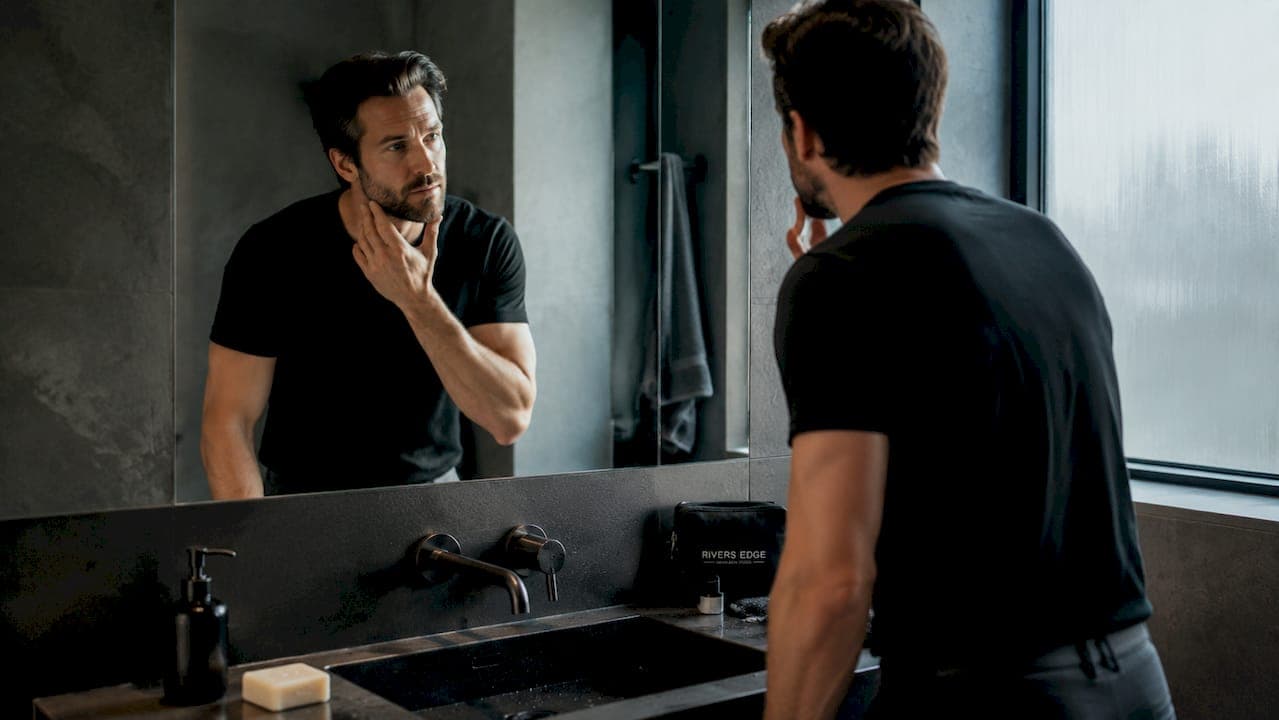
Men delay skincare routines primarily because of social stigma, perceived cost, and a failure to frame skin health as maintenance rather than vanity. These are not minor inconveniences. 71% of men do not maintain consistent skincare routines, and that figure reflects a pattern driven by psychology, culture, and practical barriers that are entirely fixable. Understanding what causes men to delay skincare locally is the first step toward changing it. For men aged 25–45 in Merseyside, the barriers are real but not permanent. Riversedgeskinstudio exists specifically to help local men move past them.
What causes men to delay skincare locally?
The clinical term for this pattern is "skincare avoidance behaviour," and it has identifiable causes. Social stigma sits at the top of the list. At least 40% of men with acne avoid professional treatment because they associate skincare with femininity. That association does not disappear with age. It gets reinforced by peer groups, workplace culture, and decades of marketing that positioned moisturiser as a product for women.
The second major cause is what researchers call "lack of problem legitimisation." Men do not act on a health concern until they perceive it as a real problem. Dry skin, early lines, and sun damage rarely feel urgent. So men wait. They wait until the issue is visible, uncomfortable, or pointed out by someone else. By that point, corrective treatment costs more and takes longer than preventive care would have.
The third cause is practical: cost and complexity. 46% of men cite product cost as a main barrier to starting a routine. That statistic matters because it shows the barrier is not laziness. It is a perceived value calculation that men make without full information.

How do social and cultural norms make men skip skincare?
Traditional masculinity norms are the single most consistent predictor of skincare avoidance in men. Research published in Nature in 2026 confirms that men's skincare behaviours are directly shaped by masculinity ideologies, with older generations showing the strongest resistance. The same research found that Gen Z men are 62% more likely to adopt routines, largely because social media and influencers have reframed grooming as health protection rather than vanity.
For men in their 30s and 40s in Merseyside, the cultural script is still largely the old one. Skincare is something women do. Spending time on your face is self-indulgent. These beliefs are rarely spoken aloud, but they operate as a quiet veto every time a man considers buying a moisturiser or booking a clinic appointment.
Social permission structures matter enormously here. Men often need external validation before they act. That validation typically comes from a partner, a close friend, or a trusted peer who has already started a routine. Without that nudge, most men stay in a holding pattern.
- Traditional masculinity norms directly suppress skincare adoption in men over 30.
- Social stigma is strongest in peer groups where grooming is seen as unmasculine.
- Gen Z men are significantly more open to routines due to shifting cultural norms.
- Partners and close friends are the most common triggers for a man's first clinic visit.
- Online communities and male-focused content creators are accelerating this cultural shift.
Pro Tip: If you are unsure where to start, tell a trusted friend or partner you are considering it. Social permission is a genuine psychological mechanism. Using it is not weakness. It is how most men actually begin.
How do cost and access concerns drive men's skincare procrastination?
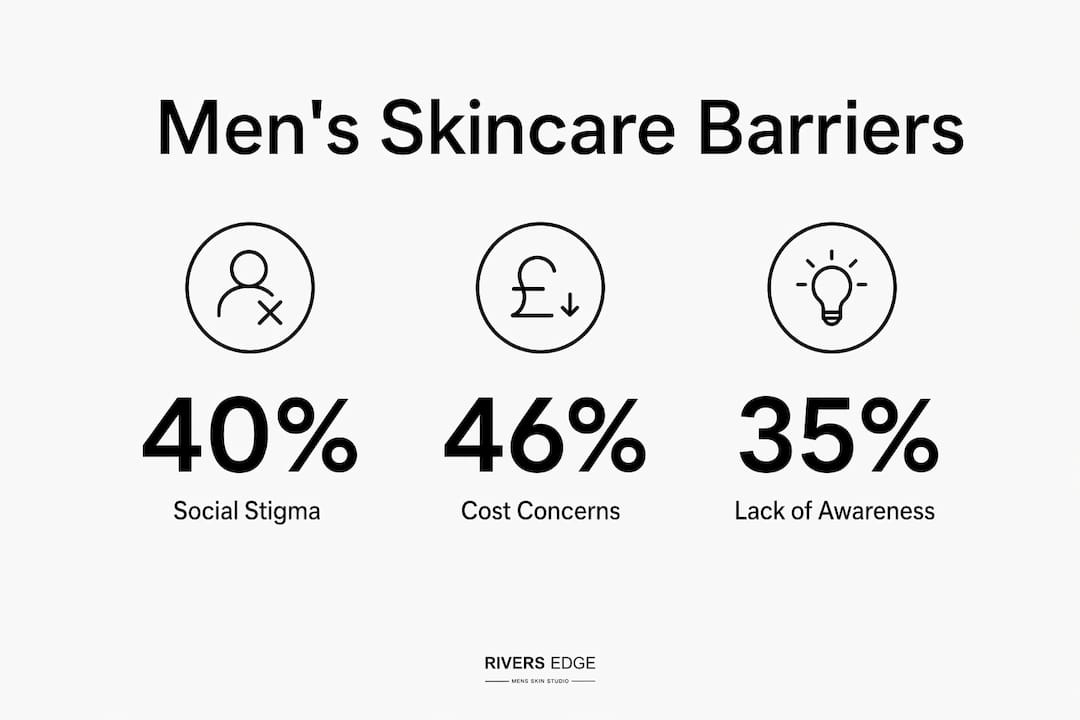
Cost is a concrete barrier, not an excuse. 46% of men name product cost as a primary reason they have not started a routine. In Merseyside, where household budgets are under real pressure, spending £30–£50 on skincare products feels hard to justify when the benefit is not immediately visible.
The cost calculation changes completely when you factor in delay. Men who wait until symptoms advance before seeking professional help face more complex and expensive treatment. A HydraFacial or a course of chemical peels to address years of neglect costs significantly more than a consistent SPF and moisturiser habit started at 30. Preventive care is not a luxury. It is the cheaper option over time.
Accessibility adds another layer. Clinic appointments feel formal, clinical, and time-consuming. Men in full-time work with families often cannot see how a skincare consultation fits into their week. Scheduling friction alone is enough to keep procrastination in place.
Here is what the cost picture actually looks like when you break it down:
- SPF daily use reduces skin cancer risk by 40%, according to dermatological data. A daily SPF 15+ product costs less than a coffee per week.
- A single preventive consultation at a local clinic typically costs far less than a corrective treatment course for acne scarring or sun damage.
- Delaying treatment for conditions like hair thinning or persistent acne increases both the number of sessions required and the total spend.
- Local clinics in Merseyside like Riversedgeskinstudio offer initial consultations focused on lifestyle assessment, not immediate high-cost procedures.
- Simple routines using three products (cleanser, moisturiser, SPF) are available at accessible price points and deliver measurable results.
The benefits of a local skin clinic become clear when you see cost as a long-term equation rather than an upfront expense.
How does the framing of skincare affect men's willingness to engage?
The biggest single lever for changing men's skincare habits is language. The primary barrier to male skincare adoption is not product quality or price. It is the absence of "problem legitimisation," the moment when a man decides his skin concern is real enough to act on. The framing of skincare as beauty or obsession actively prevents that moment from arriving.
Functional language works. Phrases like "skin barrier repair," "UV protection," and "post-shave recovery" resonate with men because they describe a problem and a solution. "Beauty routine" and "glow" do not. Men engage with maintenance framing because it aligns with how they already think about their bodies, through fitness, diet, and physical performance.
"Men perceive skincare as cognitive noise with constantly changing rules. Successful engagement depends on permission structures and functional language rather than beauty jargon." — Expert commentary on male skincare psychology
The fitness analogy is particularly effective. Men who go to the gym already understand that consistent, low-effort daily habits produce long-term results. Skincare works the same way. A cleanser and SPF applied daily for a year produces visible, measurable improvement. That framing removes the vanity association and replaces it with something men already respect: discipline and results.
Pro Tip: Replace "skincare routine" with "skin maintenance" in your own thinking. The language shift is small, but it removes the psychological friction that keeps most men from starting.
The impact of masculinity on skincare is real, but it is not fixed. Framing is the tool that changes it.
What practical skin factors make men avoid starting a routine?
Men's skin has specific biological characteristics that make the wrong products feel punishing. Frequent shaving weakens the skin barrier and causes chronic low-level irritation. When a man then applies an alcohol-based product or a harsh cleanser, the stinging sensation confirms his suspicion that skincare is not for him. He stops. The routine fails before it begins.
Men's skin also produces more sebum than women's, which creates a different set of needs around cleansing and hydration. Without education on this, men either over-cleanse (stripping the barrier further) or skip moisturiser because they assume oily skin does not need it. Both errors lead to worse skin and abandoned routines.
The perception of complexity is its own barrier. Men see a ten-step skincare routine on social media and conclude the whole thing is too much effort. That conclusion is wrong, but it is understandable.
| Myth | Reality |
|---|---|
| Oily skin does not need moisturiser | All skin types need hydration; the right formula matters |
| Skincare requires many products | Three products (cleanser, moisturiser, SPF) cover most needs |
| Shaving counts as exfoliation | Shaving weakens the barrier and requires repair, not just removal |
| Stinging means the product is working | Stinging signals barrier damage; switch to a gentler formula |
| Results appear within days | Consistent use over 6–8 weeks produces visible change |
- Men's thicker skin and higher oil production require specific product formulations.
- Post-shave barrier repair is a genuine clinical need, not a marketing invention.
- A three-product routine is sufficient for most men starting out.
- Stinging or irritation is a sign to change products, not to stop entirely.
How can men in Merseyside overcome skincare procrastination?
The most effective trigger for men starting a skincare routine is a social one. Men often need a nudge from a partner or peer before they attend a clinic or commit to a routine. If you are reading this, you have already received that nudge. The next step is practical.
Local clinics in Merseyside make the process straightforward. Initial consultations at specialist clinics focus on lifestyle and skin health assessment rather than pushing immediate treatments. That means your first appointment is a conversation, not a commitment to a procedure. It removes the pressure that keeps many men from booking.
- Start with SPF. 58% of men rarely or never apply SPF, despite it being the single most effective preventive measure available.
- Add a gentle cleanser and a basic moisturiser. Three products are enough to begin.
- Book a consultation at a local clinic to get a personalised assessment of your specific skin concerns.
- Reframe the habit as maintenance, not beauty. You service your car. Your skin works the same way.
- Use your social network. Tell someone you are starting. Accountability increases follow-through.
Pro Tip: Book your first clinic appointment the same way you would book a GP visit. Treat it as health maintenance, give it a time slot in your diary, and show up. The consultation itself will answer most of the questions that have been keeping you from starting.
Learning how to start a men's skincare routine does not require expertise. It requires a decision and a first step.
Key takeaways
Men delay skincare locally because of social stigma, cost misperception, and the absence of functional framing that positions skin health as maintenance rather than vanity.
| Point | Details |
|---|---|
| Social stigma is the primary barrier | At least 40% of men avoid treatment due to masculinity norms and fear of judgement. |
| Cost perception distorts the real picture | Preventive care costs less long-term than corrective treatment after years of delay. |
| Framing changes behaviour | Functional language like "skin barrier repair" reduces resistance far more than beauty messaging. |
| Shaving creates real skin damage | Post-shave barrier repair is a clinical need, not optional, and shapes which products work. |
| A social nudge is often the trigger | Partners, friends, and peers are the most common reason men finally book a clinic visit. |
Why I think men's skincare procrastination is a solvable problem
Working with men on skincare, the pattern I see most often is not laziness. It is a permission problem. Men are waiting for someone or something to tell them it is acceptable to care about their skin. That permission rarely arrives on its own, which is why so many men in their 30s and 40s are still using whatever soap is in the shower.
The cultural shift is real and it is accelerating. Gen Z men are normalising skincare in a way that older generations did not. But men aged 25–45 in Merseyside are not waiting for a cultural revolution. They need a practical reason to start now, and the evidence gives them one. Skin cancer risk, premature ageing, and chronic irritation from untreated barrier damage are all preventable. They are also expensive to fix once they take hold.
What I find most encouraging is how quickly men change their behaviour once the framing shifts. The moment a man stops thinking about skincare as a beauty ritual and starts thinking about it as maintenance, the resistance drops. He books the appointment. He buys the SPF. He sticks to the routine because it makes sense to him on his own terms.
The clinics that succeed with male clients are the ones that speak that language from the first interaction. No jargon. No pressure. Just a clear explanation of what is happening with your skin and what you can do about it. That is what good local care looks like.
— David
Men's skin treatments at Riversedgeskinstudio
Riversedgeskinstudio is a specialist men's skin clinic in Merseyside, built specifically for men who want results without the pressure of a traditional beauty environment.

The clinic offers men's skin treatments including HydraFacials, chemical peels, microneedling, anti-wrinkle injections, and scalp microneedling for hair loss. Every treatment plan starts with a thorough skin assessment, not a sales pitch. The first consultation is a conversation about your skin, your lifestyle, and what you actually want to achieve. If you have been putting off getting proper advice, Riversedgeskinstudio is the practical next step. Book a consultation and find out exactly where your skin stands.
FAQ
Why do men avoid skincare routines?
Men avoid skincare routines primarily because of social stigma linking skincare with femininity, perceived cost, and a lack of problem legitimisation. Research shows 71% of men have no consistent routine, driven by these combined barriers.
Is skincare for men really that different from women's?
Men's skin is thicker, produces more sebum, and is regularly disrupted by shaving, which weakens the skin barrier. These biological differences mean men need specific product formulations, not just adapted versions of women's products.
How much does a basic men's skincare routine cost?
A functional three-product routine (cleanser, moisturiser, SPF) is available at accessible price points. The cost is significantly lower than corrective clinical treatment for conditions that develop from years of neglect.
What is the best first step for men starting skincare in Merseyside?
The most effective first step is booking a consultation at a local specialist clinic like Riversedgeskinstudio. Initial visits focus on lifestyle and skin assessment, making them approachable for men with no prior skincare experience.
Does SPF actually make a difference for men?
Daily SPF use reduces skin cancer risk by 40%, yet 58% of men rarely or never apply it. SPF is the single highest-impact preventive measure available and requires less than thirty seconds per day.