

Men's skin is biologically distinct from women's skin, exhibiting greater thickness, higher sebum output, and a different ageing timeline driven by testosterone. These are not marketing claims. They are structural and hormonal realities that determine how male skin behaves, how it ages, and what it actually needs from a skincare routine. Understanding why men's skin differs from women's is the first step toward choosing products and treatments that genuinely work. Brands like Typology, Dermalogica, and Y-Code have built their male skincare research around exactly these biological distinctions.
Why does men's skin differ from women's structurally?
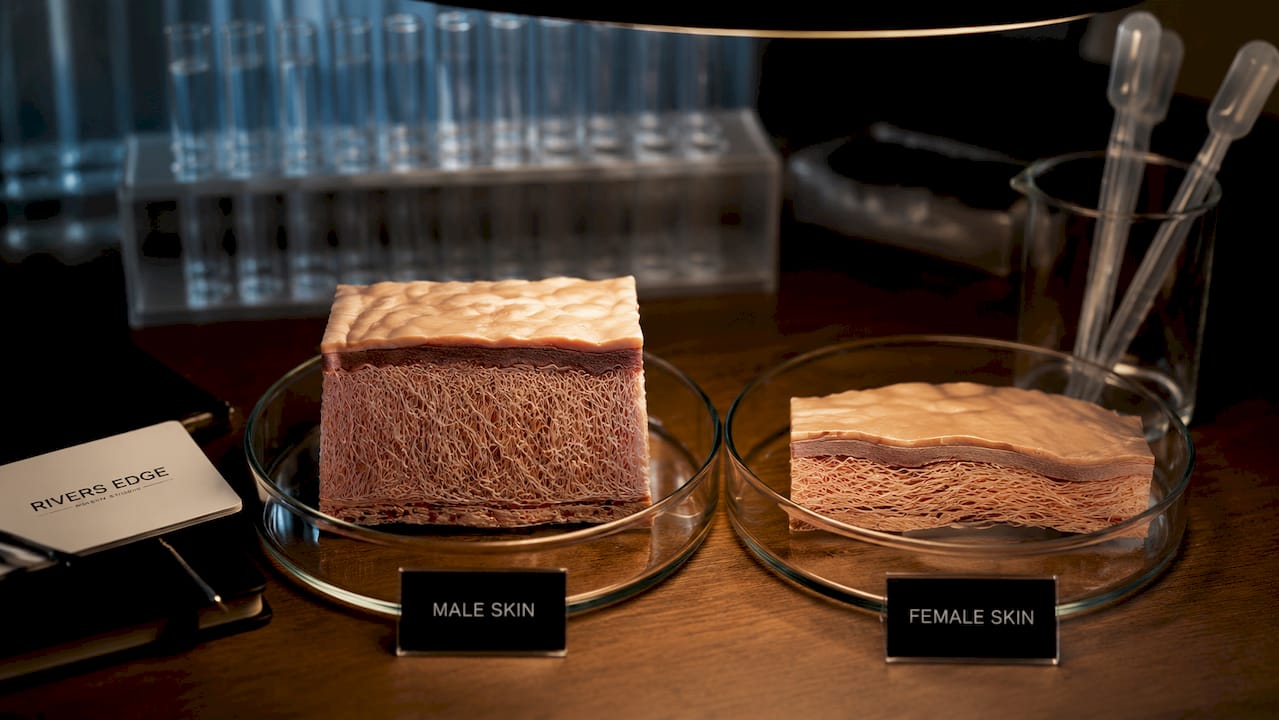
Men's skin is 20–25% thicker than women's skin. Male epidermal thickness typically exceeds 60 μm, while female skin rarely reaches 50 μm. That difference is not trivial. It means male skin has a denser physical structure, which affects how it feels, how it responds to products, and how quickly it shows signs of ageing.
Higher collagen density is the primary driver of this thickness. Collagen provides mechanical firmness and resilience, which is why men's skin tends to feel tighter and less prone to fine lines in early adulthood. The trade-off is that active ingredients need deeper penetration to reach the dermis effectively. Many formulations designed for female skin simply do not achieve this.
Daily shaving adds another layer of complexity. Shaving mechanically exfoliates the skin, which sounds beneficial, but razor blades changed every 3–4 uses are critical to preventing micro-traumas. Blunt blades drag across the skin, causing chronic low-grade inflammation that weakens the barrier over time.
| Feature | Male skin | Female skin |
|---|---|---|
| Epidermal thickness | Above 60 μm | Below 50 μm |
| Collagen density | Higher at every age | Lower, accelerates at menopause |
| Shaving exfoliation | Daily (for most men) | Infrequent on face |
| Product penetration needed | Deeper | Standard |
Pro Tip: If a product feels like it sits on the surface without absorbing, it is almost certainly formulated for thinner female skin. Look for men's formulations with higher concentrations of niacinamide, retinol, or hyaluronic acid to ensure adequate penetration.
How does testosterone drive oiliness and pore size?
Testosterone is the central hormone behind the most visible differences in male skin. Testosterone levels are 6–7 times higher in men than in women. That hormonal gap directly stimulates the sebaceous glands, making them larger and more active.
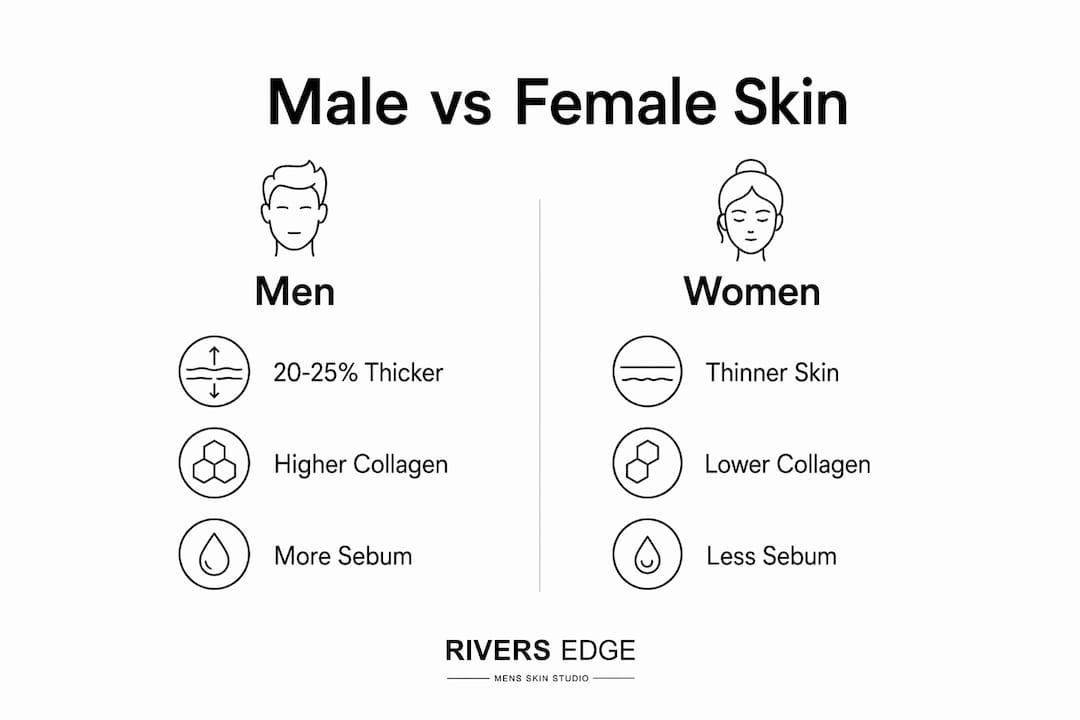
The result is that men produce roughly twice as much sebum as women. More sebum means oilier skin, larger pores, and a higher likelihood of blocked follicles. It also means that products formulated for normal or dry female skin will feel heavy and congesting on male skin.
Male skin also sits at a lower, more acidic pH than female skin. A more acidic environment influences how the skin barrier reacts to products and external irritants. It also affects which bacteria thrive on the skin surface, which has direct implications for acne prevalence.
Common skin issues caused by elevated sebum in men include:
- Enlarged and visibly blocked pores, particularly across the nose and forehead
- Persistent shine and greasiness by midday, even after cleansing
- Acne and blackheads driven by excess oil trapping dead skin cells
- Reduced effectiveness of moisturisers that are too occlusive for oily skin
- Sensitivity to heavy, fragrance-laden products that disrupt the acid mantle
Pro Tip: Managing oiliness does not mean stripping the skin with harsh cleansers. Over-cleansing triggers a rebound effect where sebaceous glands produce even more oil. Use a gentle, pH-balanced cleanser twice daily and apply a lightweight, oil-free moisturiser to keep the barrier intact.
How does collagen decline differ between men and women?
Collagen loss in men is gradual and steady from early adulthood onward. Women experience a different pattern. Collagen content declines sharply at menopause due to the drop in oestrogen, which accelerates visible ageing in a relatively short window. Men do not have an equivalent hormonal trigger.
This difference has a striking consequence. Men's skin can appear up to 15 years younger than chronologically matched female skin, largely because of sustained collagen density. That biological advantage is real, but it is not permanent and it is not unconditional.
Sun exposure is the single biggest factor that erodes this advantage. Men are statistically less likely to use SPF daily, which accelerates photoageing and collagen breakdown regardless of baseline density. The biology gives men a head start. Behaviour determines whether they keep it.
| Collagen pattern | Men | Women |
|---|---|---|
| Rate of decline | Gradual, steady | Gradual, then sharp at menopause |
| Trigger for acceleration | Sun exposure, lifestyle | Menopause (oestrogen drop) |
| Visible ageing onset | Later | Earlier, then rapid catch-up |
| Skincare strategy | Consistent, long-term support | Intensive support post-menopause |
Because collagen decline in men lacks a sharp hormonal trigger, the most effective approach is continuous, long-term collagen support rather than reactive treatment. Starting a retinol or peptide routine in your thirties pays dividends in your fifties.
What skincare routine actually works for male skin?
Formulations designed for female skin underperform on male skin because they do not penetrate thick skin adequately or manage excess oil effectively. This is not a marketing angle. It is a functional limitation rooted in biology. A men's skincare routine needs to account for thickness, oiliness, shaving trauma, and the skin's more acidic pH.
The misconception that men's skincare is simply repackaged women's products is widespread and costly. Men who use generic or female-targeted products often find they either break out, feel greasy, or see no visible improvement. The biology explains why.
Male skin shows a stronger inflammatory response to friction, heat, and chemical disruption than female skin. That means barrier-supportive and anti-inflammatory ingredients are not optional extras. They are foundational.
A practical daily routine for men, built around their skin's actual biology:
- Cleanse with a gentle, pH-balanced face wash morning and evening. Avoid sulphate-heavy formulas that strip the acid mantle.
- Treat with a targeted serum. Niacinamide controls sebum and reduces pore appearance. Vitamin C supports collagen synthesis and addresses sun damage.
- Moisturise with a lightweight, oil-free formula. Men with oily skin still need hydration. Skipping this step worsens oil production.
- Protect with SPF 30 or higher every morning. This single step preserves the collagen advantage that male biology provides.
- Shave smart by using a sharp blade, a quality shaving gel, and a post-shave balm with calming ingredients such as allantoin or centella asiatica.
The top skincare essentials for men in 2026 reflect these biological realities, prioritising penetration depth, oil regulation, and barrier repair.
Pro Tip: Change your razor blade every 3–4 shaves. A blunt blade is one of the most common and overlooked causes of persistent redness, razor bumps, and skin barrier damage in men.
One more fact worth knowing: 60% of men report having sensitive skin, a figure close to the 70% reported by women. Male skin is not tougher in the sense of being less reactive. It is structurally thicker but often more prone to inflammation. That distinction matters when choosing products.
Key takeaways
Men's skin is biologically distinct from women's skin in thickness, sebum production, collagen density, and ageing pattern, and each difference requires a specific, targeted response in any effective skincare routine.
| Point | Details |
|---|---|
| Structural thickness | Male skin is 20–25% thicker, requiring formulations with deeper penetration. |
| Hormonal oiliness | Testosterone drives twice the sebum output, enlarging pores and increasing acne risk. |
| Collagen advantage | Men age more slowly initially, but sun exposure and poor SPF habits erode this benefit fast. |
| Shaving as a variable | Daily shaving exfoliates but causes micro-trauma without proper blade maintenance. |
| Routine specificity | Female-targeted products underperform on male skin due to thickness and oil differences. |
Why I think most men are working against their own biology
I have seen it repeatedly at Riversedgeskinstudio. Men come in frustrated that nothing they have tried has worked, and when we look at what they have been using, it is almost always a product designed for a completely different skin type. Not just a different concern. A different biological structure.
The idea that skincare is skincare, regardless of sex, sounds reasonable until you understand that a product's ability to penetrate the skin depends on the density of what it is trying to get through. Thicker skin, higher sebum, a more acidic pH. These are not minor variations. They change how a product behaves entirely.
What I find most striking is the collagen story. Men have a genuine biological advantage in how slowly they age. Most squander it by skipping SPF and using products that do nothing. The science behind men's skincare routines is not complicated, but it does require you to stop treating your face as an afterthought.
Skin type also changes with age, environment, and hormonal shifts. A routine that worked at 25 may be inadequate at 40. The men who get the best results are the ones who treat their skincare as something that evolves, not a fixed habit set once and forgotten.
— David
Treatments built around how male skin actually works
Men's skin has a distinct biology, and the treatments it responds to best are those designed with that biology in mind.

At Riversedgeskinstudio, every treatment is built specifically for male skin. HydraFacials, chemical peels, microneedling, and anti-wrinkle injections are all calibrated to account for greater skin thickness, higher sebum output, and the inflammatory response that comes with daily shaving. There is no one-size-fits-all approach here. If you want to see what professional men's skin treatments can do for your skin, the team at Riversedgeskinstudio is ready to put together a plan that reflects your skin's actual needs.
FAQ
Why is men's skin thicker than women's?
Men's skin is 20–25% thicker than women's due to higher collagen density driven by testosterone. Male epidermal thickness typically exceeds 60 μm, compared to under 50 μm in female skin.
Does men's skin age more slowly than women's?
Men's skin can appear up to 15 years younger than chronologically matched female skin because of sustained collagen density. However, low SPF use significantly accelerates photoageing and reduces this biological advantage.
Why do men produce more oil than women?
Testosterone levels are 6–7 times higher in men, which directly stimulates larger and more active sebaceous glands. This results in roughly twice the sebum output compared to female skin, causing oilier skin and enlarged pores.
Can men use women's skincare products?
Female-targeted formulations often underperform on male skin because they do not penetrate thick skin adequately or manage excess oil effectively. Men benefit from products specifically formulated for their skin's density, pH, and sebum levels.
Is men's skin more sensitive than people assume?
Yes. Around 60% of men report having sensitive skin, a figure close to the 70% reported by women. Male skin is structurally thicker but shows a strong inflammatory response to friction, heat, and chemical disruption.