
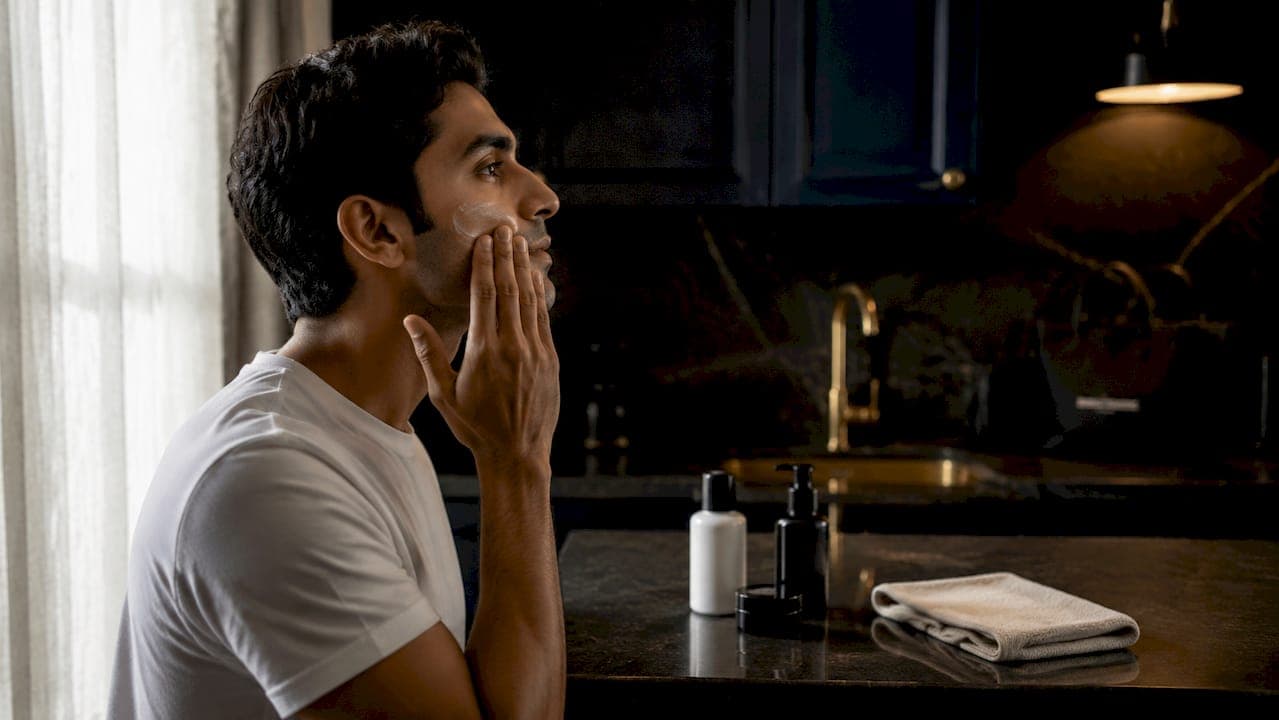
Men's skin care is most effective when built on a consistent, minimalist routine tailored to your skin type and specific concerns. The three foundational steps are cleanse, moisturise, and protect with SPF. Brands like Cetaphil, Medik8, and Hero Cosmetics have made these basics accessible and genuinely effective. Men's skin is approximately 25% thicker than women's and naturally oilier due to testosterone. That physiological difference means male skin needs products formulated for its density and oil regulation, not just repurposed versions of women's ranges.
1. what is the best cleanser for men's skin?
A good cleanser is the non-negotiable first step in any skin care routine for men. Gel cleansers suit oily and combination skin by cutting through excess sebum without stripping the barrier. Gentle, cream-based cleansers work better for dry or sensitive skin, preserving moisture while removing dirt and pollutants. Cetaphil Gentle Skin Cleanser is a dermatologist-recommended option that works across most skin types.
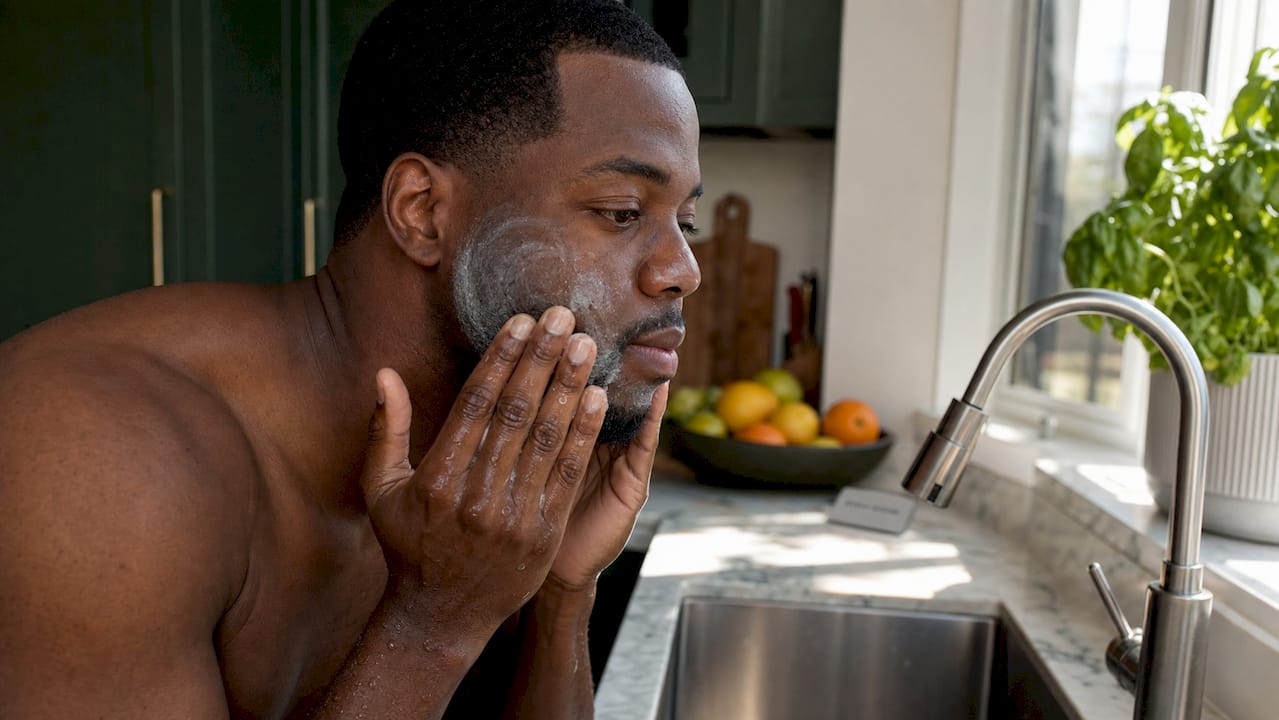
Avoid cleansers with alcohol or heavy fragrance. These disrupt the skin's natural pH and cause the sebaceous glands to overproduce oil in response.
2. men's facial moisturiser: gel vs cream
Moisturiser is the product most men skip and the one that makes the biggest difference. Men with combination-to-oily skin benefit from lightweight, gel-based moisturisers containing zinc or niacinamide to control shine. Richer creams suit dry skin types, providing the deeper hydration that thicker male skin can absorb.
A persistent myth is that moisturiser causes breakouts. Non-comedogenic moisturisers with niacinamide or salicylic acid actually regulate oil production and reduce the likelihood of blocked pores. The Inkey List and Medik8 both offer well-formulated options at different price points.
Pro Tip: Apply moisturiser to slightly damp skin immediately after cleansing. The residual water helps active ingredients penetrate more effectively.
3. SPF: the most overlooked men's grooming product
Broad-spectrum SPF 30+ is the single most evidence-backed anti-ageing product available. Most men skip it entirely or apply it inconsistently, which makes every other product in the routine less effective. UV exposure accelerates collagen breakdown, deepens lines, and increases pigmentation regardless of skin tone.
SPF moisturiser hybrids from brands like Altruist, La Roche-Posay, and Medik8 remove the excuse of an extra step. Apply every morning, including overcast days, as UVA rays penetrate cloud cover.
4. niacinamide serum for oily skin and large pores
Niacinamide is the most versatile active ingredient in men's skincare. It controls sebum production, tightens the appearance of pores, reduces redness, and supports the skin barrier simultaneously. The Ordinary Niacinamide 10% + Zinc 1% is one of the most affordable and widely available options on the market.
Apply niacinamide after cleansing and before moisturiser. It layers well with most other actives, making it a practical first serum for men new to treatments.
5. retinol and retinal: the gold standard for anti-ageing
Retinol is the gold standard for anti-ageing, but beginners should start with gentle retinal formulations to avoid dryness and irritation. Retinal converts to retinoic acid faster than retinol, delivering results with less initial sensitivity. Medik8 Crystal Retinal is a widely recommended starting point for men new to this ingredient.
Anti-ageing actives like retinol show changes after about 28 days of consistent use. Introduce it two to three nights per week before building to nightly use. Always follow with moisturiser and apply SPF the following morning.
6. salicylic acid for acne and post-shave irritation
Salicylic acid is a BHA (beta hydroxy acid) that penetrates oil-filled pores to dissolve debris and reduce breakouts. It also addresses the mechanical stress that regular shaving places on skin. Facial hair and regular shaving add mechanical stress that requires targeted care, and salicylic acid is one of the most effective responses.
Paula's Choice BHA Exfoliant and The Inkey List Salicylic Acid Cleanser are both practical options. Use salicylic acid two to three times per week rather than daily to avoid over-exfoliation.
7. eye cream: worth it or not?
The skin around the eye is the thinnest on the face and shows fatigue, dehydration, and ageing earliest. A dedicated eye cream with peptides or caffeine addresses puffiness and fine lines more precisely than a standard facial moisturiser. Kiehl's Creamy Eye Treatment with Avocado and Elemis Pro-Collagen Eye Cream are two well-regarded options.
Apply with your ring finger using light tapping motions. Dragging or pressing the skin around the eye accelerates the very damage you are trying to reverse.
8. AHA exfoliants for skin texture and tone
AHAs (alpha hydroxy acids) such as glycolic and lactic acid work on the skin's surface to remove dead cells, improve texture, and brighten uneven tone. They are particularly useful for men dealing with post-shave roughness or dullness from daily environmental exposure.
Use an AHA product once or twice per week at night. The Ordinary Glycolic Acid 7% Toning Solution is a budget-friendly entry point. Always apply SPF the morning after AHA use, as exfoliated skin is more sensitive to UV damage.
9. how to build a daily skin care routine for men
A consistent 4–8 week period is required before adding treatment serums to avoid irritation. Start with the three-step core routine: cleanser, moisturiser, and SPF in the morning; cleanser and moisturiser at night. Run this for four weeks before introducing a serum.
The complexity trap causes many men to abandon skincare entirely. A two or three step routine maintained daily for four to eight weeks outperforms a seven-step routine used sporadically. Consistency is the variable that determines results, not product count.
For oily skin, swap to a mattifying moisturiser with salicylic acid in the morning. For dry skin, layer a hyaluronic acid serum beneath your moisturiser at night. Combination skin benefits from a gel moisturiser on the T-zone and a slightly richer formula on drier areas.
Pro Tip: Set your skincare products next to your toothbrush. Habit stacking with an existing routine is the fastest way to build consistency.
For a detailed walkthrough on starting your routine, Riversedgeskinstudio has published a practical 2026 guide covering product sequencing and skin type adjustments.
10. when to see a professional for men's skin concerns
At-home routines address maintenance and prevention well. Professional treatments accelerate results for concerns like deep lines, acne scarring, pigmentation, and persistent oiliness. The table below shows where each approach performs best.
| Concern | At-Home Approach | Professional Treatment |
|---|---|---|
| Fine lines | Retinol, peptide serum | Microneedling, anti-wrinkle injections |
| Acne and oiliness | Salicylic acid, niacinamide | Chemical peel, HydraFacial |
| Dull or uneven skin tone | AHA exfoliant, Vitamin C serum | Chemical peel, laser resurfacing |
| Deep hydration | Hyaluronic acid, facial oil | HydraFacial, moisture infusion facial |
| Acne scarring | Retinol, niacinamide | Microneedling, fractional laser |
Chemical peels and HydraFacials deliver results that no over-the-counter product can replicate in the same timeframe. They also reset the skin's baseline, making your daily routine more effective afterwards. For guidance on combining treatments effectively, Riversedgeskinstudio covers the sequencing in detail.
"Men's skin requires active ingredients such as salicylic acid and panthenol to control larger pores and excess oil. A generic wash-and-moisturise approach is insufficient for most male skin concerns." — Harper's Bazaar
Post-treatment care integrates directly with your existing routine. Most clinics recommend a simplified routine for 48–72 hours after a peel or microneedling session: gentle cleanser, plain moisturiser, and SPF only. Then return to your normal routine.
Key takeaways
Effective men's skin care requires three consistent daily steps, targeted actives introduced gradually, and professional treatments for concerns that home products cannot fully resolve.
| Point | Details |
|---|---|
| Start with three steps | Cleanse, moisturise, and apply SPF every morning before adding any treatment products. |
| Match products to skin type | Gel moisturisers suit oily skin; richer creams and layered hyaluronic acid suit dry skin. |
| Introduce actives gradually | Wait four to eight weeks on your core routine before adding retinol or exfoliating acids. |
| Consistency beats complexity | A two-step routine used daily outperforms a seven-step routine used sporadically. |
| Professional treatments accelerate results | HydraFacials, chemical peels, and microneedling address concerns that home products cannot match. |
Why simple always wins in men's skincare
I have spoken with hundreds of men about their skin over the years, and the pattern is almost always the same. They either do nothing at all, or they buy six products at once, overwhelm themselves within a fortnight, and go back to doing nothing. The middle ground, a short, consistent routine with two or three well-chosen products, is where the real results live.
The science backs this up. A minimalist routine done consistently over weeks yields better outcomes than a complex one abandoned after a few days. I have seen men in their forties transform their skin in three months with nothing more than a gentle cleanser, a niacinamide moisturiser, and a daily SPF. No serums. No eye cream. Just those three things, every day.
My honest advice is to resist the urge to solve everything at once. Pick one concern, whether that is oiliness, dullness, or the early signs of ageing, and choose one product that addresses it. Run that for six weeks. Then reassess. You will learn more about your skin in those six weeks than you would from reading every product review online.
The men who see the best results are not the ones with the most products. They are the ones who show up every morning and every night, without fail, with a routine they can actually maintain. That is the only skincare secret worth knowing.
— David
Take your skin further with Riversedgeskinstudio
If your at-home routine has plateaued or you want faster results for a specific concern, professional treatment is the logical next step.

Riversedgeskinstudio specialises exclusively in men's skin. The clinic offers HydraFacials, chemical peels, microneedling, and anti-wrinkle injections, all delivered within personalised treatment plans designed around your skin type and goals. There is no guesswork and no generic protocols. Every treatment is chosen based on what your skin actually needs. Explore the full range of men's skin treatments and book a consultation to find out which professional options will complement your daily routine most effectively.
FAQ
What is the best skin care routine for men?
The best routine for men is a three-step daily process: cleanse, moisturise, and apply SPF 30+ every morning. A consistent routine over four to eight weeks delivers better results than a complex one used irregularly.
How long does men's skin care take to show results?
Hydration improvements appear within two to four weeks. Anti-ageing actives like retinol show visible changes after about 28 days of consistent nightly use.
Does moisturiser cause acne in men?
No. Non-comedogenic moisturisers with niacinamide or salicylic acid regulate oil production and reduce breakouts. Skipping moisturiser causes the skin to overproduce oil, which worsens acne.
Why is men's skin different from women's?
Men's skin is approximately 25% thicker and oilier due to testosterone. This means male skin has larger pores, produces more sebum, and requires products formulated for higher density and oil regulation.
When should men consider professional skin treatments?
Professional treatments are worth considering when at-home products have not resolved concerns like acne scarring, deep lines, or persistent pigmentation after eight to twelve weeks. Treatments like microneedling and chemical peels deliver results that topical products cannot replicate. Read more on professional vs home skincare to understand which approach suits your current skin goals.