

Dermal filler treatment is the process of injecting a gel-like substance beneath the skin to restore lost volume, smooth out lines, and contour facial features without surgery. The most widely used material is hyaluronic acid, a substance your body produces naturally that attracts and retains moisture. Unlike anti-wrinkle injections such as Botox, which relax muscles to reduce movement-related lines, dermal fillers physically add volume and structure to targeted areas. Results are visible almost immediately, and recovery time is minimal for most people.
Here is a quick summary of what dermal filler treatment involves:
- Injectable gels placed beneath the skin to add volume and definition
- Common treatment areas include the lips, cheeks, jawline, chin, and under-eye hollows
- Results appear straight away and typically last several months to over a year
- Hyaluronic acid fillers can be dissolved if needed, offering a reversible option
- Minimal downtime, with most people returning to normal activities the same day
- Must be performed by a qualified healthcare professional in the UK
What types of dermal fillers are available?
Three main categories of dermal fillers are used in clinical practice, each with a different composition, longevity, and purpose.
Hyaluronic acid fillers are the most common choice. Hyaluronic acid occurs naturally in the body, particularly in skin and connective tissue, where it holds moisture and maintains plumpness. When injected, it integrates with surrounding tissue to add volume and smooth lines. One significant advantage is reversibility: if you are unhappy with the result or a complication arises, a practitioner can dissolve the filler quickly using an enzyme called hyaluronidase. This makes hyaluronic acid the preferred starting point for most people new to fillers.
Calcium hydroxylapatite fillers sit deeper in the tissue and are suited to areas requiring more structural support, such as the cheeks or jawline. The calcium particles stimulate some natural collagen production over time, and results tend to last longer than hyaluronic acid options. They are not reversible with an enzyme, so precision during injection is especially important.
Poly-L-lactic acid fillers work differently again. Rather than adding immediate volume, they act as a collagen stimulator, prompting the skin to rebuild its own support structure gradually over several months. The results develop slowly and can last considerably longer, making this type better suited to people seeking a gradual, natural-looking improvement rather than an instant change.
Key differences at a glance:
- Hyaluronic acid: reversible, immediate results, suits most areas, typically lasts 6–18 months
- Calcium hydroxylapatite: not reversible, deeper volume, longer-lasting, best for structural areas
- Poly-L-lactic acid: not reversible, gradual collagen stimulation, results build over months
What does the dermal filler treatment process involve?
The treatment process follows a clear sequence from first consultation through to aftercare, and knowing what to expect at each stage makes the experience far less daunting.
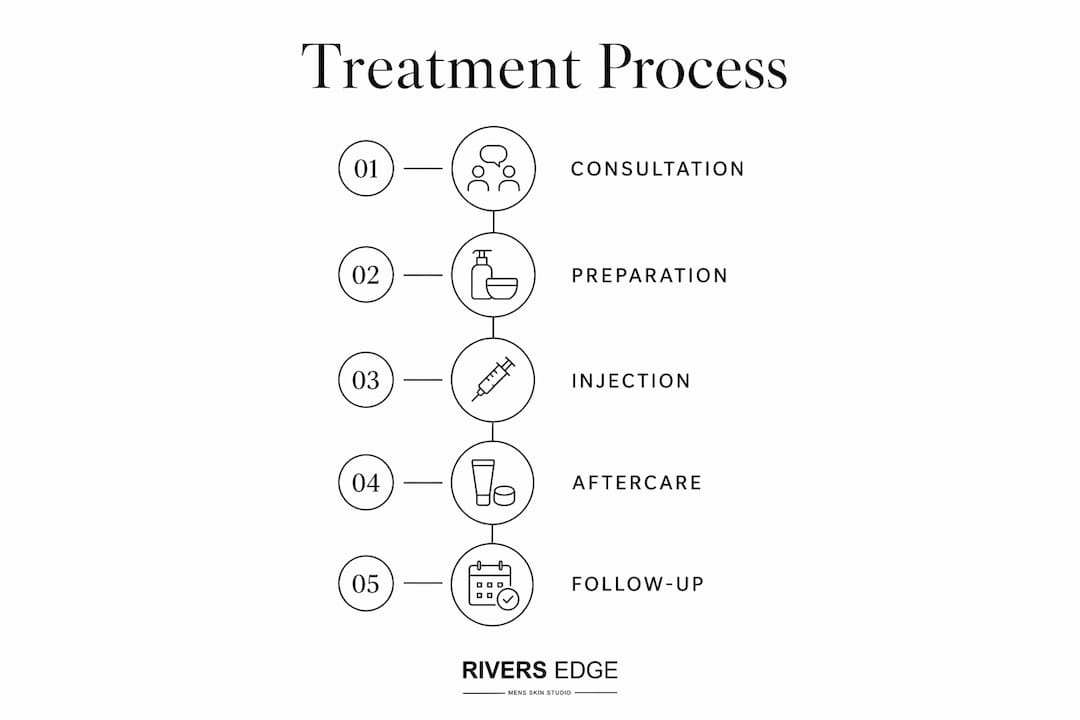
Consultation. Your practitioner will assess your facial structure, discuss your goals, and check your medical history for any contraindications. This is the stage where you agree on which areas to treat, how much filler to use, and what realistic outcomes look like. A good practitioner will never rush this part.
Preparation. On the day of treatment, the target areas are cleaned and marked. A topical anaesthetic cream is applied and left to take effect, usually for around 20–30 minutes. Many filler products also contain lidocaine, a local anaesthetic, which further reduces discomfort during the injections themselves.
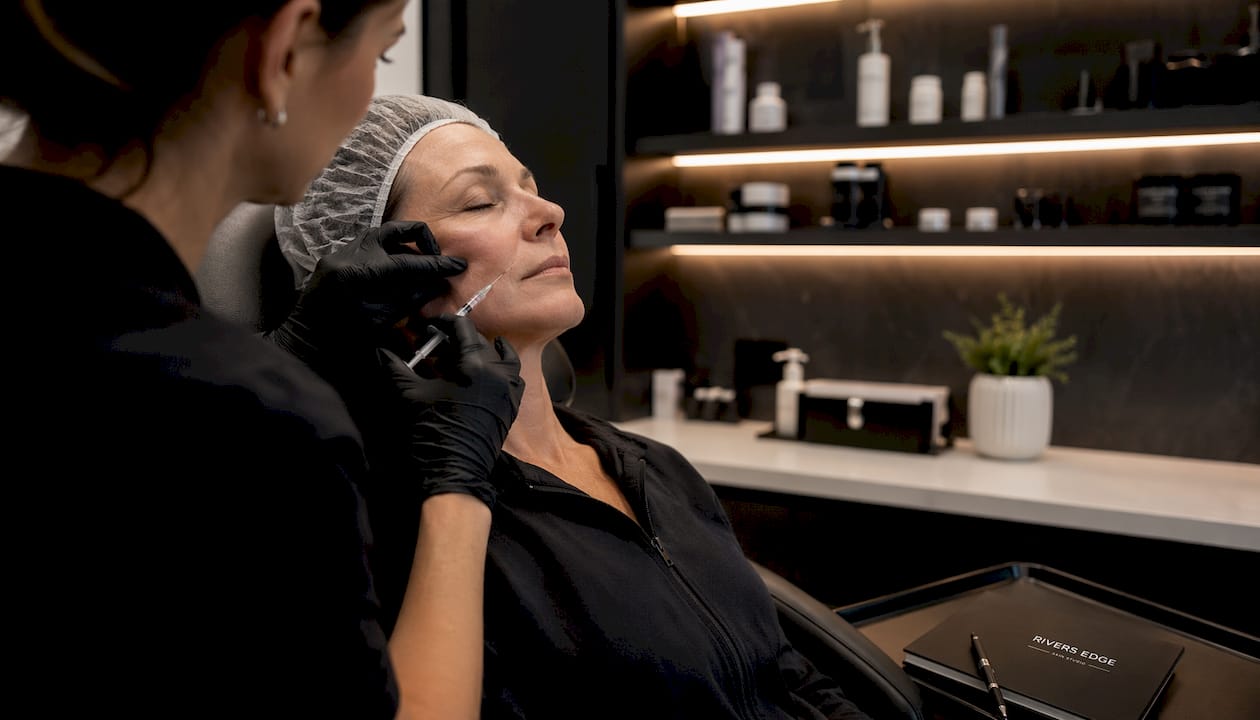
The injection. The procedure typically takes 30–60 minutes depending on how many areas are being treated. Your practitioner uses a fine needle or cannula to deposit the filler at the correct depth. You may feel mild pressure or a slight stinging sensation, but most people find it very manageable.
Immediate aftercare. Once the injections are complete, the practitioner will gently massage the area to distribute the product evenly. Ice packs are often applied to reduce initial swelling. You will be advised to avoid strenuous exercise, alcohol, and excessive heat for 24–48 hours.
Follow-up. A review appointment, usually two to four weeks later, allows your practitioner to assess the settled result and make any refinements if needed.
Key steps in the process:
- Consultation and face assessment
- Topical anaesthetic application
- Injection with fine needle or cannula
- Immediate massage and ice pack application
- Follow-up review for refinement
Pro Tip: Start with a conservative volume at your first appointment. It is always easier to add more filler at a follow-up than to correct an overfilled result, and a gradual approach produces the most natural-looking outcome.
What are the benefits of dermal fillers?
The appeal of dermal filler treatment lies in its ability to deliver visible, natural-looking changes without the recovery time or cost associated with surgery. For men in particular, the goal is usually subtle improvement rather than dramatic transformation, and fillers are well suited to that approach.

Volume loss is one of the most common signs of ageing in the male face. Cheeks flatten, the jawline softens, and hollows appear beneath the eyes. Fillers address all of these directly by replacing what time has taken away, rather than pulling or tightening skin. The result tends to look refreshed rather than "done."
Lines and wrinkles around the mouth, nose, and chin respond well to filler, particularly the nasolabial folds (the creases running from the nose to the corners of the mouth) and marionette lines. These are areas where anti-wrinkle injections alone are less effective, so fillers and Botox often complement each other as part of a broader facial rejuvenation plan.
Benefits worth knowing:
- Immediate visible results with no surgical downtime
- Restores volume to cheeks, temples, and under-eye areas
- Smooths static lines that muscle-relaxing injections cannot address
- Enhances definition in the jawline, chin, and lips
- Fully reversible when hyaluronic acid products are used
- Can be combined with other treatments for a more complete result
What are the risks and safety considerations?
Dermal fillers are generally safe when administered by a qualified professional, but they carry real risks that every patient should understand before proceeding.
The most common side effects are mild and temporary. Bruising, swelling, redness, and tenderness at the injection site are normal responses and usually resolve within a few days. Lumps or unevenness can occur, particularly in the lips, though these often settle on their own or can be massaged out.
Serious complications are rare but require urgent attention. Vascular occlusion, where filler inadvertently enters or compresses a blood vessel, can restrict blood flow to surrounding tissue. If not treated immediately, this can cause tissue damage. Infection, though uncommon, is another risk, particularly if aftercare instructions are not followed. Registered healthcare professionals with specialist aesthetics training and access to emergency protocols, including hyaluronidase, are significantly better placed to prevent and manage these complications than unqualified practitioners.
The reversibility of hyaluronic acid fillers is a genuine safety advantage. Non-hyaluronic acid fillers cannot be dissolved, so any complication must be managed differently, often with more limited options.
Under the Botulinum Toxin and Cosmetic Fillers (Children) Act 2021, it is a criminal offence in England to administer dermal fillers for cosmetic purposes to anyone under 18, regardless of parental consent. This law took effect on 1 October 2021.
Risks to be aware of:
- Bruising, swelling, and redness (common, temporary)
- Lumps or asymmetry (usually resolves or can be corrected)
- Vascular occlusion (rare but serious, requires immediate treatment)
- Infection (uncommon, linked to poor technique or aftercare)
- Permanent complications with non-reversible filler types
- Legal prohibition on treating anyone under 18 in England
Seek urgent medical advice if you notice skin blanching, severe pain, or any vision changes after treatment. These can be early signs of vascular occlusion.
What should you expect during recovery?
Recovery after dermal filler treatment is straightforward for most people. Mild swelling and bruising are the most common post-treatment experiences, and both typically resolve within a few days. You can usually return to work and daily activities on the same day, though avoiding the gym, alcohol, and direct sun exposure for 24–48 hours helps reduce swelling and the risk of bruising.
Results are visible immediately, though the final appearance settles over the following few days as any swelling subsides and the filler integrates with surrounding tissue. Lips, in particular, can look more swollen than the intended result for the first 48 hours, so patience pays off before judging the outcome.
How long results last depends on the type of filler used and the area treated. Hyaluronic acid fillers in the lips typically last 6–12 months, while cheek and jawline treatments can hold for 12–18 months or longer. Maintenance appointments are needed to sustain the effect as the body gradually breaks down the filler material.
Post-treatment care tips to support your recovery:
- Apply ice packs wrapped in a cloth to reduce swelling in the first few hours
- Avoid touching or pressing the treated area for at least 24 hours
- Sleep with your head slightly elevated on the first night
- Stay out of saunas, steam rooms, and intense heat for 48 hours
- Attend your follow-up appointment to assess the settled result
For a more detailed guide on caring for your skin after aesthetic procedures, the post-treatment recovery guide from Fundamental Skin covers the key steps clearly.
Dermal fillers in the UK: costs, regulations, and choosing a practitioner
The UK aesthetic market has changed significantly since 2024, and understanding both the cost landscape and the regulatory framework helps you make a safer, more informed choice.
What does dermal filler treatment cost in the UK?
Dermal filler treatments in the UK typically cost a few hundred pounds per 1ml syringe, with variation depending on the treatment area and clinic location. Lip enhancement generally has a lower starting price than cheek and jawline augmentations, which may require multiple syringes and thus cost more overall. London clinics tend to charge significantly more than those elsewhere in the country. Price alone should never be the deciding factor. A lower cost can reflect less experienced practitioners, unbranded products, or inadequate aftercare, all of which increase risk.
What regulations apply to dermal fillers in the UK?
Dermal fillers are regulated as medical devices in the UK rather than as prescription medicines, which historically meant lighter oversight than treatments like Botox. From 2024, new legislation requires that non-surgical cosmetic procedures, including dermal fillers, be performed or directly supervised by registered healthcare professionals in licensed premises. This closes a significant gap that previously allowed unqualified individuals to administer fillers with little accountability.
The Medicines and Healthcare products Regulatory Agency (MHRA) is also bringing dermal fillers under more stringent medical device regulation, recognising that their risk profile warrants the same scrutiny applied to other clinical products.
How do you choose a qualified practitioner?
Verifying credentials before booking is the single most important step you can take. Look for practitioners registered with a recognised professional body such as the General Medical Council (GMC), Nursing and Midwifery Council (NMC), or General Dental Council (GDC). Clinics should also comply with Care Quality Commission (CQC) standards where applicable. A practitioner worth trusting will always conduct a thorough consultation, discuss risks openly, and have access to hyaluronidase on site for managing complications. For guidance on choosing an aesthetic clinic that meets these standards, the process is more straightforward than many people expect.
Key points for UK patients:
- Typical cost: £200–£600 per 1ml syringe, higher in London
- Lip treatments from approximately £200–£400; cheeks and jawline from £600–£1,200+
- Under-18 treatment is a criminal offence in England under the 2021 Act
- From 2024, treatments must be performed or supervised by a registered healthcare professional
- Verify GMC, NMC, or GDC registration before booking
- Confirm the clinic holds hyaluronidase on site for emergency use
Riversedgeskinstudio operates as a specialist men's aesthetic clinic, delivering treatments in a professional environment with qualified practitioners who understand the specific concerns and goals of male patients. If you are considering dermal fillers as part of a broader skincare or facial rejuvenation plan, the team at Riversedgeskinstudio can advise on whether fillers are the right fit alongside other treatments such as anti-wrinkle injections or skin resurfacing.

Ready to find out more? Explore the full range of men's skin treatments available at Riversedgeskinstudio and book a consultation with a specialist who works exclusively with male clients.
Key takeaways
Dermal filler treatment offers immediate, natural-looking results with minimal downtime, but safety depends entirely on choosing a qualified, registered practitioner working within the UK's updated regulatory framework.
| Point | Details |
|---|---|
| What fillers do | Injectable gels restore volume, smooth lines, and contour the face without surgery. |
| Reversibility matters | Hyaluronic acid fillers can be dissolved with hyaluronidase; non-hyaluronic acid types cannot. |
| UK cost range | Treatments typically cost £200–£600 per 1ml syringe, with London clinics charging 20% more. |
| Legal age restriction | Administering dermal fillers to anyone under 18 in England is a criminal offence under the 2021 Act. |
| Practitioner credentials | Verify GMC, NMC, or GDC registration and confirm hyaluronidase is available on site before booking. |