

A first skin clinic visit is a structured consultation that moves through medical history, physical examination, diagnostic tests, and personalised treatment planning. Most men arrive unsure of what happens during a skin exam or how long it takes. The process is designed to replace guesswork with evidence-based care. Clinicians follow a clear sequence, so knowing each step in advance reduces anxiety and helps you get more from the appointment. Riversedgeskinstudio specialises in this kind of structured, results-focused care for men, and understanding the skin care consultation process makes the whole experience far more productive.
1. What happens during your first skin clinic visit?
A first dermatology appointment follows a consistent structure: history taking, a thorough skin examination, possible diagnostic tests, and a treatment plan. This sequence is designed for efficiency and accurate diagnosis. Knowing the order helps you prepare the right information and ask better questions. Dermatology experts stress that this structure is meant to demystify skin care and replace self-treatment guesswork with clinical clarity.
The consultation typically lasts between 30 and 60 minutes for a first appointment. Aesthetic clinics focused on men, such as Riversedgeskinstudio, often extend this time to cover lifestyle factors and treatment goals in detail. You leave with a clear picture of your skin's condition and a defined next step.
2. What will happen during the skin health assessment?
The assessment begins with your personal and family skin history. Your clinician will ask about existing conditions, previous treatments, allergies, and any medications you currently take. Honesty here directly affects the accuracy of your diagnosis. The more detail you provide, the faster the clinician can identify patterns and rule out causes.
Typical questions cover:
- How long you have had the concern
- Whether it is getting worse, better, or staying the same
- Any products you currently use on your skin
- Family history of skin conditions such as psoriasis, eczema, or melanoma
- Any recent changes in diet, stress levels, or environment
Preparation helps clinicians provide accurate diagnosis and efficient care. Bringing a written list of your medications, current skincare products, and photos of any skin changes saves time and prevents missed details.
Pro Tip: Take photos of any skin changes on your phone before the appointment. Clinicians find time-stamped images far more useful than verbal descriptions alone.
Your clinician will also ask about your lifestyle, including sun exposure habits, diet, and whether you work outdoors. For men, occupational skin exposure is a common but overlooked factor. A men's skin assessment at a specialist clinic accounts for these male-specific variables from the start.
3. How do clinicians conduct the skin examination?
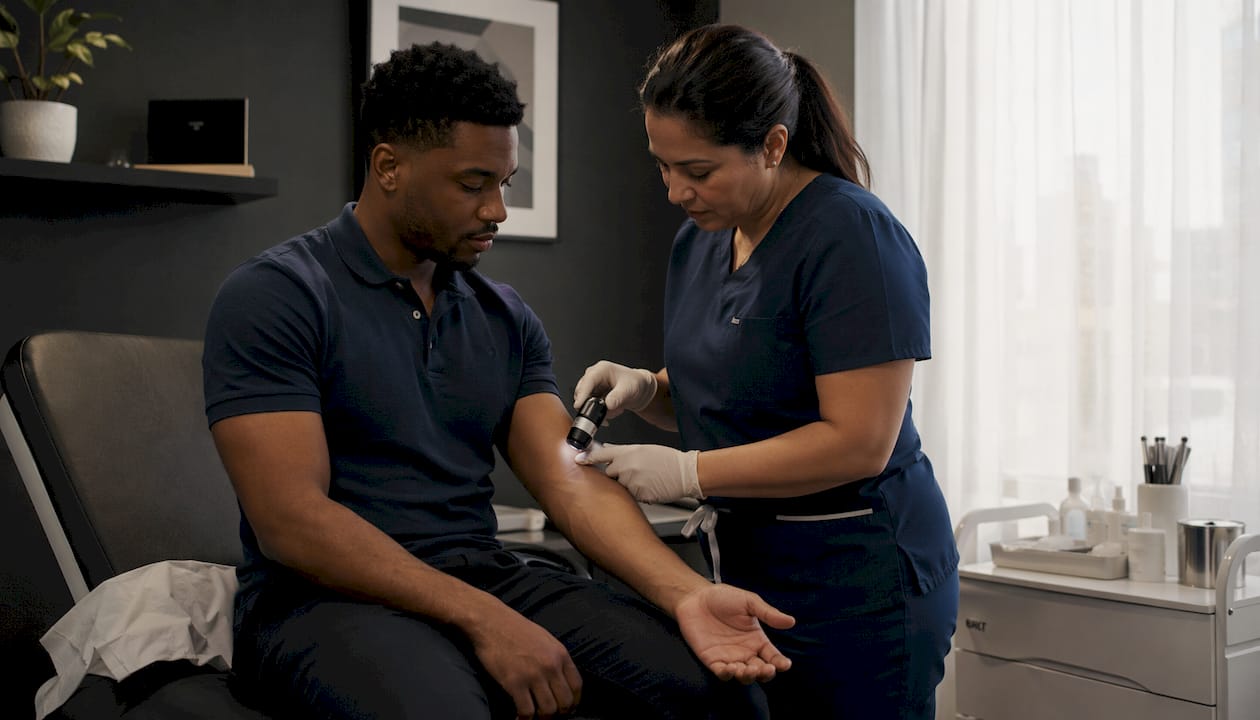
The physical examination follows the history review. Your clinician will examine the areas of concern directly and may conduct a broader check depending on your risk profile. Dermatoscopy and photographic mole monitoring are standard tools used to evaluate moles and track changes over time. A dermatoscope combines magnification and polarised light to reveal structures invisible to the naked eye.
Areas commonly examined include:
- Face, neck, and scalp
- Arms, hands, and chest
- Back, which men often cannot self-examine
- Any specific area of concern you have flagged
The examination is conducted professionally and privately. You can request a chaperone at any point. Wear loose, easily removed clothing so the clinician can access relevant areas without difficulty.
Pro Tip: Wear a two-piece outfit or loose-fitting clothes to your appointment. Tight or complicated clothing slows the examination and can cause you to miss areas that need checking.
Clinicians at specialist men's clinics are trained to examine skin types and conditions common in male patients, including ingrown hairs, razor-related irritation, and sun damage on the back of the neck. The examination is thorough but not lengthy when you are well prepared.
4. What tests and procedures might be recommended?
Diagnostic tests are ordered when the visual examination alone cannot confirm a diagnosis. Swabs, scrapings, patch tests, and biopsies may be performed or scheduled when infection or allergy is suspected. Each test serves a specific purpose.
- Swabs and scrapings collect surface material to test for bacterial or fungal infection.
- Patch tests apply small amounts of common allergens to the skin to identify contact allergies.
- Skin biopsies remove a small tissue sample for laboratory analysis. The area is numbed first, and the procedure takes only a few minutes.
- Photographic mole monitoring creates a baseline record of moles so future changes can be detected accurately.
- Blood tests may be requested if a systemic condition such as lupus or a hormonal issue is suspected.
Common in-clinic procedures during first visits include cryotherapy for warts or sun spots, corticosteroid injections for inflamed lesions, and minor mole removal. These can often be carried out during the same appointment, saving you a return visit.
Test results directly shape your treatment plan. A confirmed fungal infection leads to antifungal treatment. A biopsy result that shows a benign lesion removes the need for further intervention. Waiting for results is normal and does not mean something serious has been found.
5. What treatment options and follow-up plans are typically suggested?
Treatment plans are personalised to your condition, lifestyle, and goals. They may include topical treatments, oral medications, lifestyle adjustments, and a follow-up schedule. No two plans are identical because no two men present with exactly the same skin history and concerns.
Common elements of a treatment plan include:
- Topical treatments such as prescription retinoids, antibiotics, or steroid creams applied directly to the skin
- Oral medications for conditions like acne, rosacea, or fungal infections that require systemic treatment
- Skincare routine advice tailored to your skin type, including product recommendations suited to male skin
- Lifestyle guidance covering sun protection, diet, hydration, and shaving technique where relevant
- Follow-up appointments scheduled at intervals appropriate to your condition, typically at four to twelve weeks
Dermatologists advise annual exams even without symptoms, and more frequently for men with a history of sun damage, skin cancer, or chronic conditions. Your clinician will tell you clearly when to return and what to watch for in the meantime.
Aesthetic treatments such as HydraFacials, chemical peels, and microneedling may also be recommended at Riversedgeskinstudio as part of a broader skin health plan. These are not cosmetic extras. They address texture, pigmentation, and collagen loss in ways that topical products alone cannot. You can review the full range of men's skin treatments to understand which procedures align with your goals before your appointment.
Managing expectations is part of the plan. Most topical treatments take four to eight weeks to show visible results. Your clinician will set a realistic timeline so you are not left wondering whether the treatment is working.
6. Preparing your skin clinic first visit checklist
Preparation is the single biggest factor in getting value from your first appointment. Bringing a list of medications, skincare products, photos of skin changes, and any referral letters gives your clinician everything needed to make an accurate assessment quickly.
A practical skin clinic first visit checklist includes:
- A written list of all current medications, including supplements
- Photos of any skin changes, ideally taken over several weeks to show progression
- Names of all skincare products you currently use
- Notes on when the concern started and any triggers you have noticed
- Any referral letters or previous test results
- Questions you want answered before you leave
Knowing what to ask your clinician is as important as the physical preparation. Men who arrive with specific questions get more targeted answers and leave with a clearer plan.
7. How collaborative care improves your outcome
Clinical guidelines encourage a collaborative approach where patient questions and concerns are addressed openly. This is not just good practice. It produces better outcomes. Men who understand their diagnosis and treatment rationale are more likely to follow the plan consistently.
Ask your clinician to explain any term you do not recognise. Ask what happens if the first treatment does not work. Ask whether there are lifestyle changes that would speed up results. A good clinician welcomes these questions because they signal engagement. Collaborative care is the standard at specialist men's clinics, and it is the model Riversedgeskinstudio is built around.
Key takeaways
A first skin clinic visit follows a structured sequence of history, examination, testing, and personalised planning, and preparation is the most effective way to get the most from it.
| Point | Details |
|---|---|
| Structured process | Every first visit covers history, examination, tests, and a treatment plan in sequence. |
| Preparation matters | Bring medication lists, product names, and photos of skin changes to speed up diagnosis. |
| Tests confirm diagnosis | Swabs, patch tests, and biopsies remove uncertainty and direct the right treatment. |
| Plans are personalised | Treatment combines topical, oral, and lifestyle elements tailored to your skin and goals. |
| Annual checks are standard | Dermatologists recommend yearly skin exams even without visible symptoms. |
What I have learned from men's first skin clinic visits
Men tend to underestimate how much the first appointment depends on them. The clinician brings the expertise. You bring the history. When men arrive without knowing their current products, without photos, and without any questions prepared, the consultation becomes reactive rather than targeted. The clinician spends time gathering basic information instead of moving straight to assessment.
The anxiety most men feel before a first skin clinic appointment is real, but it is almost always disproportionate to the experience. The examination is straightforward. The questions are not invasive. The clinician is not judging the state of your skin. They are gathering data.
What I find genuinely useful is the shift in mindset that happens after the first visit. Men who arrive sceptical about professional skincare leave with a concrete plan and, more importantly, a reason to follow it. That shift does not happen from reading about skincare online. It happens when a clinician looks at your skin specifically and tells you exactly what is going on.
The men who get the most from their first appointment are the ones who treat it like a briefing rather than a check-up. They come prepared, they ask questions, and they leave with a clear next step. That is the entire point of the consultation.
— David
Men's skin treatments at Riversedgeskinstudio
Riversedgeskinstudio is a specialist men's skin clinic offering treatments designed around male skin, from anti-wrinkle injections and HydraFacials to microneedling and chemical peels. Every treatment plan starts with a thorough consultation so nothing is guessed and nothing is generic.

If you are ready to move from uncertainty to a clear skin plan, the men's treatments and services page outlines every procedure available, with detail on what each one addresses and who it suits. Booking a consultation is the first step toward understanding exactly what your skin needs and how to get there.
FAQ
What should I bring to my first skin clinic appointment?
Bring a list of current medications, names of skincare products you use, photos of any skin changes, and any referral letters. Preparation helps your clinician reach an accurate diagnosis faster.
How long does a first skin clinic visit take?
A first appointment typically lasts between 30 and 60 minutes. Specialist men's clinics may allow longer to cover lifestyle factors and treatment goals in full.
Will I need tests at my first appointment?
Tests such as swabs, patch tests, or a biopsy are only ordered when the visual examination cannot confirm a diagnosis. Many men leave their first visit with a treatment plan and no further tests required.
Can treatment start at the first appointment?
Minor procedures including cryotherapy, corticosteroid injections, and mole removal can often be carried out during the first visit. Your clinician will advise whether immediate treatment is appropriate.
How often should men have a skin check?
Dermatologists recommend a routine skin exam at least once a year, and more frequently for men with a history of sun damage, skin cancer, or chronic skin conditions.