
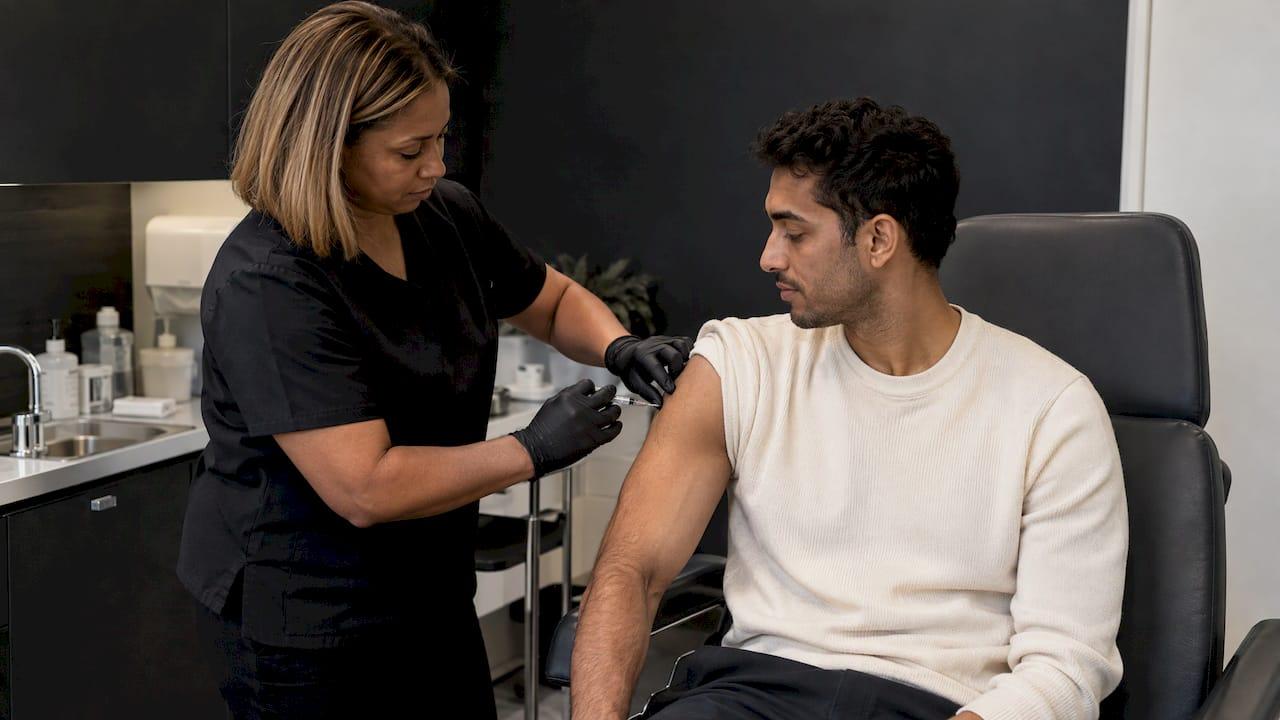
Biotin injections are usually well tolerated. The effects worth knowing about are a mild upset stomach, the rare allergic reaction, and one that has nothing to do with how you feel: high-dose biotin can skew certain blood tests, including thyroid tests. If you tell your GP, nurse or laboratory about it, that last one is easy to manage. At Rivers Edge Skin Studio, our men-only clinic at Unit 6, 10-14 Jamaica St, Liverpool L1 0AF, we offer biotin as one of our intramuscular vitamin injections for skin and wellness. This guide sets out what to expect, what to watch for and what to say before your next blood test.
TL;DR
- Side effects of biotin are uncommon and usually mild, most often nausea, cramping or loose stools.
- A serious allergic reaction is rare. Swelling of the face, lips or throat, wheezing, hives or fainting need emergency help straight away.
- The effect most likely to matter is on blood tests: high-dose biotin can give false results on some immunoassays, including thyroid and troponin tests.
- Tell any clinician or laboratory that you have had biotin before a blood test, and ask how long to leave between the injection and the sample.
- Injectables at our clinic are for over-18s only. You can book online at any time.
Table of Contents
- What biotin is and why men have it injected
- The common, mild side effects
- Allergic reactions: the signs that need urgent help
- Biotin and blood tests: the effect most men miss
- Hair loss and your GP
- Who we see, and how we run injectables
- How often can you have biotin injections?
- Our view: side effects are a planning question
- Book a biotin injection in Liverpool
- FAQ
- Sources
What biotin is and why men have it injected
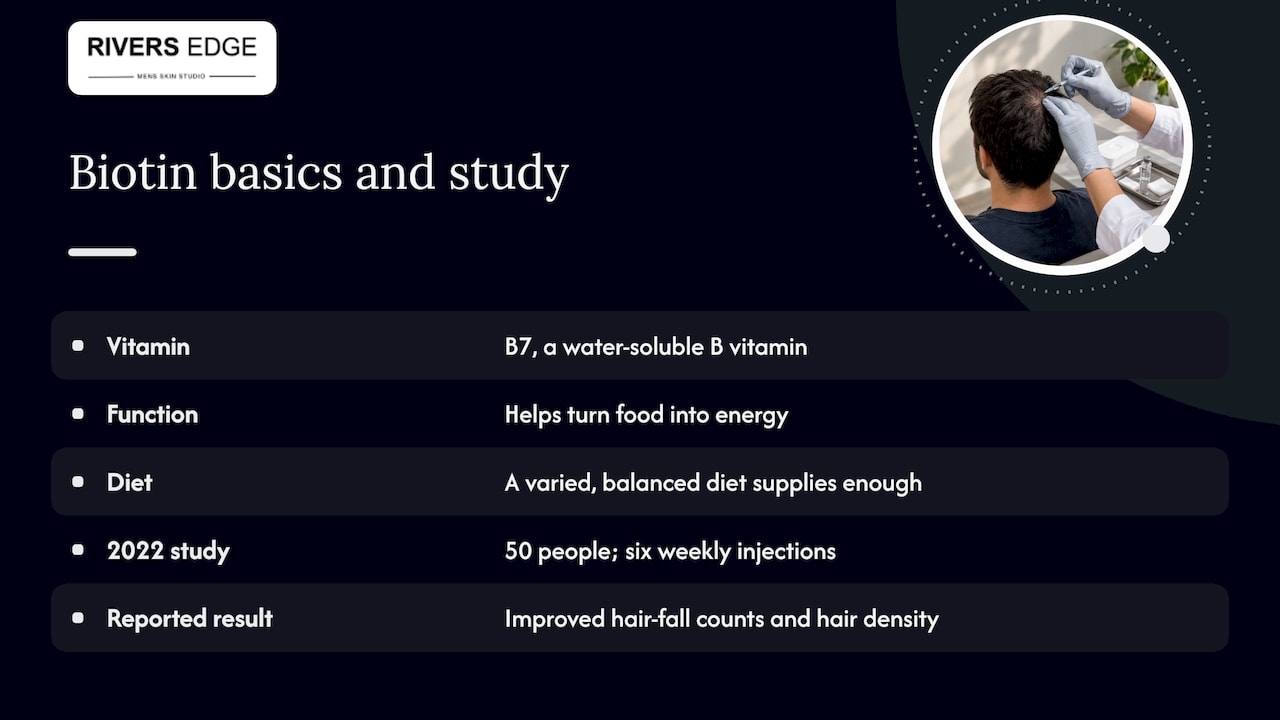
Biotin is vitamin B7, a water-soluble B vitamin that helps the body turn food into energy. The NHS says you should be able to get all the biotin you need from a varied and balanced diet, so most men never need to think about it.
Men who come to a clinic for a biotin injection are usually thinking about hair, skin and nails. A 2022 randomised, double-blind study of 50 people with diffuse hair loss used six weekly injections containing biotin and dexpanthenol, and the authors reported improved hair-fall counts and hair density. Biotin is also part of the wider conversation about how nutrition supports hair, and a piece on diet and hair health is a good companion read.
The injection goes into the muscle, so the vitamin is delivered directly rather than through the gut. That is why the side effects below are worth understanding before you book.
The common, mild side effects
Because biotin is water-soluble, the body clears what it does not use through urine. That is the main reason the risk of toxicity from it is considered very low.
When people do notice something, it tends to be one of these:
- Stomach upset: nausea, cramping or diarrhoea. It is uncommon and usually passes on its own.
- Injection-site soreness: a small tender spot, a little redness or a slight bruise where the needle went in. This is common to any intramuscular injection and settles within a day or two.
- Feeling a bit off for a few hours: some men feel mildly tired or lightheaded after any injection, especially if they have not eaten. Eating beforehand and sitting for a few minutes afterwards helps.
You will often see claims online that biotin causes spots or breakouts. Personal accounts of this circulate on forums, but they are anecdotal. If your skin changes after a course, mention it at your next appointment so your treatment plan can be adjusted.
Allergic reactions: the signs that need urgent help
A true allergic reaction to a vitamin injection is rare, but it is the one side effect where speed matters. Reactions to any injection tend to start within minutes to an hour.
WebMD lists the signs of a serious allergic reaction to biotin as breathing problems or wheezing, a racing heart, swelling of the face, lips, mouth, tongue or throat, trouble swallowing, hives, dizziness or fainting. Stomach cramps and joint pain can also appear.
A published case from the American Academy of Allergy, Asthma & Immunology describes a woman who developed itching, lip swelling, hives and low oxygen 15 minutes after self-administered injections containing biotin, and was treated with adrenaline and prednisone. It is a single case, but it shows why the first few minutes matter.
What to do:
- Tell the person who gave the injection straight away if you feel itching, tightness in the throat, swelling or faintness. This is one reason to have injections in a clinic, with someone beside you, rather than at home.
- Call 999 if you have difficulty breathing, swelling of the lips, tongue or throat, or you feel faint. Do not wait to see if it settles.
- Tell your GP afterwards, and mention the reaction before any future injections of any kind.
Before you have any injection with us, tell us about any previous reactions to vitamins, medicines or injections, and about anything you take regularly.
Biotin and blood tests: the effect most men miss
This is the part that does not appear on most side-effect lists, and it is the one that has led to UK guidance.
Many hospital and GP laboratory tests are immunoassays: they measure a hormone or marker using a chemical reaction that relies on biotin. Extra biotin in your blood can interfere with that reaction. Depending on the test design, the result can read falsely high or falsely low.
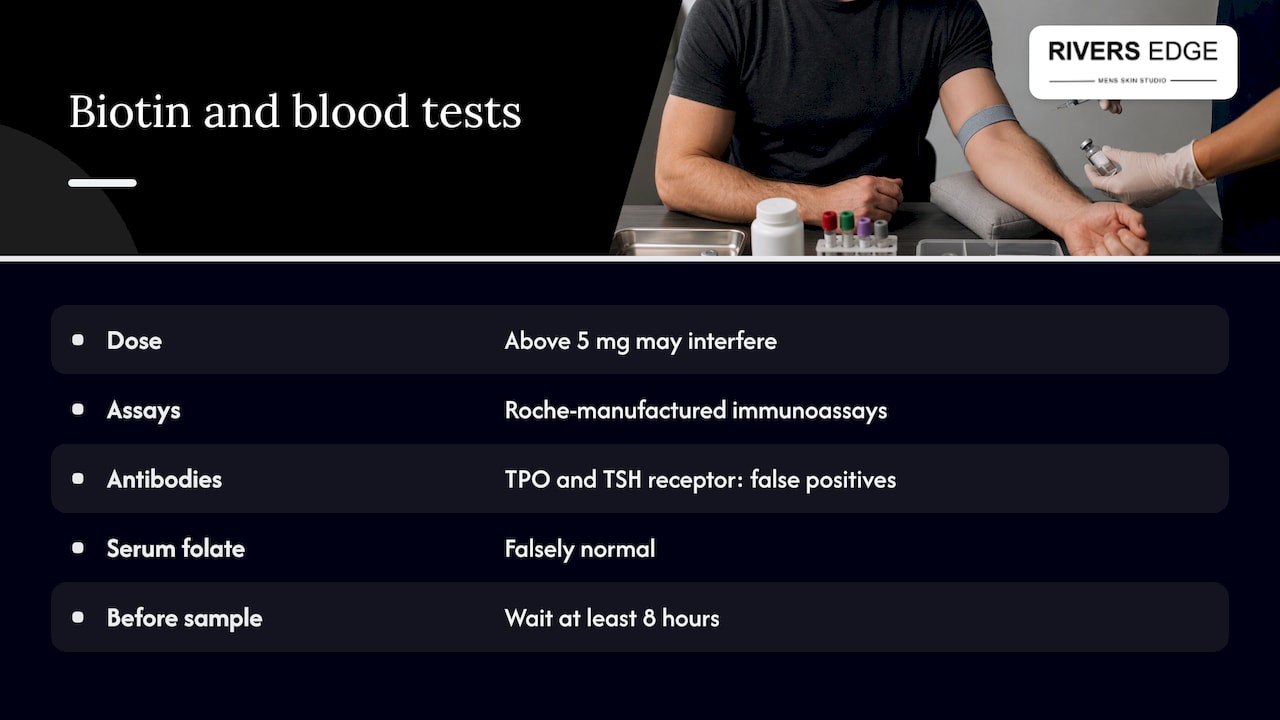
York Teaching Hospital NHS Foundation Trust's laboratory guidance says that biotin doses above 5mg may interfere with Roche-manufactured immunoassays, giving results that do not fit the clinical picture. It notes that this level is typical of over-the-counter hair, skin and nail supplements and that normal multivitamin intake poses no risk. The same guidance lists TPO antibodies and TSH receptor antibodies as giving false positives and serum folate as giving falsely normal results at supplement-level doses. It advises waiting at least eight hours after biotin before a sample is taken, ideally avoiding the supplement on the day of the test.
Manchester University NHS Foundation Trust gives the same warning: high-dose biotin can interfere with immunoassay blood tests and may produce misleading results, so biotin use should be taken into account when results are read.
Why thyroid tests matter most
In June 2023 the MHRA, the UK medicines regulator, issued a drug safety update on biotin and thyroid immunoassays. NICE then reviewed its thyroid disease guideline and decided to add a recommendation to ask adults, children and young people with suspected thyroid dysfunction about their biotin intake, because high consumption from supplements may lead to falsely high or low thyroid results. NICE's own evidence summary explains that the review followed the MHRA update of June 2023, which warned of a risk of misdiagnosis or inappropriate management.
That matters for men because tiredness, low mood and hair thinning are among the reasons men look at both biotin and thyroid testing. If you are having a thyroid check and have recently had a biotin injection, the lab needs to know.
What to say, and when
There is no single UK-wide rule for how long to leave between biotin and a test. The York guidance quoted above is the clearest published figure from an NHS laboratory: at least eight hours, ideally skipping biotin on the day. Laboratories differ, so the practical routine is:
- Tell whoever books or takes your blood test that you have had biotin injections, and when the last one was.
- Ask them whether your laboratory wants a longer gap for the test you are having.
- If a test is urgent, such as in an emergency department, say so at once. Do not hold back that you have had biotin because you feel it is minor.
- Where you can choose the timing, book your injection after the blood test rather than just before it.
We cover this in more detail, with the reasoning for men with hair loss, in our guide on avoiding false lab results with biotin injections.
Hair loss and your GP
The NHS advises anyone worried about hair loss to see a GP to find the cause, and its hair loss page is the place to read about patterns and causes. Sudden, patchy or scarring hair loss should be seen promptly. Hair loss can have many causes, from genetics to stress to thyroid and iron problems, and a GP can arrange the right tests.
A biotin injection can sit alongside that. If your GP orders blood tests, remember the points above and mention the injections. At our clinic we also offer scalp microneedling and scalp polynucleotides for hair loss, and we put together a personalised treatment plan for each man rather than a one-size-fits-all course.
Who we see, and how we run injectables
Our clinic treats men only. Injectables, including vitamin injections, anti-wrinkle injections and sweat (hyperhidrosis) injections, are for over-18s only.
We are open Monday to Saturday, 10:00 to 17:00, and closed on Sunday. If you have had a reaction to an injection before, take regular medication, or have a blood test coming up, tell us when you book so we can plan around it.
How often can you have biotin injections?
There is no NHS schedule for biotin injections. The NHS does not set one because it does not treat hair loss with them. The 2022 study mentioned above used weekly injections for six weeks, but that was a research protocol for a specific combination of ingredients, not a standard to copy.
The sensible approach is to agree a plan based on your goals and your health, review it after a few sessions, and pause before any blood test where the laboratory asks you to. Frequency is one of the things we settle with you during your personalised plan.
If you are interested in other vitamin injections, our guides to B complex injection benefits and how often to have B12 injections cover them in the same plain terms.
Our view: side effects are a planning question
Most men who ask us about side effects are really asking one thing: is this safe to put in my routine? For a water-soluble vitamin like biotin, the answer is that the effects people notice are usually small and short-lived. The things that deserve proper attention are the rare allergic reaction and the blood-test issue, and both are handled by being open about what you have had and when.
We built Rivers Edge around men, and that shapes how we approach it. Men tend to book in around work, the gym and family, and they often have a blood test or a check-up coming up. So we would rather talk through your timings and your history before the injection than leave you to find out later that a result looks odd.
Biotin is one of several vitamin injections we offer alongside our skin and hair treatments. Whether it is the right one for you depends on what you want to change, and that is a conversation, not a script. Bring your questions and your diary.
David
Book a biotin injection in Liverpool
We offer men's facials, chemical peels, microneedling, skin boosters, anti-wrinkle injections, sweat (hyperhidrosis) injections, polynucleotides, vitamin injections and hair-loss treatments, all in one men-only studio in Liverpool city centre. Biotin, vitamin B complex, vitamin C and vitamin D injections are listed on our services page, and you can book your appointment online.

If you are comparing options, our guides to vitamin C injection benefits and what to expect at your first aesthetic appointment will help you arrive prepared.
FAQ
Does biotin have any side effects?
Side effects are uncommon and usually mild, most often nausea, cramping or diarrhoea. A rare allergic reaction is possible with any injection, so tell staff immediately about itching, swelling or breathlessness. The more practical issue is its effect on some blood tests.
Can biotin injections affect my blood tests?
Yes. High-dose biotin can interfere with certain immunoassays, including thyroid tests, giving falsely high or low results. NHS laboratory guidance suggests waiting at least eight hours after biotin before a sample is taken, and you should always tell the person taking your blood that you have had it.
Does the NHS recommend biotin?
The NHS says a varied, balanced diet should provide all the biotin you need. If you are worried about hair loss, it advises seeing a GP to look for the cause. A biotin injection at a clinic is a personal choice that you can discuss with us alongside that advice.
How often should you get a biotin injection?
There is no set NHS schedule. One 2022 study used six weekly injections of a biotin and dexpanthenol combination, but your own plan should reflect your goals, your health and any blood tests coming up. We agree this with you at your appointment.
Who can have a biotin injection at your clinic?
Our clinic is for men, and injectables are for over-18s only. Book online, and tell us about any previous reactions, regular medication or upcoming blood tests so we can plan around them.
Sources
- Biotin (Vitamin B7): Uses, Side Effects, Interactions, WebMD
- Anaphylaxis associated with biotin, American Academy of Allergy, Asthma & Immunology
- York Teaching Hospital NHS Foundation Trust, laboratory guidance on biotin interference
- Manchester University NHS Foundation Trust, potential for biotin interference in immunoassays
- NICE, 2023 exceptional surveillance of thyroid disease (NG145)
- NICE, surveillance decision evidence for NG145
- NHS, hair loss
- PubMed, efficacy of intramuscular injections of biotin and dexpanthenol
- Does biotin help hair loss? The evidence
- Diet and hair health: what you eat truly matters