
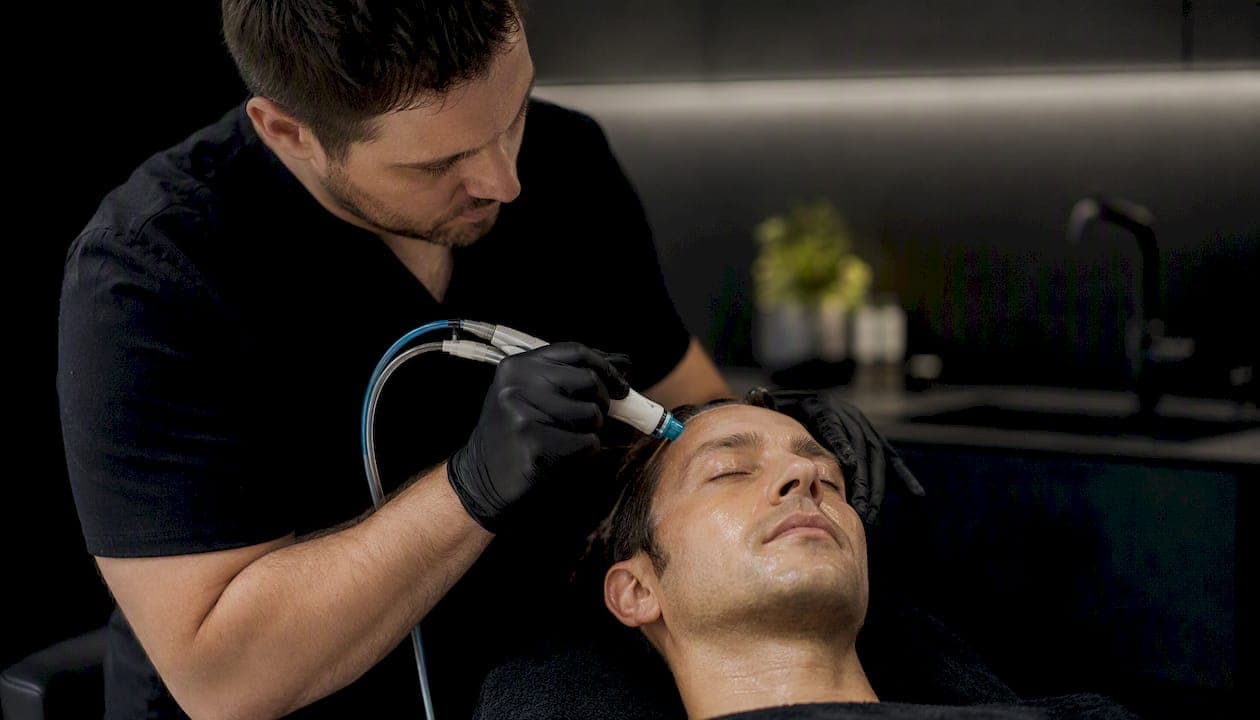
If you want an immediate glow and hydrated skin with zero downtime, HydraFacial is the sensible first choice. If you need to correct atrophic acne scars, deeper texture issues, or stimulate collagen over time, microneedling delivers results that a surface treatment simply cannot match.
The decisive differences at a glance:
- Downtime: HydraFacial has none; microneedling typically means 24–72 hours of redness and possible peeling.
- Results: HydraFacial works immediately after one session; microneedling builds cumulatively across a course of treatments.
- Best concerns: HydraFacial suits dehydration, dull tone, and maintenance; microneedling suits acne scars, fine lines, and texture correction.
- Skin tone safety: Both treatments are generally suitable across Fitzpatrick phototypes, though microneedling carries a lower risk of post-inflammatory hyperpigmentation than many laser alternatives.
At Rivers Edge Skin Studio, a personalised consultation maps your specific concerns to the right treatment before anything is booked. The American Academy of Dermatology confirms microneedling can fade scars and improve uneven skin tone, while UK clinics operating under CQC-aligned standards are expected to carry out a full skin assessment before any procedure.
Pro Tip: If you are unsure where to start, book a HydraFacial first. It calms and hydrates the skin, giving a clinician a clearer baseline before recommending a corrective course.
Key takeaways
Choosing between HydraFacial and microneedling comes down to one question: do you need immediate surface improvement, or structural correction over time?
| Point | Details |
|---|---|
| Instant glow vs corrective work | HydraFacial delivers same-day results; microneedling builds collagen across a course of 3–5 sessions. |
| Downtime trade-off | HydraFacial has no downtime; microneedling typically means 24–72 hours of redness and possible peeling. |
| Acne scars need microneedling | Clinical evidence from multiple RCTs supports microneedling as an efficacious treatment for atrophic acne scars. |
| Combining both is effective | HydraFacial and microneedling work well together when properly sequenced, never on the same day. |
| Rivers Edge Skin Studio | Offers both treatments with personalised plans for men in Merseyside, starting with a full skin assessment. |
Table of Contents
- How does a HydraFacial actually work?
- What is microneedling and how does it work?
- HydraFacial vs microneedling: a side-by-side comparison
- Which treatment works best for your specific skin concern?
- Can you combine HydraFacial and microneedling?
- What are the risks, and who should avoid each treatment?
- How to choose between the two treatments at your consultation
- How Rivers Edge Skin Studio approaches treatment selection
- A clinician's perspective on realistic outcomes
- Book your treatment at Rivers Edge Skin Studio
- Sources
How does a HydraFacial actually work?
HydraFacial is a branded vortex hydro-exfoliation treatment that combines cleansing, exfoliation, extraction, serum infusion, and protection in a single session. The device uses a spiral-tipped handpiece to simultaneously loosen debris and deliver targeted serums into the skin, rather than stripping and leaving the barrier exposed.
A typical session runs 30–45 minutes and follows a consistent sequence:
- Cleanse and peel — a gentle resurfacing solution loosens dead skin cells.
- Extract and hydrate — automated suction clears congested pores while hydrating serums are infused simultaneously.
- Fuse and protect — antioxidants and peptides are delivered to saturate the skin and support barrier function.
The primary benefits are immediate and visible: brighter tone, reduced surface congestion, improved hydration, and a smoother texture. These results make it particularly well suited to maintenance appointments and to men whose skin is sensitised or reactive. There is no meaningful downtime; most people return to normal activity straight away, with mild flushing that settles within a few hours.
In terms of UK clinic pricing, a single HydraFacial session typically varies based on the clinic's location, the clinician's seniority, and whether enhanced serums or add-ons such as LED therapy are included. Specialist men's clinics in cities like Liverpool tend to price sessions in line with the complexity of the treatment plan rather than as a flat retail rate.
Pro Tip: HydraFacial is the sensible preliminary treatment when skin is inflamed or barrier-compromised. Calming and hydrating the skin first gives microneedling a better surface to work on and reduces the risk of post-procedure sensitivity.
What is microneedling and how does it work?
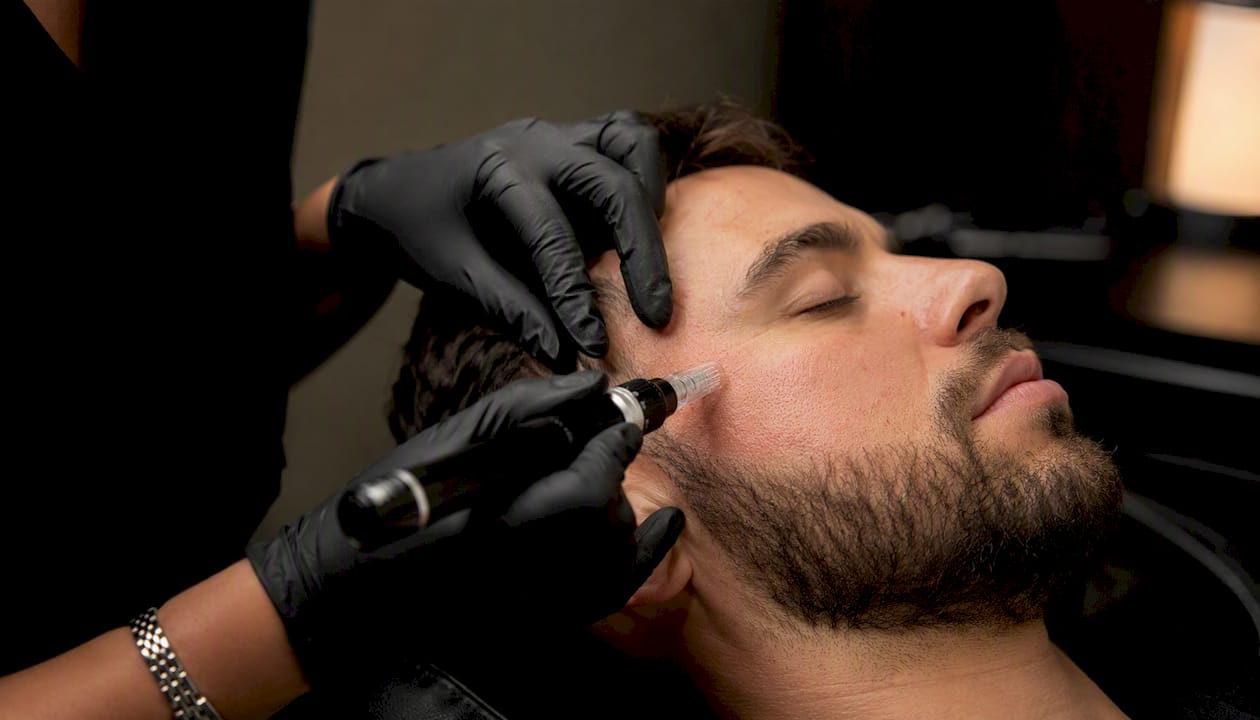
Microneedling, also called collagen induction therapy, creates controlled micro-injuries in the dermis using fine needles. The skin responds by triggering a wound-healing cascade: collagen and elastin production increases, and dermal remodelling follows over several weeks. The Cleveland Clinic describes it as a minimally invasive outpatient procedure suitable for scars, stretch marks, and wrinkles, with results that accumulate across a course of sessions.
Device types and what they mean for your results
Three main formats are used in clinical settings:
- Manual rollers — the original format, now largely replaced in professional settings due to inconsistent depth control.
- Powered pens (e.g., SkinPen, Dermapen) — motorised devices that allow precise needle depth adjustment; the standard in reputable UK clinics.
- Fractional radiofrequency microneedling (FRF-MN) — combines needle penetration with radiofrequency heat delivery at depth, producing stronger collagen remodelling and tighter results, particularly for lax skin and deeper scars.
According to a PMC clinical update, both standard microneedling and FRF-MN are generally well tolerated, can be combined with other therapies, and often carry less downtime than ablative lasers. Post-inflammatory hyperpigmentation remains a possible side effect, particularly with FRF-MN in higher Fitzpatrick phototypes.
What microneedling treats and how long it takes
The strongest evidence base is for atrophic acne scars. A systematic review of nine randomised controlled trials found consistent clinical improvement with no serious adverse effects reported across the included trials. Beyond scarring, microneedling is used for fine lines, skin texture, enlarged pores, and stretch marks.
A typical course runs 3–5 sessions spaced 2–4 weeks apart. Results are cumulative: most people notice meaningful improvement after the second or third session, with the full benefit visible 4–6 weeks after the final treatment as collagen matures. Topical anaesthetic is applied beforehand, and post-treatment redness usually settles within 24–72 hours.
For men with bearded skin, a pre-treatment shaving assessment is worth discussing at consultation, as hair follicle presence affects needle depth selection and aftercare guidance.
HydraFacial vs microneedling: a side-by-side comparison
The right choice depends almost entirely on what you are trying to fix and how much recovery time you can accommodate.
| Dimension | HydraFacial | Microneedling |
|---|---|---|
| Best for | Dehydration, dull tone, congested pores, maintenance | Atrophic acne scars, texture, fine lines, collagen induction |
| Mechanism | Vortex hydro-exfoliation with serum infusion | Controlled micro-injuries triggering collagen remodelling |
| Invasiveness | Non-invasive, no needles | Minimally invasive, fine needles penetrate dermis |
| Pain level | Minimal; mild suction sensation | Mild to moderate; topical anaesthetic used |
| Downtime | None; mild flushing for a few hours | 24–72 hours redness; possible peeling |
| Sessions needed | One session gives visible results; monthly maintenance common | Typically 3–5 sessions, spaced 2–4 weeks apart |
| Fitzpatrick suitability | Suitable for all phototypes | Suitable across phototypes; lower PIH risk than many lasers |
| Key risks | Rare sensitivity to serums; mild irritation | Redness, peeling, rare infection, possible PIH |
| Combines well with | LED therapy, skin boosters | PRP, chemical peels, skin boosters |
Quick decision rules:
- Want an immediate result before an event? Book a HydraFacial.
- Dealing with acne scarring or persistent texture? A course of microneedling is the appropriate route.
- Focused on monthly skin maintenance? HydraFacial fits that rhythm naturally.
- Need minimal downtime but want corrective results? Discuss FRF-MN at consultation, as it often delivers stronger remodelling with a manageable recovery window.
Which treatment works best for your specific skin concern?
Acne scars
Microneedling is the clearer choice here. The AAD confirms it can fade acne scars and improve uneven skin tone, and the systematic review evidence supports its use specifically for atrophic scarring. A comprehensive review of skin needling also found that combining microneedling with PRP or chemical peels can increase clinical benefit when scars are more pronounced. HydraFacial will not address the structural depth of atrophic scarring.
Fine lines and early skin laxity
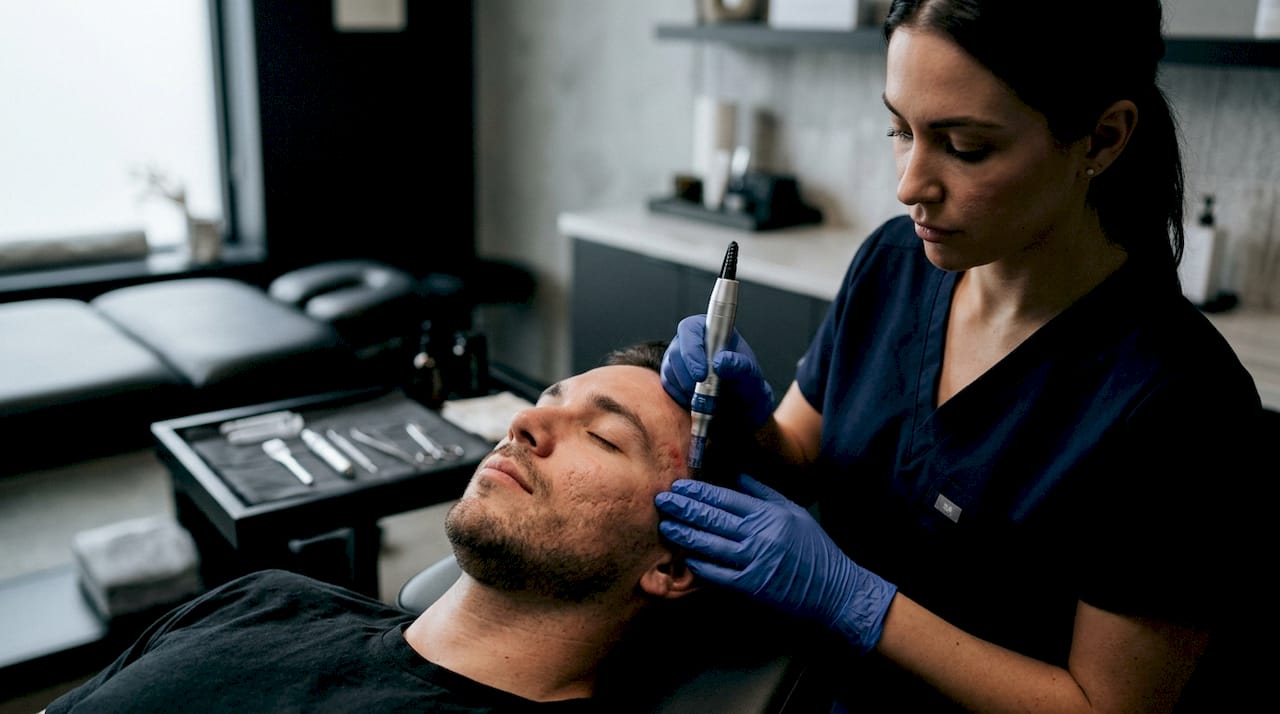
Microneedling again has the stronger corrective effect, particularly FRF-MN for laxity. HydraFacial can temporarily plump fine lines through hydration, which is useful for maintenance between corrective sessions.
Hyperpigmentation
Both treatments can help, but the approach differs. HydraFacial can deliver brightening serums directly into the skin during the infusion step. Microneedling promotes cellular turnover and can reduce pigmentation over a course, though clinicians should assess Fitzpatrick phototype carefully, as PIH is a documented risk. For darker skin tones, microneedling is often a preferable alternative to laser-based resurfacing precisely because it does not generate the same heat.
Enlarged pores and congestion
HydraFacial is the more direct solution. The extraction step physically clears pores, and the serum infusion supports ongoing pore health. Microneedling can reduce pore appearance over time through collagen remodelling, but it is not the first-line choice for congestion alone.
Dehydration and dull tone
HydraFacial is built for this. One session delivers measurable hydration and surface brightness. Microneedling does not address dehydration as a primary mechanism.
Pro Tip: Mixed presentations are common. If you have both dehydration and acne scarring, a staged plan often works best: start with a HydraFacial to restore the skin barrier, then begin a microneedling course once the skin is calm and well-hydrated.
Can you combine HydraFacial and microneedling?
Yes, and many men benefit from both. The key is sequencing them correctly rather than treating them as interchangeable.
Recommended order and timing:
- If your skin is reactive, dehydrated, or barrier-compromised, schedule a HydraFacial first. Allow at least two weeks before starting microneedling.
- During a microneedling course, schedule HydraFacial sessions in the gaps between needling appointments, not on the same day or within a week of a microneedling session.
- Once a corrective microneedling course is complete, monthly HydraFacial sessions work well as maintenance to preserve results and keep the skin hydrated.
What to avoid:
- Never book microneedling on actively inflamed or cystic acne-affected skin. The Cleveland Clinic notes this as a clinical pitfall that risks worsening inflammation and scarring.
- Do not combine both treatments in a single session; the skin needs recovery time between procedures.
- Avoid microneedling within two weeks of a chemical peel unless a clinician has specifically planned a combined protocol.
- Skip both treatments if you are using isotretinoin; most clinics require a waiting period of at least six months after completing a course.
A practical combined plan might look like this: a HydraFacial in month one to prepare the skin, a course of three microneedling sessions across months two and three, then a return to monthly HydraFacial maintenance from month four onwards. Combining microneedling with PRP during the corrective course is worth discussing if scarring is the primary concern, as the evidence supports improved outcomes.
What are the risks, and who should avoid each treatment?
Common side effects
HydraFacial: mild redness or flushing immediately after treatment, settling within a few hours. Rare sensitivity reactions to specific serums are possible, particularly in men with reactive or rosacea-prone skin.
Microneedling: transient redness and warmth lasting 24–72 hours, possible mild peeling, and occasional bruising at treated sites. Post-inflammatory hyperpigmentation is a documented risk, especially in Fitzpatrick phototypes IV–VI, though clinical evidence confirms microneedling generally carries less PIH risk than ablative laser resurfacing.
Who should avoid each treatment
- Active rosacea flare or skin infection: avoid both treatments until the skin is calm.
- Current isotretinoin use: avoid microneedling; most clinicians require a six-month post-course wait.
- Active cystic or inflammatory acne: avoid microneedling directly over affected areas.
- Blood-thinning medications or clotting disorders: discuss with a clinician before microneedling.
- Known allergy to specific serums: flag this before a HydraFacial.
UK professional standards and what to check before booking
The quality of the device, the clinician's training, and the clinic's hygiene protocols matter as much as the treatment itself. The AAD guidance stresses that microneedling should be performed by trained professionals who can select the correct needle depth and minimise infection risk. DIY approaches carry significantly higher complication rates.
Before booking, confirm:
- The clinician holds a recognised qualification in aesthetic medicine or dermatology.
- Single-use, sterile needle cartridges are used for microneedling (never reused).
- The clinic operates under appropriate UK regulatory standards; for clinics providing certain regulated activities, CQC registration may apply.
- A full medical history and skin assessment is taken before treatment.
- Informed consent and a written treatment plan are provided.
- Before-and-after photographs are taken to document progress.
Avoiding common microneedling mistakes such as incorrect needle depth or inadequate aftercare is largely a function of choosing a properly trained clinician rather than a budget provider.
How to choose between the two treatments at your consultation
A consultation is where the decision should actually be made, not before you walk in. That said, arriving with the right questions saves time and gives you a clearer outcome.
Questions worth asking at any reputable UK clinic:
- What device do you use for microneedling, and what needle depth range does it offer?
- How many sessions do you recommend for my specific concern, and why?
- What results have you documented for patients with a similar skin type and concern?
- Will you take before-and-after photographs throughout the course?
- What aftercare do you provide, and what should I avoid post-treatment?
- Are you CQC-registered or operating under equivalent UK regulatory oversight?
Red flags to watch for:
- No medical history taken before treatment.
- Blanket guarantees of specific results without a skin assessment.
- An offer to perform microneedling over active acne without any discussion of risk.
- Reusable needle cartridges or vague answers about sterilisation.
- No written treatment plan or consent form.
What affects the price
UK clinic pricing for both treatments varies based on several legitimate factors: the device used (FRF-MN costs more than a standard pen), the clinician's seniority and qualifications, whether PRP or enhanced serums are included, and the number of sessions in a package. A single HydraFacial session and a single microneedling session are priced differently, and a full corrective course is typically offered at a package rate. Be cautious of unusually low prices, as they often reflect compromises on device quality or clinician experience.
Pro Tip: Ask to see documented before-and-after results from the clinic's own patients, not stock images. A clinic confident in its outcomes will have them readily available.
At Rivers Edge Skin Studio, the initial consultation covers a full skin analysis, a discussion of your goals, and a written treatment plan before any commitment is made. For men with bearded skin, the assessment also includes guidance on shaving and preparation specific to facial hair.
How Rivers Edge Skin Studio approaches treatment selection
Rivers Edge Skin Studio specialises in men's aesthetic treatments, offering HydraFacial, microneedling, chemical peels, skin boosters, anti-wrinkle injections, and hair loss treatments from a single clinic in Merseyside.
The clinical approach to recommending one treatment over the other follows straightforward rules of thumb:
- HydraFacial is recommended for monthly maintenance, pre-event skin preparation, and as a first step for men whose skin is reactive or dehydrated.
- Microneedling is recommended for corrective courses targeting acne scarring, persistent texture, or fine lines, typically planned as a series of three to five sessions.
- Combined plans are structured so that HydraFacial prepares or maintains the skin around a microneedling course, never on the same day.
Every appointment begins with a skin analysis. If a patch test is needed before microneedling, that is arranged before the first treatment session. Progress is documented with photographs throughout any corrective course, so results are measurable rather than subjective. For men exploring advanced aesthetic treatments, the clinic also offers skin boosters such as polynucleotides, which can complement both HydraFacial and microneedling in a longer-term plan.
A clinician's perspective on realistic outcomes
The question men most often ask is which treatment will make the biggest difference fastest. The honest answer is that it depends entirely on what the skin actually needs. For someone with good baseline skin health who wants to look fresher, a HydraFacial delivers a visible result the same day. For someone with rolling or boxcar acne scars, a single session of anything will not move the needle; a committed course of microneedling, documented with photographs, is the only way to demonstrate real structural improvement.
Managing expectations is part of the job. Collagen remodelling takes weeks to mature after each microneedling session, so the full result of a course is not visible until four to six weeks after the last treatment. Men who understand this tend to stay the course and see the outcome. Those who expect immediate correction from microneedling often feel disappointed after session one, which is why the pre-treatment conversation matters as much as the procedure itself.
Individual results vary, and photographic documentation is not just a marketing tool; it is the only objective way to assess whether a treatment plan is working and whether adjustments are needed.
Book your treatment at Rivers Edge Skin Studio
Men in Merseyside who want clear, expert guidance on which treatment to book will find exactly that at Rivers Edge Skin Studio. The clinic offers HydraFacials for immediate skin improvement and maintenance, microneedling courses for corrective collagen work, and personalised treatment plans that combine both where appropriate.

Every new client starts with a full skin assessment, not a sales conversation. The clinician reviews your skin concerns, discusses realistic outcomes, and puts a written plan in place before any treatment begins. Qualifications, sterile technique, and documented results are standard, not optional extras.
To see the full range of men's skin treatments available, visit the services page or book your initial consultation directly online.
Sources
The following sources informed the clinical guidance in this article:
- Microneedling can fade scars, uneven skin tone
- Microneedling in the treatment of atrophic scars: A systematic review of randomised controlled trials
- Microneedling for the Treatment of Scars: An Update for Clinicians - PMC
- Microneedling: What It Is, Uses, Benefits & Results
This article is general information, not a substitute for advice from a qualified doctor. Consult a qualified healthcare professional about your own circumstances before acting on anything here.