

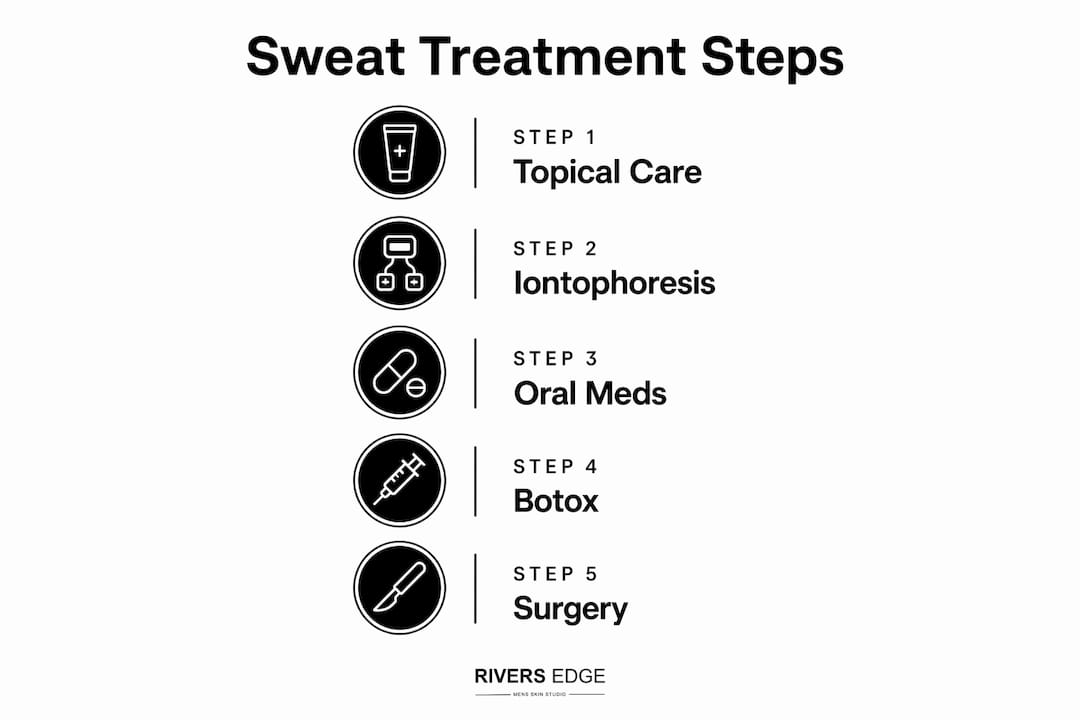
Excessive sweat treatment is the clinical management of hyperhidrosis, a condition where the body produces sweat far beyond what temperature regulation requires. The recognised medical term is hyperhidrosis, and it affects the underarms, palms, feet, and face most commonly. Effective options range from high-concentration aluminium chloride antiperspirants and iontophoresis to botulinum toxin injections and, in severe cases, surgery. A stepwise treatment approach starting with the least invasive option and escalating based on severity gives patients the best chance of lasting control.
How do topical treatments and clinical antiperspirants work?
Aluminium chloride antiperspirants are the first-line excessive sweat treatment for mild to moderate hyperhidrosis. At concentrations of 20 to 25%, they physically block sweat ducts by forming a gel plug inside the duct opening. Clinical antiperspirants reduce sweating by approximately 50% in mild cases, which is a meaningful reduction for men who struggle with visible underarm dampness or wet handshakes throughout the working day.
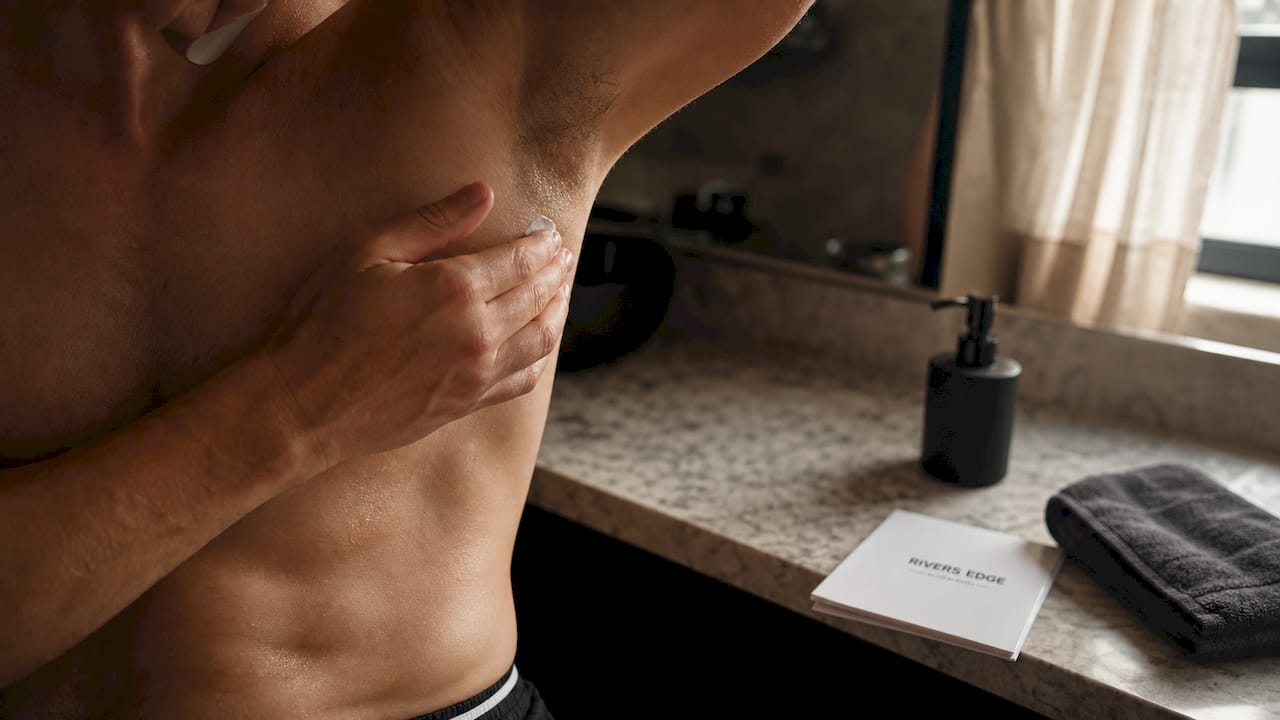
Consistent application over four to six weeks is what separates success from failure with this approach. Many men apply antiperspirant in the morning and wonder why it stops working by lunchtime. The reason is straightforward: sweat produced during the day washes the product away before it can form an effective plug.
Pro Tip: Apply aluminium chloride to completely dry skin at night before bed. This allows the active ingredient to penetrate sweat ducts during the hours when sweating is minimal, maximising efficacy and reducing the risk of skin irritation.
Beyond standard antiperspirants, topical anticholinergics such as glycopyrronium bromide cream represent a newer category of hyperhidrosis remedies. These work by blocking the nerve signals that trigger sweat glands locally, rather than physically plugging the duct. They are particularly useful for men who find aluminium chloride too irritating for sensitive facial or underarm skin.
Key points to manage with topical treatments:
- Start with the lowest effective concentration and increase gradually if results are insufficient
- Apply only to dry, intact skin to avoid stinging and contact dermatitis
- Wash off in the morning and allow skin to breathe during the day
- Expect at least four weeks before judging whether the treatment is working
- Discontinue and seek advice if persistent redness or broken skin develops
What is iontophoresis and how effective is it for hands and feet?
Iontophoresis is a non-surgical sweat treatment that passes a weak, controlled electrical current through water and into the skin surface, temporarily disrupting the function of sweat glands. The procedure is painless for most people and requires no needles or incisions. It is the most evidence-backed option for palmar hyperhidrosis (sweaty palms) and plantar hyperhidrosis (sweaty feet), two areas where antiperspirants are often impractical.
Iontophoresis success rates reach 80 to 93% in clinical studies for palmar and plantar hyperhidrosis. That figure places it among the most effective non-invasive sweat management solutions available, outperforming topical treatments for these specific areas.
A typical treatment schedule follows this structure:
- Initial phase: Two to three sessions per week for two to four weeks, with each session lasting 20 to 30 minutes
- Assessment: Evaluate sweat reduction after the initial course before deciding on maintenance frequency
- Maintenance phase: Weekly or fortnightly sessions to sustain results, as effects are temporary without ongoing treatment
- Home device use: Devices such as the Hidrex or Idromed are available for purchase, allowing maintenance sessions at home once the initial clinic course is complete
- Review: Reassess every three to six months with a clinician to adjust frequency based on seasonal changes or lifestyle factors
The main limitation of iontophoresis is that it works almost exclusively on the hands and feet. Axillary (underarm) hyperhidrosis responds poorly to this method. Men with generalised or multifocal sweating will need a different or combined approach.
Pro Tip: Tap water iontophoresis works well for most patients, but adding a small amount of glycopyrronium powder to the water can significantly improve results for those who do not respond to standard sessions alone.
When are oral medications used for treating excessive sweating?
Oral medications enter the picture when sweating affects multiple body areas simultaneously or when topical treatments have not provided adequate control. The most commonly prescribed agents are glycopyrrolate and oxybutynin, both of which belong to the anticholinergic drug class. They work by blocking acetylcholine, the neurotransmitter that signals sweat glands to activate, reducing sweating across the entire body rather than in one localised area.
Oral anticholinergics reduce sweating effectively for multifocal hyperhidrosis but carry systemic side effects that limit their long-term use for many patients. This is not a minor caveat. The side effect profile is the primary reason these medications are considered a second or third-line option rather than a starting point.
Common side effects to discuss with your prescribing clinician include:
- Dry mouth: The most frequently reported complaint, ranging from mild to severe enough to affect eating and speaking
- Blurred vision: Particularly relevant for men who drive or work with screens for extended periods
- Constipation: Can become problematic with prolonged use without dietary adjustment
- Urinary retention: A concern for older men or those with prostate issues
- Cognitive effects: Some patients report mild memory or concentration difficulties, particularly with oxybutynin at higher doses
Medical supervision is non-negotiable with oral anticholinergics. Dosing is titrated gradually, starting low and increasing only if tolerated, and regular review appointments are needed to monitor for side effects and assess ongoing benefit.
How do Botox injections and surgery address excessive sweating?
Botulinum toxin injections, commonly known as Botox, are the most widely used procedural treatment for axillary hyperhidrosis and represent a significant step up in both effectiveness and cost. The mechanism is precise: small injections of botulinum toxin A are placed into the skin of the affected area, where they block the nerve signals that activate sweat glands for several months at a time.
Botox injections reduce sweating by 82 to 87%, with results lasting six to twelve months per session. That level of reduction is transformative for men whose professional or social lives have been significantly affected by visible sweating. The treatment is performed in a clinic setting, takes around 30 minutes, and requires no downtime.
Comparing procedural options for hyperhidrosis
| Treatment | Effectiveness | Duration | Key consideration |
|---|---|---|---|
| Botulinum toxin injections | 82 to 87% sweat reduction | 6 to 12 months | Requires repeat sessions; clinic-based |
| Endoscopic thoracic sympathectomy | High for palmar sweating | Permanent | Risk of compensatory sweating |
| Sweat gland excision or curettage | High for axillary sweating | Long-lasting | Surgical recovery required |
| Iontophoresis | 80 to 93% for hands and feet | Temporary; requires maintenance | Best for palmar and plantar areas |
Surgical options are reserved for cases where all other treatments have failed. Endoscopic thoracic sympathectomy (ETS) involves cutting or clamping the sympathetic nerves that control sweating in the upper body. Surgical treatment can provide permanent relief but carries a well-documented risk of compensatory sweating, where the body redirects sweat production to the trunk, thighs, or back. This side effect affects a significant proportion of patients and can be more distressing than the original condition.
Key points to consider before pursuing procedural treatment:
- Botox is the preferred procedural option for underarm sweating before surgery is considered
- A skin consultation for men with a qualified practitioner is the correct starting point to assess candidacy
- Surgery requires referral to a specialist surgeon and thorough pre-operative counselling
- Compensatory sweating post-surgery cannot always be predicted or reversed
What lifestyle changes support managing excessive sweating?
Lifestyle adjustments do not replace medical treatment, but they reduce the daily impact of hyperhidrosis and support whatever clinical approach you are following. Wearing loose natural fibres and moisture-wicking fabrics, avoiding spicy foods and alcohol, and choosing breathable footwear all reduce the visible and social consequences of excessive sweating.
Practical self-care measures that complement medical treatment:
- Clothing: Choose loose-fitting shirts in natural fibres such as cotton or linen; avoid synthetic fabrics that trap heat and moisture
- Footwear: Wear moisture-wicking socks and rotate shoes daily to allow them to dry fully between wears
- Diet: Reduce intake of caffeine, alcohol, and spicy foods, all of which stimulate the sympathetic nervous system and increase sweat output
- Sweat shields: Disposable or reusable underarm shields protect clothing and reduce visible staining on days when sweating is higher
- Skin care: Use gentle, fragrance-free cleansers on affected areas to prevent secondary skin infections, which are more common in persistently moist skin
- Stress management: Emotional sweating is triggered by the same nerve pathways as thermal sweating; techniques such as controlled breathing or mindfulness reduce the frequency of stress-triggered episodes
Treatment adherence is the single most common reason topical therapies fail. Men who stop applying antiperspirant after two weeks because they see no change are abandoning treatment before it has had time to work. Patience and consistency are as important as choosing the right product.
Key takeaways
Effective hyperhidrosis management requires a stepwise approach, starting with topical treatments and escalating to procedural options only when conservative measures have been given a fair trial.
| Point | Details |
|---|---|
| Start with topical treatment | Aluminium chloride at 20 to 25% concentration reduces sweating by around 50% in mild cases. |
| Apply antiperspirant at night | Dry-skin night application maximises duct blockage and minimises irritation. |
| Iontophoresis for hands and feet | Success rates of 80 to 93% make it the strongest non-surgical option for palmar and plantar sweating. |
| Botox for underarm sweating | An 82 to 87% reduction lasting 6 to 12 months makes it the most effective procedural option before surgery. |
| Adherence determines outcome | Most topical treatment failures are caused by stopping too early, not by the treatment itself. |
Why I always start with the question nobody asks
After working with men on skin concerns for years, the pattern I see most often is this: someone arrives having already tried three or four products from a pharmacy shelf, decided they "don't work," and concluded that nothing will help. What they have rarely done is apply the right product correctly, at the right time, for long enough.
The stepwise management approach exists precisely because most men with hyperhidrosis have not actually exhausted their conservative options. They have tried them incorrectly. A clinical-strength aluminium chloride product applied to dry skin at night, consistently for six weeks, is a genuinely different intervention from a pharmacy antiperspirant used in the morning after a shower.
The second thing I always ask is whether anyone has ruled out a secondary cause. Hyperhidrosis can be a symptom of thyroid dysfunction, diabetes, or certain medications. Seeing a dermatologist first to exclude these causes is not bureaucratic box-ticking. It changes the treatment entirely if a secondary cause is found.
My honest view is that Botox injections are underused for axillary hyperhidrosis in men. The results are predictable, the downtime is zero, and the quality-of-life improvement is immediate. Men who have spent years avoiding certain colours of clothing or declining social situations because of sweating often describe the first treatment as genuinely life-changing. The cost is real, but so is the cost of doing nothing.
Modern treatments dramatically improve quality of life but there is no permanent cure for primary hyperhidrosis. Ongoing maintenance is part of the reality, and the sooner a man accepts that and builds a sustainable management plan, the better his outcomes will be.
— David
Ready to take control of excessive sweating?
At Riversedgeskinstudio, we specialise in men's skin treatments designed around your specific concerns, not a generic protocol. If excessive sweating is affecting your confidence or daily life, a personalised consultation is the right starting point.

Our team assesses your sweating pattern, rules out contributing factors, and recommends the most appropriate treatment from our range of men's skin treatments. Whether that means clinical-strength topical therapy, botulinum toxin injections, or a combined approach, every plan is built around you. Riversedgeskinstudio serves men across Merseyside, and booking is straightforward. If you want to know what to expect before you arrive, our guide on finding a men's skin clinic in the area covers everything you need.
FAQ
What is the most effective excessive sweat treatment?
Botulinum toxin injections deliver an 82 to 87% reduction in sweating lasting six to twelve months, making them the most effective option for axillary hyperhidrosis. For palmar and plantar sweating, iontophoresis achieves success rates of 80 to 93%.
How long does it take for clinical antiperspirants to work?
Clinical-strength aluminium chloride antiperspirants typically require four to six weeks of consistent nightly application before meaningful results are visible. Stopping early is the most common reason for perceived treatment failure.
Can hyperhidrosis be cured permanently?
Primary hyperhidrosis has no permanent cure, though surgical sympathectomy can provide long-lasting relief for palmar sweating. Most treatments require ongoing maintenance to sustain results.
Are there non-surgical options for treating excessive sweating?
Yes. Topical aluminium chloride, iontophoresis, topical anticholinergics, and botulinum toxin injections are all non-surgical sweat treatment options with strong clinical evidence behind them.
Should I see a doctor before starting hyperhidrosis treatment?
A medical assessment is recommended before starting treatment to rule out secondary causes such as thyroid disorders or medication side effects, which require a different management approach entirely.