

Hair regeneration is the process of stimulating miniaturised hair follicles back into active growth, restoring density and quality before permanent follicle loss occurs. The clinical term you will encounter in medical literature is androgenetic alopecia treatment, though "hair regeneration" accurately describes the biological goal. Proven hair restoration methods include finasteride, minoxidil, and platelet-rich plasma (PRP) therapy. Natural hair regrowth practices such as scalp massage and rosemary oil support these treatments but cannot replace them. The single most important factor in any hair loss recovery solution is timing. The earlier you act, the more follicles you can save.
What is hair regeneration and which hair loss types does it treat?
Androgenetic alopecia is the primary cause of hair loss in men, affecting the majority of men to some degree by their fifties. It works through a hormonal pathway: dihydrotestosterone (DHT) binds to follicle receptors and progressively shrinks them, a process called miniaturisation. Understanding this distinction matters because it determines whether your follicles can still respond to treatment.
There are two states a follicle can be in:
- Miniaturised but active: The follicle is shrinking and producing thinner, shorter hair. This is the critical window where medical and regenerative treatments are most effective.
- Dormant: The follicle has shut down completely. A smooth, shiny scalp with no fine hairs visible is a sign of dormant follicles that will not respond to minoxidil, PRP, or natural methods.
- Advanced loss (Norwood stages 5–7): At this stage, hair transplant is the definitive solution, not regenerative therapy.
- Non-genetic causes: Alopecia areata, telogen effluvium, and nutritional deficiencies can also cause hair loss, and these often respond well to targeted treatment.
The practical takeaway is straightforward. If you can still see fine, wispy hairs in the thinning area, your follicles are miniaturised but alive. That is your window. Act on it.
How do medical treatments for hair regeneration work?
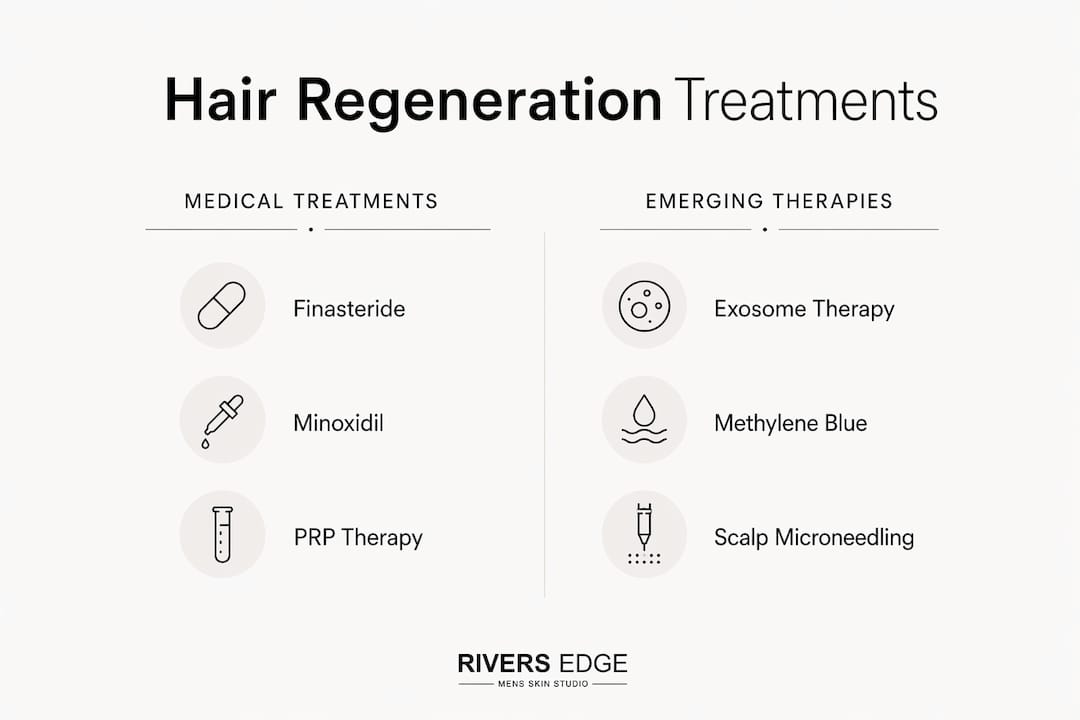
The three most established medical options are finasteride, minoxidil, and PRP therapy. Each targets a different part of the hair loss process, which is why combining them produces the strongest outcomes.
Finasteride: blocking the root cause
Finasteride is an oral DHT inhibitor. It works by blocking the enzyme 5-alpha reductase, which converts testosterone into DHT. Less DHT means less follicle miniaturisation. It does not regrow hair on its own in most cases, but it stops the progression that makes regrowth impossible. Finasteride requires a prescription and is not suitable for everyone, so a GP or dermatologist consultation is the right starting point.
Minoxidil: stimulating blood flow to follicles
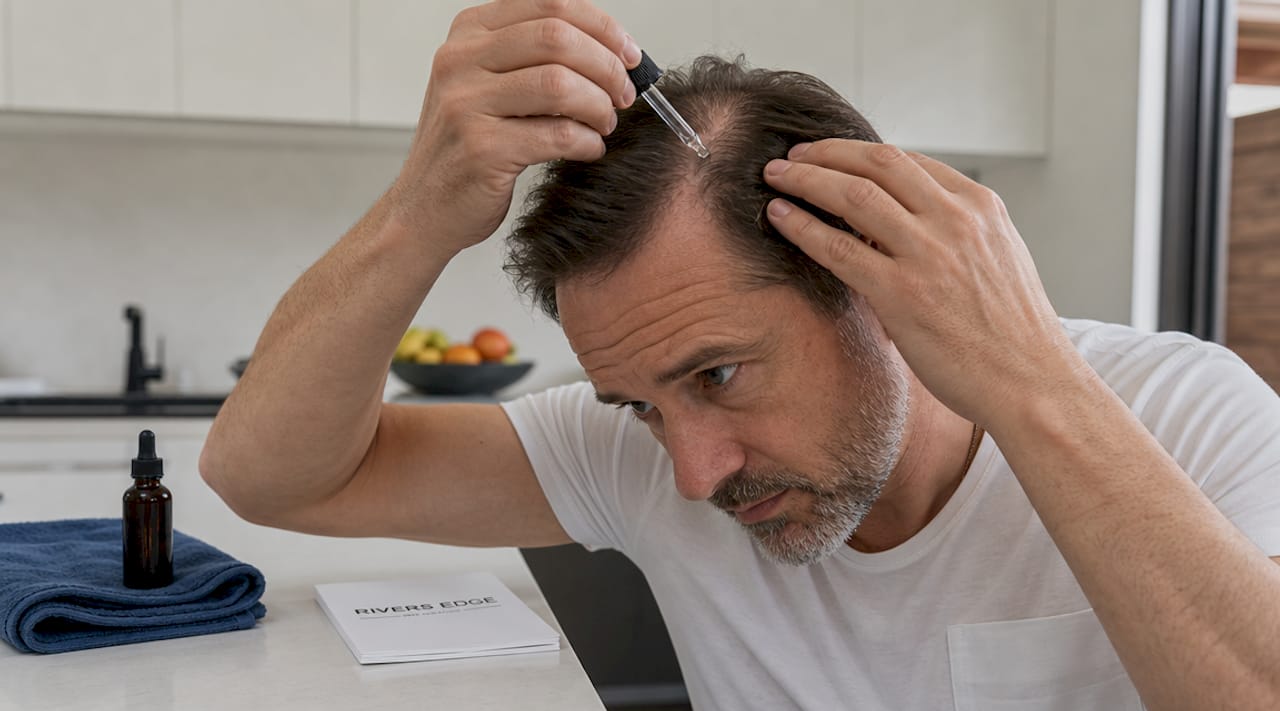
Minoxidil is a topical vasodilator applied directly to the scalp. It widens blood vessels around follicles, increasing oxygen and nutrient delivery. Visible regrowth typically appears within 4–6 months, with significant density improvement by 12 months. Minoxidil is available over the counter in 2% and 5% formulations. The 5% version is generally more effective for men. For guidance on how topical treatments interact with men's skin specifically, the local treatments guide at Riversedgeskinstudio covers this in detail.
PRP therapy: regenerating from within
Platelet-rich plasma therapy involves drawing a small amount of your blood, concentrating the growth factors through centrifugation, and injecting the plasma directly into the scalp. Those growth factors stimulate follicle activity and improve the scalp microenvironment. PRP combined with minoxidil produces a mean increase of approximately 20 hairs per cm², improving density from roughly 151 to 171 hairs per cm². That is a measurable, clinically significant result.
Pro Tip: PRP results vary considerably between clinics. Ask specifically about centrifugation speed, platelet concentration targets, and injection depth before booking a session. Standardised clinical protocols are what separate effective treatment from wasted money.
| Treatment | Mechanism | Timeline for Results | Maintenance |
|---|---|---|---|
| Finasteride | DHT inhibition | 6–12 months | Daily, ongoing |
| Minoxidil | Follicle vasodilation | 4–6 months visible | Daily, ongoing |
| PRP Therapy | Growth factor injection | 3–6 months | Monthly x3, then annual |
PRP sessions cost between $500 and $1,500 per session depending on the clinic and protocol. That cost underlines why protocol quality matters so much.
Which natural methods aid hair regrowth?
Natural approaches to stimulating hair growth are genuinely useful, but only within a specific context. They work best as complements to medical treatment, not as standalone solutions for genetic hair loss.
- Scalp massage: Regular massage increases blood circulation to follicles. Practised consistently three times weekly, it supports the scalp environment that medical treatments need to work in.
- Rosemary oil: Applied topically, rosemary oil has shown comparable results to 2% minoxidil in some small studies. It is a credible addition to a natural hair regrowth routine, particularly for men who want to reduce chemical load.
- Biotin and zinc: Nutritional deficiencies in biotin and zinc are linked to hair thinning. Supplementing these where deficiency exists supports follicle function, though supplementing beyond normal levels does not accelerate growth in healthy individuals.
- Reducing oxidative stress: Smoking, poor sleep, and chronic stress all increase oxidative damage to follicles. Addressing these factors removes barriers to regrowth.
Natural methods are insufficient alone for genetic hair loss. They do not block DHT or replicate the growth factor activity of PRP. Their real value is in reducing inflammation and improving scalp circulation, which makes the medical treatments work better.
Pro Tip: Apply rosemary oil mixed with a carrier oil such as jojoba directly to the scalp 30 minutes before washing. Consistency over 3–4 months is what produces results, not intensity of application.
Natural methods are also ineffective for advanced genetic loss at Norwood stages 5–7. At that point, the follicles are dormant and no amount of scalp massage or nutritional support will reactivate them.
How do emerging therapies improve hair regeneration outcomes?
The most interesting developments in hair loss recovery solutions are happening at the intersection of regenerative medicine and cellular biology. Two areas stand out: exosome therapy and mitochondrial antioxidants.
Exosomes are cell-derived vesicles that carry signalling molecules between cells. When applied to the scalp, they can communicate growth signals to follicle stem cells in a way that mimics the body's own repair processes. Early clinical data is promising, though standardised protocols are still being established.
Methylene blue is a mitochondrial-targeted antioxidant with a surprising application in hair science. Oxidative stress miniaturises follicles by damaging follicle stem cells at the mitochondrial level. Methylene blue protects those stem cells and synergises with minoxidil, offering a potential adjunct therapy that addresses a mechanism neither finasteride nor PRP directly targets.
| Emerging Therapy | Mechanism | Current Status |
|---|---|---|
| Exosome therapy | Cell signalling to follicle stem cells | Early clinical trials |
| Methylene blue | Mitochondrial antioxidant protection | Preclinical and early human data |
| Stem cell therapy | Direct follicle regeneration | Research phase |
The most effective approach right now is a multi-modal combination of minoxidil, finasteride, and periodic PRP, with emerging therapies added as evidence matures. No single treatment addresses every mechanism involved in androgenetic alopecia. A combined protocol does.
For men interested in how scalp microneedling fits into this picture, it is worth noting that microneedling enhances topical absorption and stimulates collagen production in the scalp, making it a practical bridge between natural and medical approaches.
What are the practical steps to starting a hair regeneration plan?
Starting treatment is straightforward. Sticking to it is where most men fail.
- Get a professional assessment first. A dermatologist or specialist clinic can confirm your Norwood stage, identify whether follicles are miniaturised or dormant, and recommend the right combination of treatments. Self-diagnosing and self-prescribing wastes time and money.
- Start with the proven core. Finasteride and minoxidil together form the foundation of any evidence-based plan. Add PRP once you have the core protocol established.
- Commit to the timeline. Early signs appear after 3–4 months, with full results taking 12–18 months. Stopping treatment at month two because you see no change is the most common and most damaging mistake men make.
- Support your scalp. Post-treatment scalp care matters more than most men realise. The post-treatment skincare steps guide from Riversedgeskinstudio outlines exactly what to do after procedures like PRP and microneedling to protect your results.
- Review and adjust at six months. If you are not seeing improvement after six months of consistent treatment, the protocol needs reviewing, not abandoning.
"Premature discontinuation is the single biggest reason men report that treatments 'didn't work.' The biology of hair growth requires sustained commitment before visible change occurs."
The critical window between miniaturisation and dormancy is real and finite. Every month of inaction narrows it.
Key takeaways
The most effective approach to hair regeneration combines DHT inhibition, follicle stimulation, and periodic regenerative therapy, started early and maintained consistently for at least 12 months.
| Point | Details |
|---|---|
| Act during miniaturisation | Treat while follicles are still active; dormant follicles do not respond to medical or natural methods. |
| Combine treatments | Finasteride, minoxidil, and PRP together target different mechanisms and produce stronger results than any single treatment. |
| Expect a long timeline | Visible results appear at 3–4 months; full density improvement takes 12–18 months of consistent treatment. |
| Natural methods support, not replace | Scalp massage, rosemary oil, and nutritional support improve scalp conditions but cannot block DHT or replicate PRP growth factors. |
| Protocol quality matters | PRP outcomes vary significantly between clinics; standardised centrifugation and injection protocols are non-negotiable. |
What i have learned about hair regeneration after years in men's aesthetics
Most men who come to a specialist clinic arrive six to twelve months too late. They have spent that time trying a single over-the-counter product, seeing no dramatic change, and concluding that nothing works. The reality is that they were using the right tool for the wrong stage of the problem.
The men who get the best results share one characteristic: they treat hair loss as a multi-layered biological problem, not a cosmetic inconvenience. They use finasteride to stop the hormonal damage, minoxidil to stimulate the follicles, and PRP to create the regenerative environment that makes both work better. They also do the unglamorous work of improving sleep, reducing stress, and following a consistent scalp care routine.
What I find genuinely exciting about the current state of the field is methylene blue and exosome research. These are not marketing terms. They represent a real shift in how we understand follicle stem cell biology. Within the next few years, I expect these to become standard adjuncts to the core protocol.
My honest advice: do not wait until the thinning is obvious to everyone else. The window where treatment makes a real difference is earlier than you think. Find a clinic that follows standardised protocols, get a proper assessment, and commit to at least twelve months. The men who do this consistently are the ones who keep their hair.
— David
Explore hair regeneration treatments at Riversedgeskinstudio
If you are ready to move from reading about treatment to actually starting it, Riversedgeskinstudio offers specialist hair regeneration and skin treatments designed specifically for men.

The clinic combines medical-grade protocols with regenerative therapies including scalp microneedling and PRP, all delivered within a personalised treatment plan. Every protocol follows current clinical standards, so you are not guessing at centrifugation speeds or injection depths. You can explore the full range of men's skin treatments and book a consultation directly through the Riversedgeskinstudio services page. A professional assessment is the fastest way to find out exactly where your follicles are and what they need.
FAQ
What is hair regeneration and how does it differ from hair transplant?
Hair regeneration stimulates miniaturised but still-active follicles to resume normal growth using treatments like minoxidil, finasteride, and PRP. A hair transplant relocates follicles surgically and is the appropriate option when follicles are completely dormant.
How long does it take to see results from hair regeneration treatments?
Early signs of regrowth typically appear after 3–4 months of consistent treatment. Full density improvement generally takes 12–18 months, depending on the combination of treatments used.
Can natural methods alone regrow hair in men?
Natural methods such as scalp massage and rosemary oil support scalp health and circulation but cannot block DHT or replicate the growth factor activity of PRP. They are effective complements to medical treatment, not standalone solutions for genetic hair loss.
Is PRP therapy worth the cost for hair loss?
PRP combined with minoxidil produces a clinically significant increase of approximately 20 hairs per cm², making it one of the most evidence-backed regenerative options available. Results depend heavily on the clinic's protocol quality, so research centrifugation standards before committing.
At what stage of hair loss is treatment no longer effective?
Follicles on a completely smooth, shiny scalp are typically dormant and will not respond to regenerative or medical treatments. At Norwood stages 5–7, hair transplant surgery is the appropriate solution rather than regenerative therapy.