
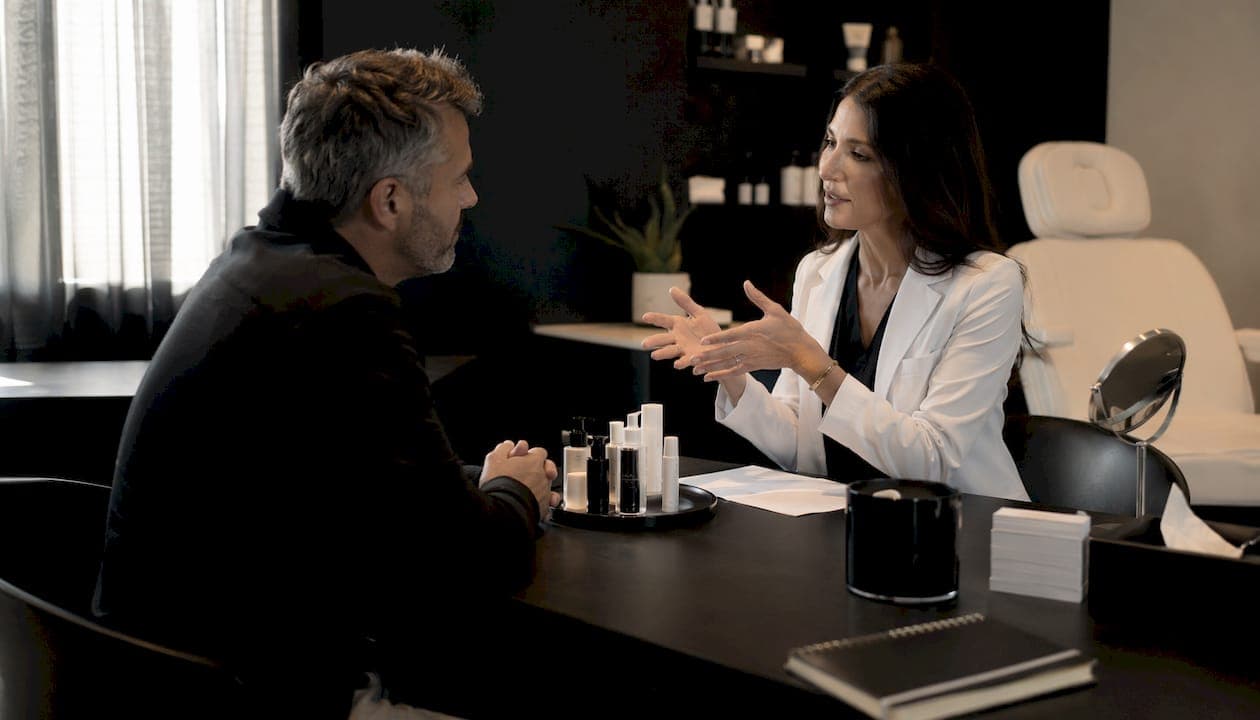
A red flag in a men's skincare clinic is any sign that the provider prioritises sales, speed, or profit over your skin health and safety. Spotting these warning signs before you book can protect you from poor outcomes, unnecessary procedures, and real physical harm. The men's skincare clinic red flags list below covers the most critical indicators, from missing medical oversight to manipulative pricing tactics. Men's skin has distinct physiological needs, and clinics that ignore those differences put you at risk from the first consultation.
1. What are the most common red flags in men's skincare clinics?
Pressure to book on the same day is the clearest sign a clinic values its conversion rate above your welfare. Legitimate providers give you time to consider your options, ask questions, and return for a second consultation if needed. Urgency tactics and same-day pressure indicate the clinic is not prioritising patient care. That pattern alone should end your interest.
Vague answers about products and procedures are equally serious. If a practitioner cannot name the specific product being injected, explain the mechanism of a treatment, or describe what happens if something goes wrong, walk away. Clinics that use terms like "medical-grade" without specifying concentrations, brands, or regulatory approval are using marketing language as a substitute for clinical transparency.
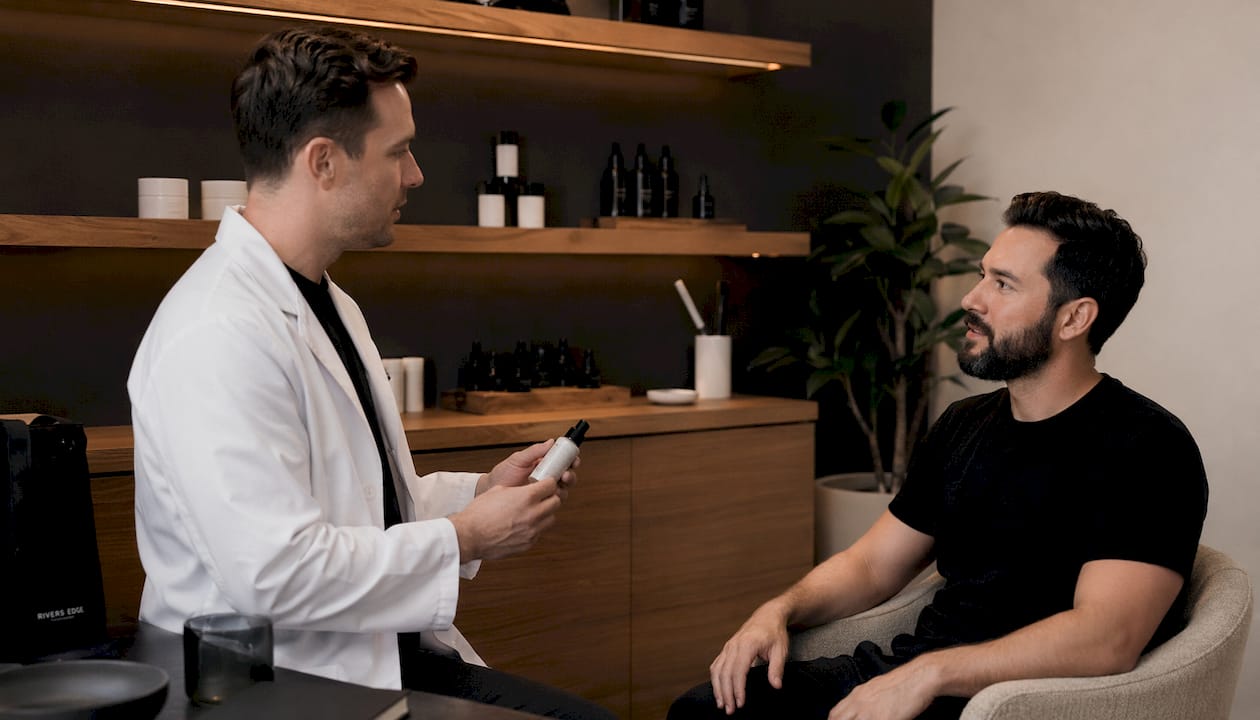
Pro Tip: Before any consultation, write down three questions about the procedure. If the practitioner deflects, rushes, or gives non-answers to all three, that is your answer.
Clinics with no visible medical director or physician involvement represent a structural red flag. Unclear physician involvement correlates directly with higher patient risk. Ask who the medical director is, what their qualifications are, and whether they are on-site during treatments.
Extremely low pricing without clear justification is another warning sign. Discounted anti-wrinkle injections or HydraFacials priced well below the local market rate usually reflect compromised product quality, undertrained staff, or both. Cheap is not a bargain when the cost is a complication on your face.
2. Why no-risk guarantees are always a red flag
Clinics that guarantee instant or permanent results are misrepresenting the nature of aesthetic medicine. Temporary redness, swelling, and bruising are normal after treatments such as microneedling or anti-wrinkle injections. Any clinic claiming zero risk is either uninformed or dishonest. Both are disqualifying.
Reputable clinics discuss the realistic range of outcomes before you sign anything. They explain what a good result looks like, what a typical result looks like, and what happens if you fall outside that range. That conversation is not a formality. It is the foundation of informed consent, and it is required by responsible clinical practice.
3. Why personalised care matters for men's skin
Men's skin differs physiologically from women's skin in ways that directly affect treatment outcomes. Male skin is typically thicker, produces more sebum, and ages differently due to hormonal variation. One-size-fits-all approaches contribute to pigmentation issues, scarring, and ineffective results. A clinic that uses the same protocol for every client, regardless of skin type or history, is cutting corners.
A proper consultation for men should cover the following:
- Skin type and tone assessment, including Fitzpatrick scale classification
- Current skincare routine and product use
- Medical history, including any medications that affect skin sensitivity or healing
- Lifestyle factors such as shaving frequency, sun exposure, and diet
- Previous aesthetic treatments and any adverse reactions
Clinics that skip this process and move straight to recommending treatments are not practising safe care. They are selling. Men's skin requires unique, personalised care due to hormonal and physiological differences, and clinics that ignore this put patient health at risk.
Pro Tip: Ask the clinic whether they use the Fitzpatrick scale to classify your skin tone before any laser or chemical peel treatment. If they look blank, that tells you everything about their level of expertise.
Understanding your own skin before you walk through the door also helps. A guide on how to identify your skin concerns gives you the vocabulary to ask better questions and spot when a clinic is not taking your individual profile seriously.
4. How to read before-and-after photos critically
Before-and-after photos are the most common marketing tool in aesthetic clinics, and the most commonly manipulated. Photos with inconsistent lighting or angles suggest the results are being presented more favourably than they actually were. Look for changes in shadow, camera distance, posture, and skin tone between the two images. These are not accidents.
| What to look for | Green flag | Red flag |
|---|---|---|
| Lighting consistency | Same light source, same angle | Brighter "after" photo, different angle |
| Skin type diversity | Multiple tones and types shown | Only one skin type represented |
| Complication discussion | Clinic mentions variability openly | Only perfect results shown |
| Photo volume | Large portfolio across treatments | Two or three cherry-picked images |
| Context provided | Age, skin type, treatment noted | No context, no detail |
A clinic lacking diverse skin type representation in its photo portfolio likely lacks experience managing pigmentation or scarring risks in men with different skin tones. This is a particularly serious concern for men with darker skin, where treatments like chemical peels and laser carry a higher risk of post-inflammatory hyperpigmentation if not managed correctly.
Genuine clinics show a range of outcomes, including cases where results were modest or required follow-up. That honesty signals clinical maturity, not weakness.
5. What aftercare and emergency support should you expect?
Every reputable clinic provides written aftercare instructions before you leave the building. This is not optional. Lack of written aftercare or unclear emergency contacts correlates with poor patient safety standards. Verbal instructions alone are insufficient because you will not remember everything when you are managing a reaction at home.
The aftercare documentation should cover:
- What is normal in the first 24–72 hours, including expected redness, swelling, or sensitivity
- Clear thresholds for when a reaction becomes a complication requiring contact
- A direct phone number or contact method for the clinic during and outside business hours
- Specific products to use and avoid during recovery
- A scheduled follow-up appointment or check-in protocol
Clinics that are dismissive when you ask about complications are signalling a poor safety culture. Open discussion about treatment risks is the mark of a trustworthy provider. If a practitioner seems annoyed by the question, that reaction is itself a warning sign.
6. How pricing and sales tactics reveal a clinic's priorities
Transparent, itemised pricing is a marker of clinical integrity. When a clinic cannot tell you exactly what you are paying for, or bundles treatments together in ways that obscure individual costs, it is harder to assess value and easier to be overcharged. Pricing far below market rates without clear explanation and aggressive upselling indicate the clinic prioritises profit over your outcomes.
Watch for these specific sales-driven behaviours:
- Time-limited discounts presented during or immediately after a consultation
- Recommendations for additional treatments you did not enquire about, with no clinical rationale
- Packages that require upfront payment for multiple sessions before you have seen any results
- Reluctance to provide a written quote before you commit
The men's skincare risks associated with sales-driven clinics extend beyond financial loss. Unnecessary procedures carry real physical risk. A clinic that upsells microneedling to someone with active acne, for example, can cause a significant flare rather than improvement. Understanding why men hesitate with clinics often comes down to exactly these kinds of experiences.
7. Credential verification: what to check before you book
Credential verification is not paranoia. It is due diligence. Ask for the name and registration number of the practitioner who will perform your treatment, then check it against the relevant regulatory body. In the UK, medical practitioners are registered with the General Medical Council (GMC), nurses with the Nursing and Midwifery Council (NMC), and aesthetic practitioners may hold qualifications from bodies such as the Level 7 Diploma in Clinical Aesthetic Injectable Therapies.
Clinics that label treatments as "medical-grade" or "clinic-based" without specifying credentials are using vague language to imply competence they may not possess. Credential verification and treatment customisation are more reliable safety markers than any marketing label. Ask directly, and expect a direct answer.
8. The consultation itself as a quality signal
The quality of your initial consultation tells you almost everything about how the clinic will treat you during and after a procedure. A good consultation takes time. It involves questions, not just answers. The practitioner should be asking about your goals, your history, and your concerns before recommending anything.
A consultation that lasts under ten minutes and ends with a treatment recommendation is a warning sign. So is a consultation that feels like a sales pitch rather than a clinical assessment. How to choose a local aesthetic clinic for men covers this in detail, including what questions to ask and what answers to expect from a reputable provider.
9. Online reviews: how to use them without being misled
Online reviews are useful but require critical reading. A clinic with hundreds of five-star reviews posted within a short period is a red flag. Genuine review accumulation is gradual and includes a realistic spread of ratings. Look for reviews that mention specific treatments, specific practitioners, and specific outcomes, including complications handled well.
Clinics that respond defensively or dismissively to negative reviews are showing you how they handle dissatisfied clients. A professional response acknowledges the concern and offers resolution. That behaviour in public is a reliable indicator of how the clinic behaves in private.
10. Lack of male-specific expertise
A clinic that treats men as an afterthought rather than a primary client group is unlikely to deliver results suited to male skin. Male-specific concerns such as razor burn, ingrown hairs, sebaceous hyperplasia, and the effects of daily shaving on skin barrier function require practitioners who understand and regularly treat these conditions. Local clinics dedicated to men's skin consistently outperform generalist providers on outcomes for male clients precisely because the expertise is built around male physiology rather than adapted from it.
Key takeaways
The single most reliable indicator of a safe men's skincare clinic is visible, verifiable medical oversight combined with a personalised consultation that addresses your specific skin type, history, and goals.
| Point | Details |
|---|---|
| Medical oversight is non-negotiable | Confirm the medical director's name and credentials before booking any treatment. |
| Personalised consultation is the baseline | Any clinic skipping skin type, medical history, or lifestyle questions is cutting corners. |
| No-risk guarantees signal dishonesty | Legitimate treatments carry inherent risks; clinics denying this are misleading you. |
| Written aftercare is a minimum standard | Verbal instructions alone are insufficient; always expect documented recovery guidance. |
| Pricing transparency reflects clinical integrity | Itemised quotes and honest consultations distinguish reputable clinics from sales-driven ones. |
What I have learned about spotting the clinics that actually care
The red flag I see men overlook most often is the one hiding in plain sight: a clinic that answers every question perfectly but never asks you a single one. A practitioner who launches straight into recommendations without understanding your skin history, your medications, or your lifestyle is not conducting a consultation. They are conducting a sales call with clinical vocabulary.
The credential check matters enormously, but it is not sufficient on its own. I have seen practitioners with impressive qualifications working in environments with no escalation protocol, no written aftercare, and no follow-up system. The qualification tells you what someone knows. The clinic environment tells you how they practise.
Trust your instincts about the physical space too. A clinic that feels rushed, where staff seem distracted or where the consultation room doubles as a waiting area, is telling you something about its operational standards. Good clinical environments are calm, private, and unhurried. That is not a luxury detail. It is a safety condition.
Men who research their options before booking consistently report better outcomes and fewer regrets. The men's skincare warning signs listed here are not obscure. They are visible at every stage of the booking process if you know what to look for.
— David
Riversedgeskinstudio: men's skincare done properly
Riversedgeskinstudio is built specifically for male clients, with every treatment designed around the physiological realities of men's skin rather than adapted from a general aesthetic menu.

Every client at Riversedgeskinstudio begins with a detailed skin assessment covering skin type, medical history, lifestyle, and treatment goals before any procedure is recommended. Practitioners are certified, medical oversight is visible, and aftercare documentation is provided as standard. Pricing is itemised and discussed openly during consultation, with no time-limited pressure tactics. Whether you are considering men's skin treatments such as HydraFacials, microneedling, anti-wrinkle injections, or chemical peels, the process starts with your skin, not a sales target.
FAQ
What is the biggest red flag in a men's skincare clinic?
The absence of visible medical oversight is the single clearest warning sign. Unclear physician involvement correlates directly with higher patient risk across aesthetic treatments.
Should I be worried if a clinic offers same-day booking pressure?
Yes. Pressure to book immediately or accept a time-limited discount indicates the clinic prioritises sales over your safety and considered decision-making.
How do I verify a practitioner's credentials in the UK?
Ask for the practitioner's full name and registration number, then check it against the GMC register for doctors or the NMC register for nurses. Both registers are publicly searchable online.
Are before-and-after photos reliable for assessing a clinic?
Only when they show diverse skin types, consistent photography conditions, and a realistic range of outcomes. Photos with inconsistent lighting or angles suggest the results are being presented more favourably than they were.
What aftercare should a reputable men's skincare clinic provide?
Written aftercare instructions, a direct emergency contact number, clear thresholds for identifying complications, and a scheduled follow-up are the minimum standards from any reputable provider.