
Skin concerns are defined as any visible or tactile changes to the skin that signal an underlying imbalance, damage, or condition requiring attention. For men, the most common include acne, sensitivity, dryness, excess oiliness, and early signs of ageing. UV radiation causes up to 80% of visible skin ageing, which makes identifying concerns early a genuine health priority, not a vanity exercise. Men's skin is physiologically thicker, produces more oil, and contains more sebaceous glands than women's skin. That combination makes men more prone to clogged pores, ingrown hairs, and breakouts. Knowing your skin type is the starting point for every effective men's skincare guide.
How to identify skin concerns: the men's guide to self-assessment
The most reliable home method for skin type identification is the naked skin test. It requires no products, no equipment, and takes under an hour. Follow these steps:
- Wash your face with a gentle, fragrance-free cleanser and lukewarm water.
- Pat dry with a clean towel. Do not rub.
- Wait 30–60 minutes without applying any product.
- Observe your skin in natural light. Note any shine, tightness, flaking, or redness.
- Press a clean tissue gently against different zones: forehead, nose, cheeks, and chin.
What you observe tells you your skin type. Shine across the entire face signals oily skin. Tightness or flaking indicates dry skin. Shine only on the T-zone with dry or normal cheeks points to combination skin. Redness, stinging, or a reactive feeling after cleansing suggests sensitive skin. Normal skin feels comfortable, balanced, and shows no extremes.
Skin type fluctuates with seasonal changes, stress, and age. That means a result from winter may not hold in summer. Reassessing every few months keeps your product choices accurate.
Pro Tip: Perform the naked skin test on a day when you have not used any active ingredients or exfoliants for at least 48 hours. Recent product use can temporarily alter your skin's behaviour and skew the result.
What are the common skin concerns men face?
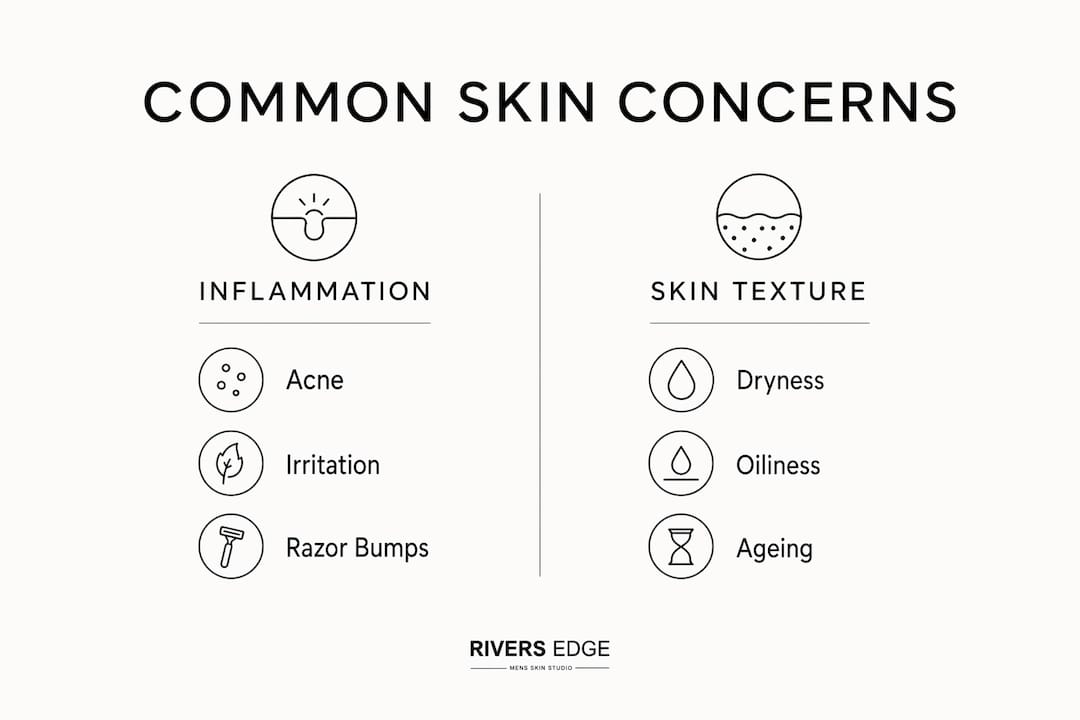
Recognising symptoms accurately is the core of any practical men's skin issue solutions approach. Each concern has distinct signs.
Acne and breakouts
Acne appears as whiteheads, blackheads, papules, or cysts. Whiteheads are closed, flesh-coloured bumps. Blackheads are open pores with oxidised sebum visible as dark spots. Papules are red, raised, and tender. Cysts are deep, painful, and often leave scarring. Acne most commonly appears on the forehead, nose, chin, and back.
Razor bumps and ingrown hairs
Razor bumps, clinically called pseudofolliculitis barbae, appear as small red or flesh-coloured raised spots along the shaving line. They form when cut hairs curl back into the skin. Ingrown hairs feel like hard, tender lumps and may contain a visible hair beneath the surface. Men with coarser or curlier hair are more susceptible.
Sensitivity and irritation
Sensitive skin reacts to products, temperature changes, or shaving with redness, stinging, or a burning sensation. The reaction is often immediate. Skin may look flushed or feel tight after contact with water, fragrance, or alcohol-based products.
Dryness and oiliness
Dry skin feels tight, looks dull, and may show fine flaking around the nose or cheeks. Oily skin appears shiny, particularly across the forehead and nose, and feels greasy to the touch within a few hours of washing. Both conditions can exist simultaneously in combination skin.

Early signs of ageing
Fine lines first appear around the eyes and mouth. Loss of elasticity makes skin look less firm, particularly along the jawline. Sun damage shows as uneven skin tone, dark spots, or a rough texture. These signs typically become visible from the mid-thirties onwards, though UV exposure accelerates the timeline considerably.
Which skincare ingredients should men prioritise?
Linking your skin assessment to the right ingredients is where a men's skincare guide becomes genuinely useful. Six ingredients have strong dermatological backing for men's common concerns.
| Ingredient | Primary benefit | Best for |
|---|---|---|
| SPF (broad spectrum) | Blocks UV damage | All skin types, daily use |
| Niacinamide (5%) | Regulates sebum, reduces redness | Oily, acne-prone, sensitive skin |
| Vitamin C | Brightens, supports collagen | Dull skin, sun damage, ageing |
| Retinol | Reduces fine lines, speeds cell turnover | Ageing, uneven texture |
| Gentle cleanser | Removes debris without stripping | All skin types |
| Moisturiser | Restores barrier function | All skin types, formulation varies |
Daily SPF is the single most impactful step for preventing visible ageing. No other product addresses the root cause of the majority of skin damage as directly.
Niacinamide at 5% concentration regulates sebum production and reduces redness without causing irritation. It suits oily and acne-prone skin particularly well, and it layers safely with most other ingredients.
Vitamin C brightens uneven skin tone and supports collagen production. It works best in the morning, applied before SPF, to counter the oxidative stress of daily UV exposure.
Retinol requires 8–12 weeks of consistent use before visible results appear. An initial purging phase, where skin temporarily becomes drier or more sensitive, is normal and temporary. Starting with a low concentration two to three nights per week reduces this reaction.
A simplified three-step routine of cleanser, moisturiser, and SPF consistently outperforms complicated regimens applied irregularly. Build complexity only after the basics are consistent habits.
Pro Tip: Men with oily skin should choose oil-free or gel-based moisturisers. These hydrate without adding shine or blocking pores, which is a common mistake when men assume oily skin does not need moisturiser.
What mistakes do men make when assessing their skin?
Misidentifying your skin type leads to using the wrong products, which worsens the original concern. These are the most common errors and how to correct them.
- Washing with hot water. Hot water strips the skin's natural oils, which triggers either dryness or compensatory excess oil production. Use lukewarm water every time.
- Treating skin type as permanent. Skin changes with seasons, stress, diet, and age. A skin type assessed in january may be different by july. Reassess every few months.
- Overcomplicating the routine too early. Adding five new products at once makes it impossible to identify which one is causing a reaction. Introduce one new product at a time, waiting two weeks between additions.
- Confusing purging with irritation. Retinol and acids cause a temporary purging phase. Genuine irritation from an incompatible product causes persistent redness or burning that does not settle. Knowing the difference prevents men from abandoning effective treatments prematurely.
- Skipping SPF on cloudy days. UV radiation penetrates cloud cover. Skipping SPF on overcast days accumulates the same long-term damage as skipping it in direct sun.
- Ignoring shaving as a skin variable. Shaving removes the top layer of skin cells and disrupts the barrier. Men who shave daily need to account for this when choosing cleansers and moisturisers, favouring gentler formulations.
A men's skincare routine built on accurate self-assessment avoids most of these pitfalls from the start. Getting the foundation right saves time, money, and skin health in the long run.
Key takeaways
Accurate skin type identification is the single most important step in building an effective skincare routine for men.
| Point | Details |
|---|---|
| Start with the naked skin test | Cleanse, wait 30–60 minutes, then observe shine, tightness, or redness without any products applied. |
| Reassess skin type regularly | Skin changes with seasons, stress, and age, so reassess every few months for accurate product choices. |
| Match ingredients to concerns | Use niacinamide for oily or acne-prone skin, retinol for ageing, and daily SPF for all skin types. |
| Keep routines simple first | A consistent three-step routine of cleanser, moisturiser, and SPF outperforms a complex one applied irregularly. |
| Avoid common assessment errors | Hot water, skipping SPF, and overloading products are the most frequent mistakes that worsen skin concerns. |
Why I think most men are one honest look away from better skin
I have worked alongside men at various stages of their skincare awareness, from those who have never owned a moisturiser to those who have tried every product on the market without a clear plan. The pattern I see most often is not ignorance. It is misidentification. Men apply the wrong products because they have never properly assessed what their skin is actually doing.
There is still a cultural reluctance among men to engage with skincare seriously. I understand why men avoid skincare clinics and why the topic can feel unnecessary. But skin is the body's largest organ. Protecting it is maintenance, not indulgence.
What I have found is that once a man performs a proper self-assessment and understands what he is looking at, the resistance drops quickly. The naked skin test takes less than an hour. The ingredient table above covers the six things that actually move the needle. The rest is consistency.
My advice is to start with one honest observation session, identify your one or two primary concerns, and add a single targeted ingredient. Do not wait until a concern becomes a problem that requires clinical intervention. The men I see who get the best results are not the ones with the most products. They are the ones who started simple, stayed consistent, and reassessed when things changed.
— David
Professional skin treatments for men at Riversedgeskinstudio
Self-assessment is a strong starting point, but some concerns need professional input to resolve fully.

Riversedgeskinstudio specialises in men's skin treatments including HydraFacials, chemical peels, microneedling, and anti-wrinkle injections, all tailored specifically for male skin. Each treatment plan begins with a thorough skin assessment, so the work you have done identifying your concerns translates directly into a personalised clinical approach. Whether you are managing persistent acne, early signs of ageing, or post-shave sensitivity, the clinic offers results-driven treatments in a comfortable, no-nonsense environment built for men. Booking a consultation is the natural next step after completing your own assessment.
FAQ
What is the naked skin test for men?
The naked skin test involves cleansing your face, waiting 30–60 minutes without applying any product, then observing shine, tightness, or redness. It is the most reliable home method for identifying your skin type.
How often should men reassess their skin type?
Skin type changes with seasons, stress, and age, so reassessing every few months gives the most accurate result. A skin type identified in winter may differ significantly by summer.
What causes most visible skin ageing in men?
UV radiation accounts for up to 80% of visible skin ageing. Daily broad-spectrum SPF is the most effective preventive step available.
How long does retinol take to work?
Retinol typically requires 8–12 weeks of consistent use before visible anti-ageing results appear. An initial period of dryness or sensitivity is normal and settles with continued use.
Is a simple skincare routine enough for men?
A consistent three-step routine of cleanser, moisturiser, and SPF outperforms complex regimens applied irregularly. Complexity should only be added once the basics are a daily habit.