

Most men aged 25–45 dismiss persistent skin problems as minor inconveniences. The signs men need professional skincare are defined as visible, recurring skin changes that a standard home routine cannot resolve, including chronic breakouts, premature ageing markers, and skin behaviour shifts that worsen despite consistent care. Recognising these indicators early prevents long-term damage and delivers results that no over-the-counter product can match. Techniques like microneedling, chemical peels, and HydraFacials, available at specialist clinics such as Riversedgeskinstudio, address the root causes that home routines simply cannot reach.
1. What persistent skin issues signal the need for professional skincare?
Chronic skin problems are the clearest indicator that home care has reached its ceiling. Acne that returns every month despite using salicylic acid cleansers, persistent redness that flares without an obvious trigger, and rough texture that no moisturiser smooths out all point to an underlying imbalance requiring clinical assessment.
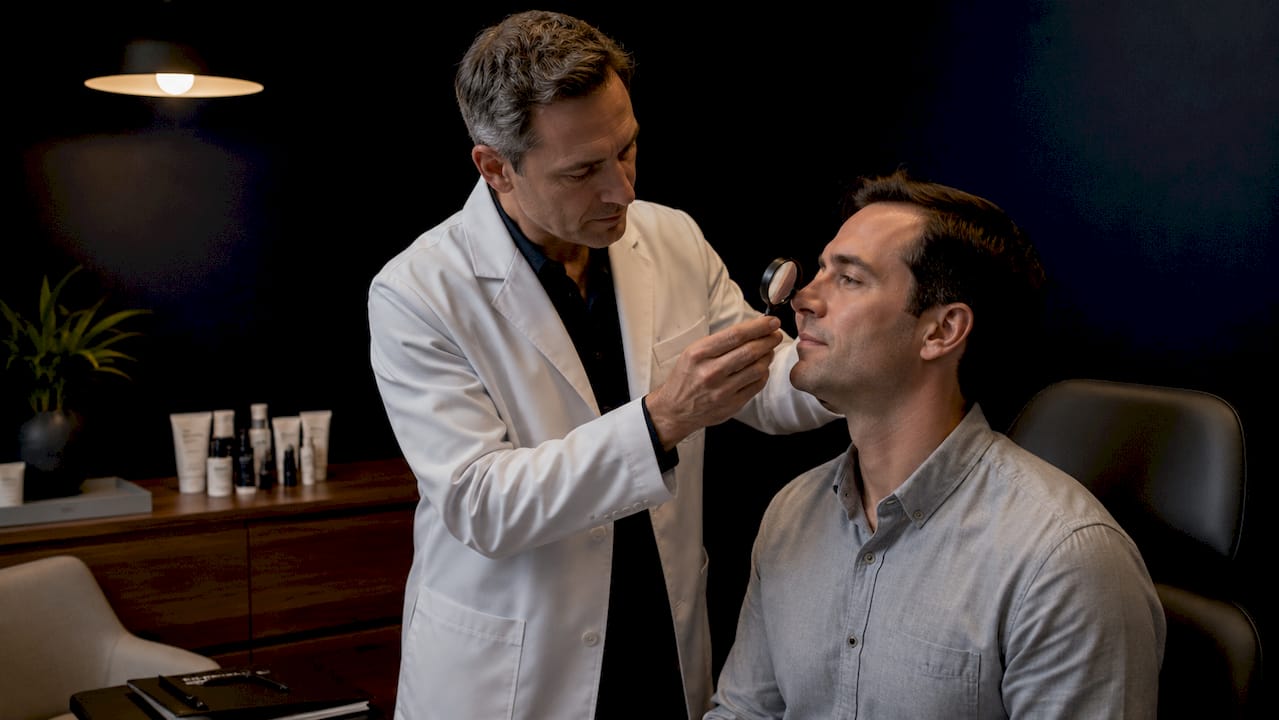
Conditions like rosacea and atopic dermatitis are frequently misread as ordinary sensitivity. Both require a professional diagnosis because treating them with the wrong products, such as harsh exfoliants or alcohol-based toners, actively worsens the skin barrier. A dermatologist or trained aesthetician can distinguish between these conditions and a simple reactive skin type.
Excessive oiliness or dryness that shifts with the seasons also signals an imbalance. When your skin swings between tight and flaky in winter and visibly greasy by midday in summer, a single off-the-shelf moisturiser will not correct the underlying sebum regulation issue. Professional assessment maps the cause and prescribes a targeted response.
- Acne that does not clear within 8–12 weeks of consistent over-the-counter treatment
- Redness or flushing with no clear dietary or environmental cause
- Persistent flaking or tightness despite daily moisturising
- Itching or stinging when applying products that are labelled as gentle
Pro Tip: If your skin reacts badly to three or more products labelled as suitable for sensitive skin, book a professional consultation before trying anything new. Continued trial and error risks damaging your skin barrier further.
2. How visible signs of premature ageing reveal a need for professional treatment
Fine lines that remain visible after a full night's sleep are not tiredness. They are a structural change in the skin's collagen and elastin network, and that distinction matters when choosing a treatment path. Persistent ageing signs like lines that do not soften after rest, rough texture that moisturiser cannot fix, and dark spots that deepen despite daily SPF all indicate the need for clinical evaluation.
Home retinol serums help when used consistently. Retinoids are recommended at 4–5 nights per week after tolerance is built, and they do produce results over time. The problem is that advanced collagen loss, deep pigmentation, and significant skin laxity sit beyond what any consumer-grade retinol concentration can correct.
Uneven skin tone is one of the most commonly ignored ageing signs in men. Patches of discolouration caused by sun exposure accumulate gradually, making them easy to dismiss as normal variation. A professional assessment identifies whether the cause is post-inflammatory hyperpigmentation, melasma, or UV damage, each of which requires a different clinical approach.
- Fine lines visible at rest, not just when squinting or smiling
- Dark spots that have deepened over 6–12 months despite sunscreen use
- Loss of firmness along the jaw or under the eyes
- Uneven skin tone that foundation or tinted moisturiser cannot mask
Professional treatments like chemical peels and microneedling address these changes at a cellular level. They stimulate collagen production and accelerate cell turnover at concentrations and depths that home products cannot safely reach.
3. When home skincare routines reach their limits
Every home skincare routine hits a biological ceiling. Active ingredients in consumer products are capped at concentrations that are safe for unsupervised use, which means they can only do so much. Consumer-grade chemical peels are capped at around 10% active acid, while professional treatments safely use 30–50%, making a single professional session equivalent to months of home treatment.
That gap in concentration is not a marketing claim. It reflects the reality that higher-strength actives require real-time monitoring to avoid damaging the skin barrier. Professional sessions involve real-time calibration of treatment intensity in response to how your skin reacts, something that is impossible to replicate safely at home.
Signs that your routine has plateaued include persistent dullness despite using vitamin C serums, enlarged pores that do not respond to niacinamide, and rough texture that remains after months of consistent exfoliation. These are not signs of a bad routine. They are signs that the routine has done what it can.
| Indicator | Home care result | Professional treatment result |
|---|---|---|
| Acid peel strength | Up to 10% glycolic acid | 30–50% glycolic or lactic acid |
| Collagen stimulation | Mild surface improvement | Deep dermal remodelling |
| Treatment monitoring | None | Real-time adjustment by practitioner |
| Results timeline | 6 months of consistent use | Visible improvement after one session |
Pro Tip: If you have used the same routine for six months without visible improvement, that is your signal to book a professional skin assessment rather than add another product.
4. How men's unique skin characteristics affect professional skincare needs
Male skin is physiologically different from female skin, and those differences affect both the problems men face and the treatments that work. Men's skin is thicker, produces more sebum, and is shaped by hormonal factors that create a distinct pattern of skin behaviour. That does not make it tougher or more resilient. It makes it different, and different requires a tailored approach.
The misconception that men's skin is inherently hardier leads many men to skip moisturiser, use harsh bar soaps, and ignore early signs of sensitivity. Hormonal fluctuations affect sebum production and can trigger breakouts well into a man's forties. Conditions like atopic dermatitis are not uncommon in men and require clinical management rather than generic products labelled as "for men."
Tailored clinical approaches address the specific combination of skin type, hormonal influence, and lifestyle factors that shape each man's skin. A personalised treatment plan from a specialist clinic accounts for shaving habits, diet, stress levels, and environmental exposure in a way that a shelf product cannot.
- Thicker skin requires higher active concentrations to achieve the same penetration depth
- Higher sebum production increases the risk of blocked pores and breakouts in men over 30
- Shaving creates micro-trauma that can worsen sensitivity and accelerate barrier breakdown
- Hormonal changes in men aged 35 and over can trigger new skin conditions that were not present in their twenties
Understanding your skin concerns as a man is the first step toward choosing the right professional treatment rather than cycling through products that were not designed for your skin's specific biology.
5. How to recognise when professional skincare can improve what home care cannot
The clearest trigger for seeking professional help is a condition that worsens despite doing everything right. Dark spots that deepen even when you apply SPF 50 every morning, breakouts that return within days of clearing, and skin that feels tight and reactive regardless of how gentle your routine is all indicate that home care is not the right tool for the job.
Melasma is a strong example. It is a pigmentation condition driven by hormonal and UV factors, and it responds poorly to over-the-counter brightening serums. Applying the wrong actives to melasma can trigger a rebound effect that darkens the patches further. Clinical evaluation identifies the condition correctly and prescribes a treatment protocol that will not make it worse.
Skin reassessment every six months is a practical standard for men who are actively managing a skin concern. Skin changes with age, season, and lifestyle, and a treatment plan that worked at 30 may not be appropriate at 38. Professional monitoring catches those shifts before they become visible problems.
- Dark spots that deepen despite daily SPF application
- Breakouts that return within one to two weeks of clearing
- Skin that stings or flushes after applying products you have used for months
- New patches of discolouration appearing after the age of 35
Pro Tip: Do not self-diagnose pigmentation. Melasma, post-inflammatory hyperpigmentation, and sun damage look similar but require completely different treatments. A professional assessment prevents months of wasted effort on the wrong products.
Physician-dispensed skincare is not about restricting access to strong products. It is about ensuring that high-concentration actives are used safely, with proper screening and ongoing adjustment. That level of oversight is what separates a clinical result from a home care plateau.
Key takeaways
Professional skincare for men is the necessary next step when persistent skin issues, visible ageing markers, or a plateaued home routine signal that consumer-grade products have reached their biological limit.
| Point | Details |
|---|---|
| Persistent skin issues | Chronic acne, redness, or dryness lasting beyond 8–12 weeks requires professional assessment. |
| Ageing signs at rest | Fine lines visible without expression and deepening dark spots indicate clinical treatment is needed. |
| Home routine plateau | Six months of consistent use with no improvement signals the limit of consumer-grade products. |
| Male skin physiology | Thicker skin, higher sebum, and shaving habits require personalised clinical plans, not generic products. |
| Professional monitoring | Real-time calibration during clinical sessions protects the skin barrier in ways home care cannot replicate. |
What I have learned from watching men delay professional skincare
Men consistently wait too long. In my experience working with male clients, the average man arrives at a specialist clinic after 18 months of trying to fix a problem with products that were never designed to solve it. By that point, the issue is more entrenched and the treatment timeline is longer than it needed to be.
The hesitation is understandable. There is still a cultural assumption that skincare is not a male concern, and that seeking professional help for your skin is excessive. That assumption costs men real results. The clients who come in early, often prompted by a partner or a photo that surprised them, consistently achieve better outcomes with fewer sessions.
What I find most telling is the moment men realise their routine has been working against them. Using a harsh scrub daily on a sensitised skin barrier, or layering three actives without understanding interactions, is not a minor mistake. It sets the skin back and makes professional correction harder. The comparison between professional and home skincare is not about one being superior in every situation. It is about knowing which tool is right for the problem in front of you.
My practical advice is this: if a skin concern has been present for more than three months and has not improved, stop adding products and book a consultation. One professional assessment gives you more accurate information than six months of trial and error.
— David
Riversedgeskinstudio: professional skincare built for men
Riversedgeskinstudio specialises exclusively in men's skin treatments, which means every service is designed around male skin physiology, not adapted from a general clinic's offering.

From men's skin treatments including HydraFacials, chemical peels, and microneedling, to anti-wrinkle injections and scalp treatments, each service at Riversedgeskinstudio begins with a personalised consultation. The clinic's approach is results-driven and grounded in clinical expertise, with treatment plans adjusted as your skin responds. If you have identified any of the signs covered here, a consultation is the logical next step. Book directly through the Riversedgeskinstudio website and get a clear picture of what your skin actually needs.
FAQ
What are the main signs men need professional skincare?
The main signs include chronic acne that does not clear within 8–12 weeks, fine lines visible at rest, dark spots that deepen despite SPF, and a home routine that has produced no visible improvement after six months of consistent use.
When should a man see a dermatologist about his skin?
A man should seek professional advice when a skin condition persists for more than three months, worsens despite a consistent routine, or involves new pigmentation, persistent redness, or suspected rosacea or atopic dermatitis.
Are professional skincare treatments worth it for men?
Professional treatments use acid concentrations of 30–50% compared to the 10% maximum in consumer products, meaning a single session can deliver results equivalent to months of home care.
How often should men have a professional skin assessment?
A professional skin reassessment every six months is a practical standard, particularly for men actively managing a skin concern, as skin behaviour changes with age, season, and lifestyle.
Is men's skin really different enough to need specialist treatment?
Male skin is thicker, produces more sebum, and is affected by hormonal factors and shaving habits that create distinct skin concerns. Generic skincare products labelled for men rarely account for this biology, making personalised clinical plans the more effective option.