
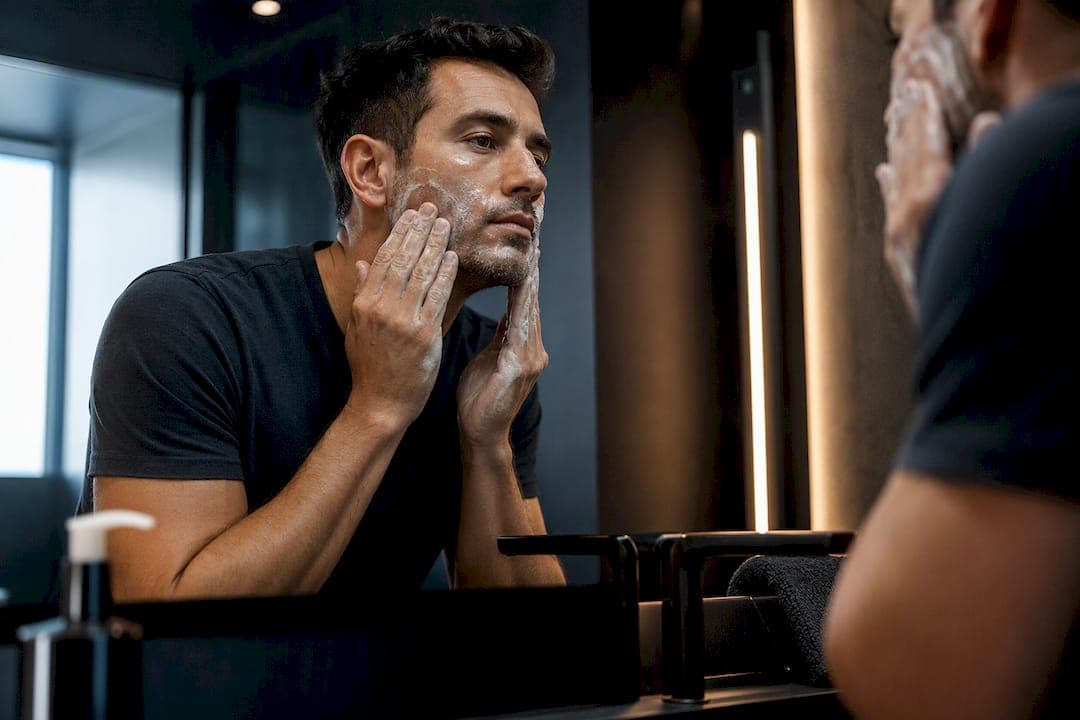
The simplest effective routine is cleanse, treat, moisturise and protect: gentle cleanser morning and night, an oil-free non-comedogenic moisturiser, daily SPF, and a targeted active such as salicylic acid or benzoyl peroxide introduced gradually. Oil needs controlling, not stripping. Most men see visible change within several weeks to months, and persistent or scarring breakouts warrant a GP or dermatologist visit rather than unsupervised changes to products.
TL;DR:
- Gentle cleansing twice daily with pH-balanced, soap-free gel cleansers prevents oil overproduction without drying out the skin.
- Using an oil-free, non-comedogenic moisturizer with SPF 30 or higher helps hydrate the skin without clogging pores or adding shine.
- Introducing active ingredients such as benzoyl peroxide or retinoids gradually over weeks minimizes irritation and improves long-term control.
- Evening routines should focus on thoroughly removing sunscreen and applying targeted actives before layering a moisturizer, with exfoliation limited to two or three nights weekly.
- Persistent congestion, scarring, or lack of progress after several months may require professional treatment, including clinic facials, chemical peels, or prescription topicals.
Table of Contents
- Morning routine: cleanse, treat lightly, moisturise, protect
- Evening routine: remove the day, introduce actives with care
- How the main active ingredients work and how to start them safely
- Everyday habits that quietly make oily skin worse
- When to see a GP or dermatologist and what clinic treatments add
- A balanced view on managing oily skin long term
- Where Rivers Edge Skin Studio fits into an oily skin routine
- Sources
- FAQ
Morning routine: cleanse, treat lightly, moisturise, protect
Oily skin reacts badly to harsh soap. Stripping away every trace of oil signals the sebaceous glands to produce more, so NHS guidance points to a gentle cleanser used twice daily rather than anything abrasive or heavily foaming. A soap-free, pH-balanced gel cleanser removes overnight oil without leaving skin tight.
After cleansing, a lightweight treatment step is optional. Niacinamide serums are well tolerated in the morning and sit comfortably under moisturiser, while stronger actives such as benzoyl peroxide or retinoids are better kept for the evening, since daylight and sweat can make them more irritating. Layer from thinnest to thickest: cleanser, serum if used, moisturiser, then SPF.
Choosing the right moisturiser matters more than most men expect. An oil-free, non-comedogenic formula hydrates without adding shine or blocking pores, and a combined moisturiser with SPF 30 or higher saves a step on busy mornings. The American Academy of Dermatology recommends oil-free and non-comedogenic labels specifically for this skin type, since the wrong base product can undo everything else in the routine.
Shaving adds friction and can spread oil and bacteria across the face, so timing and technique both count.
- Shave after cleansing, never before, so the blade moves across clean skin rather than trapped oil.
- Use a sharp, single-use or freshly stropped blade to reduce nicks that trigger inflammation.
- Rinse with cool water afterwards to help calm the skin before moisturiser goes on.
- For beard-adjacent areas, a light pass with a dedicated beard cleanser reduces oil transfer without over-drying the surrounding skin, an approach dermatology guidance for men supports.
Shine that reappears by lunchtime is common and does not mean the morning routine failed. A quick blot with tissue and, if needed, a light dusting of mattifying powder controls midday shine without adding another layer of product.
Pro Tip: Keep blotting papers in a jacket pocket or desk drawer. Pressing rather than rubbing lifts oil without disturbing sunscreen.
Evening routine: remove the day, introduce actives with care
Evenings are where most of the work happens, because this is when actives go on and the skin has all night to absorb them. The first job is removing sunscreen, sweat and grime thoroughly, since leftover SPF and pollution particles left on the skin overnight can contribute to congestion. A single cleanse is usually enough for men who wear standard sunscreen; a double cleanse, oil-based balm first followed by the usual gel cleanser, suits those wearing heavier or water-resistant SPF.
Once skin is clean and dry, actives go on in a specific order:
- Apply any prescribed or targeted treatment first, whether that is benzoyl peroxide, salicylic acid, a retinoid or azelaic acid, directly to affected areas rather than the whole face.
- Wait a few minutes for it to absorb before adding anything else.
- Finish with a non-comedogenic moisturiser over the entire face, including treated areas, to buffer the active and support the skin barrier.
Exfoliation fits in two or three evenings a week rather than daily. A chemical exfoliant containing salicylic acid suits oily, congestion-prone skin better than a physical scrub, which can create micro-tears and worsen inflammation. The NHS treatment guide for acne notes that treatments such as benzoyl peroxide, topical retinoids and azelaic acid typically need a 6 to 12-week course, and should always be paired with a moisturiser to limit irritation.
Skipping moisturiser after an active is one of the most common mistakes. Dry, irritated skin can trigger the same compensatory oil production that over-cleansing does, undoing the benefit of the active itself.
Pro Tip: If skin feels tight or flaky the morning after starting a new active, cut back to alternate nights for a week before returning to daily use.
How the main active ingredients work and how to start them safely
Four ingredients dominate oily and acne-prone skincare, and each suits a different pattern of oiliness or congestion.
- Benzoyl peroxide (BPO) reduces the bacteria associated with breakouts and helps clear blocked pores; it is commonly started as short-contact therapy, applied for around an hour before washing off, building up to leave-on use over two to four weeks as tolerance improves, a gradual approach used in primary care.
- Salicylic acid is oil-soluble, so it penetrates congested pores more effectively than water-soluble acids, making it a good fit for blackheads and rough texture; most over-the-counter formulas are used two to three times a week to start.
- Topical retinoids, such as adapalene, normalise skin cell turnover and prevent pores from clogging, but they carry a real risk of dryness and peeling in the first fortnight, so starting two or three nights a week and increasing gradually reduces irritation.
- Azelaic acid offers a gentler alternative or adjunct, calming redness and unclogging pores with less irritation than retinoids, while niacinamide can be layered alongside most of these actives to help regulate sebum.
Clinical reviews estimate that around 25% of adults have an oily skin phenotype, and the same research notes that long-term control works best when medical treatment and daily skincare are combined rather than relying on one or the other.
Over-the-counter actives are usually sufficient for mild to moderate oiliness and occasional breakouts. When lesions are widespread, deep, or leaving marks despite a consistent routine for several months, prescription-strength treatment or a combination approach is more likely to be needed, and that is a conversation for a GP or dermatologist rather than another product swap.

Everyday habits that quietly make oily skin worse
Small daily habits often undo an otherwise solid routine. The most common saboteur is over-cleansing: washing three or four times a day feels proactive, but it strips the barrier and pushes the skin into a rebound cycle of overproducing oil, a pattern reviews of sebum biology link directly to barrier disruption. Twice-daily cleansing, done gently and consistently, outperforms an aggressive routine every time.
- Change pillowcases weekly and gym towels more often, since fabric holds oil and transfers it straight back to the skin.
- Avoid touching or resting a phone against the face, both of which spread oil and bacteria across the cheeks and jaw.
- Wipe down after sweating rather than letting it sit, particularly after exercise or hot, humid days.
- Treat diet, sleep and stress as supporting factors rather than a fix: the evidence linking them to oiliness is modest, but poor sleep and high stress are commonly reported alongside flare-ups.
- Use blotting papers or a light powder for midday shine instead of an extra cleanse, which only restarts the oil cycle.
Consistency with a gentle routine beats intensity applied inconsistently, and that single shift resolves more complaints about persistent shine than any single product change.
When to see a GP or dermatologist and what clinic treatments add
Home care has limits, and knowing where they sit saves months of frustration. Referral to a dermatologist is generally appropriate when acne is scarring, when nodules or widespread inflammatory lesions appear, or when a consistent over-the-counter routine has not improved things after several months. Persistent oiliness that never settles despite gentle cleansing and appropriate actives is also worth a professional opinion, since hormonal factors can drive sebum production independently of surface skincare.
Oily skin has its advantages, including thicker skin and typically slower visible signs of ageing, and the goal of any routine should be balance rather than elimination.
Clinic treatments address what home care cannot always reach. A deep cleanse facial lifts congestion that daily cleansing misses, chemical peels improve texture and tone over a course of sessions, and microneedling is often used for acne scarring once active breakouts have settled. Prescription topicals, including stronger retinoids or oral options, come into play when over-the-counter strength plateaus.
A first clinic consultation typically involves a skin assessment, a discussion of current routine and any treatments already tried, and a plan tailored to the specific pattern of oiliness or scarring. Worth asking: how many sessions a given treatment usually needs, what results are realistic, and how it fits alongside an existing home routine. Rivers Edge Skin Studio offers exactly this kind of assessment for men, with treatment plans built around visible, natural-looking outcomes rather than a one-size approach.

A balanced view on managing oily skin long term
The biggest mistake men make with oily skin is treating it as a problem to eliminate rather than a trait to manage. Skin genuinely built to produce more oil will keep doing so no matter how many products promise to switch it off, and chasing a completely matte face usually ends in barrier damage and worse breakouts than the ones you started with.
Patience matters more than most routines admit. Actives need weeks to months to show their full effect, and switching products every fortnight resets the clock every time. A stepwise approach, consistent basics first, one active introduced at a time, works better than an ambitious five-step routine started all at once. When progress genuinely stalls, that is the point to bring in a professional rather than another serum.
— David
Where Rivers Edge Skin Studio fits into an oily skin routine
A good home routine handles most day-to-day oiliness, but persistent congestion, visible scarring or slow progress are where clinic treatments earn their place. Rivers Edge Skin Studio works exclusively with men's skin, so treatment plans are built around male skin thickness, oil production and shaving habits rather than adapted from women's protocols.

- Deep Cleanse Facial (£35) lifts congestion that daily cleansing cannot reach.
- Chemical peels (from £60 for a single treatment) improve texture and tone over a course.
- Microneedling (from £70) supports scarring left by past breakouts.
Men with ongoing congestion, visible scarring, or who simply want faster results than a home routine alone provides tend to benefit most from these sessions. Full details and online booking are available on the Rivers Edge Skin Studio services page.
This article is general information, not a substitute for advice from a qualified doctor. Consult a qualified healthcare professional about your own circumstances before acting on anything here.
Sources
- Acne - NHS
- Oily skin - American Academy of Dermatology
- Review on sebum biology and treatments (semanticscholar pdf)
FAQ
How can men reduce oily skin day to day?
Gentle cleansing twice daily, an oil-free non-comedogenic moisturiser and daily SPF form the baseline, with a targeted active such as salicylic acid or benzoyl peroxide added gradually for congestion. NHS guidance recommends avoiding harsh scrubbing, since it tends to increase oil production rather than reduce it.
What is the 4-2-4 rule in skincare?
This is not a recognised dermatological guideline from the NHS or AAD, and definitions circulating online vary widely. Stick to an evidence-based routine of cleanse, treat, moisturise and protect rather than a numbered rule with no clinical backing.
Does oily skin mean higher testosterone?
Sebum production is influenced by androgens, but oily skin alone is not a reliable marker of testosterone levels, since research on sebaceous gland regulation shows the relationship is complex and varies between individuals. A dermatologist or GP is the right route for any genuine hormonal concern.
Does oily skin age more slowly than dry skin?
Oily skin tends to show visible signs of ageing later, since the extra sebum helps maintain skin thickness and hydration over time, a point the American Academy of Dermatology associates with this skin type. This does not remove the need for daily SPF and a consistent routine to protect the skin barrier.
How long before an oily skin routine shows results?
Most men notice a difference within several weeks, with fuller improvement typically taking up to a few months once an active treatment is introduced and used consistently. Persistent oiliness or breakouts beyond this point are worth discussing with a GP or dermatologist.