
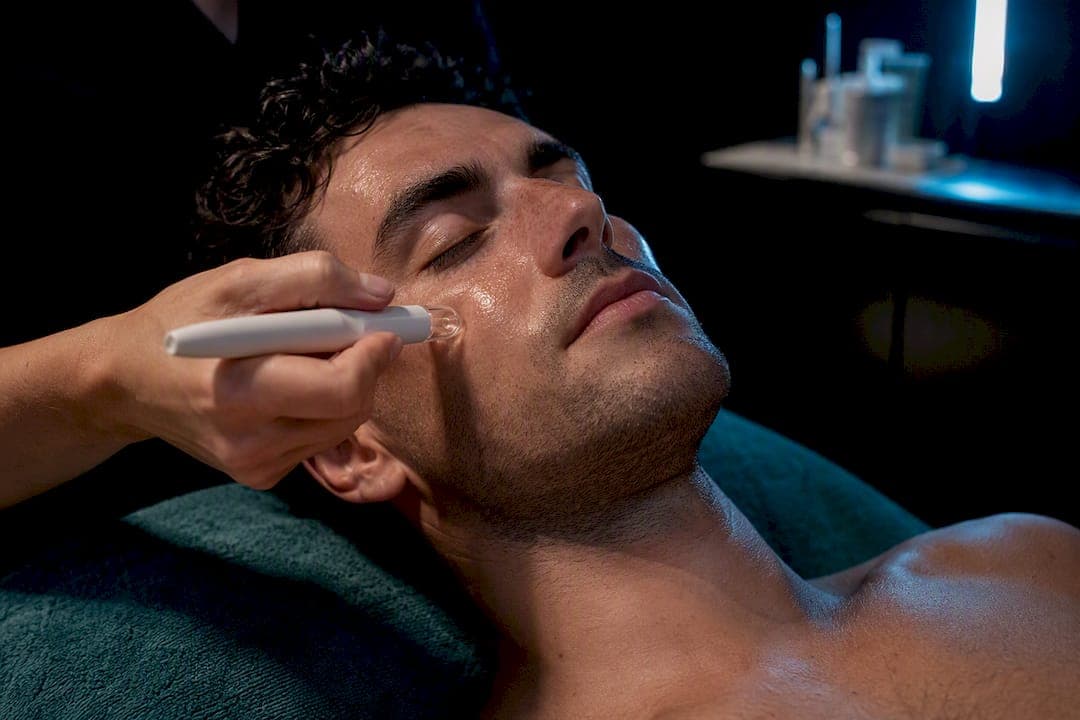
The strongest evidence for treating oily, acne-prone male skin points to four in-clinic treatments: HydraFacial for oiliness and congestion, lipophilic chemical peels for inflammatory acne, microneedling for scarring and pore refinement, and combination protocols that stack these approaches for faster, more stable results. Single treatments help. Personalised, combined plans tend to do more, and last longer.
TL;DR:
- Combining HydraFacial, chemical peels, and microneedling in a tailored protocol offers the most stable and significant results for oily, acne-prone male skin.
- Treatment courses typically include six HydraFacial sessions over 12 weeks, two to six peel sessions, and three to five microneedling treatments, with maintenance every few months.
- Proper clinic selection, including practitioner experience and equipment, and avoiding treatments after recent isotretinoin use or active infection, is essential for safety and effectiveness.
- Post-treatment care emphasizes daily sun protection with oil-free sunscreens, gentle moisturizers, and consistent skincare routines to sustain results.
- Lifestyle factors such as stress, sleep, and diet influence sebum production, making them important to support professional treatment outcomes.
Table of Contents
- What oily skin treatment for men actually involves
- Why combination therapy beats single treatments
- What to expect: sessions, timeline and downtime
- How to choose a clinic and prepare for consultation
- Post treatment care and maintenance plan
- Building a daily routine that supports your clinic results
- How diet, stress and sleep affect oily skin
- Where topical treatments fit alongside clinic care
- Getting sun protection right for oily male skin
- Common myths about treating oily skin in men
- Rivers Edge Skin Studio's approach to treating oily male skin
- Book a consultation at Rivers Edge Skin Studio
- Sources
What oily skin treatment for men actually involves
Oily skin treatment for men is a clinical category, distinct from the daily grooming products lining a bathroom cabinet. It means procedures delivered by a trained practitioner: HydraFacial, chemical peels, microneedling, and injectable adjuncts such as skin boosters or PRP. Each targets a different part of the problem, and the right combination depends on how oily the skin is, how much scarring exists, and how it has responded to treatment before.
HydraFacial uses a vortex system to cleanse, exfoliate, extract, and infuse the skin in one session. A 12 week open label study tracking six clarifying treatments, spaced roughly two weeks apart, found that more than 80% of participants reported reduced oiliness and congestion, and every participant reported feeling more confident in their appearance by the end of the course. Clinical trial registrations confirm the protocol is studied across skin types, with hydration and satisfaction as standard outcome measures. Our guide on HydraFacial benefits for men covers the session structure in more detail.
Chemical peels using salicylic or mandelic acid suit oily male skin because these acids are lipophilic. They cut through excess sebum rather than sitting on top of it. A 2025 study on medium depth peels combining glycolic, salicylic, and retinoic acids found an 85% reduction in inflammatory acne lesions and over 20% reduction in acne scar depth after just two sessions, four weeks apart. Our article on men's skin concerns chemical peels address breaks down which peel suits which skin presentation.
Microneedling creates controlled micro-injuries that trigger collagen production. Across three to five sessions, meta-analyses show scar visibility typically drops by 50 to 70%. Because male skin tends to be thicker with denser follicular architecture, practitioners often use deeper needling settings, sometimes between 1.5mm and 3.5mm, than they would for female patients.
- HydraFacial: clarifies pores and reduces surface oil, six sessions typical
- Peels: reduce active inflammation and shallow scarring, two to six sessions
- Microneedling: rebuilds collagen and softens scar depth, three to five sessions
- Skin boosters and PRP: adjuncts that enhance remodelling and help regulate sebum
None of this suits everyone straight away. Anyone who has taken isotretinoin in the past six to twelve months, has an active skin infection, or has a poorly controlled medical condition should wait, and a proper clinic will screen for this before treatment.
Why combination therapy beats single treatments
A single peel or one microneedling session rarely resets oily, scarred skin on its own. A 2026 comparative trial testing microneedle mesotherapy, chemical exfoliation, and a combined protocol found the combination group achieved the most extensive and stable sebum reduction, along with the largest drop in C. acnes colonisation, of the three arms.
The logic is straightforward. Exfoliation strips the surface layer first, which improves how well active ingredients and needling penetrate afterwards. Clinics typically sequence exfoliation before microneedling or mesotherapy for exactly this reason.
A typical combined cycle looks like this:
- Three mandelic or salicylic peels, spaced 2 to 4 weeks apart
- Three microneedling or mesotherapy sessions, spaced 3 to 4 weeks apart
- Maintenance HydraFacial every 2 to 3 months between larger cycles
A 2026 meta-analysis reviewing studies to July that year found combined microneedling and PRP produced significantly greater acne scar improvement than microneedling alone, with no increase in adverse events.
What to expect: sessions, timeline and downtime
Realistic expectations start with the numbers. Here is the typical course length for each modality:
- HydraFacial: six sessions over roughly 12 weeks, one every two weeks
- Chemical peels: two to six sessions, spaced two to four weeks apart depending on strength
- Microneedling: three to five sessions, spaced two to four weeks apart
Visible improvement in oiliness often appears within the first few HydraFacial sessions. Collagen remodelling from microneedling generally builds gradually over several months after the final session as new collagen matures.
Downtime varies by treatment. HydraFacial carries almost none, you can return to normal activity immediately. Peels typically cause a few days of redness and light flaking. Microneedling causes redness that generally lasts one to two days, sometimes with minor pinpoint bleeding and mild swelling that settles within a few days.
Pro Tip: Keep a simple photo log at the same time of day, same lighting, before each session. Oiliness and scarring both change slowly enough that memory alone will undersell your own progress.
Watch for red flags: spreading redness, pus, or fever after any procedure warrants a call to the clinic, not a wait and see approach.
How to choose a clinic and prepare for consultation
Not every provider offering these treatments has the same training or equipment, and that gap shows up in results. Before booking, confirm the essentials.
- The practitioner's qualification and experience specifically with male skin
- Which device brand is used (a genuine HydraFacial system, a named RF microneedling device)
- Photographic evidence of real outcomes, not stock imagery
- A clear explanation of how many sessions your specific skin will likely need
At consultation, ask direct questions: any history of isotretinoin use, what a realistic outcome looks like for your skin type, what aftercare involves, how often maintenance sessions are needed, and how pricing is structured across a full course rather than a single session.
Before your appointment, stop retinoid use if your practitioner advises it, and avoid significant sun exposure in the days beforehand. Our chemical peel guide for men's skin covers pretreatment steps in more depth, and a full medical history alongside a patch test where indicated is standard safety practice before any needling or deep peel.
Post treatment care and maintenance plan
Results from clinic treatments hold up far better with consistent aftercare than without it. Most clinics recommend the same core routine regardless of which procedure you have had.
- Daily sun protection, non negotiable after any peel or needling session
- A gentle, fragrance free moisturiser while skin settles
- A temporary pause on retinoids and active acids until your practitioner clears you to resume
Maintenance timing differs by treatment. Microneedling benefits from a top-up every 6 to 12 months once the initial course is complete. HydraFacial works well as a periodic refresh every two to three months to keep surface oil and congestion under control between larger remodelling cycles. Microneedling shows lower PIH risk than many resurfacing lasers, which is part of why it suits maintenance work well over time.
Progress gets tracked through standardised photography and patient reported measures, and a review appointment every few months keeps the plan adjusted to how your skin is actually responding, not just the original prescription.
Building a daily routine that supports your clinic results
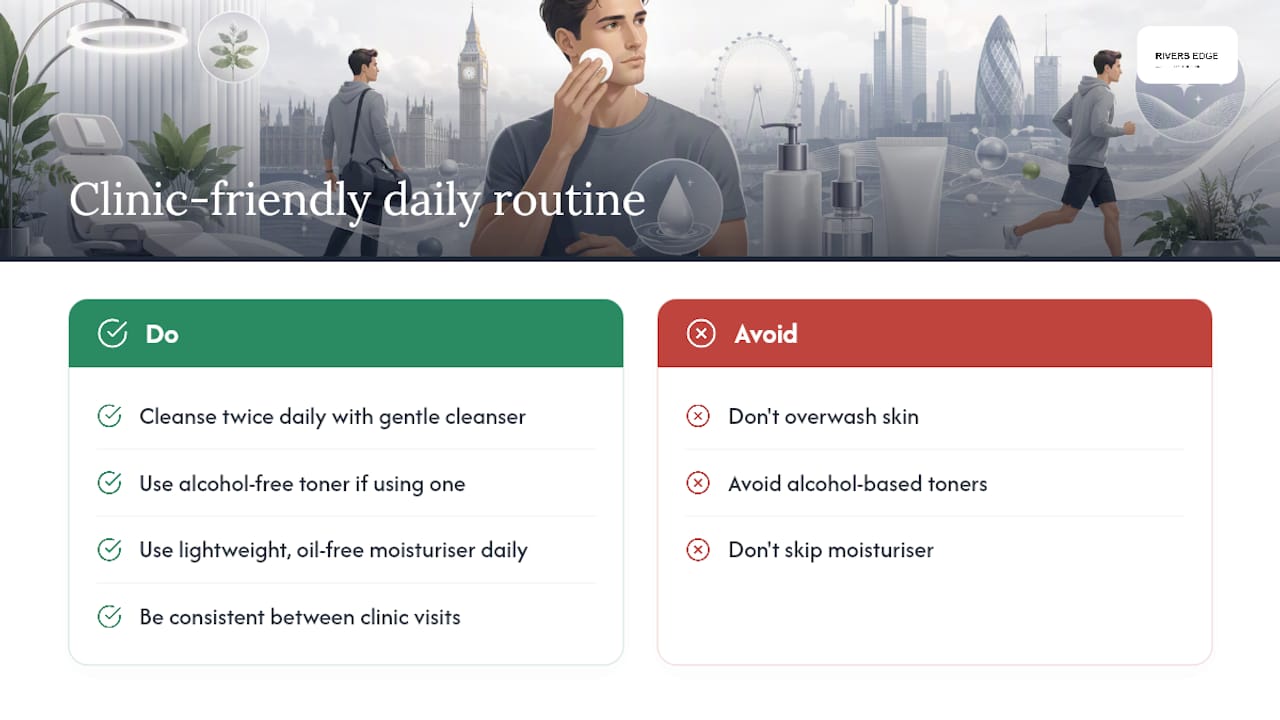
Clinic treatments do the heavy lifting, but a sensible daily routine protects that investment between sessions. Cleansing twice daily with a gentle, non-stripping cleanser matters more than an aggressive one. Overwashing oily skin often backfires, triggering more sebum production as the skin tries to compensate for what it perceives as dryness.
A toner is optional rather than essential, and if you use one, choose an alcohol free formula. Alcohol based toners strip the skin barrier and can leave post-treatment skin more reactive during a peel or microneedling course.
Moisturising is where most men skip a step, assuming oily skin needs no hydration at all. That is backwards. A lightweight, oil-free, non-comedogenic moisturiser keeps the skin barrier intact, which actually helps regulate oil production rather than adding to it. Skipping moisturiser tends to make oily skin oilier, not less so.
If you want a gentler complement to clinic aftercare, some men find oil cleansing methods useful for removing sunscreen or makeup without irritation, though this sits alongside professional treatment rather than replacing it. Whatever routine you settle on, consistency across the weeks between clinic visits does more for results than any single product swap.
How diet, stress and sleep affect oily skin
Sebum production responds to more than what you put on your face. Stress raises cortisol, and cortisol increases sebaceous gland activity, which is why breakouts often cluster around high pressure periods at work or during poor sleep stretches.
Sleep deprivation compounds this. Skin repairs itself overnight, and consistently cutting that process short leaves inflammation less controlled, which can slow how well your skin responds to treatments like peels or microneedling.
Diet's role is more debated than certain, but a pattern worth taking seriously involves high glycaemic foods and dairy, both of which some men notice correlate with flare ups. This is not a guarantee for every person, but it is a reasonable variable to track if breakouts feel unpredictable despite a consistent clinic schedule. Cutting back on sugary, processed food and keeping hydration steady will not replace a chemical peel, but it removes one variable that can undermine your results between sessions.
None of this means lifestyle changes substitute for professional treatment. They are the maintenance layer around it, the things that help a combination protocol hold its results for longer rather than sliding backwards within weeks of your last appointment.
Where topical treatments fit alongside clinic care
Retinoids, benzoyl peroxide, and oil control moisturisers are genuinely effective for mild oiliness and early breakouts, and they often form part of the maintenance plan a clinic recommends between sessions. Retinoids increase cell turnover and help keep pores clear, which supports whatever microneedling or peel work has already been done.
Benzoyl peroxide targets the bacteria involved in inflammatory acne, making it a reasonable addition for active breakouts rather than established scarring. Its limitation is that it does nothing for existing scar tissue or textural damage, which is precisely where microneedling and peels take over.
Oil control moisturisers, formulated to be non-comedogenic and lightweight, help manage shine through the day without clogging pores further. They are a genuinely useful daily layer.
The honest limitation of all three is depth. Topicals work on the skin's surface and upper layers. They cannot rebuild collagen, meaningfully soften a depressed scar, or shift stubborn congestion the way a supervised peel or microneedling course can. Most clinics will suggest a topical retinoid as part of aftercare precisely because it supports, rather than replaces, the procedural work.
Getting sun protection right for oily male skin
Sun protection after any of these procedures is not optional. Freshly peeled or needled skin is significantly more vulnerable to pigment changes, and unprotected sun exposure in that window is one of the most common causes of post-inflammatory hyperpigmentation, particularly in darker skin tones.
The common objection from men with oily skin is that sunscreen feels heavy or greasy. That is largely a formulation problem rather than an unavoidable trade-off. Gel based or fluid sunscreens, often labelled matte finish or oil free, sit far more comfortably on oily skin than the thicker creams marketed generally. A broad spectrum SPF 30 or higher, reapplied through the day if you are outdoors for extended periods, is the standard recommendation.
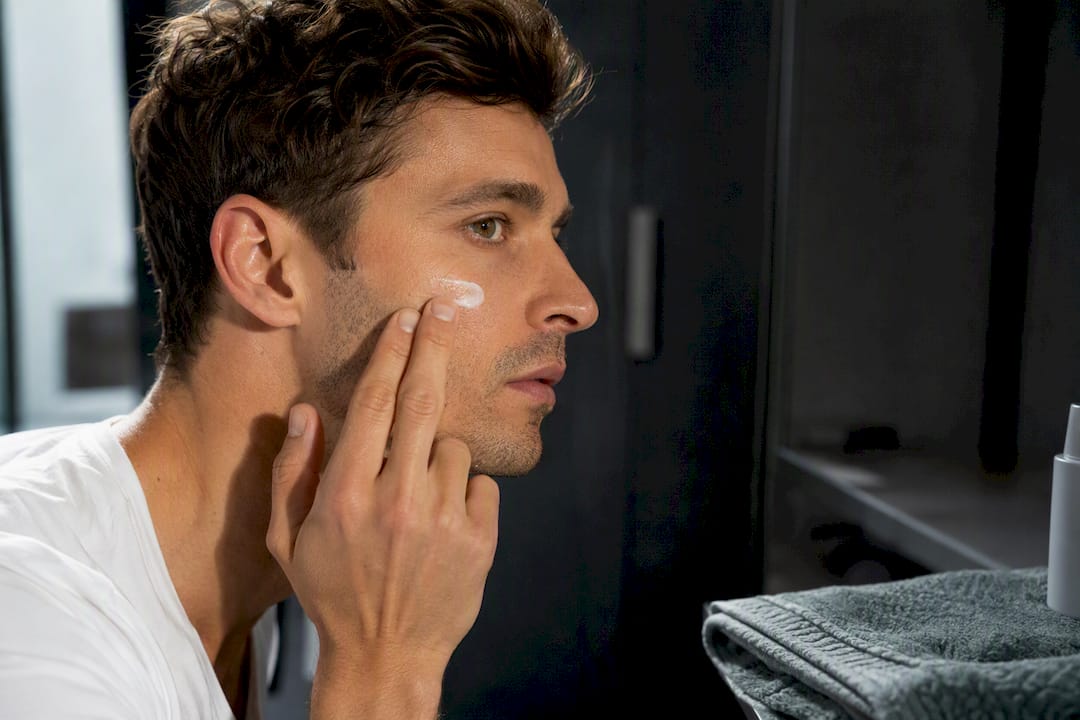
Sun protection matters even outside a treatment window. Consistent daily use protects the collagen gains from microneedling and prevents the kind of UV damage that worsens skin texture over time, undoing some of what the treatments were meant to achieve.
Common myths about treating oily skin in men
A few persistent myths steer men away from treatments that would actually help.
Myth: oily skin doesn't need moisturiser. Covered above, but worth repeating because it drives so many poor routines. Skipping moisturiser tends to worsen oiliness, not fix it.
Myth: peels and microneedling will make oily skin worse before it gets better, permanently. Temporary dryness or flaking during recovery is normal and short lived. It does not indicate the treatment is backfiring.
Myth: oily skin means you can use the strongest products or settings available. Thicker, oilier skin tolerates more, but "more" still has a ceiling. Overly aggressive peel concentrations or excessive needling depth raise complication risk without proportionate benefit, which is exactly why a trained practitioner selects the settings, not the client.
Myth: one HydraFacial session will sort out years of congestion. The study data behind HydraFacial's results reflects a six session course over 12 weeks, not a single visit.
Myth: professional treatment is only for severe acne. Mild to moderate oiliness and early textural changes respond well to these treatments too, often with fewer sessions needed than more advanced cases.
Rivers Edge Skin Studio's approach to treating oily male skin
Riversedgeskinstudio builds each plan around a proper assessment of your skin rather than a generic package. That means looking at oiliness, scarring, and skin thickness together before recommending whether a HydraFacial course, a peel series, microneedling, or a combined protocol fits your case. The plans are structured drawing on the combination therapy evidence covered throughout this guide. Case studies and testimonials reflect the kind of natural, gradual improvement men see when treatments are sequenced properly rather than rushed. Treatment outcomes and client satisfaction data shape how sessions are spaced and reviewed. A consultation remains the only reliable way to know which combination suits your skin.
— David
Book a consultation at Rivers Edge Skin Studio
Riversedgeskinstudio is the direct route to the treatments covered in this guide, HydraFacial, chemical peels, microneedling, and combination protocols, delivered by a clinic built specifically around men's skin rather than adapted from a general aesthetics menu. Rather than piecing together advice from separate sources, you get one assessment and one plan, tailored to how oily your skin actually is and how it has responded before.

Booking follows a simple flow. You start with a consultation, where your skin gets properly assessed and any history, including previous isotretinoin use, gets checked before anything is recommended. A patch test follows where needed, then treatment begins on a schedule built around your skin rather than a fixed package. The full range of men's skin treatments and services is listed online, with booking available directly through the site whenever you are ready to arrange your first consultation.