
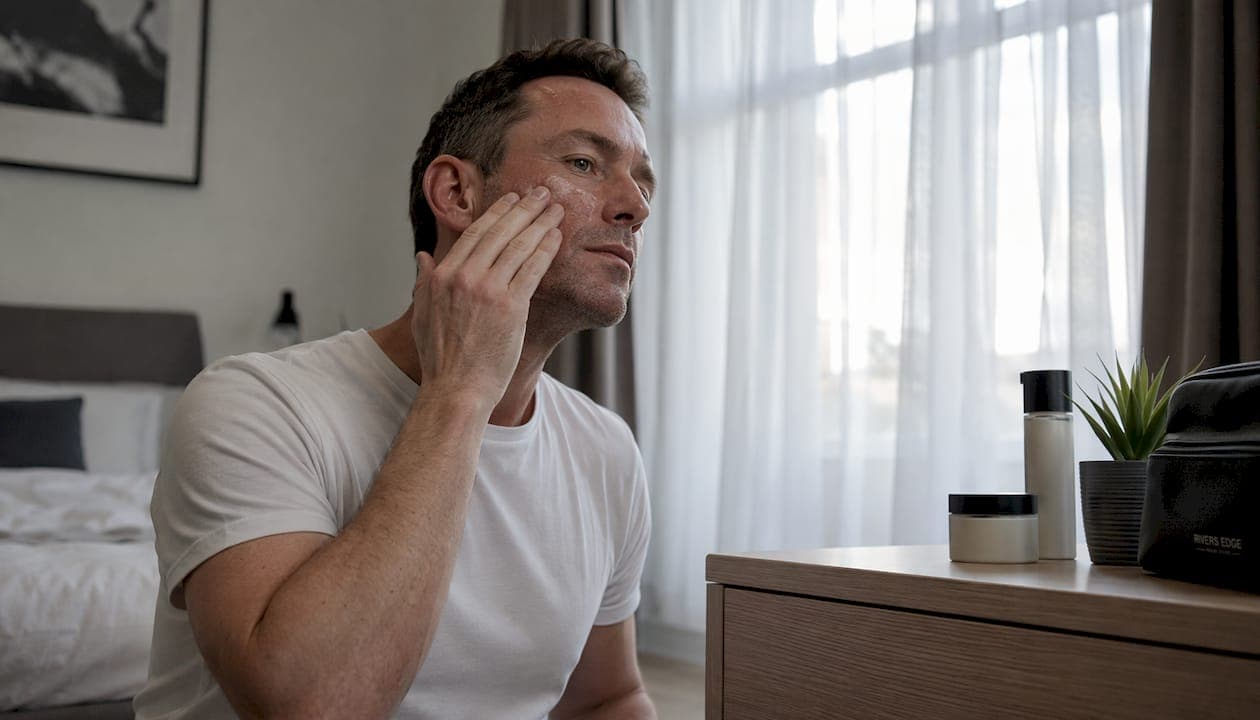
What are the most common men's skin concerns in the UK?

The most common men's skin concerns in the UK span wrinkles, sagging skin, puffy eyes, oily or acne-prone skin, dryness, enlarged pores, uneven texture, and shaving-related irritation. These issues affect men across all ages and ethnicities, and each one responds differently to treatment depending on your skin type, lifestyle, and how consistently you look after your skin.
Understanding your own skin concerns is the first step toward addressing them properly. Here is a clear breakdown of what most men in the UK are dealing with:
- Wrinkles and fine lines — appear later in men but progress quickly once they start
- Sagging skin — particularly around the jawline and neck as collagen declines
- Puffy eyes and dark circles — one of the most visible signs of fatigue and ageing in men
- Oily skin and acne — driven by higher sebum production and androgen activity
- Dryness and flaking — worsened by cold weather, central heating, and harsh soaps
- Enlarged pores — linked to excess oil and reduced skin elasticity over time
- Uneven skin texture and tone — often caused by sun damage, scarring, or post-inflammatory pigmentation
- Razor burn, bumps, and folliculitis — affecting a significant number of men who shave regularly
- Redness and rosacea — more common than many men realise, often mistaken for general sensitivity
- Hyperpigmentation — particularly relevant for men with darker skin tones
- Scalp concerns — including dryness, flaking, and hair thinning
Riversedgeskinstudio specialises in addressing these concerns with treatments designed specifically for male skin physiology.
Table of Contents
- How male skin ages differently and why it matters
- How to tailor your skincare routine and know when to see a professional
- What professional treatments are available for men's skin in the UK?
- Simple daily habits that keep your skin in good condition
- Riversedgeskinstudio: professional men's skin treatments in the UK
- Key takeaways
How male skin ages differently and why it matters
Male skin is notably thicker than female skin, with higher collagen density, more active sebaceous glands, and a lower pH. That biological profile means men's skin starts ageing later. The catch is that once the process begins, it moves fast. Wrinkles in men tend to be fully grooved rather than superficial, and sagging combined with puffy eyes and dark circles is the pattern most men notice first.
Testosterone drives much of this. It increases sebum production, enlarges pores, and contributes to oilier skin that is more prone to acne and impurities. It also influences how the skin responds to treatments, which is why male-specific skincare protocols produce better outcomes than generic approaches.
Shaving adds another layer of complexity. Men who shave regularly subject their skin to what amounts to daily mechanical exfoliation, removing the uppermost layer of skin cells and exposing more reactive tissue beneath. That repeated stress accelerates sensitivity and increases the risk of irritation, ingrown hairs, and folliculitis barbae.
Ethnic background also shapes how these concerns present. Men with darker skin tones are more prone to post-inflammatory hyperpigmentation and keloid scarring after shaving injuries, while men's skin concerns vary significantly across the UK's multiethnic population. A tailored approach is not optional. It is the only approach that works.
Pro Tip: Use a single- or double-blade razor and shave with the grain. Replace the blade every 5–7 shaves to reduce razor burn, bumps, and the risk of pseudofolliculitis barbae.
How to tailor your skincare routine and know when to see a professional
The right routine depends entirely on your skin type. Oily skin needs oil-free, non-comedogenic products. Dry skin benefits from richer moisturisers applied immediately after washing. Sensitive skin requires fragrance-free formulations. One important distinction: "unscented" is not the same as fragrance-free. Many unscented products contain masking fragrances that can still irritate reactive skin.
Men tend to stick with routines that are minimal and results-focused. Three steps done consistently outperform a ten-step regimen abandoned after a fortnight. A mild cleanser, a targeted moisturiser, and a broad-spectrum SPF 30 or higher covers the fundamentals for most men. For product guidance built around what actually works in 2026, the top skincare essentials are worth reviewing.
Some skin changes need professional attention, not just better products. See a dermatologist promptly if you notice:
- A new or changing mole, or one that bleeds or itches
- Persistent redness, irritation, or patches that do not resolve
- Acne that is worsening despite consistent care
- Pigmentation changes that appear suddenly or spread
- Skin that feels consistently tight, flaky, or reactive regardless of what you apply
Warning: Men over 50 carry a higher risk of melanoma than the general population. Early detection makes treatment highly effective. Check your skin monthly and book an annual professional skin check.
Regular self-checks matter at every age, but they become particularly important from your late forties onwards. Catching changes early keeps your options open.
What professional treatments are available for men's skin in the UK?
Clinical treatments for men's skin have moved well beyond the basics. The protocols available in 2026 are designed around male skin biology, which means they account for greater skin thickness, distinct ageing patterns, and the specific concerns men present with most often. Riversedgeskinstudio offers a full range of treatments built specifically for male clients, including:
- Anti-wrinkle injections — address deep, grooved wrinkles and prevent further progression without altering natural facial expression
- HydraFacials — cleanse, exfoliate, and hydrate in a single session, particularly effective for oily, congested, or enlarged-pore concerns
- Chemical peels — improve uneven texture, pigmentation, and post-acne scarring with controlled resurfacing
- Microneedling — stimulates collagen production to firm skin, reduce scarring, and improve overall tone
- Scalp microneedling — targets hair thinning by stimulating follicle activity directly at the scalp
- Hair vitality injections — complementary treatments supporting hair health and overall scalp condition
Treatment selection depends on your specific concerns and how your skin is likely to respond. A man dealing primarily with sagging and tired-looking eyes needs a different protocol to one managing persistent acne scarring or pigmentation. That is why personalised assessment matters before any procedure begins. For a clearer picture of which treatments suit your skin type, the local treatments guide covers the options in practical detail.
Simple daily habits that keep your skin in good condition
Looking after your skin does not need to be complicated. The habits that make the biggest difference are straightforward, and most take under two minutes.
- Cleanse with a mild, pH-balanced facial wash — bar soap is too harsh for facial skin and strips the barrier
- Moisturise immediately after washing or shaving — applying to damp skin traps moisture and reduces fine lines more effectively than applying to dry skin
- Wear SPF 30 or higher daily — sun damage is the single biggest driver of premature ageing, pigmentation, and skin cancer risk
- Adjust for the seasons — skin loses more moisture in winter due to cold air and central heating; switch to a richer moisturiser from October through March
- Check your skin monthly — look for new spots, changes in existing moles, or persistent patches of irritation
- Seek advice early — minor concerns addressed promptly rarely become major ones
For men with sensitive or reactive skin, a tallow-based face balm can offer a natural, minimal-ingredient alternative to conventional moisturisers, particularly useful post-shave when the skin barrier is most exposed. Keeping the routine short and consistent is what drives results over time. Complexity rarely improves outcomes.
Riversedgeskinstudio: professional men's skin treatments in the UK
Riversedgeskinstudio is a specialist men's skin clinic offering professional aesthetic and rejuvenation treatments tailored to male skin. Where a general skincare routine addresses the surface, clinical treatments work at a deeper level, targeting the structural changes that cause sagging, deep wrinkles, persistent pigmentation, and hair thinning.

Every treatment at Riversedgeskinstudio is built around your skin, not a generic protocol. The clinic's approach combines clinical expertise with a premium, comfortable environment, so you get results that look natural and feel right for you. Whether you are addressing a specific concern or looking for a full skin assessment, the process starts with understanding exactly what your skin needs.
Book your consultation at Riversedgeskinstudio and get a personalised treatment plan designed for your skin.
Key takeaways
Men's skin ages later than women's but progresses faster once it starts, making early professional assessment and a consistent, tailored routine the most effective approach to long-term skin health.
| Point | Details |
|---|---|
| Male skin is biologically distinct | Men's skin is thicker than women's, with higher sebum output and distinct ageing patterns. |
| Shaving affects approximately 40% of men | Regular shaving stresses the skin barrier and causes razor burn, bumps, and folliculitis in about two out of five men. |
| Melanoma risk rises after 50 | Men over 50 have elevated melanoma risk; monthly self-checks and annual professional reviews are advised. |
| Minimal routines work best | Men adhere better to streamlined, results-focused routines with three core steps rather than complex regimens. |
| Riversedgeskinstudio offers tailored care | The clinic provides male-specific treatments including anti-wrinkle injections, HydraFacials, microneedling, and scalp treatments. |