

Skin brightening treatment is the process of using targeted ingredients and clinical procedures to reduce hyperpigmentation, even out skin tone, and restore a healthy, luminous complexion without altering your natural skin colour. The term is often confused with skin lightening, but the two are distinct. Brightening works with your skin biology rather than against it. Vitamin C, niacinamide, alpha-arbutin, and thiamidol are the evidence-backed ingredients at the core of modern brightening protocols, and professional treatments like chemical peels and laser therapy extend those results further. This guide covers how it all works, what is safe, and how to build a routine that delivers real results.
What is skin brightening treatment and how does it work?
Skin brightening treatment targets the overproduction or uneven distribution of melanin, the pigment responsible for dark spots, post-inflammatory marks, and dull skin tone. The goal is not to change your natural complexion. It is to correct irregularities and restore the skin's baseline radiance.
Melanin is produced by cells called melanocytes, triggered by UV exposure, inflammation, or hormonal shifts. Brightening treatments interrupt this process at specific points in the melanin production pathway. Most ingredients work by inhibiting tyrosinase, the enzyme that drives melanin synthesis. Others accelerate cell turnover to disperse existing pigment faster.
The clinical term you will encounter in professional settings is hyperpigmentation management. Skin brightening is the consumer-facing description of the same goal. Both refer to reducing excess pigment and improving tone consistency, not bleaching or whitening the skin.
What ingredients are used in skin brightening treatments?
The most effective brightening ingredients each target melanin production through a different mechanism. Understanding the differences helps you choose the right combination for your skin type and concerns.
Vitamin C (ascorbic acid) is an antioxidant that inhibits tyrosinase and neutralises free radicals from UV exposure. It brightens existing pigment and prevents new spots from forming. Niacinamide (vitamin B3) works differently. It blocks the transfer of melanin from melanocytes to skin cells, reducing visible discolouration without disrupting melanin production itself. Alpha-arbutin is a glycoside that slowly releases hydroquinone at the skin surface, inhibiting tyrosinase with a gentler profile than hydroquinone alone.
Thiamidol is a newer tyrosinase inhibitor with a strong clinical record. Modern alternatives like thiamidol provide results comparable to hydroquinone with a significantly better safety profile, making it one of the most promising ingredients in current formulations. Kojic acid, azelaic acid, and tranexamic acid round out the toolkit. Azelaic acid also reduces inflammation, which makes it particularly useful for post-acne marks. Tranexamic acid works on a separate pathway by blocking UV-induced prostaglandins that trigger melanin production.
| Ingredient | Mechanism | Safety profile |
|---|---|---|
| Vitamin C | Tyrosinase inhibition, antioxidant | High; can oxidise if poorly formulated |
| Niacinamide | Blocks melanin transfer | Very high; suits all skin types |
| Alpha-arbutin | Slow-release tyrosinase inhibitor | High; gentler than hydroquinone |
| Thiamidol | Targeted tyrosinase inhibition | High; clinically comparable to hydroquinone |
| Kojic acid | Tyrosinase inhibition | Moderate; can cause sensitivity |
| Azelaic acid | Anti-inflammatory, tyrosinase inhibitor | High; prescription-strength available |
| Tranexamic acid | Blocks prostaglandin pathway | High; well-tolerated orally and topically |
Pro Tip: Combining niacinamide with a tyrosinase inhibitor like alpha-arbutin or thiamidol produces better results than using either alone. Apply vitamin C in the morning for antioxidant protection and use your tyrosinase inhibitor in the evening for uninterrupted activity overnight.
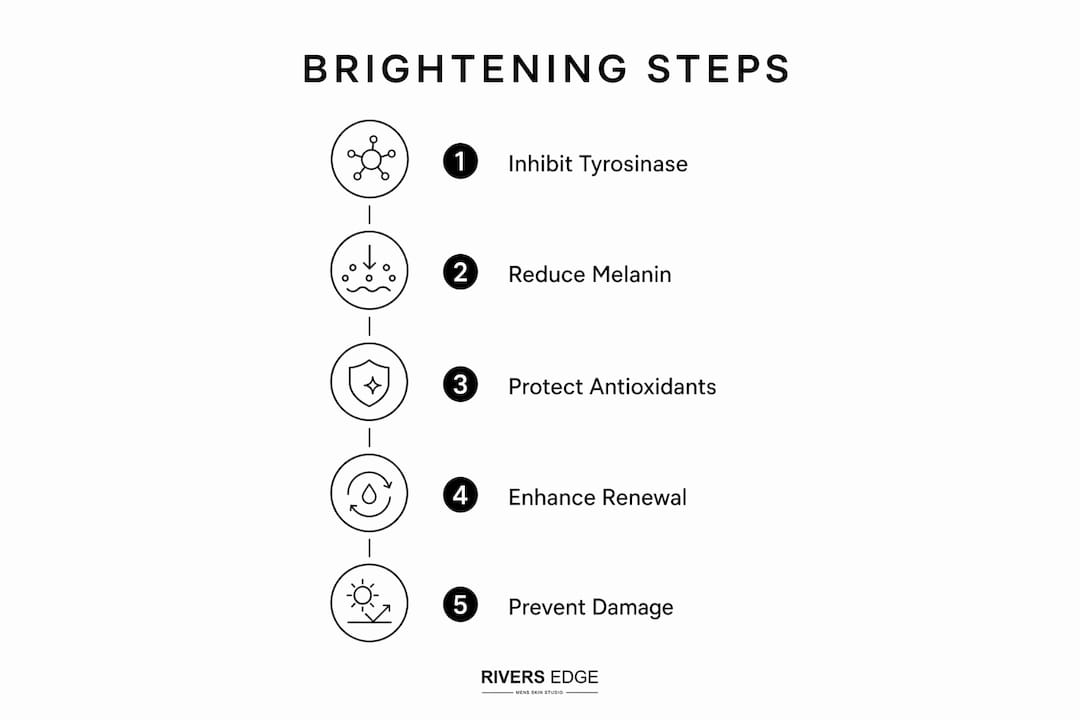
Modern brightening routines benefit most from pairing tyrosinase inhibitors with niacinamide and careful use of retinoids. Lipid nanoparticle-encapsulated retinol (nanoretinol) accelerates cell turnover with less irritation than standard retinol, making it a strong addition for men with sensitive or reactive skin.
How do professional treatments compare to at-home products?
Professional skin brightening treatments and at-home products operate on the same biological principles but at very different intensities. Knowing which to use, and when, prevents both underperformance and skin damage.
Clinical treatments include laser therapy, chemical peels, and microneedling with brightening serums. These deliver faster, more dramatic results by working deeper into the skin. Laser and chemical peels can significantly reduce pigmentation, but they require skin priming with lightening agents and strict post-care to avoid adverse effects. The American Academy of Dermatology stresses that skin priming before procedures is non-negotiable for darker skin tones, where the risk of post-inflammatory hyperpigmentation (PIH) is higher.
At-home products work more gradually but are safer for unsupervised use. Consistent daily application of well-formulated serums and moisturisers containing the ingredients above produces measurable improvements over 3–6 months. For a detailed breakdown of how these two approaches stack up, the professional vs home skincare guide at Riversedgeskinstudio covers the key decision points for men.
Pros and cons at a glance:
- Professional treatments: faster results, deeper action, treats stubborn pigmentation. Requires clinical supervision, higher cost, recovery time, and careful skin preparation.
- At-home products: accessible, lower cost, suitable for maintenance and mild pigmentation. Slower results, requires consistency, and may not address deep or severe discolouration.
- Combination approach: professional treatments to reset the skin, followed by a daily topical routine to maintain and protect results. This is the most effective long-term strategy.
Realistic expectations matter. A single chemical peel will not erase years of sun damage. Most men see meaningful improvement after a course of treatments combined with a consistent home routine.
What safety considerations surround skin brightening?
Safety is the most important factor when choosing any brightening product or procedure. The risks are real, and some products on the market are genuinely dangerous.
The FDA warns that hydroquinone and mercury are unsafe in over-the-counter skincare due to risks of systemic absorption and serious skin damage. Mercury is banned outright in skincare products. Hydroquinone is legal only under healthcare supervision in the UK and many other markets. Products sold without proper labelling or with foreign-language-only ingredient lists are a clear warning sign. The FDA advises avoiding products with missing, fake, or unclear ingredient information.
Pro Tip: Before purchasing any brightening product, check the full ingredient list against the INCI (International Nomenclature of Cosmetic Ingredients) database. If a product does not list ingredients clearly in English, do not use it.
Key safety rules to follow:
- Avoid products claiming dramatic whitening results in days. Genuine brightening takes weeks to months.
- Never use prescription-strength hydroquinone without medical supervision.
- Always apply broad-spectrum SPF 30 or higher daily. UV exposure undoes brightening progress and triggers pigmentation rebound.
- If you have a darker skin tone (Fitzpatrick types IV–VI), consult a professional before starting any laser or peel treatment.
- Monitor your skin for signs of irritation, redness, or worsening pigmentation. These signal barrier disruption and require treatment adjustment.
Overuse of harsh agents can provoke pigmentation rebound or irritation, which is the opposite of the intended result. Barrier health is not optional. It is the foundation that makes every other brightening step work.
How to build an effective daily skin brightening routine
A consistent daily routine is the single most reliable way to achieve and maintain brighter skin. Dr Antionetta Ashwini J recommends consistency in routine over aggressive one-off treatments for lasting brightness. The steps below apply to both morning and evening, with adjustments for each.
Morning routine:
- Cleanse with a gentle, pH-balanced cleanser. Avoid foaming cleansers with sulphates if your skin is dry or reactive.
- Apply a vitamin C serum (10–20% L-ascorbic acid or a stable derivative like ascorbyl glucoside). This is your antioxidant and brightening layer.
- Follow with a niacinamide serum or moisturiser containing niacinamide (4–10%). This blocks melanin transfer and supports the skin barrier.
- Apply a lightweight moisturiser suited to your skin type.
- Finish with broad-spectrum SPF 30 or higher. This step is non-negotiable. UV exposure is the primary driver of hyperpigmentation.
Evening routine:
- Double cleanse if you wear sunscreen or have been outdoors. An oil-based cleanser first, then a water-based one.
- Apply your tyrosinase inhibitor (alpha-arbutin, thiamidol, or azelaic acid). Evening application allows uninterrupted activity.
- Use a retinol or nanoretinol product two to three nights per week to accelerate cell turnover. Start at a low concentration and increase gradually.
- Apply a barrier-supportive moisturiser containing ceramides, hyaluronic acid, or peptides.
For guidance on layering these steps with other treatments, the skincare combinations guide at Riversedgeskinstudio is worth reading before you start. Consistency over 3–6 months is the clinical standard for judging results. Stopping early leads to regression.
What results and benefits can you expect?
The benefits of skin brightening extend well beyond aesthetics. Reducing hyperpigmentation improves skin tone consistency, which makes the complexion look healthier and more youthful. Dark spots and post-acne marks fade progressively, and the overall texture of the skin improves as cell turnover increases.
Anti-ageing is a secondary but significant benefit. Many brightening ingredients, particularly vitamin C and retinol, stimulate collagen production and reduce oxidative damage. This means you are addressing pigmentation and supporting skin structure at the same time.
Confidence is a real outcome too. Men who address long-standing skin concerns consistently report improved self-perception. The skin does not need to look perfect. It needs to look healthy and even.
Timelines vary by concern severity. Mild post-acne marks may fade within 8–12 weeks of a consistent routine. Deeper sun damage or melasma requires longer treatment, often 6 months or more, and may benefit from professional intervention alongside topical care. Real patient results stem from realistic expectations, consistent routines, and daily sun protection. There are no shortcuts that are also safe.
Key takeaways
Skin brightening treatment works by targeting melanin overproduction with evidence-based ingredients and consistent daily routines, not by altering your natural skin colour.
| Point | Details |
|---|---|
| Brightening vs lightening | Brightening corrects uneven tone and pigmentation without changing your natural skin colour. |
| Best ingredients | Vitamin C, niacinamide, alpha-arbutin, and thiamidol are the safest and most effective options. |
| Professional treatments | Lasers and chemical peels deliver faster results but require skin priming and professional supervision. |
| Safety first | Avoid products containing mercury or unlabelled hydroquinone; always use broad-spectrum SPF daily. |
| Consistency is key | Clinical protocols require 3–6 months of consistent use before stable brightening results are achieved. |
What I have learned from years of watching men approach skin brightening
Most men come in expecting a quick fix. They have a dark spot from a shaving nick three years ago, or sun damage from a decade of outdoor work, and they want it gone in a month. That expectation is the first thing I address.
The men who get the best results are not the ones who use the most products. They are the ones who commit to a simple, well-chosen routine and protect their skin from UV every single day. I have seen expensive laser courses undone in a summer because someone skipped sunscreen. Conversely, I have seen significant pigmentation improvements from nothing more than a vitamin C serum, niacinamide moisturiser, and SPF applied consistently for six months.
The other misconception worth addressing directly: skin brightening is not skin whitening. If a product or clinic is promising to make your skin lighter overall, that is a different goal with a very different risk profile. Brightening is about health and evenness. The moment someone starts chasing a lighter skin tone rather than a clearer one, the risk of harm increases substantially.
My honest advice is to start simple, be patient, and get a professional assessment if you are dealing with anything beyond mild discolouration. The skin responds well to consistency and poorly to aggression.
— David
Start your skin brightening journey at Riversedgeskinstudio
If you are ready to move beyond guesswork and get a routine that actually works for your skin, Riversedgeskinstudio is built for exactly that.

Riversedgeskinstudio offers clinical skin brightening treatments tailored specifically for men, including chemical peels, HydraFacials, and microneedling with brightening actives, all delivered in a results-focused environment. Every treatment plan starts with a thorough skin analysis so you know precisely what you are dealing with and what will work. Explore the full range of men's skin treatments and book a consultation to get a personalised plan built around your skin, your concerns, and your goals.
FAQ
What is the difference between skin brightening and skin whitening?
Skin brightening targets uneven pigmentation and hyperpigmentation to restore a healthy, even complexion without changing your natural skin colour. Skin whitening aims to reduce overall melanin levels, which carries significantly higher health risks and is associated with unsafe ingredients like mercury.
How long does skin brightening treatment take to work?
Clinical protocols show most people need 3–6 months of consistent use before achieving stable, visible brightening results. Stopping early leads to regression of any improvements made.
Is skin brightening treatment safe for darker skin tones?
Yes, but with careful ingredient selection and professional guidance. Darker skin tones carry a higher risk of post-inflammatory hyperpigmentation from aggressive treatments like lasers or strong peels, so skin priming with anti-inflammatory and lightening agents beforehand is essential.
Which skin brightening ingredients are considered unsafe?
The FDA identifies mercury as completely banned in skincare and hydroquinone as unsafe for over-the-counter use due to risks of systemic absorption and skin damage. Avoid any product that does not clearly list its ingredients.
Can men use skin brightening treatments?
Skin brightening treatments are fully suitable for men and address the same concerns: post-shave hyperpigmentation, sun damage, uneven tone, and dark spots. The ingredients and professional treatments are identical; the application is simply adapted to male skin characteristics.