
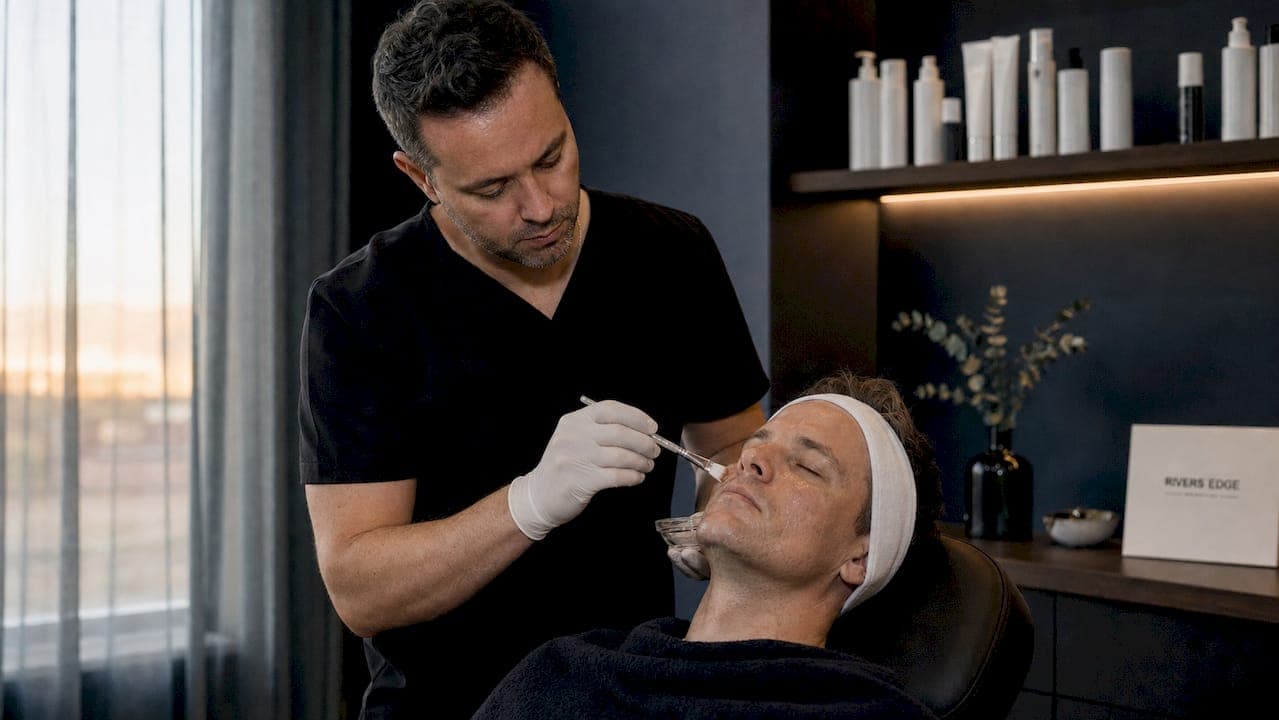
Chemical peels are defined as controlled exfoliation treatments that remove damaged outer skin layers to reveal healthier, renewed skin beneath. They are one of the most effective professional solutions for the specific skin concerns men face, from persistent acne and razor bumps to hyperpigmentation and early signs of ageing. Male skin is thicker, oilier, and regularly disrupted by shaving, which means standard skincare protocols designed for women often fall short. Understanding which skin concerns men face and how chemical peels target them directly is the first step towards real, lasting results.
1. Most common men's skin concerns chemical peels address
Chemical peels dramatically improve acne, razor bumps, oily skin, sun damage, and uneven skin texture for men. Each of these concerns has a distinct cause, but all share a common thread: a build-up of dead skin cells, excess sebum, or post-inflammatory pigmentation that sits on the surface and in the upper layers of the skin. A well-chosen peel cuts through that build-up efficiently.
Acne and acne scars

Active acne forms when pores become blocked with oil and dead skin cells. Chemical peels, particularly those using salicylic acid or glycolic acid, dissolve the debris inside pores and reduce the bacterial environment that fuels breakouts. Over a course of treatments, post-acne scarring also fades as fresh collagen production is stimulated beneath the surface.
Hyperpigmentation and sun damage
Years of outdoor activity without adequate sun protection leave many men with uneven skin tone, dark spots, and a dull complexion. Alpha hydroxy acids (AHAs) and trichloroacetic acid (TCA) peels accelerate the shedding of pigmented cells and encourage the growth of evenly toned skin. The result is a noticeably clearer, more uniform complexion after a course of sessions.
Razor bumps and ingrown hairs
Razor bumps, clinically known as pseudofolliculitis barbae, affect a significant proportion of men who shave regularly. Chemical peels effectively treat razor bumps, ingrown hairs, and thickened skin by softening the keratin that traps hairs beneath the surface and reducing the inflammation that causes the characteristic red, raised bumps. Regular superficial peels keep this cycle from repeating.
Enlarged pores and excess oiliness
Male skin produces more sebum than female skin, which contributes to visibly enlarged pores and a persistent shine. Salicylic acid peels are oil-soluble, meaning they penetrate directly into the pore lining and clear out the sebum and debris that stretch pores over time. After treatment, pore size appears reduced and skin texture feels noticeably smoother.
Signs of ageing
Fine lines, rough texture, and a loss of firmness become more visible in men from their mid-thirties onwards. Chemical peels stimulate collagen remodelling in the dermis, which gradually plumps and firms the skin from within. Combined with a consistent men's skincare routine, peels slow the visible progression of these changes considerably.
2. Types of chemical peels and their suitability for men
Not every peel suits every concern. The three main categories, superficial, medium, and deep, differ in the depth of skin they reach, the results they deliver, and the recovery they require.
Superficial peels use AHAs such as glycolic or lactic acid, or low-concentration salicylic acid. They work on the outermost layer of skin, the epidermis, and are ideal for mild acne, early pigmentation, and general maintenance. Recovery is minimal. Most men experience mild redness for a day at most, making superficial peels easy to fit around work and social commitments.
Medium-depth peels, most commonly formulated with TCA, penetrate into the upper dermis. They address moderate acne scarring, more established wrinkles, and sun damage that has moved beyond the surface. Some downtime is expected: skin will peel visibly for around five to seven days. The results, however, are considerably more pronounced than those from superficial treatments. A detailed explanation of what this involves is available in this guide to medium-depth peels.
Deep peels, such as those using phenol, reach the mid-dermis and produce the most dramatic results for severe ageing and significant sun damage. They carry a longer recovery period of several weeks and a higher risk profile, which means they require careful patient selection and close professional supervision.
| Peel type | Active agents | Concerns treated | Recovery |
|---|---|---|---|
| Superficial | Glycolic acid, salicylic acid, lactic acid | Mild acne, oiliness, early pigmentation | Minimal, 1–2 days |
| Medium | TCA | Acne scars, wrinkles, sun damage | Moderate, 5–7 days |
| Deep | Phenol | Severe ageing, deep scarring | Extended, 2–4 weeks |
Pre-treatment consultation is the only reliable way to match peel strength to your specific skin type and concern severity. A professional assessment removes the guesswork and reduces the risk of over-treating skin that is already sensitised by shaving or sun exposure.
3. How male skin physiology affects chemical peel treatment
Male skin is thicker, more oil-prone, and regularly affected by shaving, which means treatment protocols designed for female skin do not translate directly. These differences are not minor. They influence which peel is chosen, how it is applied, and what aftercare is needed.
Key physiological and grooming factors that shape peel treatment for men:
- Skin thickness. Male skin is roughly 25% thicker than female skin due to higher testosterone levels. This means peels may need slightly longer contact time or higher concentrations to achieve equivalent penetration.
- Sebum production. Higher oil output means the skin surface often needs thorough degreasing before a peel is applied. Without this step, the acid cannot penetrate evenly.
- Shaving trauma. Regular shaving creates micro-abrasions across the face. These small wounds make skin more reactive to chemical agents, so peel strength must be calibrated carefully.
- Facial hair. Men can receive chemical peels even with facial hair, but technique and peel choice must adapt to beard length and density. Liquid-based peels penetrate stubble more evenly, while deeper peels work best on clean-shaven skin for uniform application.
- Post-shave sensitivity. Freshly shaved skin is more vulnerable to irritation. Timing the treatment correctly around your shaving schedule makes a real difference to comfort and outcomes.
Pro Tip: Men should shave at least 24 hours before a chemical peel appointment. Shaving immediately before treatment increases the risk of stinging, redness, and uneven acid penetration across the face.
A professional skin analysis accounts for all of these variables before a single drop of acid touches your skin. This is what separates a safe, effective treatment from one that causes unnecessary irritation.
4. What to expect from results and recovery
Realistic expectations make the difference between a positive experience and a frustrating one. Results from chemical peels for men build progressively, and recovery varies by peel depth.
After a superficial peel, most men notice brighter, smoother skin within 48 hours. There is little to no visible peeling. Mild redness may appear on the day of treatment and resolves quickly. A course of four to six sessions, spaced two to four weeks apart, produces the most consistent improvement in acne, oiliness, and early pigmentation.
Medium-depth peels deliver more visible change after a single session. Skin will feel tight and begin to peel between days two and five. By day seven, the new skin underneath is revealed. The improvement in acne scarring, uneven tone, and fine lines is considerably more noticeable than anything a superficial peel achieves in a single visit.
Pro Tip: Apply a broad-spectrum SPF 30 or higher every morning without exception during recovery. Freshly treated skin is highly susceptible to UV damage, and sun exposure at this stage can trigger the very pigmentation you are trying to correct.
Aftercare essentials for men recovering from a chemical peel:
- Keep skin well moisturised with a gentle, fragrance-free product.
- Avoid shaving over treated areas until peeling has fully resolved.
- Do not pick or pull at peeling skin, as this risks scarring.
- Stay out of direct sunlight and wear SPF daily for at least four weeks.
- Avoid gym sessions and heavy sweating for 48–72 hours post-treatment, as heat and sweat irritate freshly treated skin.
Recovery time and aftercare are critical for maximising peel benefits and minimising irritation in male skin. Cutting corners on aftercare undoes a significant portion of the work done in the treatment room.
Key takeaways
Chemical peels are the most versatile professional treatment for addressing the full range of men's common skin concerns, from acne and razor bumps to ageing and sun damage.
| Point | Details |
|---|---|
| Peels target multiple concerns | Acne, hyperpigmentation, razor bumps, enlarged pores, and fine lines all respond to chemical exfoliation. |
| Peel type must match concern severity | Superficial peels suit mild issues; medium TCA peels address scars and pigmentation; deep peels treat severe ageing. |
| Male skin needs adapted protocols | Thicker skin, higher oil production, and shaving trauma require technique adjustments, not female-adapted treatments. |
| Shaving timing matters | Shave at least 24 hours before treatment to reduce irritation and allow even acid penetration. |
| Aftercare determines results | Daily SPF, gentle moisturising, and avoiding shaving over treated skin are non-negotiable during recovery. |
Chemical peels and men's skin: what I have actually observed
Men are arriving at clinics with more specific questions than ever before. They are not asking "what can you do for my skin?" They are asking "why do I keep getting razor bumps along my jaw?" or "why has this dark patch not shifted after two years?" That shift in specificity is significant. It tells me that men are paying attention to their skin, and they want answers that match the precision of the question.
What I have noticed, though, is that many men have tried generic skincare products for months or years before seeking professional help. The frustration is understandable. A salicylic acid face wash from a pharmacy shelf operates at a concentration that is a fraction of what a clinical peel delivers. The mechanism is the same; the outcome is not remotely comparable.
The other thing worth saying plainly: men who are hesitant about peels because they assume the treatment is designed for women are working from an outdated assumption. Male skin, with its thickness, oiliness, and shaving-related challenges, actually responds very well to chemical exfoliation. The key is a bespoke protocol that accounts for those characteristics rather than ignoring them.
Combining a course of peels with a consistent daily routine produces results that neither approach achieves alone. The peel resets the skin. The daily routine maintains it. That combination is what I consistently see delivering lasting change for men who commit to it.
— David
Riversedgeskinstudio: men's chemical peel treatments
Riversedgeskinstudio specialises exclusively in men's skin treatments, which means every chemical peel protocol is built around male skin physiology from the outset.

The consultation process at Riversedgeskinstudio begins with a thorough skin assessment that accounts for your skin type, concern severity, shaving habits, and lifestyle. From that foundation, the right peel strength and treatment plan are selected for your specific needs. There is no one-size-fits-all approach. Whether you are dealing with persistent acne, post-shave irritation, or the early signs of ageing, the team at Riversedgeskinstudio builds a plan around you. View the full range of men's skin treatments and book a consultation to get started.
FAQ
What skin concerns do chemical peels treat in men?
Chemical peels treat acne, acne scarring, hyperpigmentation, razor bumps, enlarged pores, excess oiliness, and fine lines. They work by removing damaged outer skin layers and stimulating fresh cell growth beneath.
How often should men have a chemical peel?
Superficial peels are typically spaced two to four weeks apart, with a course of four to six sessions recommended for consistent results. Medium-depth peels are usually performed as a single session, repeated only after full recovery.
Can men with beards have a chemical peel?
Yes. Men can receive chemical peels with facial hair, but the peel type and application technique must be adapted to beard length and density. Liquid-based formulations penetrate stubble more evenly than thicker preparations.
How long does recovery take after a chemical peel for men?
Superficial peels require one to two days of mild redness at most. Medium-depth peels involve visible peeling for five to seven days. Deep peels require a recovery period of several weeks and close professional aftercare.
Is a consultation necessary before a chemical peel?
A pre-treatment consultation is essential. It determines your skin type, concern severity, and shaving habits, all of which directly influence which peel strength is safe and effective for your skin.