

A medium depth peel is a professional skin treatment that uses acid solutions to penetrate beyond the epidermis into the papillary or upper reticular dermis, triggering controlled injury and collagen remodelling. The procedure commonly uses 20–35% trichloroacetic acid (TCA) or Jessner's solution to treat fine lines, pigmentation, acne scars, and moderate sun damage. Unlike superficial peels, which only affect the outermost skin layer, a medium depth peel reaches deeper tissue. That depth is what makes it effective for structural skin repair rather than surface-level improvement.
What is a medium depth peel and how does it work?
A medium depth peel works by applying an acid solution to the skin in a controlled clinical setting, causing deliberate damage to the outer layers. That controlled injury triggers collagen remodelling, prompting the skin to regenerate with improved texture, tone, and firmness. The process is biological, not cosmetic. The acid does not simply strip the surface. It signals the dermis to rebuild from within.
The two most common agents are TCA at concentrations of 20–35% and Jessner's solution, a combination of resorcinol, salicylic acid, and lactic acid. Jessner's solution is often applied first to prime the skin before TCA, allowing for more uniform penetration. The depth of penetration sits between a superficial peel, which targets only the epidermis, and a deep peel such as phenol, which reaches the mid-reticular dermis. Medium depth peels occupy the clinical middle ground where meaningful results are achievable without the extended recovery of a phenol peel.
Pro Tip: Pre-treatment priming with topical retinoids or hydroquinone for several weeks before your peel improves acid penetration and reduces the risk of uneven results.
The table below compares the three main peel categories by depth, agent, and typical recovery.
| Peel type | Depth reached | Common agents | Recovery time |
|---|---|---|---|
| Superficial | Epidermis only | Glycolic acid, low-dose salicylic acid | 1–5 days |
| Medium depth | Papillary to upper reticular dermis | TCA 20–35%, Jessner's solution | 7–14 days |
| Deep | Mid-reticular dermis | Phenol | 2–4 weeks or longer |
What are the benefits of a medium depth peel?
Medium depth peel benefits are clinically significant for men dealing with moderate skin concerns that superficial treatments cannot fully address. The procedure reduces fine lines, uneven pigmentation, acne scarring, and sun damage by stimulating genuine dermal repair. This is structural skin improvement, not a temporary brightening effect.
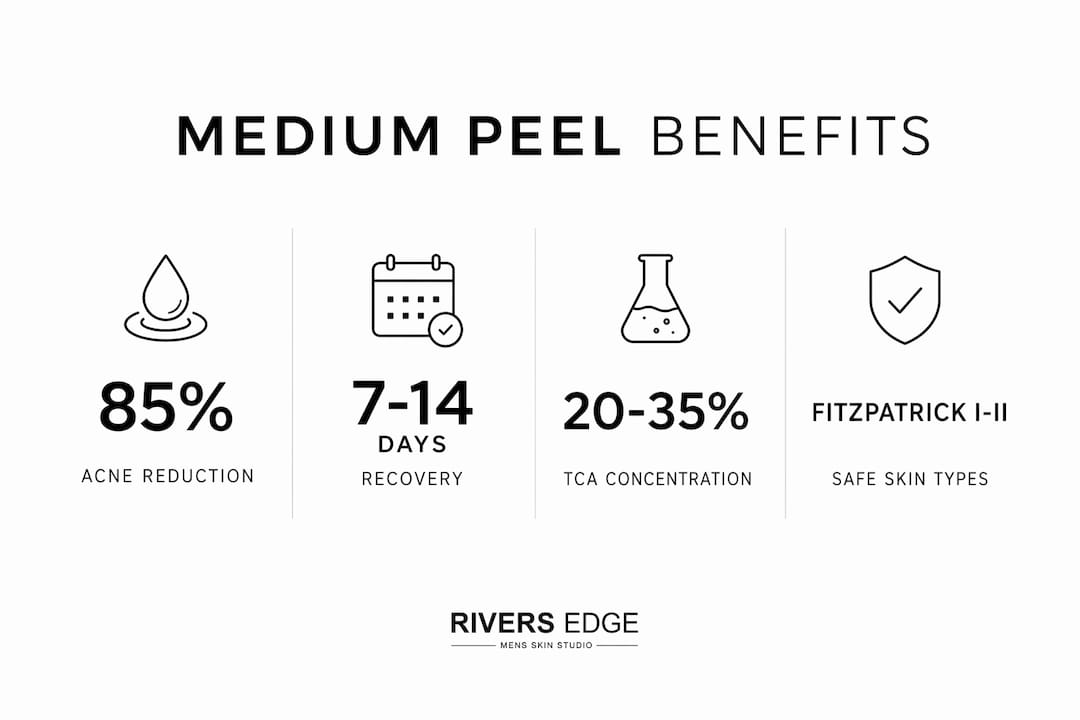
Clinical evidence supports its use for acne specifically. A multimodal medium depth peel regimen produced an 85% reduction in inflammatory acne lesions and a reduction of over 20% in atrophic scar depth after two sessions. Those figures reflect real tissue change, not surface-level smoothing. For men with post-acne scarring or long-term sun damage from outdoor work or sport, this level of improvement is difficult to achieve through topical products alone.
The procedure also functions as a field treatment for actinic dysplasia, which refers to widespread sun-induced skin changes that carry a low risk of becoming precancerous. Treating the entire face rather than individual spots addresses the broader pattern of damage. For a full overview of chemical peels for men's skin, including how different acids compare, Riversedgeskinstudio has published a detailed guide worth reading before your consultation.
Skin concerns that medium depth peels address effectively include:
- Fine lines and mild to moderate wrinkles
- Uneven skin tone and hyperpigmentation
- Acne and post-acne scarring
- Moderate sun damage and actinic dysplasia
- Rough skin texture and enlarged pores
- Melasma in suitable skin types
What to expect during the procedure and recovery
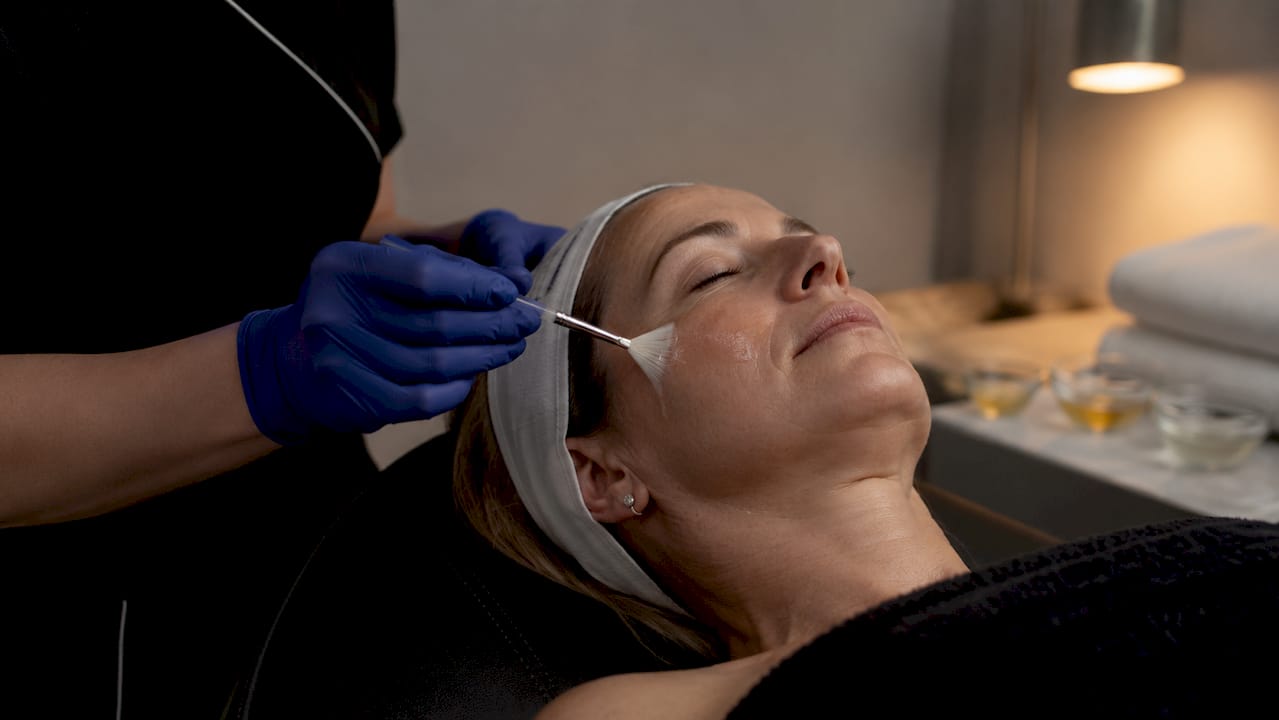
The medium depth peel procedure begins with thorough skin cleansing to remove oils and debris. The practitioner then applies the acid solution evenly across the treatment area, monitoring the skin's response closely. A frosting effect, where the skin turns white, indicates the acid has reached the intended depth. Neutralisation follows, and a soothing barrier product is applied to protect the skin immediately after.
Recovery is predictable but visible. Oedema, erythema, and desquamation peak around days 4–5 after the procedure, with full exfoliation completing between days 10 and 14. The skin looks and feels raw during this phase. Social downtime typically lasts 7–10 days while visible peeling and redness are at their most pronounced. Most men plan this period around work commitments or social events accordingly.
Pro Tip: Do not pick or peel flaking skin during recovery. Premature removal of peeling skin increases the risk of scarring and uneven pigmentation.
Post-treatment care steps for a successful recovery:
- Apply a gentle, fragrance-free moisturiser twice daily to support the skin barrier.
- Use a broad-spectrum SPF 50 sunscreen every morning without exception.
- Avoid direct sun exposure for at least four weeks after treatment.
- Do not use active ingredients such as retinoids or AHAs until the skin has fully healed.
- Attend any follow-up appointments your practitioner schedules to monitor healing.
Riversedgeskinstudio recommends reviewing post-treatment skincare steps before your appointment so you are fully prepared for the recovery phase.
Who is suitable for a medium depth peel and what are the risks?
Medium depth peels are most suitable for Fitzpatrick skin types I and II, which describes fair to light skin tones. Darker skin types carry a significantly higher risk of post-inflammatory hyperpigmentation and pigmentation irregularities following treatment. This does not mean medium depth peels are never performed on darker skin, but the risk-benefit calculation changes considerably and requires an experienced practitioner.
Patient selection is the single most important factor in safe outcomes. A thorough skin consultation for men should assess skin type, medical history, current medications, and realistic expectations before any peel is agreed upon. Medium depth peels are typically limited to the face or scalp because other body areas carry a higher risk of scarring due to lower density of skin appendages needed for healing.
Contraindications and risks to be aware of include:
- Active cold sores or herpes simplex infection (prophylactic antivirals are required)
- Recent use of isotretinoin (Roaccutane) within the past 12 months
- Active bacterial or fungal skin infection
- Pregnancy or breastfeeding
- Unrealistic expectations or inability to follow post-care instructions
- Risk of post-inflammatory hyperpigmentation in darker skin types
- Scarring, particularly on non-facial areas
Pro Tip: Always disclose your full medication list and any history of cold sores to your practitioner. Herpes simplex reactivation after a peel can cause significant scarring if not managed with antiviral medication in advance.
Medium depth peeling is a biological classification, not a marketing term. The quality of aftercare directly influences whether the outcome is a success or a complication.
Medium peel vs deep peel: how do they compare?
The distinction between a medium peel and a deep peel is not simply about strength. It is about the depth of tissue affected, the recovery required, and the clinical indications for each. A medium depth peel reaches the papillary to upper reticular dermis. A deep peel, typically using phenol, penetrates into the mid-reticular dermis. That additional depth produces more dramatic results for severe wrinkles and significant scarring, but at the cost of a much longer and more demanding recovery.
| Feature | Medium depth peel | Deep peel (phenol) |
|---|---|---|
| Depth | Papillary to upper reticular dermis | Mid-reticular dermis |
| Primary agents | TCA 20–35%, Jessner's solution | Phenol |
| Recovery time | 7–14 days | 2–4 weeks or longer |
| Treatment frequency | Every 6–12 months | Rarely repeated |
| Best for | Moderate lines, pigmentation, acne scars | Deep wrinkles, severe sun damage |
| Anaesthesia needed | Topical or none | Often sedation or local anaesthesia |
Medium depth peels are preferred when the goal is meaningful improvement without the commitment of a phenol peel recovery. They are also repeatable, with treatments spaced every 6–12 months, compared to light peels which can be performed every 1–4 weeks. That frequency difference reflects the depth of tissue repair involved. A medium peel needs time to complete its biological work before the skin is ready for another session.
Key takeaways
A medium depth peel is the most clinically effective option for treating moderate acne scarring, pigmentation, and sun damage without the extended recovery of a deep phenol peel.
| Point | Details |
|---|---|
| Definition and depth | Medium depth peels penetrate the papillary to upper reticular dermis using TCA 20–35% or Jessner's solution. |
| Recovery timeline | Visible peeling and redness last 7–10 days; full skin healing completes between days 10 and 14. |
| Clinical results | An 85% reduction in inflammatory acne lesions and over 20% scar depth reduction after two sessions has been documented. |
| Skin type suitability | Best suited to Fitzpatrick skin types I and II; darker skin tones carry higher risk of pigmentation complications. |
| Aftercare is non-negotiable | Strict sun avoidance, SPF 50, and gentle moisturising directly determine the quality of your result. |
What I have learned from watching men go through this procedure
Men tend to underestimate the recovery phase. They book a medium depth peel expecting something similar to a facial, and then they are genuinely surprised by the intensity of the peeling on day four. That gap between expectation and reality is the most common problem I see, and it is entirely avoidable with honest pre-treatment education.
The procedure itself is not the hard part. The hard part is the week that follows, when the skin looks its worst before it looks its best. Men who are prepared for that phase, who have their SPF ready, who have cleared their social calendar, and who resist the urge to pick at flaking skin, consistently get the best results. The ones who skip aftercare instructions or try to rush back to normal activity are the ones who end up disappointed.
My honest view is that medium depth peels are genuinely underused in men's skincare. The results for acne scarring and sun damage are difficult to replicate with any non-invasive treatment. But the procedure demands respect. It requires a qualified practitioner with clinical training, not a beauty therapist working from a kit. Advanced clinical training is required precisely because improper administration risks scarring and permanent pigmentation changes. Choose your clinic carefully. Ask about training, experience, and what happens if something goes wrong. A good practitioner will welcome those questions.
— David
Professional medium depth peel treatments at Riversedgeskinstudio
Riversedgeskinstudio offers men's skin treatments including chemical peels tailored to male skin concerns, from post-acne scarring to sun damage accumulated over years of outdoor activity.

Every treatment at Riversedgeskinstudio begins with a thorough consultation to assess your skin type, history, and goals before any acid is applied. The clinic provides personalised pre-treatment priming plans and structured aftercare support to protect your results through recovery. If you are considering a medium depth peel and want to understand whether it is the right option for your skin, book a consultation with the Riversedgeskinstudio team and get a clear, honest answer before you commit.
FAQ
What is a medium depth chemical peel?
A medium depth chemical peel is a clinical procedure that uses acids such as TCA at 20–35% or Jessner's solution to penetrate the epidermis into the papillary or upper reticular dermis, triggering collagen remodelling and skin renewal.
How long does medium peel recovery take?
Recovery from a medium depth peel takes 7–14 days. Visible peeling and redness peak around days 4–5 and social downtime typically lasts 7–10 days.
Is a medium depth peel safe for all skin types?
Medium depth peels are safest for Fitzpatrick skin types I and II. Darker skin tones carry a higher risk of post-inflammatory hyperpigmentation and require careful assessment by an experienced practitioner before treatment.
How does a medium depth peel differ from a superficial peel?
A superficial peel only affects the epidermis and requires minimal downtime. A medium depth peel penetrates deeper into the dermis, producing more significant results for scarring and pigmentation but requiring 7–14 days of recovery.
How often can you have a medium depth peel?
Medium depth peels are typically performed every 6–12 months. That interval allows the skin to complete its repair cycle fully before undergoing another session.