
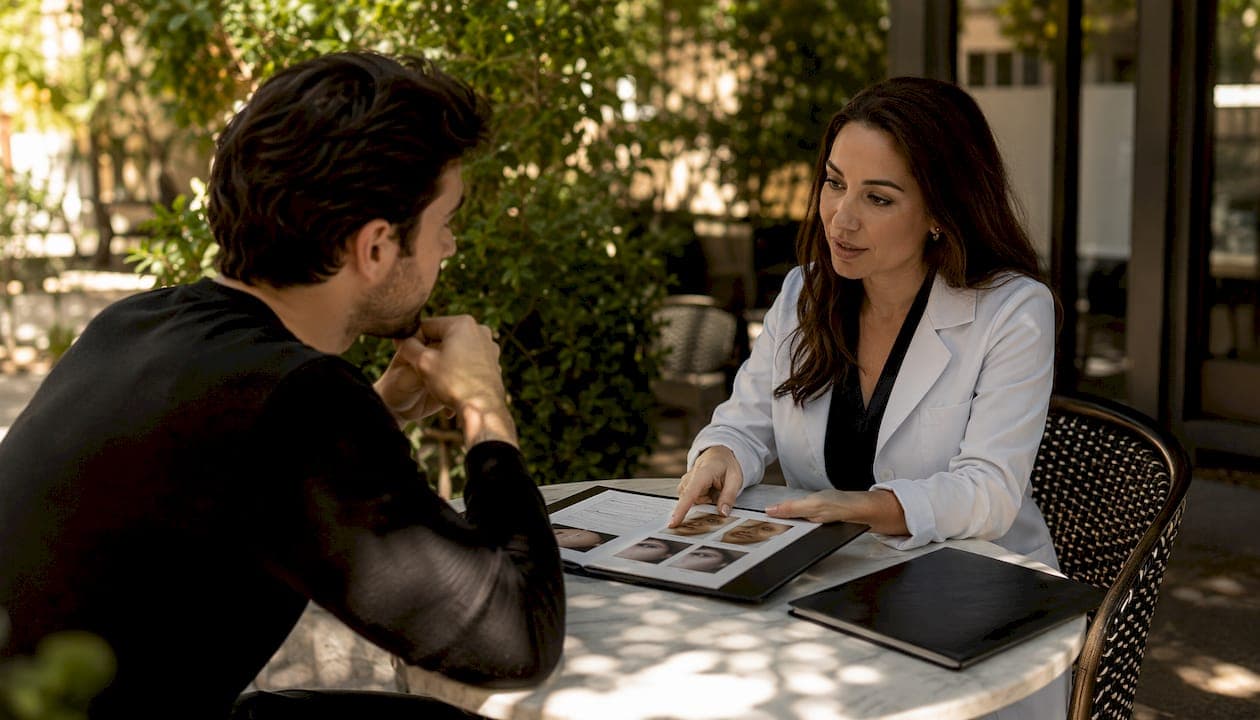
For active acne and oily skin, a salicylic peel is the strongest starting point. For pigmentation and progressive texture correction, a serial TCA protocol delivers the most reliable results. Lactic and glycolic peels suit maintenance and mild concerns; Jessner handles combined congestion and pigment; phenol is reserved for severe photoageing under surgical supervision. Male skin is often thicker and oilier with greater sebaceous activity, which directly shapes which peel works and how it is applied.
| Option | Depth | Best for | Downtime | Sessions | Male skin suitability | Risk profile | UK cost (approx.) |
|---|---|---|---|---|---|---|---|
| Rivers Edge Skin Studio professional peel programmes | Superficial to medium | Tailored: acne, pigmentation, texture, maintenance | Hours to days | Programme-based | Male-specialist; beard-aware protocols | Assessed per client; patch tested | Consultation-led |
| Glycolic peel | Superficial | Dull skin, mild texture, surface pigmentation | Hours | 3–6 | Good; avoid active beard line | Low | £60–£150 per session |
| Salicylic peel | Superficial | Active acne, oily skin, enlarged pores | Hours | 3–6 | Excellent for oily male skin | Low | £60–£150 per session |
| Lactic peel | Superficial | Sensitive skin, hydration, mild brightening | Hours | 3–6 | Good for dry or reactive skin | Very low | £50–£120 per session |
| Jessner peel | Superficial to medium | Pigmentation, seborrhoeic conditions, congestion | 2–5 days | 2–4 | Strong for oily/congested male skin | Low to moderate | £100–£250 per session |
| TCA peel | Medium | Moderate scarring, deeper pigmentation, texture | 5–10 days | 2–4 | Good; series pricing common | Moderate | £150–£400 per session |
| Phenol peel | Deep | Severe photoageing, deep wrinkles | 14–21 days | 1 (rarely repeated) | Tightly selected cases only | High; hypopigmentation risk | £1,000+ |
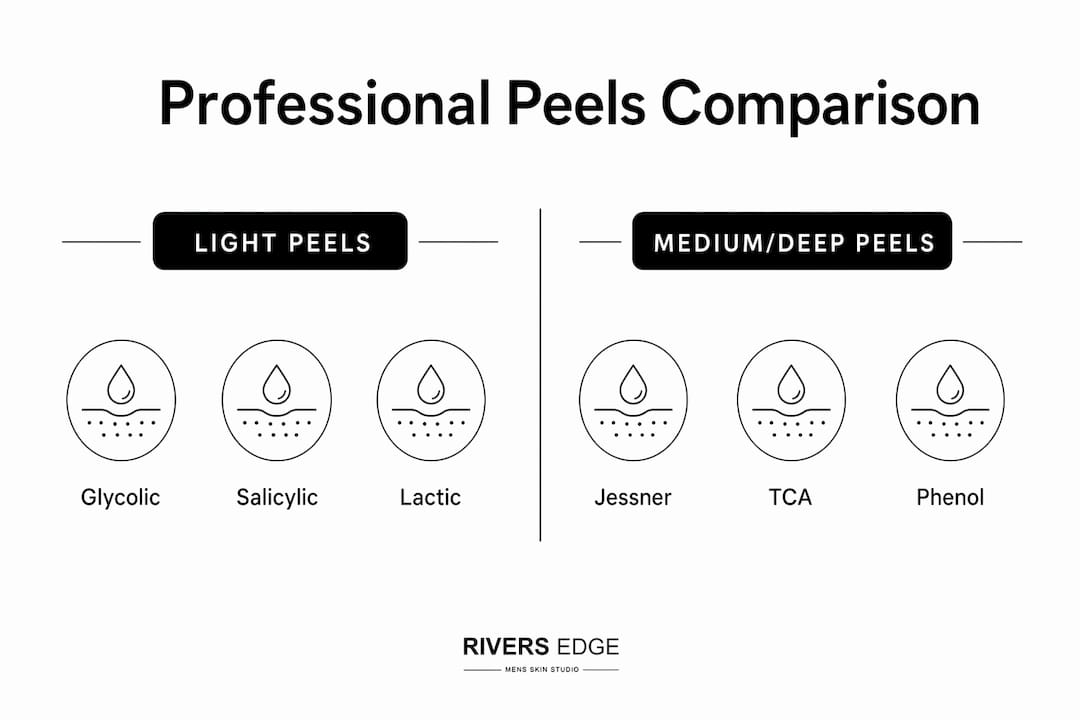
Men who work outdoors carry a higher risk of post-inflammatory hyperpigmentation after peels, so photoprotection and longer prep are non-negotiable. For bearded men, segmental application techniques and vortex-based exfoliation such as HydraFacial reduce chemical contact with hair follicles.
Table of Contents
- What are the real risks, and how do good clinics manage them?
- How do practitioners personalise peel plans for men?
- What do professional peels cost in the UK?
- How do peels fit into a longer skin programme?
- How do you choose the right peel for your skin type and concerns?
- What should you ask a provider before booking?
- Red flags to watch for when choosing a clinic
- How effective are different peels specifically on male skin?
- Riversedgeskinstudio: peel programmes built specifically for men
- Key takeaways
What are the real risks, and how do good clinics manage them?
Every peel carries some risk: redness, peeling, temporary sensitivity, and, in poorly selected cases, pigmentation changes or scarring. The risks scale with depth. A superficial glycolic or salicylic peel carries minimal risk in most men; a TCA peel demands careful skin assessment; phenol requires surgical-level supervision.
Reputable clinics mitigate risk through three steps. First, a full medical consultation covering skin type, Fitzpatrick classification, medication history, and lifestyle. Second, a patch test before any new acid or concentration. Third, clear written aftercare covering sun avoidance, moisturisation, and follow-up appointments. Any clinic that skips the consultation or patch test is not a clinic worth trusting.
How do practitioners personalise peel plans for men?
Practitioners design personalised plans based on age, goals, and skin biology rather than applying a single formula. For men, that means accounting for thicker epidermis, higher sebum output, and shaving patterns. Lipophilic acids such as salicylic and Jessner penetrate oil-filled follicles more effectively than AHAs alone, making them the default for oily or acne-prone male skin.
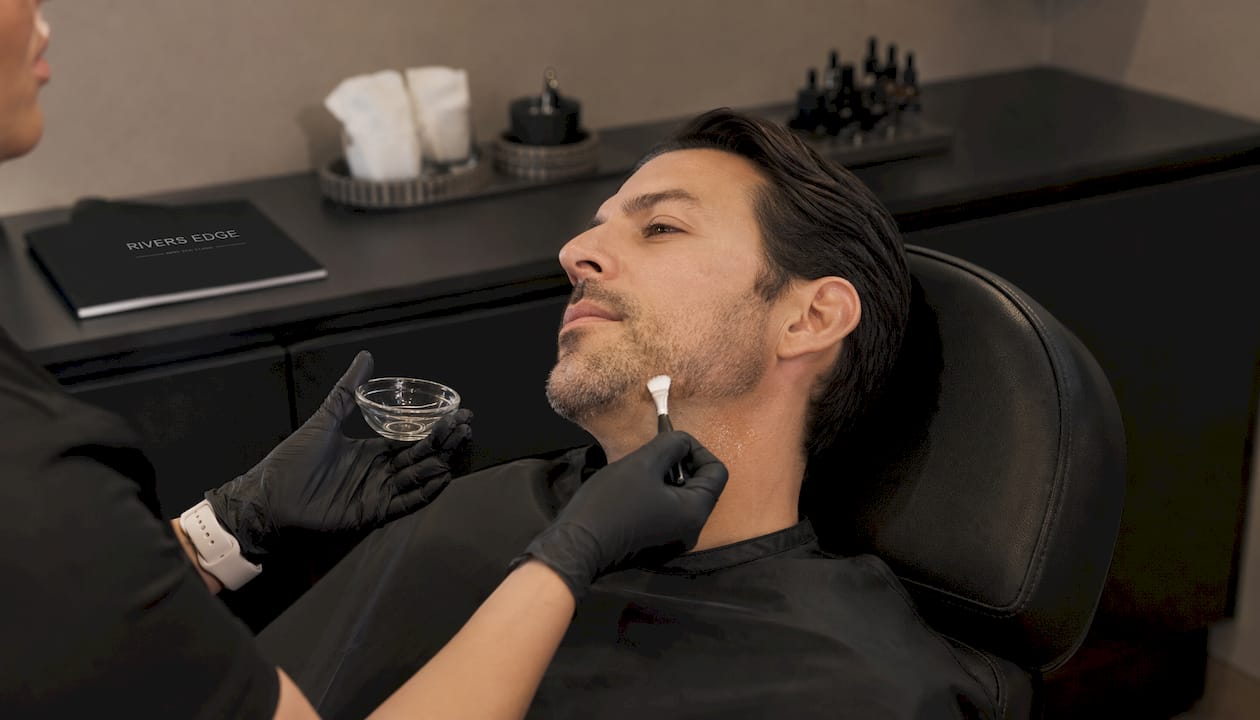
Pre-treatment often includes a degreasing protocol or a short retinoid course to even out penetration. Light peels use brushes, sponges, or gauze and are neutralised after a timed exposure; medium-depth peels self-neutralise. Practitioners track results session by session and adjust concentration or layering accordingly.
What do professional peels cost in the UK?
Light peels (glycolic, salicylic, lactic) typically run £50–£150 per session. Jessner peels sit in the £100–£250 range. TCA medium-depth protocols cost roughly £150–£400 per session, with series pricing common. Phenol peels start above £1,000 and can exceed that significantly given the supervision required. Always factor in the consultation fee, which reputable clinics charge separately as a sign of clinical rigour.
How do peels fit into a longer skin programme?
A single peel rarely delivers lasting change. Alternating peels with microneedling or HydraFacial produces better long-term results by balancing surface correction with deeper collagen stimulation. A practical sequence for men targeting acne scarring might run a salicylic series first to clear congestion, then introduce microneedling sessions to address deeper scar tissue, with HydraFacial as a low-downtime maintenance option between corrective treatments. For bearded clients, HydraFacial's vortex technology works around facial hair without product build-up. Red light therapy can also support post-peel recovery; the science behind it for men is worth reviewing if you want to extend results between clinic visits.
How do you choose the right peel for your skin type and concerns?
Start with your primary concern, not the strongest peel available.
- Active acne or oily, congested skin: salicylic peel first; Jessner if congestion and pigmentation coexist.
- Dull skin or mild texture irregularities: glycolic or lactic peel for a low-commitment refresh.
- Sensitive or dehydrated skin: lactic peel only; avoid medium-depth acids until skin barrier is stable.
- Moderate scarring or stubborn pigmentation: serial TCA protocol, planned over multiple sessions.
- Severe photoageing or deep wrinkles: phenol, but only after exhausting medium-depth options and under appropriate medical supervision.
Men with darker skin tones need particular care around acid selection and concentration to avoid PIH. A qualified practitioner will assess your Fitzpatrick type before recommending anything beyond superficial peels.
What should you ask a provider before booking?
These questions separate experienced practitioners from those simply selling treatments:
- What qualifications do you hold, and are you registered with a recognised UK professional body?
- Do you conduct a full medical consultation and patch test before every new peel or concentration?
- How do you adapt protocols for male skin, including beard areas?
- Can you show before-and-after examples from male clients with similar concerns?
- What aftercare support do you provide, and is there a follow-up appointment included?
A practitioner who answers these confidently and specifically is worth booking. Vague or dismissive answers are a signal to look elsewhere.
Red flags to watch for when choosing a clinic
Walk away if a clinic offers a peel without any prior consultation. Similarly, if the practitioner cannot explain why a specific acid and concentration suits your skin type, that is a problem. Clinics that advertise the deepest peel as the default "best" option, or that cannot provide documented aftercare instructions, are not operating to a clinical standard. Price alone is not a reliable guide: a very cheap TCA peel from an unqualified provider carries far more risk than a properly priced superficial peel from a qualified aesthetic nurse. Check clinic best practices before you commit.
How effective are different peels specifically on male skin?
Men accounted for about 9.3% of chemical peel procedures worldwide, and the evidence from that clinical population points to a consistent pattern. Salicylic peels produce the fastest visible improvement in oily, acne-prone male skin because BHA penetrates oil-filled follicles directly. Glycolic peels brighten and smooth but work more slowly on thicker male epidermis. Jessner peels outperform single-acid superficial options for men with combined oiliness and pigmentation. TCA delivers the most meaningful correction for scarring and deeper pigmentation without the prolonged recovery of phenol. Phenol remains the most powerful option but carries the highest risk of permanent hypopigmentation, making serial medium-depth TCA the safer progressive route for most men.
Riversedgeskinstudio: peel programmes built specifically for men
Riversedgeskinstudio is a male-specialist skin clinic serving men across Merseyside. Every peel programme starts with a clinical consultation and patch test, not a product menu. Practitioners assess skin type, Fitzpatrick classification, beard patterns, and lifestyle before recommending a protocol.
The clinic's men's skin treatments cover the full peel spectrum: salicylic-focused protocols for oily and acne-prone skin, Jessner for combined congestion and pigmentation, and serial TCA series for men targeting scarring or deeper texture correction. Beard-aware segmental techniques protect the follicular zone during treatment. Combination pathways integrating microneedling and HydraFacial are available for men who want progressive, multi-modality results. Qualified practitioners, documented aftercare, and follow-up appointments are standard. Book a consultation at Riversedgeskinstudio to get a plan built around your skin, not a generic protocol.
Key takeaways
For most men, the right peel is determined by skin biology and primary concern, not by choosing the strongest option available.
| Point | Details |
|---|---|
| Salicylic leads for oily skin | BHA penetrates oil-filled follicles, making it the most effective peel for acne-prone male skin. |
| TCA is the medium-depth standard | Serial TCA protocols correct scarring and pigmentation with lower risk than phenol. |
| Phenol is high-risk | Permanent hypopigmentation risk means phenol suits only tightly selected, severe cases. |
| Programme beats single session | Combining peels with microneedling or HydraFacial produces more sustained results than any single treatment. |
| Riversedgeskinstudio | Offers male-specialist peel programmes across Merseyside, from salicylic to TCA, with clinical consultation and beard-aware protocols. |