
Vitamin B12 injections reliably treat and prevent B12 deficiency, correcting the anaemia and nerve damage it causes. They work best for men with impaired absorption, such as pernicious anaemia or post-surgical malabsorption, not for those with normal B12 who simply want more energy. If your levels are already adequate, an injection is unlikely to change how you feel.
TL;DR:
- B12 injections are most effective for people with genuine deficiency caused by malabsorption or autoimmune conditions like pernicious anaemia, not for those with normal levels.
- Injections provide faster correction of B12 levels, especially in malabsorption cases, and can improve symptoms like anaemia, early nerve damage, and low mood when deficiency is confirmed.
- The optimal injection protocol involves initial frequent doses followed by lifelong maintenance every 2 to 3 months for non-dietary deficiencies, with blood tests guiding adjustments.
- Oral high-dose B12 can match injections in many cases if absorption is intact, making injections a choice mainly when absorption issues prevent oral therapy from working.
- Side effects are usually mild, but serious allergic reactions are rare; proper testing confirms deficiency before starting injections to avoid unnecessary treatment.
Table of Contents
- What benefits can you actually expect from B12 injections?
- Who actually needs B12 injections?
- How do B12 injections work, and which type is used?
- Do B12 injections work better than tablets?
- How often do you need B12 injections?
- Are B12 injections safe? Risks and side effects to know
- What happens during a B12 injection appointment?
- Where B12 injections fit into men's wellness care
- The gap between what's marketed and what's proven
- Ready to talk to a clinic about wellness injections?
- Sources
What benefits can you actually expect from B12 injections?
Injections work when they correct a genuine shortfall, not when they top up a system that already has enough. Once treatment begins, red blood cells recover and oxygen-carrying capacity improves, which is why fatigue and breathlessness often ease with treatment.
Neurological symptoms respond too, though timing matters. Numbness, tingling and pins-and-needles can improve or partially reverse if caught early, but nerve damage left untreated for months may only partly resolve. Some men also notice sharper concentration and steadier mood, but only when low B12 was genuinely behind the fog in the first place.
For malabsorption cases, injections normalise blood B12 faster than oral high-dose therapy typically manages, because the intramuscular route sidesteps a gut that cannot absorb the vitamin properly.
What injections reliably improve when deficiency is confirmed:
- Anaemia symptoms: fatigue, breathlessness, pale skin
- Early-stage numbness, tingling and balance problems
- Concentration and low mood linked directly to deficiency
- Speed of correction in confirmed malabsorption
Pro Tip: If your blood test shows B12 within the normal range, an injection will not give you more energy than you already have. The clinical evidence for injections in people with normal levels is described as little to none.
Who actually needs B12 injections?
Pernicious anaemia is the most common non-dietary cause of B12 deficiency, an autoimmune condition where the body stops producing intrinsic factor, the protein needed to absorb B12 from food. It generally requires lifelong replacement rather than dietary change.
Other groups at real risk include:
- Men who've had gastric surgery, or who live with Crohn's disease or coeliac damage affecting the small intestine
- Anyone on long-term medication known to reduce B12 absorption
- Older adults, whose absorption naturally declines with age
- Strict vegans not taking a regular supplement
Persistent fatigue, tingling in the hands or feet, memory lapses and unexplained breathlessness are the symptoms that should prompt a blood test before anyone considers injections at all.
How do B12 injections work, and which type is used?
Intramuscular injection bypasses the gut entirely, delivering B12 straight into tissue where it's absorbed into the bloodstream directly. That matters most for men whose absorption pathway, whether the stomach, intestine or intrinsic factor, is the actual problem, since no amount of oral dosing fixes a broken delivery system.
In the UK, hydroxocobalamin is the preferred injectable form because it stays in body tissue longer than the alternative, cyanocobalamin, meaning less frequent maintenance dosing for many patients.
- Hydroxocobalamin: longer retention, fewer repeat injections needed
- Cyanocobalamin: an alternative injectable, cleared from tissue faster
- High-dose oral B12: effective for many patients whose gut can still absorb it
Pro Tip: Injections aren't automatically "stronger" than tablets. They're chosen when absorption is impaired, when correction needs to happen quickly, or when a patient's history makes oral compliance unreliable.
Do B12 injections work better than tablets?
The evidence is more nuanced than most wellness marketing suggests. A systematic review comparing oral and intramuscular B12 found high-dose oral supplementation can match injections for many patients, provided the gut can still absorb the vitamin and the patient takes it consistently. Injections earn their place specifically where absorption itself is broken.
Correcting a confirmed deficiency prevents lasting nerve damage when treatment starts early. That is the injection's proven job. Boosting energy, mood or weight loss in someone whose B12 is already normal sits outside what the clinical evidence supports.
There's also a practical, financial angle. Economic analysis of switching appropriate patients from injections to oral therapy points to real cost savings, provided adherence stays reliable. That's not an argument against injections. It's a reminder that the right treatment depends on the cause, not on which option sounds more clinical.
How often do you need B12 injections?
NHS-style protocols follow a fairly consistent pattern, adjusted for the underlying cause:
- Initial phase: injections every other day for around two weeks, or until neurological symptoms stop improving, following standard NHS treatment guidance.
- Maintenance for diet-related deficiency: roughly twice a year, since dietary causes are usually easier to manage long term.
- Maintenance for non-dietary causes: maintenance injections often every 2 to 3 months for life, particularly for pernicious anaemia.
- Monitoring: follow-up blood tests confirm the response and let a clinician adjust frequency rather than guessing.
Most men notice fatigue and breathlessness easing within a few weeks of starting treatment, though drug information on cyanocobalamin injections notes clearly that stopping treatment allows deficiency to recur, so the schedule isn't optional once it's working.
Are B12 injections safe? Risks and side effects to know
Most men tolerate B12 injections without issue. The common downside is mild and short-lived: soreness or slight redness at the injection site that settles within a day or two.
Serious reactions are rare but real. Anaphylaxis has been reported, which is why regulatory guidance highlights sensitivity reactions in patients with a known cobalt allergy specifically.
- Common: mild soreness or redness at the injection site
- Rare: allergic sensitivity reactions, including anaphylaxis
- Never self-administer without proper training
- Seek urgent care immediately for swelling, breathing difficulty or dizziness after injection
Injections also aren't a diagnostic shortcut. Numbness or fatigue deserves proper blood testing, not a reflexive shot, since treating the wrong cause delays finding the real one.
What happens during a B12 injection appointment?
A proper pathway starts with blood tests confirming low B12, followed by investigation into why, whether that's autoimmune markers for pernicious anaemia or a look at gastrointestinal history. Skipping straight to injections without this step means treating a guess.
On the day, the process is quick: an intramuscular injection, a short observation period, then aftercare guidance and a plan for follow-up or maintenance dosing.
- Blood test confirms deficiency before anything else happens
- Cause investigated where it isn't obvious
- Injection given, followed by brief observation
- Maintenance schedule agreed before you leave
- Neurological symptoms may warrant referral to haematology or neurology rather than routine treatment alone
Where B12 injections fit into men's wellness care
A clinic offers intramuscular vitamin injections as part of tailored wellness and vitality support, sitting alongside skin treatments for men who want a straightforward, medically grounded approach to feeling and looking better. That means proper assessment first, administration by trained staff, and follow-up that reflects the same NHS-aligned thinking covered throughout this guide, never a shot handed over without context.
Every man who comes through our doors for an aesthetic consultation gets treated as an individual case, not a standard protocol applied blindly. That's the same principle that should govern any wellness injection: right cause, right dose, right frequency.
The gap between what's marketed and what's proven
The wellness industry has turned B12 shots into a shortcut for tiredness, and that's where the conventional advice falls apart. Marketing claims for routine B12 shots often outpace the evidence, and men are the target audience for a lot of that messaging, sold as a quick fix for the fatigue that comes with long hours and poor sleep.
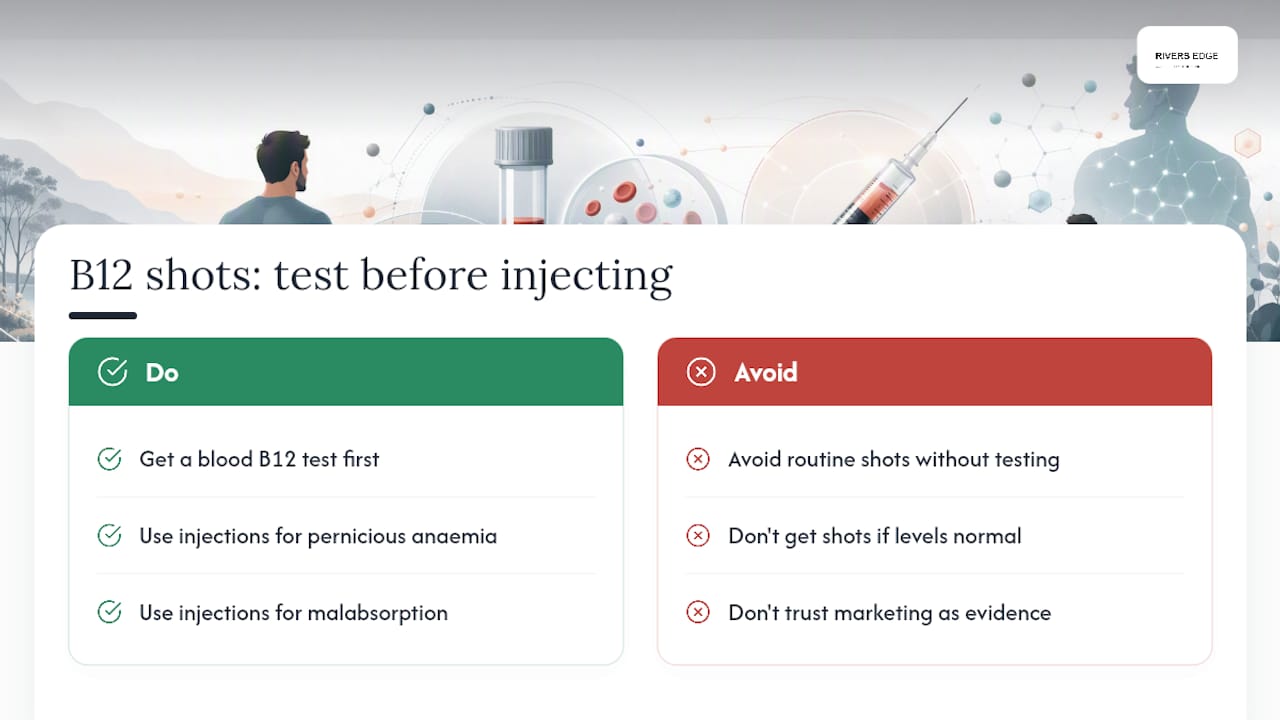
Here's what the research actually supports: injections are a precise tool for a specific problem, not a general vitality booster. If your blood work confirms deficiency, particularly from pernicious anaemia or malabsorption, injections are genuinely one of the most reliable treatments available, correcting damage that oral supplements might not reach fast enough. If your levels are normal, no injection changes that equation. The instinct to "just get a B12 shot" when you're run down is understandable, but it skips the only step that actually matters: testing.
Prioritise the blood test before the needle. That's not caution for its own sake. It's the difference between treating a real deficiency and paying for a placebo with a slight sting.
— David
Ready to talk to a clinic about wellness injections?
If fatigue, brain fog or low mood have you wondering whether a B12 shot might help, the honest first move isn't booking an injection, it's getting tested properly. A clinic offers intramuscular vitamin injections as one part of a wider men's wellness and skin service, meaning you get a proper assessment rather than a walk-in shot with no context behind it.

What sets this apart from picking up a generic wellness injection elsewhere is the setting: a clinic built around personalised treatment plans, where vitality support sits alongside skin treatments, hair loss care and the kind of aftercare guidance that actually gets followed up on. If you're dealing with persistent tiredness or you're already having other treatments and want to add wellness injections to the plan, take a look at our full range of services and book a consultation to discuss whether injections are the right fit for you.
This article is general information, not a substitute for advice from a qualified doctor. Consult a qualified healthcare professional about your own circumstances before acting on anything here.
Sources
- Oral versus intramuscular vitamin B12 for vitamin B12 deficiency (review)
- Gov
- Cyanocobalamin injection: MedlinePlus Drug Information