
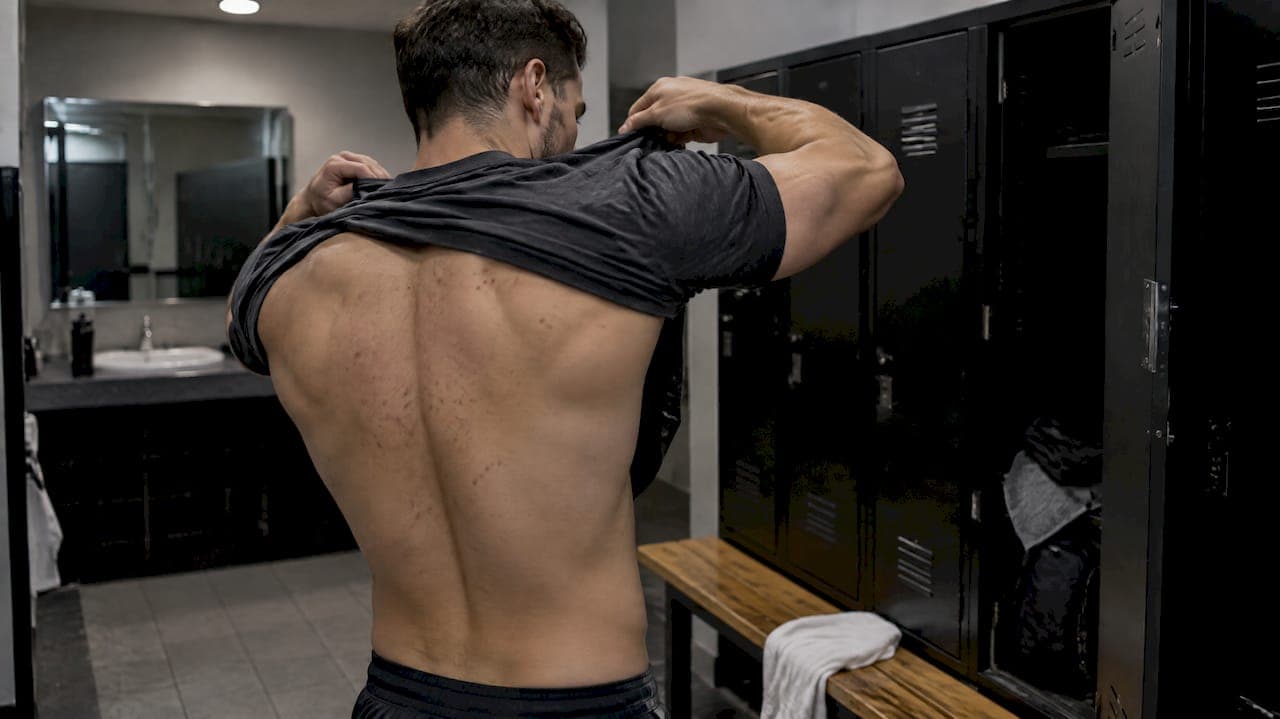
Yes, workouts can trigger or worsen acne. Sweat, friction and trapped kit irritate the skin and clog pores, especially on the chin, jaw, chest and back. Three changes usually help within weeks: change out of sweaty kit straight away, cleanse the affected areas as soon as you can, and use an oil-free wipe when a shower isn't possible.
TL;DR:
- Friction and trapped heat from tight or shared equipment drive many workout breakouts, especially beneath straps and across the chest and back.
- A small trial found no significant truncal acne difference between showering within one hour and waiting four hours, while prompt clothing changes remain useful.
- Benzoyl peroxide usually begins improving acne within 4 weeks; seek advice if it has not helped after 12 weeks, and avoid stacking strong active ingredients.
- Book an assessment for painful nodules, scarring, recurring breakouts, or acne that persists after 6 to 12 weeks of consistent nonprescription treatment.
Table of Contents
- How exercise and gym conditions trigger or worsen acne
- Practical prevention checklist: before, during and after training
- Skincare and over-the-counter treatments for post-gym acne
- When self-care isn't enough: clinical thresholds and treatment routes
- How we assess and treat post-workout acne in men
- Impact of frequency and intensity of workouts on acne flare-ups
- Diet and hydration guidance related to exercise-induced acne
- Skincare routines for men to balance oiliness without over-drying
- How hormonal changes from exercise affect male skin and acne
- Clinic perspective: keep training, change the habits around it
- Clinic services for persistent acne and scarring in men
- FAQ
- Sources
How exercise and gym conditions trigger or worsen acne
What you're seeing is often "acne mechanica", breakouts caused by friction and trapped heat rather than diet or hormones alone. It tends to show up where kit rubs or sits tight: under helmet straps, along the chin strap of a cap, under gym bag straps, or across the chest and back where fabric clings. The American Academy of Dermatology explains that padding, tight clothing and shared equipment all create the warm, damp conditions where this pattern develops.

Sweat itself isn't the villain. It's what sweat does when it sits against skin under occlusive fabric: it softens the outer skin barrier, traps oil and bacteria against the pore lining, and keeps the area warmer than normal. A narrative review of sweat related skin conditions in gym users found that occlusive sportswear and friction were consistent, modifiable contributors, and that prevention worked best when breathable fabric, prompt hygiene and barrier support were combined rather than used alone, according to this review.
None of this means you should train less. The mechanism is about:
- Trapped heat and moisture softening the skin barrier
- Friction from tight or shared equipment irritating the follicle
- Oil, sweat and bacteria accumulating faster than usual
Practical prevention checklist: before, during and after training
Most of the fix happens around your session, not during it. Think of it as three short windows: before you start, while you're training, and the minutes right after you finish.
- Before training, wear loose, moisture-wicking layers rather than tight synthetic fabric, and skip heavy, oil-based products on your face or chest beforehand.
- During training, use your own clean towel to blot sweat from your chin, chest and back, avoid touching your face with your hands or equipment, and wipe down shared benches or machines before you lie on them.
- Immediately after training, change out of damp kit as soon as you reasonably can, since removing the sweat-soaked layer is one of the more useful single steps you can take.
- If a shower isn't possible straight away, use an oil-free cleansing wipe on your face, chest and back rather than leaving sweat to dry on the skin.
- After every session, launder your gym kit, especially anything that sat against your chest, back or jaw, rather than wearing it twice.
A small trial comparing showering within one hour of exercise against waiting four hours found no significant difference in truncal acne outcomes between the two groups, which suggests the clothing change itself, not shower timing, is the part that matters most, per this study.
Pro Tip: Pack a spare, dry t-shirt in your gym bag specifically for the journey home, so you're never stuck in the same damp layer that caused the sweating.
Skincare and over-the-counter treatments for post-gym acne
Once you've sorted the habits around training, the right products speed things up. Start with a gentle, oil-free cleanser on your face and body rather than a harsh scrub, which can irritate already inflamed skin further.
For active ingredients, three are widely available and well established:
- Benzoyl peroxide is an effective over-the-counter treatment for mild-to-moderate acne; the NHS notes it's typically used once or twice daily, with improvement usually beginning within 4 weeks, and advises seeing a GP or pharmacist if there's no change after 12 weeks.
- Salicylic acid helps clear pores and is commonly found in cleansers and wipes aimed at body acne.
- Adapalene, a topical retinoid, is included in UK clinical guidance alongside benzoyl peroxide combinations as a first-line option for mild-to-moderate or truncal acne, with acne prescribing guidance setting realistic expectations of weeks to months for visible improvement.
For chest and back breakouts, a benzoyl peroxide body wash left on for a short contact time before rinsing tends to work better than a quick rinse-off pass. Avoid layering several strong actives at once, since combining benzoyl peroxide, salicylic acid and a retinoid without guidance can dry or irritate skin rather than clear it faster. If you're building a fuller routine, our guide to starting a men's skincare routine walks through the order to introduce products safely.
When self-care isn't enough: clinical thresholds and treatment routes
Most gym-related breakouts respond to the habits and products above within a few weeks. A few signs mean it's worth booking a proper assessment rather than persisting alone:
- Lesions that are large, painful or nodular rather than small surface spots
- Any sign of scarring or dark marks left behind after breakouts heal
- Widespread or persistent acne that hasn't improved after 6 to 12 weeks of consistent over-the-counter treatment
- Breakouts that keep returning in the same spots despite good hygiene habits
UK clinical guidance for acne that doesn't respond to standard over-the-counter options points towards prescription-strength topical combinations, and in some cases oral treatment, with escalation reserved for resistant or scarring cases, as set out in acne prescribing guidance. Procedural options such as chemical peels or microneedling are also used alongside topical care, particularly where marks or texture remain after active breakouts settle. Expect any of these routes to run over weeks rather than days, and plan for a course of treatment rather than a single visit. If scarring has already developed, our piece on treating acne scarring in men covers what a clinical approach involves.
How we assess and treat post-workout acne in men
When a male client comes to us with gym-related breakouts, we start with a straightforward history: training frequency, current products, where the breakouts sit, and whether there's any scarring or lingering marks. From there we build a plan around what we actually see on the skin rather than a one-size approach.
Depending on presentation, treatment options might include facials to clear congestion, chemical peels to address texture and residual marks, microneedling where scarring has started to form, or skin boosters for overall skin quality once active breakouts have settled. Every plan is built for the individual, not applied off a shelf.
Booking is available online, and aftercare is discussed at the end of every session so you know what to expect before your next one. Our focus throughout is treating men specifically, in a setting designed for their needs.
Impact of frequency and intensity of workouts on acne flare-ups
More frequent or more intense sessions generally mean more sweat, more friction against kit, and more opportunities for oil and bacteria to build up before you get a chance to wash it off. A man training six days a week in the same unwashed cap or compression top is giving his skin far less recovery time between irritations than someone training three times a week with fresh kit each session.
Intensity matters as much as frequency. Harder sessions push more sweat out faster, and that sweat tends to sit against the skin for longer if you go straight from the gym into a car, a meeting or the rest of your day without changing. High-intensity training that involves a lot of equipment contact, think weight benches, barbells, resistance bands, also increases friction exposure compared with lower-contact activities like running on an open track.
This doesn't mean cutting back on training to control breakouts. It means matching your hygiene routine to your training load: the more you train, the more deliberate you need to be about fresh kit, prompt washing and not skipping the small steps when you're tired or short on time. Stacking two sessions in one day without changing kit in between is one of the more common ways breakouts creep up on otherwise consistent training habits.
Diet and hydration guidance related to exercise-induced acne
Hydration supports skin health generally, and dehydration makes sweat more concentrated and harder for skin to tolerate comfortably. Drinking water consistently around training, rather than only when you feel thirsty, is a sensible habit alongside the hygiene steps already covered.
Diet's relationship with acne is genuinely debated, and the evidence doesn't support singling out any one food as a direct cause of gym-related breakouts. What's more established is that exercise-induced acne is primarily a mechanical and hygiene issue tied to sweat, friction and occlusion, not a dietary one. If you're also managing diet-related skin concerns, that's worth treating as a separate conversation from your post-workout routine rather than folding the two together.
A sensible approach is to keep hydration steady, eat normally, and focus your actual effort on the habits that have a direct line to the breakouts you're seeing: kit changes, cleansing and the right topical treatment. Chasing dietary changes as a fix for acne mechanica usually means slower progress on the part of the problem you can control most directly.
Skincare routines for men to balance oiliness without over-drying
Post-gym skin needs oil control without stripping the barrier, since over-drying can push skin to produce more oil in response, which works against you. A simple routine covers this without overcomplicating things.
Cleanse with a gentle, oil-free formula straight after training, rather than a foaming scrub that leaves skin tight. Follow with a lightweight, oil-free moisturiser, since skipping moisturiser entirely often backfires on oily skin by triggering more oil production. Where you're using an active ingredient like benzoyl peroxide or salicylic acid, apply it after cleansing and before moisturiser, and give your skin a few days to adjust before increasing frequency.

For chest and back, a body wash containing a treatment ingredient left on briefly before rinsing covers more surface area than a leave-on cream would. Our step-by-step oily skin routine for men breaks this down further and covers when it's worth bringing in clinic support if oiliness and breakouts persist despite a consistent routine.
How hormonal changes from exercise affect male skin and acne
Exercise causes short-term hormonal shifts, including changes in testosterone and cortisol, both of which can influence oil production in the skin. Cortisol in particular rises with intense or prolonged training and is linked to increased sebum output in some men, which can make pores more prone to clogging when combined with sweat and friction.
This is a contributing factor rather than the main driver behind most gym-related breakouts. The physical conditions, trapped sweat, occlusive clothing and friction, tend to matter more day to day than the hormonal fluctuations that come with a single session. That's consistent with the practical focus dermatologists recommend: managing the skin's immediate environment rather than trying to control short-term hormone changes that come from training itself, as this research notes.
For most men, this means the hormonal piece isn't something to worry about separately. Keep training, keep the habits in the earlier checklist consistent, and treat hormone-driven oiliness as one more reason to stick with an oil-free cleanser and the right topical treatment rather than a reason to change how you train.
Clinic perspective: keep training, change the habits around it
Training isn't the problem. What happens to your skin in the hour around training usually is. We'd rather see you keep your routine and fix the habits around it: change out of sweaty kit, cleanse promptly, and bring in an over-the-counter active like benzoyl peroxide if breakouts persist. If marks, scarring or stubborn lesions don't shift after a few weeks of consistent effort, that's the point to get a proper assessment rather than keep guessing.
— David
Clinic services for persistent acne and scarring in men
If the habits and over-the-counter routine above haven't cleared things up after a few weeks, or if scarring has started, we offer treatments built specifically for men dealing with this.

- Various facial treatments aimed at congestion and general skin health, starting at typical prices
- Chemical peel treatments for texture and marks left behind by breakouts
- Microneedling treatments for scarring that's started to form
- Skin booster treatments for overall skin quality once active breakouts have settled
A first consultation covers your training routine, current skincare, and a look at any scarring, before we set out a plan with realistic timelines. Most men follow up over multiple sessions rather than a single visit. You can see the full list of options and book directly through our services page.
This article is general information, not a substitute for advice from a qualified doctor. Consult a qualified healthcare professional about your own circumstances before acting on anything here.
FAQ
Can working out cause hormonal acne?
Working out causes short-term shifts in hormones like cortisol and testosterone, which can increase oil production in some men. The bigger factor in most gym-related breakouts is the physical environment, sweat, friction and occlusive clothing, rather than the hormonal change itself.
Will sweat pimples go away?
Gym-related breakouts often improve within a few weeks once you change out of damp kit promptly, cleanse regularly and introduce an over-the-counter treatment like benzoyl peroxide, which the NHS notes typically shows improvement within 4 weeks. If nothing changes after 12 weeks, it's worth checking in with a GP, pharmacist or clinic.
Does high testosterone cause acne?
Testosterone can influence oil production, but having acne doesn't mean testosterone is unusually high. Most gym-related acne is driven by sweat, friction and trapped bacteria against the skin rather than hormone levels sitting outside the normal range.
Why are my pores sweating so much at the gym?
Sweating increases naturally during exercise as your body regulates temperature, and tight or occlusive clothing can trap that sweat against your skin for longer. Combined with oil and bacteria already on the skin's surface, this trapped moisture is what tends to trigger breakouts, as the American Academy of Dermatology explains.
Sources
- Benzoyl peroxide: a medicine to treat acne - NHS
- Is sports equipment causing your acne? - American Academy of Dermatology
- Sweat-induced exacerbation of dermatoses in gym users: a narrative review - African Journal of Biomedical Research
- Acne Prescribing Guidelines - Clinical Management in Primary Care