
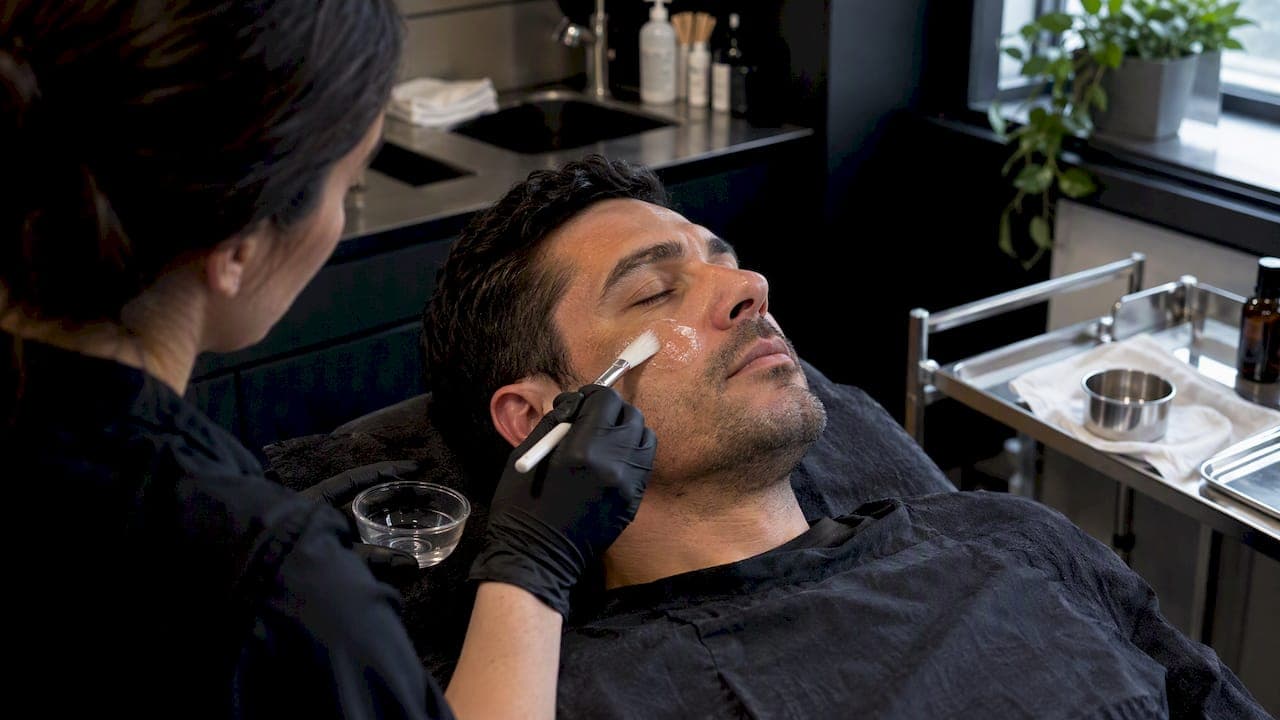
Chemical peels can genuinely improve sun spots, post-inflammatory marks and some epidermal melasma, but results depend heavily on skin type and the practitioner's skill. Deeper peels can backfire on darker skin, triggering more pigment rather than less. Expect some flaking for a few days and strict sun protection afterwards, non-negotiable if you want the improvement to last.
TL;DR:
- Superficial peels can effectively treat sun spots and post-inflammatory hyperpigmentation, but deeper pigmented lesions like dermal melasma are unlikely to respond.
- Glycolic and salicylic acids are the most common choices for superficial treatments, with stronger options like TCA used cautiously on darker skin types.
- Avoid peels if you've used isotretinoin recently, have active skin infections, or a history of pigmentation issues, to minimize risks of adverse reactions.
- Men’s thicker, oilier skin and facial hair require tailored peel protocols, often involving a staged approach and timing around shaving routines.
- Consistent sun protection, topical agents, and follow-up treatments are essential to maintain peel results and prevent pigment recurrence.
Table of Contents
- What pigmentation chemical peels can and cannot treat
- Common peel types used for pigmentation and how they work
- Who's suitable for a peel and what rules it out
- What happens at consultation and during the appointment
- Aftercare and maintenance to protect your results
- How peel protocols differ for men's skin
- How Rivers Edge Skin Studio approaches chemical peels for men
- Book a consultation for your pigmentation
- FAQ
- Sources
What pigmentation chemical peels can and cannot treat
Not all pigmentation is the same, and peels do not treat it all equally. Sun spots (solar lentigines) sit in the upper skin layers and respond well to exfoliation. Post-inflammatory hyperpigmentation, the dark marks left behind after acne, shaving irritation or a cut, often improves too. Melasma is trickier: the epidermal type can fade with peels, but the deeper, dermal form usually will not shift much no matter how often you treat it.
Chemical peels work by removing damaged outer skin and speeding up cell turnover, which breaks up melanin clumps sitting near the surface. That is why they suit shallow pigment problems far better than deep ones.
- Sun spots and PIH generally respond well to superficial peels.
- Epidermal melasma can improve, but dermal melasma usually needs a different approach.
- Peels work best alongside topical treatment and daily sun protection, not as a standalone fix.
Clinicians rarely treat pigmentation with a peel in isolation. It is one tool among several, and realistic expectations matter more than the marketing suggests.
Common peel types used for pigmentation and how they work
Different acids target pigment in different ways, and the right choice depends on your skin type and what is causing the discolouration. Glycolic acid, an alpha-hydroxy acid, loosens the bonds between dead skin cells and is widely used for epidermal melasma because it works gently and predictably. Salicylic acid, a beta-hydroxy acid, penetrates oil and suits acne-prone skin, which makes it a common choice for PIH that follows breakouts. Superficial glycolic and salicylic acid peels offer the strongest balance of results and tolerability for these conditions.
Lactic acid is milder still and often used for sensitive skin that cannot tolerate stronger agents. Jessner's solution combines several acids for a slightly deeper superficial peel. Trichloroacetic acid (TCA) goes deeper again and can reach medium-depth territory, which means more dramatic results but also more risk.
- Glycolic and lactic acid peels suit general epidermal pigment and are gentler overall.
- Salicylic acid is often the preferred option for acne-related PIH thanks to its anti-inflammatory effect.
- Jessner's and TCA peels work deeper but need more caution, particularly on darker phototypes.
A practitioner at a men's skin clinic will usually start conservatively and build up strength over a course, rather than reaching for the strongest option first. For a closer look at how these treatments are structured, our guide to chemical peels for men's skin breaks down priming and depth selection in more detail.
Who's suitable for a peel and what rules it out
Most men with sun spots, shaving-related marks or mild melasma are reasonable candidates for a peel, but a few things rule it out straight away and others call for a more cautious approach.
- Avoid peels if you have used isotretinoin (Roaccutane) in the past 12 months, as it raises the risk of scarring.
- Skip treatment if you have an active skin infection, a cold sore flare, sunburn or active dermatitis in the treatment area.
- Tell your practitioner about aspirin sensitivity before a salicylic acid peel, since the two share a chemical family.
- Flag a history of PIH or a darker skin phototype so your practitioner can choose a more conservative protocol.
- Mention pregnancy, as certain peel ingredients are generally avoided during this time.
A proper medical assessment and, where relevant, a patch test on a small area will catch most of these issues before they become a problem. It is a simple step that separates a well-run clinic from a rushed one. Our piece on men's skin concerns peels address covers the assessment process in more depth.
What happens at consultation and during the appointment
A proper peel starts long before the acid touches your skin. The consultation and preparation phase matters as much as the treatment itself.
- Your practitioner reviews your medical history, skin type and any contraindications before agreeing a plan.
- You may be given a priming routine, often topical agents used for a few weeks to settle melanocyte activity and reduce the risk of PIH.
- On the day, skin is cleansed, eyes protected, and the peel applied for a set time, then neutralised if the formula requires it.
- Aftercare instructions follow immediately: cooling, barrier support and a clear sun protection plan.
- Most men need a short course, often several sessions spaced a few weeks apart, before pigment visibly fades.
Expect mild redness and flaking for a few days after a superficial peel. Visible improvement in pigment usually builds over several weeks rather than overnight.
Pro Tip: Book your consultation a few weeks before any event where you want clear skin, since peels need time to show their effect.
Aftercare and maintenance to protect your results
What you do after a peel decides whether the improvement sticks or the pigment creeps back. Daily sun protection is the single biggest factor: SPF 30 or higher, reapplied through the day, with peak sun hours avoided where possible. Physical filters containing zinc or titanium dioxide tend to suit freshly peeled skin better than chemical sunscreens.
- Apply SPF 30+ daily and reapply if you are outdoors for long periods.
- Use topical agents such as retinoids, azelaic acid, vitamin C or niacinamide between sessions to support results, as your practitioner advises.
- Hold off shaving or using active ingredients until flaking has settled.
- Contact your practitioner if you notice unusual swelling, blistering or pigment that looks darker rather than fading.
Antioxidants play a supporting role too. Protecting skin from oxidative stress helps maintain the brightness a peel delivers, rather than letting environmental damage undo the work. For a fuller walkthrough of the recovery window, see our guide on recovering after a chemical peel.
How peel protocols differ for men's skin
Men's skin is not simply a smaller version of women's skin, and peel protocols account for that. Male skin tends to be thicker and oilier, with more active sebaceous glands, which affects how deep a given concentration penetrates and how quickly it is absorbed. A strength that works well on thinner skin might need adjusting upward slightly to achieve the same effect on a thicker, oilier face, though this is always a judgement made case by case rather than a fixed rule.

Facial hair adds another variable. Beard coverage changes how evenly a peel solution contacts the skin, and areas under denser hair growth may need extra attention during application to avoid patchy results. Shaving habits matter too: regular shaving is itself a common trigger for PIH along the jawline and neck, which is often the exact pigmentation men are trying to treat. A practitioner familiar with male skin will usually time peels around your shaving routine and may advise a short break from shaving immediately after treatment while the skin barrier recovers.

Men also tend to present later, often once pigmentation has been visible for years, which can mean a more gradual, staged approach is needed rather than expecting one session to resolve long-standing marks. None of this makes peels less suitable for men, but it does mean a protocol built for women's skin, applied without adjustment, is not automatically the right fit.
How Rivers Edge Skin Studio approaches chemical peels for men
A men's skin clinic that specializes in male skin shapes how it assesses and plans peels. Treatment plans start with a proper skin assessment, not a generic protocol, with a conservative, staged approach for clients with darker phototypes or a history of pigment flare-ups. The focus is on natural-looking, visible results delivered in a premium, comfortable setting, built around what actually suits the client's skin rather than a one-size routine.
— David
Book a consultation for your pigmentation
Looking after pigmentation shouldn't mean guessing which peel might work. A consultation at Rivers Edge Skin Studio starts with a proper look at your skin, your history and what's realistic for your case, then builds a plan around it.

At your visit, we'll review your medical history, assess your skin type and talk through a treatment plan with a clear cost estimate before anything starts. Chemical peels are available as a single treatment, a course of two or a course of four, depending on what your skin needs. Book your consultation through our services page to get started.
FAQ
Is a chemical peel good for men?
Yes, chemical peels suit most men dealing with sun spots, shaving-related marks or epidermal pigment changes, provided an experienced practitioner assesses your skin first. The right peel depends on your skin type and the cause of the pigmentation, which is why a proper consultation matters more than the peel strength alone.
Will a chemical peel remove pigmentation completely?
A peel can significantly fade sun spots, PIH and some epidermal melasma, but it rarely removes pigmentation entirely, especially where melasma sits deeper in the skin. Deeper dermal pigment typically needs a combined approach, often peels alongside topical treatment and photoprotection, rather than a single session.
How risky is a chemical peel?
Superficial peels carry low risk when performed correctly, but medium and deeper peels can cause post-inflammatory hyperpigmentation, hypopigmentation or, rarely, scarring. The risk rises on darker skin phototypes if the depth or acid strength is not adjusted, which is why an experienced practitioner and a conservative starting protocol matter.
Who cannot have a chemical peel?
Men who have used isotretinoin in the past 12 months, have an active skin infection or cold sore, or are dealing with active dermatitis or sunburn should not have a peel until these resolve. Pregnancy and aspirin sensitivity (relevant for salicylic acid peels) are also flagged at assessment, which is why a medical history review always comes first.
Sources
- Chemical peels — Birmingham Centre for Aesthetic Medicine (BCAM)
- Chemical peels in melasma: a review with consensus recommendations — PMC
- Advances in the application of chemical peels in the management of pigmentary disorders — Journal of Cosmetic Dermatology
- Isotretinoin (Roaccutane) — NHS