
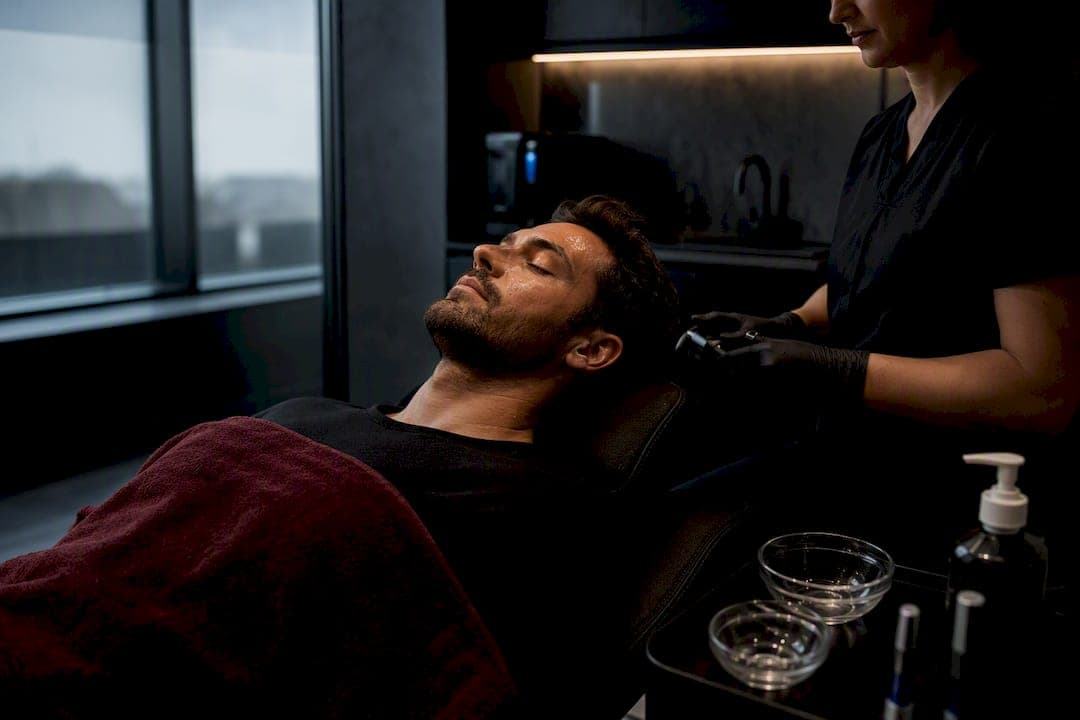
A classic Hydrafacial in the UK typically costs £80 to £150, a signature or deluxe session runs £130 to £220, and platinum treatments reach £200 to £380. Add-ons such as boosters or LED therapy will push any quote higher.
TL;DR:
- A classic Hydrafacial in the UK costs between £80 and £150, while signature or deluxe treatments range from £130 to £220; platinum sessions are between £200 and £380, excluding add-ons.
- Prices vary significantly based on treatment length, clinic location, practitioner experience, and included steps, with London clinics generally charging higher.
- Booking a course typically reduces the per-session cost by 10 to 25%, but it's advisable to try a single session first to assess results and protocol suitability.
- Add-ons such as LED therapy, booster serums, or neck extensions usually add £25 to £80 each, with layering booster treatments increasing both time and cost.
- To avoid overpaying, inquire specifically about included steps, device authenticity, practitioner qualifications, and ask for a detailed breakdown before booking.
Table of Contents
- How much does a Hydrafacial cost in the UK?
- What actually affects the price you're quoted?
- Do course packages actually save you money?
- What do common add-ons cost?
- How often should you book, and what does that cost over time?
- How do you choose a clinic without overpaying or being underserved?
- How does Rivers Edge Skin Studio approach Hydrafacial pricing?
- Why the cheapest Hydrafacial is rarely the smartest booking
- Ready to try a Hydrafacial built around your skin?
- Sources
- FAQ
How much does a Hydrafacial cost in the UK?
Prices depend heavily on which tier you book, and clinics rarely make this obvious until you ask. The three standard tiers exist for a reason: they cover different numbers of treatment steps, different session lengths, and different levels of practitioner time.
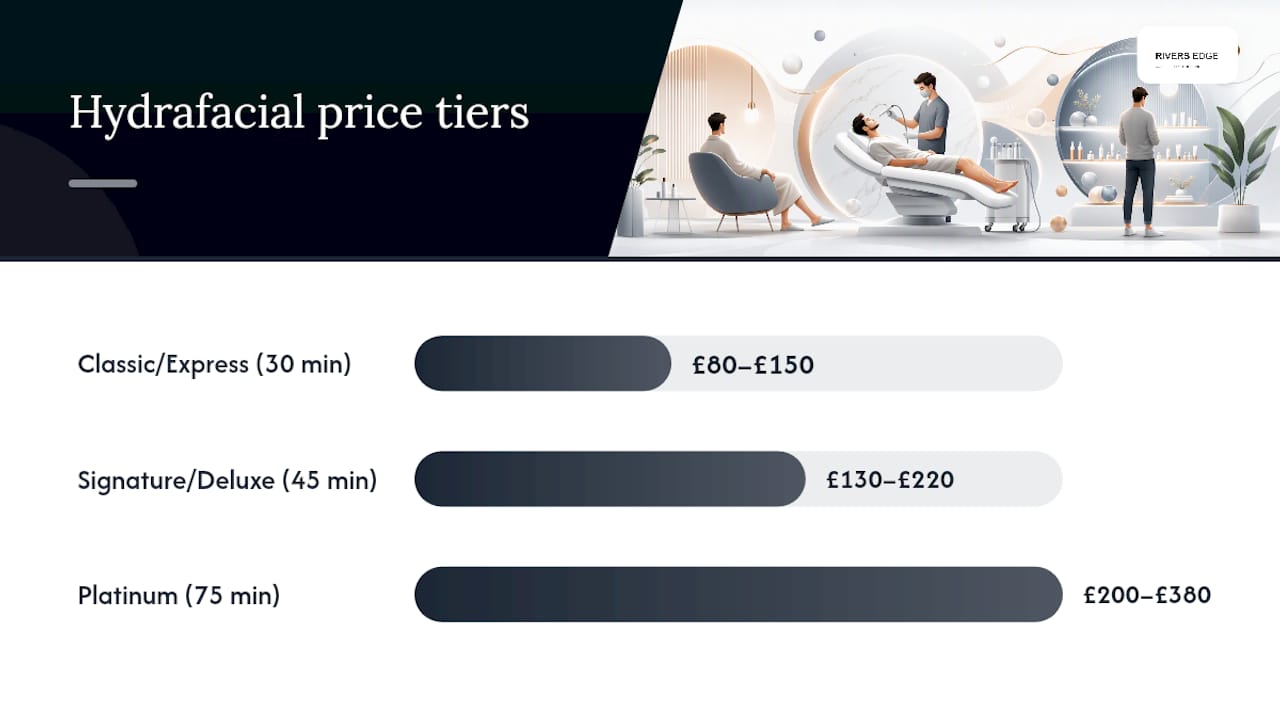
A classic or express Hydrafacial, usually around 30 minutes, typically ranges from £80 to £150 across the UK. This covers the core three steps: cleanse and peel, extraction, and hydration. It suits men who want a quick refresh before an event or who are trying the treatment for the first time.
Step up to a signature or deluxe treatment, around 45 minutes, and you're looking at £130 to £220. This tier adds a booster serum tailored to your skin concern, whether that's congestion, dullness, or early signs of ageing. It's the tier most clinics recommend for anyone with a specific goal beyond general glow.
Platinum treatments, running around 75 minutes, sit at £200 to £380. These typically bundle in lymphatic drainage massage, LED light therapy, and sometimes a neck and décolletage extension. At this price point you're paying for extra hands-on time as much as extra product.
- Classic/express (30 minutes): £80–£150
- Signature/deluxe (45 minutes): £130–£220
- Platinum (75 minutes): £200–£380
Regional variance is real and worth factoring in before you compare quotes. In London, particularly around Harley Street, Knightsbridge, and Mayfair, a signature session commonly costs £150 to £280, noticeably above the national range for the same tier. A man in Liverpool or elsewhere in the North West will generally find the same treatment priced closer to the lower end of the UK bands, though postcode within a city still matters. A clinic in a premium retail district will price differently to one on a quieter high street, even a few miles apart.
What actually affects the price you're quoted?
Two clinics offering an identical looking treatment can charge very different prices, and the gap usually comes down to a handful of concrete factors rather than arbitrary markup.
Rent and overheads explain a large share of it. A clinic in a high footfall, high rent postcode has to price treatments to cover that cost, which is part of why London premiums are so consistent. Practitioner seniority matters too: a treatment delivered by an experienced aesthetic practitioner in a proper clinical setting typically costs more than the same protocol in a beauty salon, partly because you're paying for clinical judgement, not just the machine.
Session length and inclusions drive price directly. A 30 minute appointment cannot include the same number of steps as a 75 minute one, so always check exactly what's covered before comparing two prices side by side.
- Consumables: boosters, PERK lip and eye treatments, LED add-ons, and neck or décolletage extensions all add to the bill
- Pricing model: pay-as-you-go, prepaid courses, and monthly memberships each change your effective cost per visit
Pro Tip: Ask a clinic to break down exactly which steps are included in their quoted price before you book. A £120 "classic" at one clinic might include a booster serum that another charges separately for at £40, which makes the headline price misleading on its own.
Do course packages actually save you money?
Yes, generally. Buying a course of multiple sessions commonly reduces the per-session cost by roughly 10 to 25% compared with paying for each visit individually. A course of six sessions typically totals several hundred to over a thousand pounds, depending on the tier and the clinic's own pricing.
- Check what's bundled in. Some clinics fold a skin diagnostic scan or an LED upgrade into course pricing, which effectively lowers the real per-session value further, but only if you'd have paid for that scan separately anyway.
- Confirm the expiry window. A discounted course is only good value if you can realistically attend within the timeframe the clinic sets.
- Try one session first. This is the approach most reputable practitioners recommend, and it protects you from paying upfront for a series before you know how your skin responds to that particular clinic's protocol.
Some clinics also offer membership or pay-monthly plans, which spread the cost and can work out cheaper per visit if you attend regularly. They only make financial sense if your attendance is genuinely consistent.
What do common add-ons cost?
Add-ons are where a quoted price and an actual invoice tend to diverge, so it's worth knowing the typical ranges before you're stood at the till.
- LED light therapy: typically £25–£80 extra
- PERK lip or eye treatment: typically £25–£80 extra
- Booster serums: typically £25–£80 extra, depending on the formula
- Neck and décolletage extension: typically adds £40–£80 to the session
Layering more than one booster increases both the consumable cost and the appointment length, since each product needs its own application step. A neck extension in particular adds meaningful time to the appointment, so factor that into how long you'll need to block out, not just what you'll pay.
How often should you book, and what does that cost over time?
Most practitioners recommend an initial course of three to six sessions, spaced four to eight weeks apart, with tighter spacing at the start for more stubborn concerns like congestion or pigmentation. After that, maintenance sessions every four to eight weeks tend to keep results visible, since a Hydrafacial works best as an ongoing maintenance treatment rather than a single fix.
- Course-of-six budgeting: at £70–£230 per session with a course discount, expect a total of roughly £420–£1,400 spread across three to six months.
- Quarterly maintenance: a single top-up session every eight to twelve weeks after the initial course, useful if your skin holds results well.
- Monthly membership: a fixed monthly payment that lowers the per-visit cost for men who know they'll attend on a regular schedule.
For guidance on stretching results between visits, our aftercare guide covers the first week in detail.
How do you choose a clinic without overpaying or being underserved?
Price alone tells you very little about quality, so ask specific questions before you book rather than after you've paid.
- Which exact steps are included in the quoted price, and which are extras?
- Is the device a genuine, licensed Hydrafacial machine, and can the clinic confirm this?
- What are the practitioner's qualifications, and who will actually perform the treatment?
- Are you being asked to commit to a full course at the first consultation?
Two patterns are worth treating as warning signs. The first is a price well below the local average in a high-rent area, which can point to a shortened protocol or non-genuine consumables. The second is pressure to prepay for a full course before you've had a single session, which runs against the standard clinical advice to try one treatment first and judge the result on its own merits.
Transparent pricing looks like a clear breakdown by tier, published add-on costs, and a practitioner willing to explain exactly what happens during the appointment before you commit.
How does Rivers Edge Skin Studio approach Hydrafacial pricing?
The clinic specialises in aesthetic treatments and builds Hydrafacial plans around individual skin needs rather than a one-size protocol. This is important for clients with beard-covered skin, where extraction and hydration steps may need adjustment compared with other typical treatments.
- Personalised treatment plans rather than a single fixed package (as described on our site)
- A single-session trial is recommended before committing to a course.
- Guidance on which boosters or add-ons may suit your specific concern.
For a fuller picture of what to expect, our guides on Hydrafacial benefits for men and the full procedure steps cover the practical detail behind the price.
Why the cheapest Hydrafacial is rarely the smartest booking
The conventional advice on Hydrafacial pricing stops at "compare quotes and pick the best deal," and that's where most men go wrong. Price comparison only works when you're comparing identical protocols, and very few clinics disclose their exact steps clearly enough to do that. A £90 classic and a £150 classic might genuinely be the same treatment with different overheads, or they might be entirely different numbers of steps wearing the same tier name.
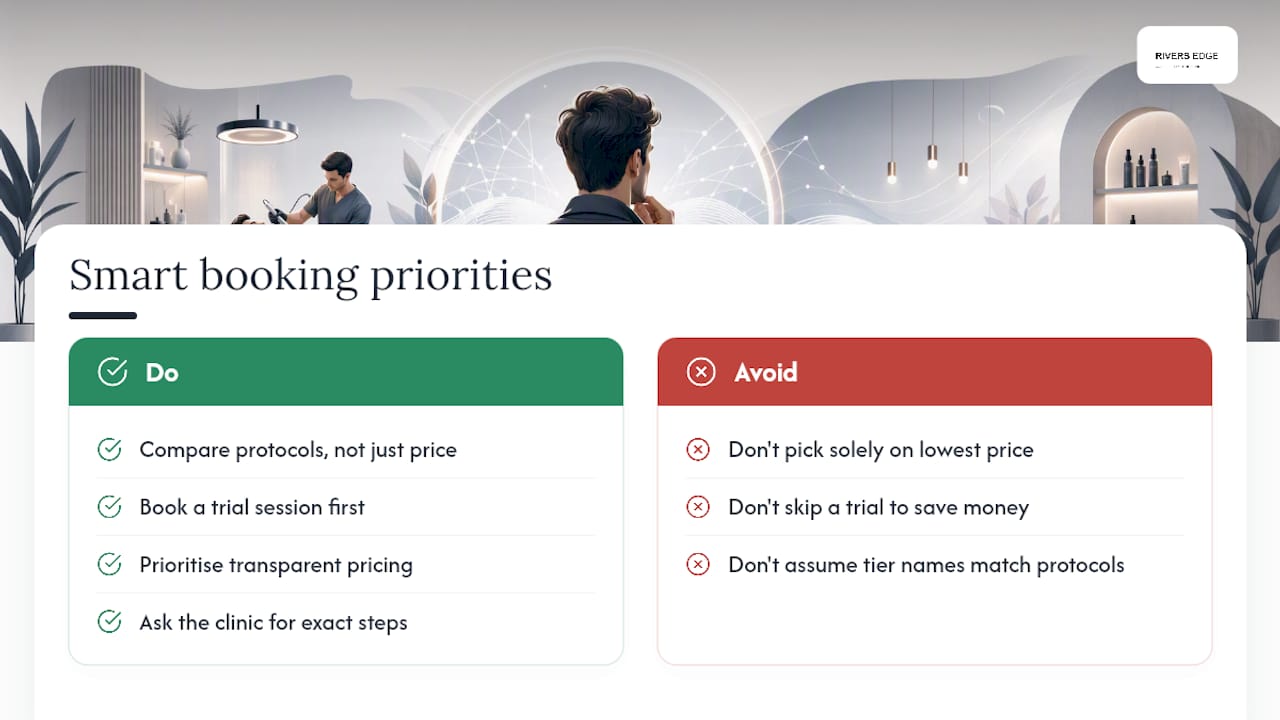
What's underrated is the value of the trial session itself. Skipping it to save money on a discounted course is a false economy if the clinic, the practitioner, or the protocol doesn't suit your skin. A single session costs more per visit than a bundled one, but it buys you information a price list never will.
If you take one thing from this, prioritise transparency overdiscount. A clinic that explains its pricing without being asked has already told you more about its standards than any percentage saving on a six-session course.
— David
Ready to try a Hydrafacial built around your skin?
This clinic offers Hydrafacial treatments aimed at men in Liverpool and Merseyside, focusing on tailored tiers and appropriate add-ons. Every treatment starts with a plan built around your specific concerns, whether that's beard-line congestion, dullness, or early ageing, rather than a generic package.
If you've read this far wondering whether a course is worth committing to, book a single session first and judge the result for yourself before you decide on anything longer. You can see the full range of treatments and book directly through the men's skin treatments page.
Sources
- HydraFacial Cost UK 2026: From £80 Price Guide
- HydraFacial in London: what it costs, what it actually does, and how to choose a clinic
- How much does a Hydrafacial cost?
- How Much Does Hydrafacial Treatment Cost in the UK 2026?
FAQ
Is a 30 minute Hydrafacial worth it?
A 30 minute classic Hydrafacial is worth it as a quick refresh or an introduction to the treatment, though it covers fewer steps than a signature or platinum session. It's a sensible way to try the treatment before committing to a longer, pricier tier.
How much should I expect to pay for a Hydrafacial?
Expect £80–£150 for a classic session, £130–£220 for signature or deluxe, and £200–£380 for platinum, with London prices typically at the higher end of each band. Courses of multiple sessions usually reduce the per-session cost by 10 to 25%.
How many days does a Hydrafacial last?
Visible glow and hydration typically last several days to around a week for a single session, which is why most practitioners frame it as a maintenance treatment rather than a one-off fix. Regular sessions every four to eight weeks help sustain results over time.
Why is Hydrafacial costly?
The cost reflects the genuine device, the consumables used in each step, practitioner time, and clinic overheads, particularly in high-rent areas. A price significantly below the local average can signal a shortened protocol or non-genuine equipment, so it's worth asking what's included before assuming a lower price is simply a better deal.