
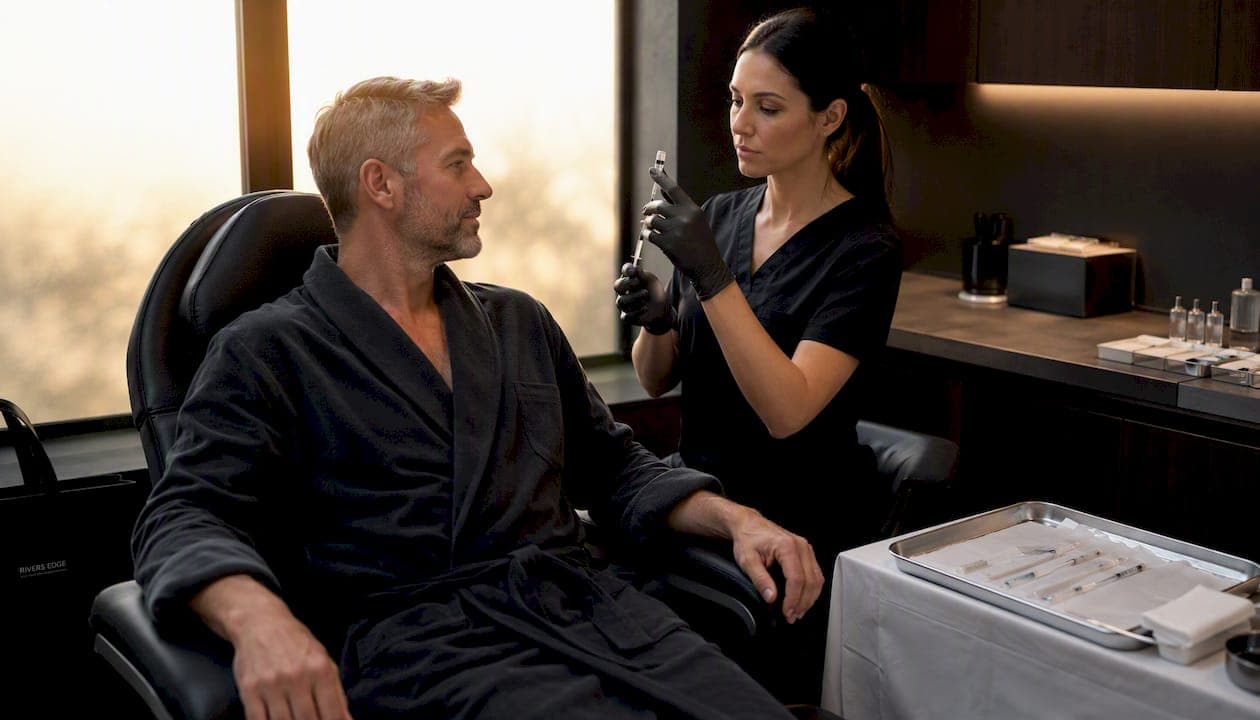
For most men, the most reliable local options are anti-wrinkle injections (Botox) for dynamic lines, dermal fillers for jawline definition, microneedling for texture and scarring, and scalp treatments or hyperhidrosis injections for hair loss and excessive sweating. The right combination depends on your skin type, goals, and how much downtime you can manage. Conservative, staged plans consistently produce safer, more natural outcomes than a single aggressive session. Your clearest next step is to book a consultation at a regulated clinic, bring a short list of concerns, and ask the clinician to walk you through a sequenced plan. Riversedgeskinstudio in Merseyside does exactly that, with treatments designed specifically around male skin and facial anatomy.
Table of Contents
- What do Botox and dermal fillers actually do for men?
- Advanced facials and resurfacing: what works for male skin?
- What can laser and light-based treatments fix for men?
- What are your options for hair loss and scalp treatments?
- How is excessive sweating treated locally?
- How do you choose a local clinic and what should you ask?
- What do treatments typically cost in the UK, and how long does recovery take?
- How Riversedgeskinstudio approaches men's skin
- Key takeaways
- Why the "more is more" approach to men's aesthetics gets it wrong
- Ready to book at Riversedgeskinstudio?
- Further reading and trusted UK sources
What do Botox and dermal fillers actually do for men?
Men's faces are not simply smaller versions of women's faces. Thicker skin, stronger muscles, and a different fat distribution mean that both Botox dosing and filler placement need to be adapted to preserve masculine proportions rather than soften them.
Botox relaxes the muscles responsible for dynamic expression lines — the kind that deepen with movement. The most common male treatment areas are:
- Forehead lines — horizontal creases from raised brows
- Glabella — the "11" lines between the brows, often more pronounced in men
- Masseter — jaw muscle reduction for a slimmer lower face or teeth-grinding relief
- Crow's feet — lateral eye lines that appear with smiling
Results typically appear within 3–5 days, peak at two weeks, and last 3–4 months. Men often need slightly higher doses than women in the forehead and glabella because of greater muscle mass, but the goal is always movement with softening, not a frozen appearance.
Dermal fillers address volume loss and structural definition. Jawline contouring, submalar support (cheek projection), and chin projection are the most requested male filler treatments. Because male facial proportions favour angular, defined contours, a clinician experienced with male anatomy will place filler differently than they would for a female patient. Results are immediate and typically last 12–18 months depending on the product used and the area treated.
Clinician checklist for your injectable consultation:
- Confirm the practitioner is a registered prescriber (nurse prescriber, doctor, or dentist)
- Ask whether the clinic is regulated and CQC-registered
- Request before-and-after photos of male patients specifically
- Ask for a staged, conservative plan rather than maximum volume in one session
- Get a written aftercare plan and a follow-up appointment
Pro Tip: If a clinician suggests the maximum dose or volume at your first appointment without discussing a staged approach, that is a red flag. Conservative dosing over two or three sessions gives you far more control over the final result.

Advanced facials and resurfacing: what works for male skin?
Male skin is thicker than female skin and produces more sebum, which means it responds well to resurfacing treatments but also needs careful technique around bearded areas.
HydraFacial
HydraFacial uses a three-step vortex system to cleanse, exfoliate, and infuse hydrating serums simultaneously. It suits all skin types, has zero downtime, and is particularly effective for men with congested pores, oily skin, or post-shave sensitivity. For bearded men, the clinician adapts the handpiece to work around facial hair rather than over it.
Chemical peels
Peels range from superficial (lactic, glycolic) to medium-depth (TCA). For men dealing with uneven tone, sun damage, or mild acne scarring, a course of superficial peels is often the starting point. Medium-depth peels deliver more visible results but require 5–7 days of peeling and redness. Clinicians typically avoid applying peels directly onto dense beard areas.
Microneedling
SkinPen microneedling is a strong option for texture, enlarged pores, and acne scarring with minimal downtime — usually 24–48 hours of redness. It works across a wide range of skin tones and can be used on bearded skin with appropriate needle depth adjustments. A course of three sessions spaced four weeks apart is the standard starting point.
Combining treatments progressively produces better results than one aggressive session. A common sequence is HydraFacial first (to clear congestion), then microneedling (to stimulate collagen), then a maintenance peel every 6–8 weeks. For guidance on sequencing clinic procedures with home care, the timing of your home actives matters too.
Pro Tip: Pause retinol and strong exfoliating acids at least five days before any resurfacing treatment and for the first week of recovery. Continuing them too soon impairs healing and increases irritation risk.
A simple, consistent home routine built around cleansing, a repair serum, and SPF supports clinic results between sessions. The AAD recommends broad-spectrum SPF 30+ sunscreen, reapplied every two hours outdoors, as a non-negotiable step after any resurfacing procedure.
What can laser and light-based treatments fix for men?
Laser treatments cover three main concerns for men: pigmentation and sun damage, skin resurfacing, and hair removal.
For pigmentation and sun damage, fractional lasers and intense pulsed light (IPL) are the most commonly used options. Fractional resurfacing targets fine lines and uneven texture with a recovery period of 5–10 days. IPL is better suited to lighter skin tones and works well for diffuse redness and sun spots. Men with darker skin tones (Fitzpatrick IV–VI) need a clinician experienced with Nd:YAG or other longer-wavelength devices to avoid post-inflammatory hyperpigmentation.
Laser hair removal for men is increasingly popular for the back, chest, and neck. Treating the neck line around a beard requires careful mapping to preserve the desired beard shape, so always discuss your styling preferences before treatment begins. Most areas require 6–8 sessions for significant reduction.
In the UK, laser and IPL devices used for hair removal and skin treatments are regulated by the MHRA. Patients should confirm that the clinic uses a registered device and that the operator holds a relevant qualification. The Care Quality Commission (CQC) regulates clinics providing certain cosmetic procedures — checking a clinic's registration status before booking is straightforward via the CQC website.
| Treatment | Issue treated | Downtime | Results timeline | Male/bearded suitability | Typical UK cost band | Maintenance |
|---|---|---|---|---|---|---|
| Fractional laser | Texture, fine lines, scarring | 5–10 days | 4–6 weeks post-treatment | High; avoid bearded areas | — | 1–3 sessions |
| IPL | Sun spots, redness, pigmentation | 1–3 days | 2–4 weeks | Lighter skin tones only | — | 3–6 sessions |
| Nd:YAG laser | Pigmentation (darker tones), hair removal | 1–5 days | 4–8 weeks | Suitable for darker skin | — | 4–8 sessions |
| Laser hair removal | Unwanted hair (back, chest, neck) | Minimal | After 3–4 sessions | High; beard mapping required | — | 6–8 sessions |
What are your options for hair loss and scalp treatments?
Hair loss in men is common, but not all thinning responds to the same approach. Clinic-based treatments work best when started early and combined with a consistent plan.
- Scalp microneedling creates micro-channels in the scalp to stimulate blood flow and growth factors. It is typically performed in a course of 4–6 sessions spaced 4–6 weeks apart. Redness and mild sensitivity resolve within 24 hours.
- Polynucleotides (PDRN) are injectable skin boosters derived from salmon DNA that support tissue regeneration and scalp health. They are increasingly available at specialist clinics and are often combined with microneedling for a synergistic effect.
- PRP (platelet-rich plasma) involves drawing a small blood sample, concentrating the growth factors, and injecting them into the scalp. Results build gradually over 3–6 months.
- Adjunct home options — clinician-approved topicals such as minoxidil can complement in-clinic sessions. Always confirm compatibility with your prescriber before combining.
Measurable improvements typically appear over months, and clinics generally plan 3–6 sessions at regular intervals. If your hair loss is rapid, patchy, or accompanied by scalp symptoms, a GP or trichologist referral is the right first step before committing to aesthetic treatments. Clinic treatments are most effective for density preservation and early-stage thinning rather than reversing advanced loss.
How is excessive sweating treated locally?
Hyperhidrosis (excessive sweating) in the underarms, hands, or feet is one of the most straightforwardly treated concerns in aesthetic medicine. Botulinum toxin injections into the affected area block the nerve signals that trigger sweat glands. The procedure takes around 20–30 minutes, requires no downtime, and results typically last 6–12 months.
For men, the practical benefits are immediate: no sweat patches through work shirts, more confidence in social situations, and no need to restrict clothing choices. Most men return for a top-up once or twice a year. The treatment is well-tolerated and does not affect normal physical activity — you can return to the gym the same day, though avoiding intense heat for 24 hours is advisable.
Topical prescription antiperspirants (aluminium chloride-based) are a first-line option for milder cases and can be discussed with your GP before pursuing injections. For moderate to severe hyperhidrosis, botulinum toxin injections remain the most effective local option.
How do you choose a local clinic and what should you ask?
The quality of your results depends as much on the clinic you choose as on the treatment itself. A good consultation should feel like a conversation, not a sales pitch.
What to check before booking:
- The practitioner is a registered prescriber or works under the supervision of one
- The clinic is CQC-registered (for injectable and certain laser treatments)
- Before-and-after photos of real male patients are available on request
- A written aftercare plan is provided as standard
- The clinic offers follow-up appointments, not just a single session
Questions to ask at your consultation:
- "What sequence of treatments would you recommend for my concerns?"
- "How will you adapt this treatment for my skin tone and beard pattern?"
- "What are the realistic risks for someone with my skin type?"
- "What does the aftercare involve, and when can I return to normal activities?"
Red flags to walk away from:
- Time-limited offers pressuring you to book on the day
- Reluctance to discuss a staged plan or to show documented outcomes
- No written aftercare or follow-up process
- Poor hygiene standards or an unwillingness to answer questions directly
Knowing when to seek professional skincare rather than managing concerns at home is a skill in itself. If a concern has persisted for more than a few months or is affecting your confidence, a consultation is the right move.
What do treatments typically cost in the UK, and how long does recovery take?
| Treatment category | Typical UK cost band | Sessions required | Visible improvement | Recovery time |
|---|---|---|---|---|
| Anti-wrinkle injections (Botox) | — | 1 (review at 2 weeks) | 3–10 days | Minimal; avoid exercise 24 hrs |
| Dermal fillers | — | 1–2 | Immediate | 24–48 hrs mild swelling |
| HydraFacial | — | 1 (monthly maintenance) | Immediate | None |
| Chemical peel (superficial) | — | 3–6 | 1–2 weeks | 2–7 days peeling |
| Microneedling | — | 3–6 | 4–8 weeks | 24–48 hrs redness |
| Laser/IPL | — | 3–8 | 4–8 weeks | 1–10 days |
| Scalp microneedling/PRP | — | 4–6 | 3–6 months | 24 hrs sensitivity |
| Hyperhidrosis (Botox) | — | 1–2 per year | 1–2 weeks | None |
Cost bands are indicative for the UK market and vary by clinic, location, and practitioner experience. Always confirm pricing at your consultation.
Recovery timeline at a glance:
- Days 1–3: Redness, mild swelling, or sensitivity depending on treatment
- Days 4–7: Most visible side effects resolve; avoid strong actives at home
- Weeks 2–4: Skin settles; initial results become visible
- Months 2–3: Full collagen response from resurfacing treatments; injectable results at peak
How Riversedgeskinstudio approaches men's skin
Riversedgeskinstudio follows a clear process: consultation first, then a conservative staged plan, then treatment, then documented aftercare and a follow-up appointment. Nothing is rushed, and no treatment is recommended without a clear rationale tied to your specific concerns.
The clinic's men-focused service range covers anti-wrinkle injections, HydraFacial, chemical peels, microneedling, scalp microneedling, polynucleotides, excessive sweating treatments, and intramuscular vitamin injections. Every treatment plan is built around male skin physiology — thicker dermis, higher sebum production, beard considerations, and the goal of natural, masculine results rather than a generic aesthetic outcome.
Booking is available online, and a consultation is always the starting point.
Key takeaways
Conservative, staged aesthetic treatment plans produce safer, more natural results for men than single aggressive sessions, and daily SPF and a simple home routine are what sustain those results long-term.
| Point | Details |
|---|---|
| Start with a consultation | A qualified, registered prescriber should assess your skin before any treatment is recommended. |
| Choose staged plans | Conservative, incremental sessions preserve masculine features and reduce the risk of overcorrection. |
| Match treatment to concern | Botox for dynamic lines, fillers for structure, microneedling for texture, scalp treatments for hair loss. |
| Protect results daily | Broad-spectrum SPF 30+ applied every morning is the single most effective maintenance step after any clinic treatment. |
| Riversedgeskinstudio | Offers a full men's treatment menu in Merseyside, with personalised plans and online booking. |
Why the "more is more" approach to men's aesthetics gets it wrong
The most common mistake men make when starting aesthetic treatments is treating the first session as the final destination. They see a result they like, assume more product or a stronger treatment will improve it further, and end up with an outcome that looks overdone rather than natural.
The clinical evidence points firmly in the other direction. Staged, conservative plans with regular maintenance consistently outperform single aggressive procedures on both safety and longevity. Male facial anatomy reinforces this: stronger muscles and denser tissue mean that small adjustments have a proportionally larger visual impact than the same dose would on a finer-featured face.
There is also a practical argument for restraint. A man who starts with a conservative Botox dose and reviews at two weeks has full control over the outcome. He can add more if needed. He cannot take it back if the first dose was too heavy.
The same logic applies to fillers, resurfacing, and hair treatments. Progress over three to six months, documented with photos, is what builds confidence in a treatment plan. A clinic that encourages that approach is one worth trusting.
Ready to book at Riversedgeskinstudio?
Riversedgeskinstudio is a specialist men's skin clinic in Merseyside, built around one straightforward idea: treatments that work for male skin, delivered by clinicians who understand it. The difference from a general aesthetic clinic is not just the service list. It is the consultation process, the staged planning, and the fact that every recommendation is made with male facial anatomy in mind.

The clinic offers anti-wrinkle injections, HydraFacial, chemical peels, microneedling, scalp microneedling, polynucleotides, hyperhidrosis treatment, and intramuscular vitamin injections. Before your appointment, note down your main concerns, bring a list of any medications or supplements you take, and have a rough idea of your current skincare routine. That information helps the clinician build a plan that fits your life, not just your skin.
View the full men's treatment menu and book your consultation online. A men's skincare routine to support your clinic results is a good place to start in the meantime.
Further reading and trusted UK sources
- Rivers Edge Skin Studio — men's treatments and online booking
- American Academy of Dermatology — skincare tips for men
- Healthline — men's skincare guide
- CeraVe — men's facial skincare routine
- Vogue — dermatologist-approved skincare routines for men
- Dermalogica — four-step men's skincare routine
- MHRA — medical device regulation in the UK (for checking laser and device safety standards)
- Care Quality Commission — find and check registered providers
This article is general information, not medical or clinical advice. Confirm treatment suitability, risks, and current regulatory requirements with a qualified clinician or the relevant UK authority before proceeding.