
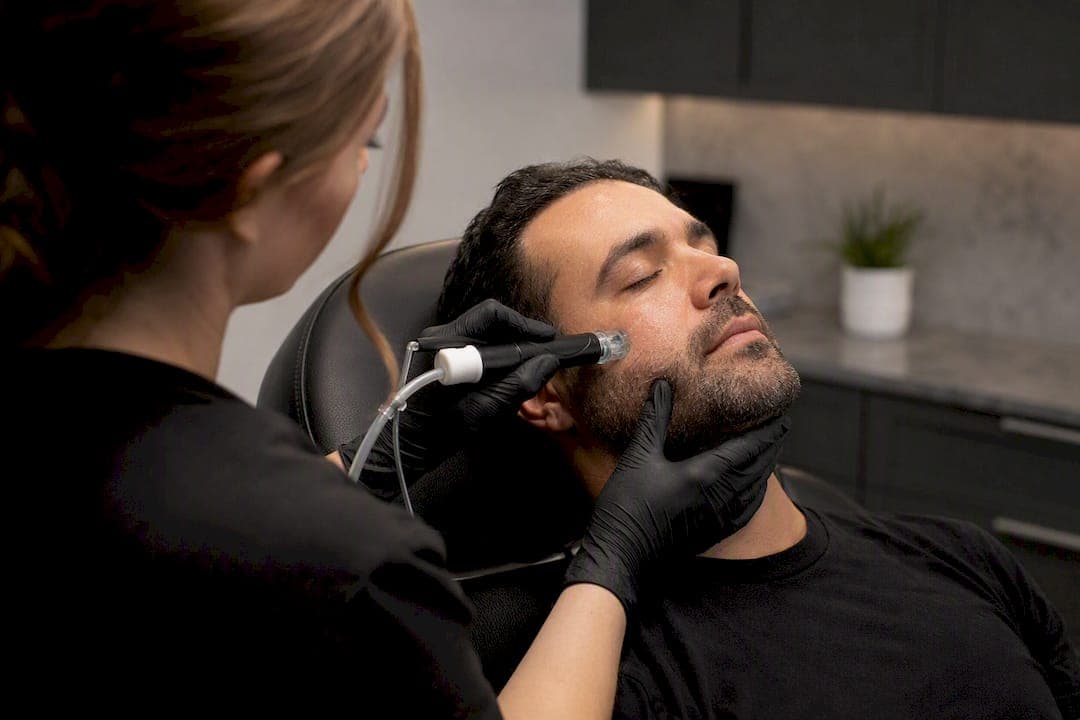
A HydraFacial follows a clear sequence: cleanse, exfoliate, extract, then infuse the skin with hydrating serums. Most clinics also weave in a light chemical peel, and higher tiers add lymphatic drainage or LED light therapy. The whole appointment typically lasts about half an hour to an hour, and you walk out with visibly plumper, more hydrated skin. No needles, no downtime, no red-raw aftermath.
At Rivers Edge Skin Studio, this is exactly what a HydraFacial session looks like for our clients:
- Cleanse and exfoliate — the device lifts away dead skin and surface debris
- Peel — a gentle acid solution loosens congestion without irritation
- Extract — vortex suction clears pores painlessly
- Boost — targeted serums address your specific skin concern
- Hydrate — hyaluronic acid and antioxidants lock in moisture
- Optional add-ons — LED therapy or lymphatic drainage, depending on tier
The typical session: around half an hour to an hour, fully customisable, and suitable as a standalone treatment or as prep before something more intensive.
Key Takeaways
HydraFacial works through a cleanse, peel, extract, and infuse sequence that clears pores before delivering hydrating serums, producing immediate plumpness with no downtime.
| Point | Details |
|---|---|
| Core sequence | Cleanse, exfoliate, peel, extract, and infuse form the backbone of every HydraFacial, regardless of tier. |
| Tier differences matter | Signature covers the essentials; Deluxe and Platinum add lymphatic drainage and LED therapy. |
| Session length varies | Expect 30 to 60 minutes, with add-ons pushing towards the longer end. |
| Results build over time | One session gives immediate glow; repeated sessions every four to six weeks build lasting improvement. |
| Rivers Edge Skin Studio | Rivers Edge Skin Studio customises peel strength and extraction pressure specifically for men's skin and beard areas. |
Table of Contents
- What are the hydrafacial steps in detail?
- What does a hydrafacial feel like and how long does it take?
- Who is hydrafacial for and what benefits should you expect?
- How should you prepare for your first hydrafacial?
- What aftercare does hydrafacial require?
- How does Rivers Edge Skin Studio adapt hydrafacial for men?
- What most guides miss about hydrafacial customisation
- Book your hydrafacial with a clinic that understands men's skin
- Sources
What are the hydrafacial steps in detail?
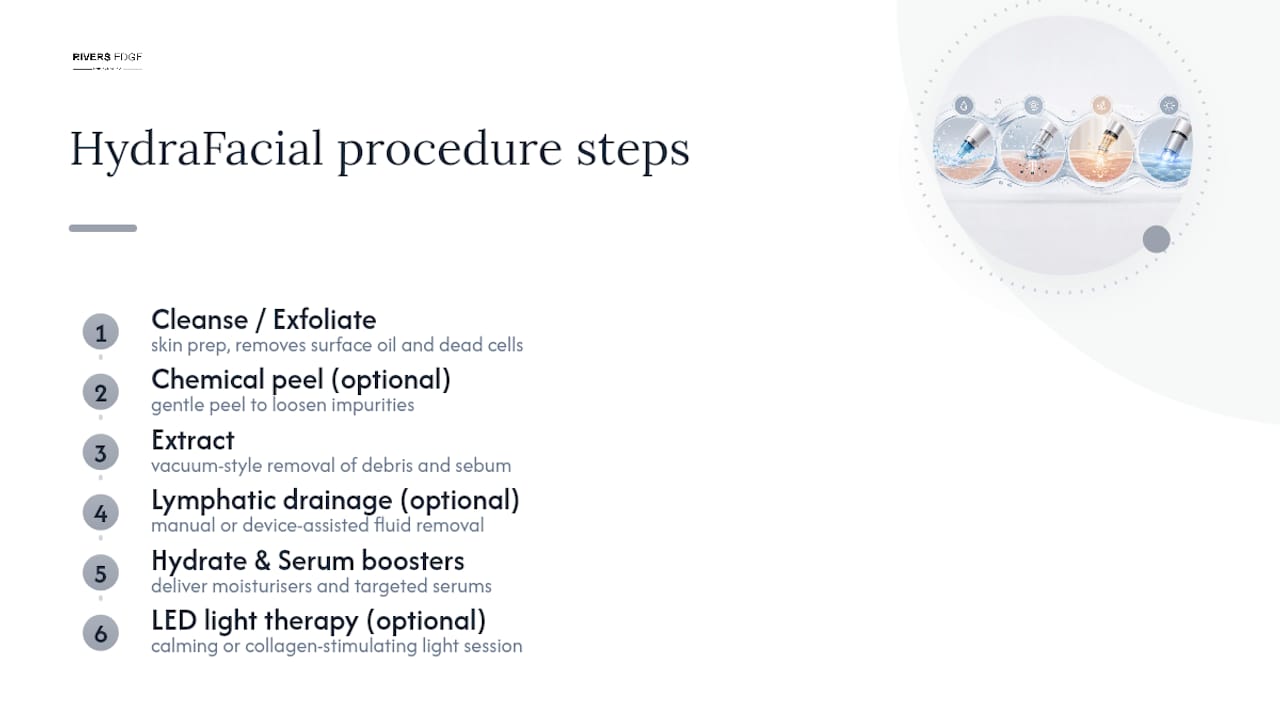
Every HydraFacial follows the same underlying logic, even if the exact number of steps varies between three and seven depending on which tier you book. Medical News Today summarises the process as three core stages: cleanse, extract, hydrate. That's the skeleton. What most providers actually deliver is a fuller version of that skeleton, with a peel, boosters, and sometimes light therapy layered in.
1. Cleanse and exfoliate
The treatment starts with a device using vortex technology to lift away dead skin cells, oil, and surface grime. This isn't a manual scrub. The suction and rotation work together to loosen debris without the friction or redness you'd get from a physical exfoliant. It feels like a light, cool massage, nothing sharp or uncomfortable.
2. Chemical peel
Next comes a mild acid blend, usually a mix of glycolic and salicylic acid, applied to dissolve any remaining buildup in the pores. You might notice a faint tingling here. It's brief and mild, nothing like the sting of a stronger clinical peel, and it's this step that makes the treatment suitable even for men who've never had a professional peel before. If you have particularly reactive skin, your practitioner will adjust the acid concentration during your consultation.
3. Extraction
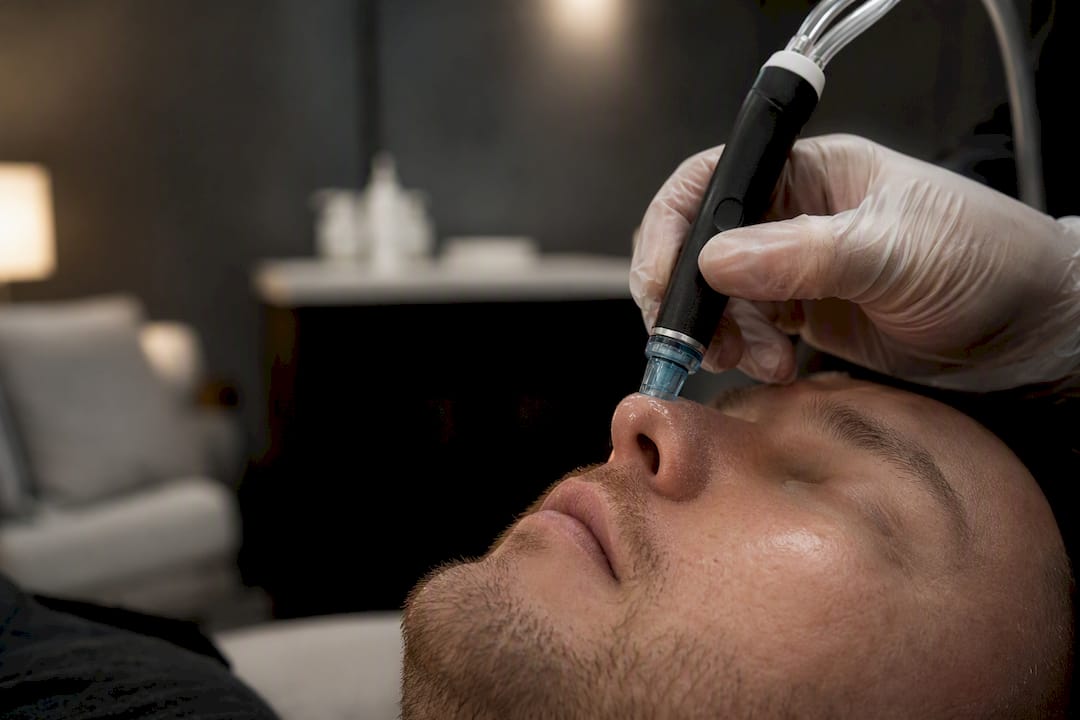
This is where HydraFacial earns its reputation. Instead of a therapist squeezing blackheads by hand, the device uses vortex-powered suction to draw out congestion. Outer Banks Dermatology notes that this vacuum-style extraction is gentler than manual squeezing and often produces immediate, visible clearing, particularly around the nose and chin where men tend to carry the most congestion.
4. Serum infusion and boosters
Once pores are clean and open, the skin is primed to absorb what comes next. This step delivers hyaluronic acid, peptides, and antioxidants tailored to your concern, whether that's dehydration, dullness, or early fine lines. One clinic explainer describes the sequencing logic well: the cleanse-exfoliate-extract stages exist specifically to make this infusion stage more effective. Skip the prep work and the serums simply don't penetrate as well.
5. Optional boosters: LED and lymphatic drainage
Here's where the tiers start to differ. A Signature treatment typically covers the core steps above. Step up to Deluxe or Platinum and you'll usually get LED light therapy added, which helps calm inflammation and support firmness, plus lymphatic drainage, which reduces puffiness and improves circulation. The manufacturer's own breakdown confirms that a full Platinum-tier treatment delivers seven therapies in one sitting: lymphatic drainage, cleanse and exfoliation, a customised peel, vortex extraction, targeted boosters, LED therapy, and final hydration. Lower tiers may drop the drainage or LED stage to keep the appointment shorter and more affordable.
Numbered simply, a full-tier session runs:
- Lymphatic drainage (pre-treatment, higher tiers only)
- Cleanse and exfoliate
- Chemical peel
- Vortex extraction
- Serum boosters
- LED light therapy (higher tiers only)
- Hydration infusion
Pro Tip: If you're not sure which tier suits you, ask your practitioner which steps address your specific concern rather than picking the most expensive option by default. A Signature treatment focused purely on hydration can outperform a Platinum session if your skin doesn't need the extra therapies that day.
Clinics also vary the order slightly. Some run lymphatic drainage first to reduce fluid retention before extraction, others save it for last to calm the skin down after the peel. Neither order is wrong. It depends on what your practitioner sees during your skin assessment.
What does a hydrafacial feel like and how long does it take?
A standard appointment usually lasts between half an hour and an hour, in line with figures reported by Verywell Health. The lower end covers a Signature treatment with no add-ons. Booking LED therapy or lymphatic drainage pushes you towards the 60-minute mark, and a full consultation beforehand adds a few more minutes on top.
Sensations are mild throughout. Expect:
- A cool, gliding feeling during cleansing and exfoliation
- Light suction during extraction, similar to a soft vacuum against the skin
- A brief tingle during the peel stage
- A soothing, hydrating finish with no stinging or heat
There's no pain and no need for numbing cream. If you experience sharp discomfort, unusual burning, or swelling that doesn't settle within a few hours, that's outside the normal range and worth flagging to your clinic straight away.
The results split into two timeframes. Immediately after your session, skin looks plumper and more hydrated. That glow is real but temporary. Lasting improvement in texture, tone, and pore appearance comes from repeated sessions, not a single visit.
Who is hydrafacial for and what benefits should you expect?
HydraFacial suits most skin types and works well for:
- Dehydrated or dull-looking skin
- Enlarged or congested pores
- Mild breakouts or blackhead-prone areas
- Early fine lines and uneven texture
- Skin that needs a reset before an event or before starting a more intensive treatment
One session delivers a visible lift in hydration and glow. Lasting change, the kind that improves texture and tone over months, comes from consistency. Practitioner guidance from the manufacturer itself is clear that repeat sessions build structural improvement that a single appointment cannot. If you're dealing with an active skin infection, have had recent facial surgery, or take certain medications like isotretinoin, talk to your clinic before booking. Our guide to HydraFacial benefits for men covers concerns specific to male skin in more detail.
How should you prepare for your first hydrafacial?
A few simple steps make your appointment smoother and safer:
- Arrive with clean skin where possible, though the clinic will remove any remaining makeup anyway.
- Avoid strong exfoliation, waxing, or shaving in the 24 to 48 hours beforehand, since this leaves skin more reactive to the peel stage.
- Tell your practitioner about any medications, particularly retinoids or a history of isotretinoin use, and mention any recent cosmetic procedures.
- Ask direct questions during consultation: which tier (Signature, Deluxe, or Platinum) fits your skin and budget, which boosters are recommended for your concern, and what qualifications your practitioner holds.
Clinical guidance consistently backs this approach, and Medical News Today's own overview recommends the same pre-appointment precautions. Our pre-treatment checklist walks through this in more depth if you want the full version.
What aftercare does hydrafacial require?
Aftercare is refreshingly simple compared to more invasive treatments, but a few rules protect your results.
In the first hour: avoid washing your face if your clinic advises against it, and apply SPF plus a gentle moisturiser exactly as directed.
Over the next 24 to 72 hours: skip saunas, steam rooms, and intense exercise that causes heavy sweating. Hold off on strong actives like retinol or vitamin C, and avoid any mechanical exfoliation. Your skin is more receptive right now, which is exactly why it needs a break from anything abrasive.
Through the first week and beyond: keep homecare gentle, wear sunscreen daily without exception, and space future sessions to maintain results. Most people benefit from booking every four to six weeks.
Pro Tip: Treat the 48 hours after your HydraFacial as a "quiet period" for your skincare routine. Cut back to cleanser, moisturiser, and SPF only. Reintroducing actives too soon is the most common reason people don't see the full benefit of the treatment.
For a full hour-by-hour breakdown, our dedicated aftercare guide covers what to expect day by day.
How does Rivers Edge Skin Studio adapt hydrafacial for men?
David, founder of Rivers Edge Skin Studio, built the clinic's HydraFacial protocol specifically around male skin, which tends to be thicker, oilier, and more prone to ingrown hairs around the beard line than female skin.
Men's skin needs a different approach to extraction and peel strength, particularly around bearded areas where product build-up and ingrown hairs are common. We adjust suction pressure and peel concentration during the consultation, not after.
The clinic also uses HydraFacial as preparation before more intensive treatments. Because it cleanses and hydrates without irritation, it improves how skin absorbs subsequent treatments like microneedling, something worth discussing if you're planning a longer-term skin programme. Read more on choosing between HydraFacial and microneedling.
— David
What most guides miss about hydrafacial customisation
Most HydraFacial content treats the treatment as a fixed sequence, cleanse, extract, hydrate, done. That's not wrong, but it undersells the point of a professional consultation. The real value isn't the device. It's the practitioner deciding which of the five to seven possible steps your skin actually needs that day.
Conventional advice tends to push people towards the highest tier available, assuming more steps means more results. That's backwards. LED therapy does nothing useful for someone whose only issue is dehydration, and lymphatic drainage is wasted on skin that isn't puffy. The steps should follow the skin assessment, not the price list.
For men specifically, the gap is even wider. Generic guides rarely mention that beard-area extraction needs different pressure, or that oilier skin often tolerates a stronger peel than the standard protocol assumes. Prioritise a proper consultation over a specific tier name. Get that right, and the steps take care of themselves.
Book your hydrafacial with a clinic that understands men's skin
Rivers Edge Skin Studio built its HydraFacial protocol around what male skin actually needs: adjusted peel strength, modified extraction pressure around the beard line, and boosters chosen from a proper skin assessment rather than a fixed package. That's a different starting point to most walk-in spa treatments, where the same settings get applied regardless of who's in the chair.

If you're weighing up which tier fits your skin, or whether HydraFacial should come before a more intensive treatment like microneedling, that's exactly the conversation David and the team have with every new client before anything begins. You bring the concern, they map the steps to match it.
Ready to find out which tier suits your skin? Book your consultation and treatment with Rivers Edge Skin Studio today.
Sources
Manufacturer pages from Hydrafacial and clinical explainers from Verywell Health detail the full procedure.
- How does Hydrafacial work? | Hydrafacial (manufacturer)
- What is a Hydrafacial? — Verywell Health
- What is a HydraFacial? — Medical News Today
- Your complete step-by-step HydraFacial experience guide — Outer Banks Dermatology