
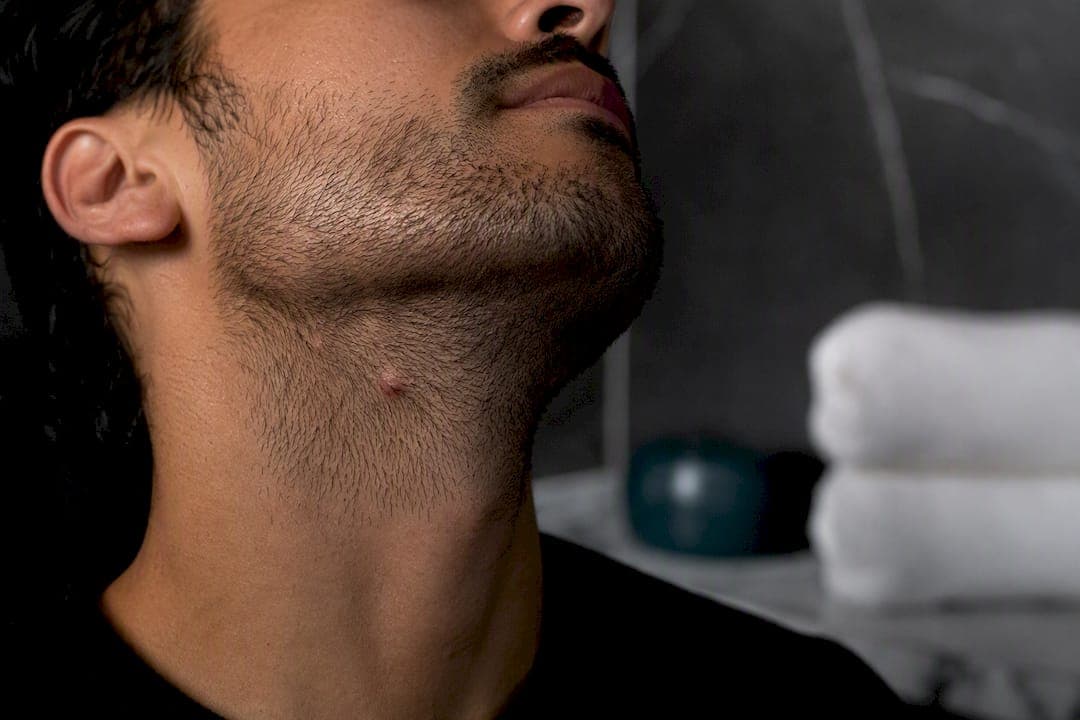
An ingrown hair under the beard happens when a shaved or curled hair curves back and grows into the skin instead of out of it, causing a red, itchy bump. Never squeeze or pick at it. Apply a warm compress, cleanse gently, and leave it alone. See a GP if the area becomes hot, spreads, or you develop a fever.
TL;DR:
- Using a single-blade razor and shaving with the grain reduces the risk of hairs curling back into the skin, especially for curly hair types.
- Avoiding close shaving for one to six months allows skin to settle and existing ingrown hairs to resolve naturally.
- Consistent skin preparation, such as gentle cleansing, warmth, and moisturization, plays a crucial role in preventing ingrown hairs.
- Home treatment options like warm compresses and avoiding picking at bumps typically lead to resolution within one to two weeks.
- Medical treatment should be sought if redness, spreading infection, or scar formation occurs, with options including topical or oral antibiotics, and laser hair removal.
Table of Contents
- What does an ingrown hair under the beard look like?
- Why do ingrown hairs happen under the beard?
- How can you prevent ingrown hairs under the beard?
- What is the safest way to treat an ingrown hair at home?
- When should you see a GP about an ingrown beard hair?
- When does specialist clinic care make sense?
- Where can you read more on ingrown hair treatment?
- Why beard-focused advice beats generic shaving tips
- Sources
What does an ingrown hair under the beard look like?
Most ingrown hairs start as a small, raised bump that feels tight or tender to the touch, often on the neck or jawline where beard hair curls back on itself. You might spot a short hair loop trapped under the surface, or the skin may just look inflamed with no visible hair at all. Itching is common, and the surrounding skin can feel warm before anything is visibly wrong.
Signs vary by skin tone and hair type. On darker skin, the bump often looks darker than the surrounding area rather than bright red, and can leave a dark mark once it heals. On lighter skin, redness and swelling are usually the first giveaway. Coarser, curlier beard hair is far more prone to this pattern than straight hair, which tends to grow outward cleanly.
Run through this quick check before deciding what to do:
- Is there a single, small, tender bump, or several clustered together?
- Can you see a hair tip trapped just under the skin?
- Is the area simply itchy and pink, or is it hot, swollen, and spreading?
- Has it lasted more than a week without settling?
If it is one or two mild bumps that settle within a few days, self-care usually does the job. Anything spreading, worsening, or accompanied by fever needs a professional look, according to NHS guidance on ingrown hairs.
Why do ingrown hairs happen under the beard?
Curved or curly hair is naturally more likely to curl back into the follicle after cutting, which is exactly why beard hair on the neck and jaw is such a common trouble spot. Multi-blade "lift-and-cut" razors make this worse. They tug the hair up before slicing it, so the cut end sits below the skin's surface once it retracts. That buried tip then has nowhere to go but sideways or backwards into the surrounding tissue.
Genetics play a real part too. Pseudofolliculitis barbae, the clinical name for chronic razor bumps, affects around 60% of Black and Afro-Caribbean men compared with fewer than 5% of white men, largely because of hair follicle shape rather than anything to do with hygiene or shaving skill.
Several habits compound the underlying risk:
- Shaving too closely or against the direction of growth
- Reusing dull blades, which drag and tear rather than cut cleanly
- Skipping proper pre-shave preparation, so hair and skin are stiff and resistant
- Tight collars or friction from clothing rubbing against the jawline
Once one ingrown hair triggers inflammation, the skin around it often stays irritated, which makes the next shave more likely to catch another hair the same way. That is how a single bump can turn into a recurring patch within a few weeks.
How can you prevent ingrown hairs under the beard?
Prevention comes down to changing how you prepare skin before shaving and what you do with it afterwards, not buying a single miracle product. Build the routine around these steps:
- Cleanse gently every day. Use a mild, fragrance-free wash under the beard rather than a harsh exfoliating scrub, which can leave skin dry and tighter around the follicles.
- Prep with warmth before shaving using gentle, soap-based products that soften hair and skin naturally, avoiding alcohol-heavy preparations that can irritate, as detailed in shaving with bar soap. A warm shower or damp towel softens both skin and hair, making it far easier for hair to release cleanly instead of snapping below the surface.
- Shave with the grain, not against it. Going against growth might feel closer, but it is one of the biggest drivers of hairs curling back into the skin.
- Choose your tool carefully. Multi-blade lift-and-cut razors are a known risk factor for cutting hair below skin level. A single-blade razor or clippers set to leave light stubble is gentler and cuts hair level with the skin rather than beneath it.
- Moisturise straight after shaving. Beard oil or a fragrance-free balm keeps skin flexible, which helps hairs emerge rather than curl inward as they regrow.
- Patch test any depilatory cream on a small area first, since chemical hair removers can irritate skin just as much as a blade if used carelessly.
If bumps keep returning despite a cleaner technique, consider stopping close shaving altogether. Merck Manual guidance notes that avoiding close shaves for one to six months often lets the skin settle and existing ingrown hairs clear on their own.
Pro Tip: Skip aftershaves loaded with alcohol. They sting, dry the skin out, and make it tighter around the follicle, which is the opposite of what you want when you're trying to stop hairs turning inward. Building a consistent barrier-first skincare routine makes a bigger difference over a few weeks than any single product swap.
What is the safest way to treat an ingrown hair at home?
Start with warmth. A warm compress held against the area for five to ten minutes, two or three times a day, softens the skin and often lets the trapped hair work its own way out without any intervention from you. Cleanse gently afterwards with a mild wash, then pat dry rather than rubbing.
Only attempt to release the hair yourself if the looped tip is clearly visible sitting on top of the skin. Even then, use a sterilised needle, lift the loop gently, and never dig beneath the surface chasing a hair you cannot see.
- Never squeeze, pick, or scratch at the bump. It raises the risk of infection and can leave permanent scarring, a caution echoed directly by Merck Manual's professional guidance on pseudofolliculitis barbae.
- A small amount of benzoyl peroxide can help with inflamed spots, but it dries skin out fast if overused.
- 1% hydrocortisone cream can calm redness and itching for a few days, though it should not be used long term without medical advice.
- Watch for stinging, peeling, or worsening redness, which signal the product is irritating the skin rather than helping it.
According to the NHS, most ingrown hairs clear up with this kind of home care within a week or two without needing a prescription.
When should you see a GP about an ingrown beard hair?
Most ingrown hairs settle with basic self-care, but some need clinical input, particularly when inflammation has taken hold rather than a single hair simply being trapped. A GP has tools and prescriptions that go beyond what is safe or effective at home.
Typical medical options include:
- Topical treatments, such as clindamycin or a low-potency corticosteroid cream, to calm inflammation and reduce bacterial involvement.
- Oral antibiotics, commonly doxycycline for moderate to severe cases, used mainly for their anti-inflammatory effect rather than purely to fight infection.
- Sterile needle or blade release, where a clinician frees an embedded hair under controlled, hygienic conditions rather than you attempting it with unclean tools.
- Surgical excision, occasionally used for stubborn lesions that keep recurring in the same spot.
- Laser-assisted hair removal, which the Mayo Clinic notes can meaningfully reduce regrowth long term, though it carries risks such as blistering, scarring, or changes in skin pigmentation.
See a GP promptly if you notice spreading redness, fever, increasing pain, or if bumps keep leaving scars or thickened keloid marks behind. Those are signs the skin needs proper medical management, not another week of waiting.
When does specialist clinic care make sense?
Persistent, infected, or scarred ingrown hairs often need more than a GP prescription can offer, especially once discolouration or textural scarring has set in around the jawline and neck. This is where a dedicated skin clinic earns its place. Sterile hair release, structured prescription management, and scar-focused treatments like microneedling or a chemical peel all work best delivered by someone who treats this specific problem regularly rather than occasionally.
Riversedgeskinstudio works with men dealing with exactly this pattern, from active ingrown hairs to the dark marks and textured scarring left behind after months of recurring flare-ups. Laser hair removal is also worth discussing directly with a clinician if close shaving keeps triggering the same cycle.
Before booking anywhere, ask a few direct questions:
- What are the clinician's qualifications for treating ingrown hairs and skin scarring specifically?
- What aftercare will you need, and for how long?
- How many sessions are realistic before you see a meaningful change?
Pro Tip: Bring a photo timeline of your worst flare-ups to the consultation. It gives the clinician a much clearer picture of your pattern than a single snapshot on the day.
Where can you read more on ingrown hair treatment?
For deeper clinical detail beyond this guide, the NHS page on ingrown hairs covers general self-care and red flags, Merck Manual's professional entry on pseudofolliculitis barbae details clinical management, and the Mayo Clinic's ingrown hair page explains laser treatment risks and benefits.
Why beard-focused advice beats generic shaving tips
Most shaving advice online treats ingrown hairs as a one-size-fits-all nuisance, and that is where it falls short for beard hair specifically. The neck and jawline have tighter curves, denser follicle clusters, and more clothing friction than any other shaved area on the body, which is exactly why generic "shave better" tips underperform here.
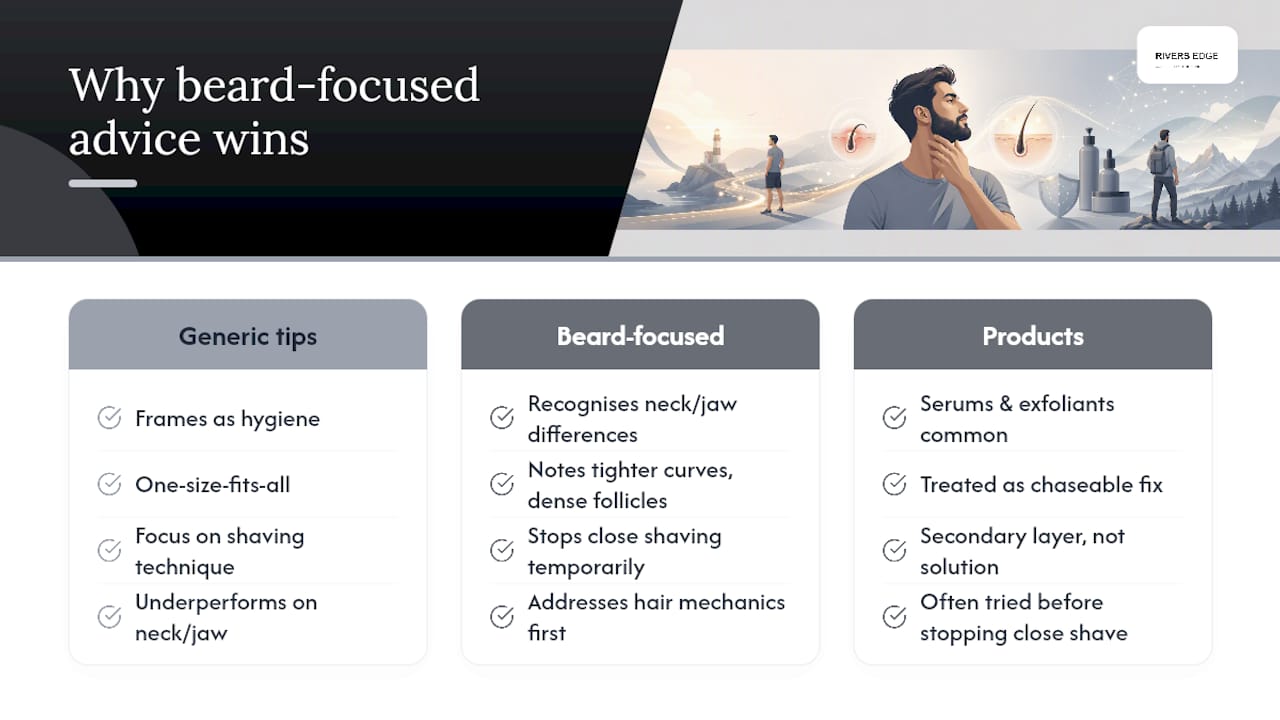
The evidence points somewhere unfashionable: the biggest single lever is not a product at all. It is the decision to stop close shaving for a while and let coarse, curly follicles settle into a calmer growth pattern. Clinics see this constantly. Men chase serums and exfoliants for months before trying the one change that actually addresses the mechanics, cutting hair level with the skin instead of below it.
Where I think conventional advice genuinely misleads readers is the framing of pseudofolliculitis barbae as a hygiene issue. It isn't. It is a hair-architecture problem, and no amount of extra scrubbing fixes a follicle shape you were born with. Prioritise technique and tool choice first. Treat product upgrades as the secondary layer, not the fix.
— David
This article is general information, not a substitute for advice from a qualified doctor. Consult a qualified healthcare professional about your own circumstances before acting on anything here.
Sources
- Pseudofolliculitis barbae - Merck Manual Professional
- Ingrown hairs - NHS
- Ingrown hair - Mayo Clinic