

Most professional skin rejuvenation treatments follow a course of several sessions before moving to maintenance, but the exact spacing depends entirely on the modality and your skin. Riversedgeskinstudio offers the full range below in Liverpool, Merseyside, with personalised schedules built around clinical assessment rather than a one-size-fits-all timetable. The British Association of Dermatologists and clinical guidance from NICE both emphasise that frequency must be personalised to skin type, healing capacity and treatment intensity. Here is the quick-reference summary:
- Radiofrequency (RF): 3 sessions spaced 3–6 weeks apart; maintenance every 3–6 months
- Microneedling: 3 sessions spaced 4–6 weeks apart; maintenance every 3–6 months
- Scalp microneedling (hair loss): 3 sessions, spaced 4–6 weeks apart; maintenance as clinically guided
- Non-ablative laser: 3–5 sessions, spaced 4–6 weeks apart; maintenance every 6–12 months
- Ablative laser: 3–5 sessions spaced 4–8 weeks apart; maintenance every 6–12+ months
- Superficial chemical peels: 5 sessions spaced 2–4 weeks apart; maintenance every 1–3 months
- IPL / HydraFacial: 3–6 sessions, spaced 3–4 weeks apart; maintenance monthly to quarterly
- Skin boosters (polynucleotides): 2–3 sessions spaced 2–4 weeks apart; maintenance every 3–6 months
Table of Contents
- How often should you book each treatment?
- What does a full treatment course actually look like?
- What personal factors change your treatment schedule?
- When will you actually see results?
- What downtime and side effects should you expect?
- How does Riversedgeskinstudio build your personal schedule?
- How much does a treatment course typically cost?
- Riversedgeskinstudio: book your personalised skin plan
- Key takeaways
- Why I think most men get their treatment schedule wrong
- Useful sources
How often should you book each treatment?
The table below gives you a practical planning reference. Downtime figures are typical ranges; your clinician will confirm what applies to your specific treatment intensity.
| Treatment | Initial sessions | Spacing during course | Typical maintenance | Typical downtime |
|---|---|---|---|---|
| Radiofrequency | a few | Every 3–6 weeks | Every 3–6 months | Minimal (hours) |
| Microneedling | 3 | Every 4–6 weeks | Every 3–6 months | 1–a few days |
| Scalp microneedling | 3 | Every 4–6 weeks | As clinically guided | 1–2 days |
| Non-ablative laser | 3–5 | Every 4–6 weeks | Every 6–12 months | 2–5 days |
| Ablative laser | 3–5 | Every 4–8 weeks | Every 6–12+ months | 1–a few weeks |
| Superficial chemical peel | 5 | Every 2–4 weeks | Every 1–3 months | 1–7 days |
| IPL / HydraFacial | 3–6 | Every 3–4 weeks | Monthly to quarterly | Minimal to 2 days |
| Skin boosters (polynucleotides) | 2–3 | Every 2–4 weeks | Every 3–6 months | Minimal (hours) |
Note: ablative laser downtime can extend to a few weeks for higher-intensity settings. Discuss your specific protocol with your clinician before booking.
What does a full treatment course actually look like?
Understanding the mechanism behind each modality explains why the spacing differs so much. Rushing intervals does not speed up results; it overwhelms your skin's repair capacity and raises the risk of adverse outcomes.
Radiofrequency
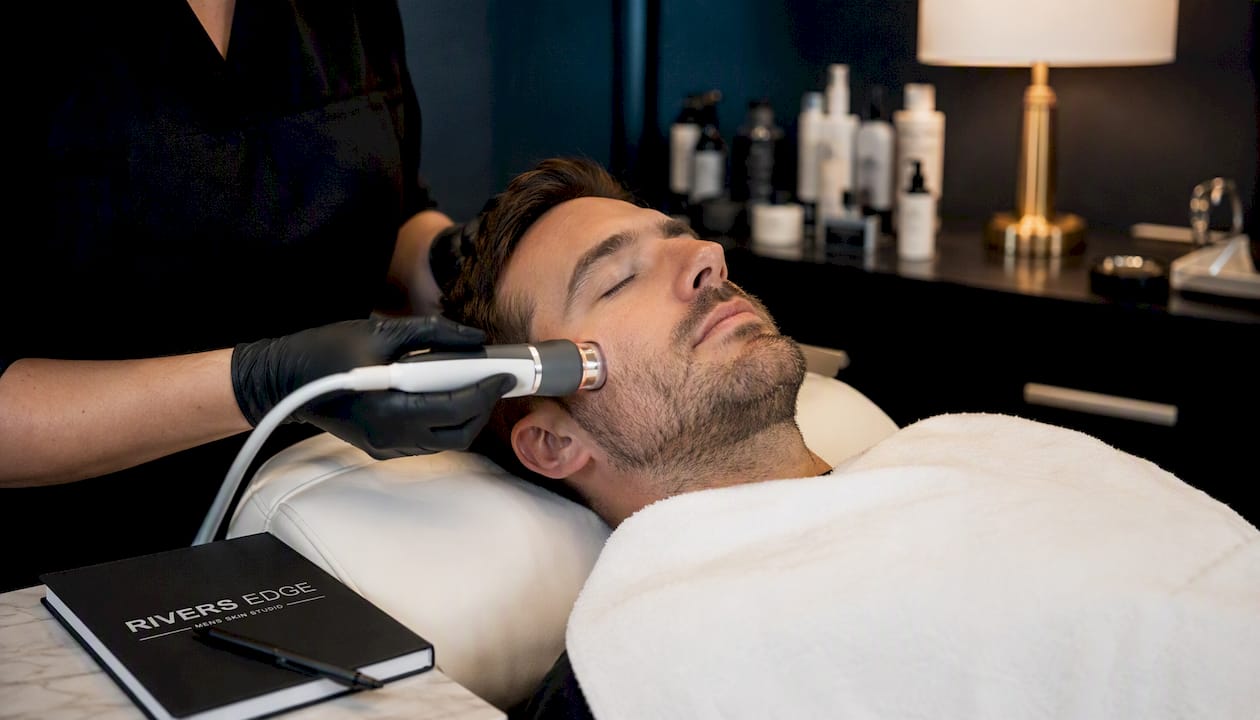
RF delivers controlled heat energy to the dermis, stimulating collagen and elastin production without breaking the skin surface. Most patients see noticeable improvement after a few sessions spaced a few–6 weeks apart, with maintenance typically every few–6 months depending on goals. Because there is no open wound, downtime is minimal, making RF a practical option for men who cannot afford extended recovery time.
Microneedling
Microneedling creates controlled micro-injuries that trigger collagen synthesis. A standard course runs to a few sessions spaced several weeks apart, which gives the skin time to complete each repair cycle before the next stimulus. Scalp microneedling for hair loss follows a similar pattern, often extended to several sessions depending on response. Avoid microneedling over active spots, open wounds or within 6 months of finishing isotretinoin.
Ablative laser
Ablative laser removes the outer skin layers entirely, making it the most intensive resurfacing option. Sessions are typically spaced 4–8 weeks apart, and a course for general rejuvenation usually runs to a few sessions. Collagen remodelling continues for several weeks after each session, so compressing the schedule does not accelerate results and increases adverse outcomes. Downtime can reach 1–a few weeks at higher intensities.
Non-ablative laser
Non-ablative laser heats the dermis without removing the surface, producing a gentler wound-healing response. Spacing of several weeks is standard across a course of several sessions, with maintenance every 6–12 months. Recovery is shorter than ablative approaches, typically 2–5 days of redness and mild swelling.
Chemical peels
Superficial peels act on the outermost skin layer and permit shorter intervals than laser-based treatments, usually 2–4 weeks between sessions across a course of several applications. Medium-depth peels need several weeks between sessions and carry 5–7 days of visible peeling. Deep peels are single-session procedures with recovery measured in weeks, not days.
IPL and HydraFacial
IPL (intense pulsed light) targets pigmentation and vascular concerns across several sessions spaced a few–4 weeks apart. HydraFacial is a non-invasive cleansing and hydration treatment that can be scheduled monthly with no downtime. Both are well suited to maintenance programmes once an initial course is complete.
Skin boosters (polynucleotides)
Polynucleotide injections stimulate cellular repair and deep hydration. An initial course of 2–a few sessions spaced 2–4 weeks apart is typical, followed by maintenance every a few–6 months. Downtime is minimal, usually a few hours of mild swelling at injection sites.
Pro Tip: Take photographs in the same lighting, at the same angle, every 4 weeks from session one. A consistent set of images is far more reliable than memory for tracking collagen remodelling, which unfolds gradually over 8–12 weeks.
| Modality | Sessions | Spacing |
|---|---|---|
| RF | 3 | 3–6 weeks |
| Microneedling | 3 | 4–6 weeks |
| Ablative laser | 3–5 | 4–8 weeks |
| Non-ablative laser | 3–5 | 4–6 weeks |
| Superficial peel | 5 | 2–4 weeks |
| IPL / HydraFacial | 3–6 | 3–4 weeks |
| Skin boosters | 2–3 | 2–4 weeks |
What personal factors change your treatment schedule?
No two men present with identical skin, and a clinician will adjust the standard schedule based on several factors before confirming your plan. Understanding these helps you have a more productive consultation.
- Fitzpatrick skin type: Darker skin types (IV–VI on the Fitzpatrick scale) are at higher risk of post-inflammatory hyperpigmentation with laser and IPL. Clinicians typically use lower settings and longer intervals to reduce that risk.
- Age and healing capacity: Mature skin regenerates more slowly. Conservative intervals are often appropriate for older clients because regenerative capacity declines with age, and pushing the pace increases sensitivity without improving outcomes.
- Severity of the concern: Mild texture issues may resolve in a few sessions; deeper scarring or significant laxity may require a longer course with adjusted spacing.
- Treatment intensity: Higher energy settings demand longer healing windows. A low-intensity peel every 2 weeks is safe; a high-intensity ablative session every 4 weeks is not.
- Medications: Isotretinoin (Roaccutane) requires a minimum 6-month gap before any ablative or microneedling procedure. Photosensitising drugs (certain antibiotics, retinoids, some blood pressure medications) affect laser and IPL safety and must be disclosed.
- Smoking: Smoking impairs wound healing and collagen synthesis, which can extend recovery and reduce results, sometimes prompting clinicians to widen intervals.
- Recent sun exposure or tanning: Active tan or recent sunburn contraindicates most light-based and ablative treatments. A minimum of 4 weeks of sun avoidance before treatment is standard.
- History of keloid or hypertrophic scarring: Raises the risk profile for microneedling and ablative procedures; clinicians may opt for gentler modalities or extended spacing.
Before you book, check the following:
- List all current medications, including supplements and topical retinoids
- Note any procedures in the past 6 months (injectables, laser, peels)
- Record recent tanning or sunburn history
- Identify any active skin conditions (eczema flare, cold sore, active acne)
- Bring reference photos of your skin concern and any goal images
Light-based treatments are best scheduled during lower UV months, making autumn and winter popular for laser and IPL courses in the UK. Post-treatment photosensitivity is a genuine safety concern, and starting a course in October rather than June gives you the full initial programme before UV levels rise again.
When will you actually see results?
Collagen remodelling does not happen overnight, and setting realistic expectations prevents disappointment after the first session.
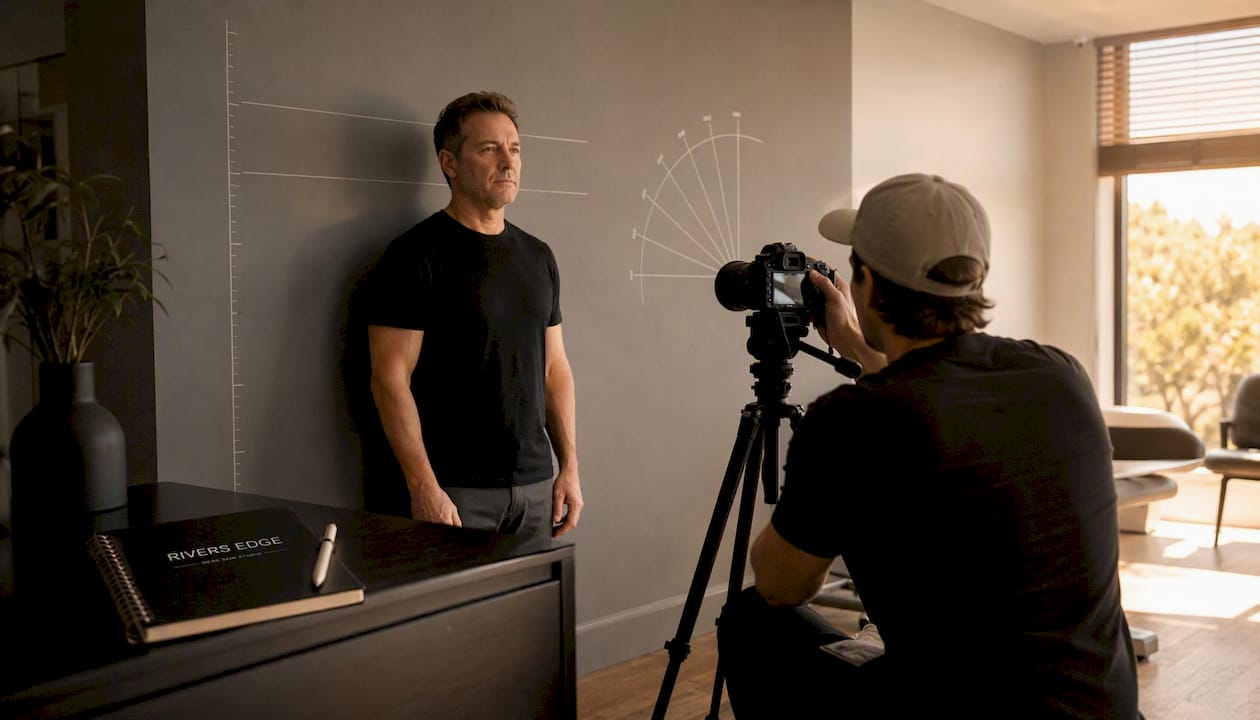
Most men notice early textural changes within 2–4 weeks of their first treatment. Visible tightening or resurfacing improvements typically become clear after 2–a few sessions, with cumulative gains continuing across the full course. The deeper structural changes from collagen synthesis develop over several weeks per session, which is why compressing sessions does not accelerate results and can set them back.
For radiofrequency, the most pronounced tightening often appears 2–a few months after completing the initial course, as the collagen response matures. Chemical peels deliver faster surface-level change, with brighter, smoother skin visible within days. Skin boosters typically show hydration improvement within a couple of weeks of the first session.
Clinical note: A full course of several sessions is the standard benchmark for judging treatment success. Assessing results after a single session is premature for any collagen-stimulating modality.
Pro Tip: Judge your results 8–12 weeks after your final session in the initial course, not immediately after. Collagen remodelling is a slow biological process, and the best outcome often arrives well after the last appointment.
What downtime and side effects should you expect?
Knowing what is normal protects you from unnecessary concern and helps you spot the rare signs that need clinical review.
Common side effects by modality:
- RF: Mild warmth, temporary redness, occasional swelling lasting a few hours
- Microneedling: Redness, pinpoint bleeding during treatment, skin sensitivity for 1–a few days
- Ablative laser: Significant redness, swelling, weeping, peeling; full recovery 1–a few weeks
- Non-ablative laser: Redness, mild swelling, 2–5 days of sensitivity
- Chemical peel (superficial): Redness, flaking, mild tightness for 1–7 days
- IPL: Temporary redness, darkening of pigmented spots before they shed, 1–2 days
- Skin boosters: Minor swelling and bruising at injection sites, resolving within hours to 1 day
Post-treatment aftercare checklist (in order):
- Cleanse gently with a fragrance-free, non-foaming cleanser for the first 48–72 hours
- Apply a plain, non-comedogenic moisturiser to support the skin barrier a few. Use SPF 30 or higher every morning without exception, starting the day after treatment
- Avoid retinoids, AHAs, BHAs, and vitamin C actives for at least 5–7 days post-treatment (longer after ablative procedures)
- Do not pick, rub, or exfoliate treated skin until fully healed
- Stay out of saunas, steam rooms, and intense exercise for 48 hours
- Follow your clinician's specific aftercare instructions and attend any scheduled follow-up
Red flags requiring prompt clinical review:
- Blistering beyond the first 24 hours
- Signs of infection: increasing pain, yellow discharge, spreading redness
- Persistent discolouration or darkening that does not resolve within 2 weeks
- Scarring or raised skin texture developing after treatment
Combining treatments in a single session or within a short window affects total downtime. Staggering procedures by at least several weeks is generally advisable; your clinician will advise on the safest sequence. For detailed post-treatment skincare steps tailored to male skin, the Riversedgeskinstudio blog covers the specifics.
How does Riversedgeskinstudio build your personal schedule?
A personalised treatment plan starts with a thorough consultation, not a booking form. At Riversedgeskinstudio, the process covers every factor that affects your schedule before a single session is confirmed.
What the consultation covers:
- Full medical history and current medication review (including supplements and topical actives)
- Skin assessment: type, tone, Fitzpatrick classification, active conditions
- Photography of the concern area under consistent lighting
- Goal-setting discussion: what you want to achieve and your realistic timeline
- Proposed course with session count, spacing, and alternative modality options
- Downtime planning: aligning the schedule with your work and social commitments
- Aftercare instructions and follow-up appointment structure
What to bring to your consultation:
- A list of all current medications and supplements
- Details of any procedures in the past 6 months
- Photos of your skin concern (close-up and in natural light)
- Any goal images or reference photos
- Your current skincare products (or a list of active ingredients)
The clinic's approach to preparing skin before an aesthetic procedure is covered in detail on the Riversedgeskinstudio blog, and it is worth reading before your first appointment. Medical oversight, clear aftercare follow-ups, and online booking are all part of the standard process. Practitioners are qualified in aesthetic medicine, and every plan is reviewed against your medical history before treatment begins.
How much does a treatment course typically cost?
Cost planning is a practical part of scheduling, and it helps to know what a full course represents financially before you commit.
Prices vary by clinic, location, and treatment intensity, but the following ranges reflect typical UK market rates for professional aesthetic clinics in 2026. These are indicative figures to aid planning; Riversedgeskinstudio's specific pricing is available directly via the services page.
- Radiofrequency (per session): £80–£200; a 4-session course typically £300–£700
- Microneedling (per session): £100–£250; a few-session course typically £250–£650
- Non-ablative laser (per session): £100–£300; a 4-session course typically £350–£900
- Ablative laser (per session): £200–£600; a few-session course typically £500–£1,500+
- Superficial chemical peel (per session): £60–£150; a 5-session course typically £250–£600
- IPL (per session): £80–£200; a 4-session course typically £280–£700
- HydraFacial (per session): £80–£180; monthly maintenance typically £80–£180 per visit
- Skin boosters / polynucleotides (per session): £150–£350; a few-session course typically £400–£900
Maintenance sessions are less frequent than the initial course, so the annual cost after year one drops considerably. A man completing a 4-session RF course followed by two maintenance sessions per year, for example, pays for six sessions total rather than twelve. Planning the full year at the outset, including maintenance, gives a clearer picture of the actual commitment.
Riversedgeskinstudio: book your personalised skin plan
Men in Liverpool and across Merseyside who want clinic-grade results without the guesswork of self-scheduling have a straightforward option at Riversedgeskinstudio. The studio specialises exclusively in men's skin, which means every protocol, every spacing decision, and every aftercare instruction is calibrated for male skin physiology and the realities of a working man's schedule.

The full treatment menu covers radiofrequency, microneedling (face and scalp), chemical peels, HydraFacials, skin boosters (polynucleotides), and anti-wrinkle injections, all delivered with a personalised treatment plan built at consultation. Online booking is available, and the consultation itself is the starting point for any course. To see the full range of treatments and book your first appointment, visit the Riversedgeskinstudio services page.
Key takeaways
The most reliable skin rejuvenation schedule is one built around your skin type, treatment intensity, and healing capacity, not a generic timetable.
| Point | Details |
|---|---|
| Initial course spacing | Most modalities run 3–5 sessions spaced 2–8 weeks apart, with gentler treatments allowing shorter gaps. |
| Maintenance is less frequent | After the initial course, most treatments drop to every a few–12 months to preserve results. |
| Stronger treatments need longer gaps | Ablative laser and deep peels require 4–8 weeks between sessions; compressing this raises adverse risk. |
| Disclose all medications | Isotretinoin, retinoids, and photosensitising drugs directly affect which treatments are safe and when. |
| Time light-based treatments wisely | Scheduling laser and IPL courses in autumn or winter reduces post-treatment photosensitivity risk in the UK. |
| Riversedgeskinstudio | Offers personalised men's skin schedules in Liverpool, covering RF, microneedling, peels, and more. |
Why I think most men get their treatment schedule wrong
There is a pattern I see repeatedly: men book a single session, see partial results at week two, and either book again too soon or give up entirely. Both responses miss how skin rejuvenation actually works.
The biology is straightforward. Collagen synthesis is a slow, cumulative process. Each session adds a stimulus; the response builds across weeks, not days. Pushing sessions closer together does not stack the benefits, it overwhelms the repair process and often produces more sensitivity with less visible improvement. Equally, abandoning a course after one or two sessions means you never reach the threshold where results become genuinely clear.
The other mistake is treating maintenance as optional. An initial course builds the foundation, but without periodic maintenance, the collagen response gradually diminishes and you are back to baseline within a year or two. A realistic plan accounts for both phases from the start.
What I find works best is an assessment-led approach: start with a proper consultation, agree a realistic course length, photograph progress consistently, and build maintenance into the annual calendar from day one. Men with mature skin or darker Fitzpatrick types particularly benefit from conservative intervals and a clinician who will adjust the plan based on how the skin is actually responding, not just a standard protocol. That is the approach at Riversedgeskinstudio, and it is the one most likely to produce results you can see and sustain.
Useful sources
The following sources informed this guide and are worth consulting for further detail:
- Radiofrequency skin tightening: everything you need to know — RF session counts, spacing and maintenance protocols
- Men's Skin Treatments & Services | Rivers Edge Skin Studio — full treatment menu and online booking for Merseyide clients
- How to maintain results after facial treatment — Riversedgeskinstudio's own aftercare and maintenance guidance