
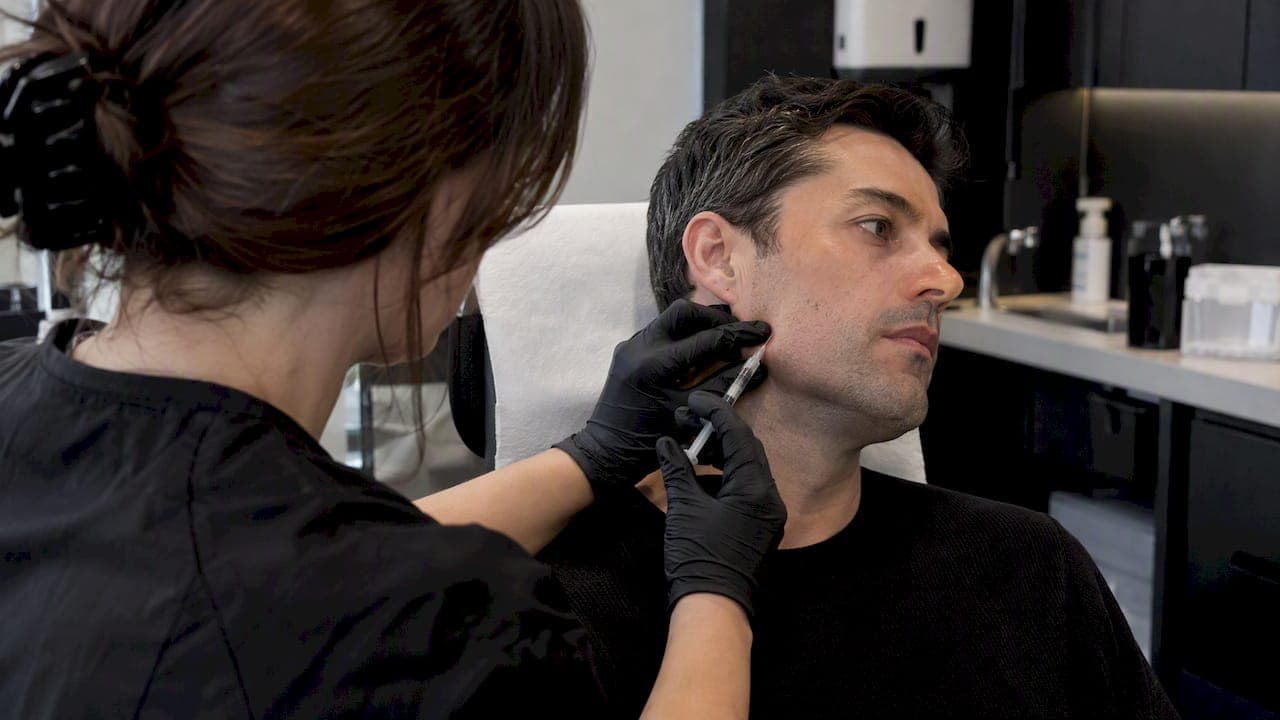
Masseter Botox uses botulinum toxin to relax the large chewing muscle at the angle of your jaw. Over several weeks the muscle shrinks, which can slim a wide, bulky lower face and ease teeth grinding. It only works if your jaw width comes from muscle rather than bone. The effect is temporary, and in the UK it is an off-label use, so who treats you matters a great deal.
This guide covers what the treatment does, who suits it, what can go wrong, what the NHS will and won't do, and how to judge a practitioner. We are a men's skin clinic in Liverpool, so we have written it from the point of view of a man weighing it up.
TL;DR
- Masseter Botox shrinks the jaw muscle gradually. It does not change bone, so it only helps if muscle is causing the width.
- Results are temporary. Expect roughly 3 to 6 months before repeat treatment is needed.
- Common side effects are mild: injection-site pain, occasional bruising and a temporary loss of chewing strength.
- In the UK it is off-label, and you should expect a face-to-face assessment, never an online-only consultation.
- The NHS does not fund it for cosmetic reasons.
Table of Contents
- What masseter Botox actually does
- Is it right for you? Muscle versus bone
- What to expect, step by step
- How long results last
- Side effects and the real downsides
- UK rules: off-label use and why a face-to-face assessment matters
- Will the NHS pay for it?
- Masseter Botox compared with other options
- Our perspective
- What anti-wrinkle treatment costs with us
- Aftercare and practical tips
- FAQ
- Sources
What masseter Botox actually does
The masseter runs from your cheekbone down to the angle of your lower jaw. It is one of the strongest muscles in the body, and in men it is often thick, especially in those who clench or grind their teeth.
Botulinum toxin blocks the signal from the nerve to the muscle. A muscle that is used less gets smaller. A clinical review describes this as relaxation followed by atrophy, and reports data with an average 60% reduction in muscle size at six weeks. So it is less a slimming trick than a controlled reduction in muscle bulk.
That has two practical consequences:
- It takes time. Nothing changes the day you are treated. Expect gradual change over several weeks.
- It is not permanent. The same review notes that the muscle tends to grow back if treatment stops, so keeping the result means repeat sessions.
Why men ask for it
Most men we speak to about jawline work want one of three things:
- A narrower, less boxy lower face, particularly where the jaw looks wide from the front.
- Relief from clenching or grinding, which shows up as jaw tension, tight mornings or headaches.
- Better balance with the rest of the face, for example when the upper face has been treated and the jaw now looks heavy by comparison.
Be clear with yourself which of these it is. The answer shapes the dose, the plan and what a good result looks like.
Is it right for you? Muscle versus bone
This is the question that decides everything. A wide jaw can come from muscle, from bone, or from a mixture. Botox treats muscle only. The same comprehensive review stresses that an assessment must work out whether your jaw shape is down to muscle bulk or bone structure, because bone will not respond.

A simple self-check, which is no substitute for an assessment: clench your teeth and feel the angle of your jaw. If a firm bulge pops out under your fingers, muscle is probably contributing. If the width stays the same when you relax and clench, the bone structure is more likely the cause.
Who may be a poor candidate
The review also notes that men with very thin skin or advanced facial ageing may not be ideal candidates. Taking too much muscle away can leave the skin looking lax, which is sometimes described as sagging or jowls. If your skin already has little support, a conservative plan, or a different treatment, may suit you better.
It is also worth telling any practitioner about:
- Heavy chewing habits, such as gum or very tough foods, or hard training with clenched teeth.
- Existing jaw pain, clicking or restricted opening, which should be examined before any cosmetic treatment.
- Your medical history, medicines and any previous toxin treatments.
What to expect, step by step
The specifics vary by clinic, but a responsible pathway looks like this.
- Face-to-face consultation. Your practitioner looks at your face at rest and while clenching, asks about grinding, stress and diet, and decides whether muscle is really the issue.
- A personalised dose. Expert perspectives in the literature say men often need higher doses than women because of larger muscle mass. They also say there is no universal dosage: it depends on muscle thickness, chewing habits and the look you want.
- Treatment. Small injections into the muscle on each side. It is quick, and most people go back to normal activity afterwards.
- Review. A sensible plan starts conservatively and reviews you after a few weeks, instead of chasing the maximum effect in one go.
Starting low matters. The review points out that over-correction can create awkward expressions, which is why skilled clinicians begin cautiously and build up.
How long results last
The research summarised in the clinical review puts the typical duration at 3 to 6 months. Changes in jaw shape show up gradually, and the muscle keeps shrinking for some weeks after treatment. Many men find that with regular repeats the interval between sessions can stretch, but that varies from person to person, so do not plan around it.
If you already have anti-wrinkle injections in your forehead or frown, our guide on how long Botox lasts in men explains why men's timelines and doses differ from the textbook figures.
Side effects and the real downsides
Most side effects are mild and short-lived. A 2025 review reports:
- Injection-site pain in 12.5% to 59.1% of patients, depending on the study.
- Bruising in about 2.5%.
- Temporary weaker chewing in around 30% of patients, typically peaking about three weeks after treatment and settling within 8 to 12 weeks.
Severe complications are described as extremely rare when treatment is carried out by qualified practitioners working within anatomical safe zones.
The things men tell us they wish they'd known
- Chewing can feel tired or tight. The same review notes that tightness or difficulty chewing can begin two to four weeks after treatment and last 8 to 12 weeks. Steak and crusty bread may be less appealing for a while.
- Over-injecting has consequences. Too much toxin, or toxin that spreads to a neighbouring muscle such as the risorius, can cause weakened chewing or an altered smile. Precise technique within the muscle's safe zone is the main protection.
- Sagging is possible. Rapid muscle loss can reduce the support under the skin, particularly in older men or those with thinner skin. Lower, spaced doses reduce that risk. If something looks wrong, the effect is temporary, though full muscle function can take months to return.
- Bruising and alcohol. If you are planning treatment around a weekend or event, our note on alcohol before Botox explains how to limit bruising.
No reputable practitioner will promise you a specific outcome. Anyone who does is selling, not assessing.
UK rules: off-label use and why a face-to-face assessment matters
Botox, Bocouture and Azzalure are licensed in the UK, but their authorisation covers specific upper facial areas. The JCCP's guidance on unlicensed medicines in cosmetic practice.pdf) and its prescribing statement are the places to read about how this works. In practice, treating the masseter is an off-label use, and the prescriber should record the clinical reasoning.

The same guidance sets out that the prescriber should see you in person before prescribing. So be wary of any clinic offering a masseter plan after only an online form or video call. The professional bodies are also clear that cosmetic treatment is not a quick fix without medical responsibility: a good practitioner asks why your masseter is large, whether that is grinding, stress or diet, and builds that into your plan.
Questions worth asking any clinic
- Who prescribes, and what are their registration and qualifications?
- Will I be assessed in person before I am quoted a dose?
- How will you tell muscle from bone in my case?
- What is your starting dose, and when will you review me?
- What happens if my chewing is affected or the result is uneven?
Will the NHS pay for it?
Not for cosmetic reasons. An NHS prescribing committee document says botulinum toxin for masseter enlargement is considered only where there is severe pain or functional limitation, such as being unable to open the mouth, and only after conservative treatments like physiotherapy or a dental splint have failed over about three months. If you grind your teeth at night, your dentist is the first call, and a night guard is the usual starting point. If you want a slimmer jaw for appearance, you will be paying privately.
Masseter Botox compared with other options
| Option | What it changes | Permanence | Good fit when |
|---|---|---|---|
| Masseter Botox | Reduces muscle bulk | Temporary, repeat sessions | Width comes from muscle, or you clench |
| Dental night guard | Protects teeth from grinding | Used as needed | Grinding is the main issue |
| Surgery | Bone or muscle reshaping | Long-lasting | Bone is the cause; a surgical consultation is needed |
| Skin treatments | Texture, tone, firmness of skin | Ongoing maintenance | Skin quality is the real concern |
Surgery is a different order of commitment, with a different set of risks, and it is for a surgeon to advise on. For many men the question is really about overall facial balance. Our overview of men's facial rejuvenation options puts the choices side by side.
Our perspective
We work only with men's skin, and that shapes how we think about jawline treatment.
The first thing we notice is that men rarely want to look "done". They want to look rested and well, with a strong face that still looks like theirs. That is why we favour conservative starting doses and a plan that can be adjusted, whatever the area being treated.
The second is that the jaw is not an area to rush. Muscle reduction is slow to appear and slow to reverse, so a cautious first session and a review beat a heavy-handed one. If a clinic is pushing a big dose at the first appointment, that is worth questioning.
The third is honesty about what will not help. If your jaw width is bone, no injection will change it, and we would rather tell you that in the consultation than book you in. Looking after your skin and your face should not be complicated, and a clear, face-to-face conversation is where it starts.
One practical point: masseter treatment is not on our published price list, so please do not assume it is available. Our listed Botox service is anti-wrinkle treatment, and the consultation is the place to talk through what else might suit you.
— David
What anti-wrinkle treatment costs with us
If you are exploring Botox for the first time, the upper face is where most men begin. Our published prices for anti-wrinkle injections for men in Liverpool are:
| Treatment | Price |
|---|---|
| Anti-wrinkle injections, 2 areas | £200 |
| Anti-wrinkle injections, 3 areas | £240 |
If your skin needs attention alongside, our services page lists facials from £35, chemical peels from £60 and microneedling from £70. Every plan is personalised, and you can book online.
For a wider view of what suits male skin, see our guide to top aesthetic procedures for male skin.
Aftercare and practical tips
Your practitioner's instructions come first, but the usual sensible habits are:
- Avoid rubbing or pressing the treated area on the day.
- Skip heavy alcohol beforehand to reduce bruising risk.
- Expect the first visible change over weeks, not days, and take photos from the same angles before treatment so you can judge fairly.
- Go easy on very chewy food if your jaw feels tired, and report anything that worries you to the clinic, in particular a lopsided smile or a change that is still increasing.
- Book a review rather than waiting for the effect to wear off to see how it went.
If you wake with a sore jaw or get headaches from clenching, mention it to your dentist or GP as well. Botox may help symptoms, but it does not address why you are clenching.
FAQ
Should men get masseter Botox?
It suits men whose lower face looks wide because of a thick masseter, or who clench heavily and want muscle bulk reduced. It is not right if the width is bone, if your skin is very thin, or if you want a permanent change. A face-to-face assessment is how you find out which applies to you.
Will masseter Botox slim my jawline?
It can, if muscle is the cause. Studies report measurable reductions in muscle size within weeks, but the change is gradual and results vary. It will not alter bone, and you will need repeat treatments to keep the effect.
What's the downside of masseter Botox?
The most common problems are mild pain at the injection site, occasional bruising and a temporary loss of chewing strength. Over-treatment can cause an altered smile or, in thinner-skinned or older men, some sagging. Choosing an experienced prescriber and starting conservatively are the best protections.
Will the NHS pay for masseter Botox?
Not for cosmetic reasons. NHS commissioners consider it only for severe pain or functional limitation after other treatments have failed for around three months. For appearance, treatment is private.
Can I have a consultation online?
Be cautious. UK professional guidance expects the prescriber to assess you in person before prescribing, so a clinic that offers masseter treatment from an online form alone is a warning sign.
Sources
- The Role of Botulinum Toxin for Masseter Muscle Hypertrophy: A Comprehensive Review (PMC)
- The Role of Botulinum Toxin for Masseter Muscle Hypertrophy: A Comprehensive Review (Toxins, 2025)
- JCCP Guidance Statement: Responsible Prescribing for Cosmetic Procedures
- JCCP: Prescribing unlicensed medicines in cosmetic practice.pdf)
- NHS prescribing committee: Botulinum A for masseteric hypertrophy and TMD