
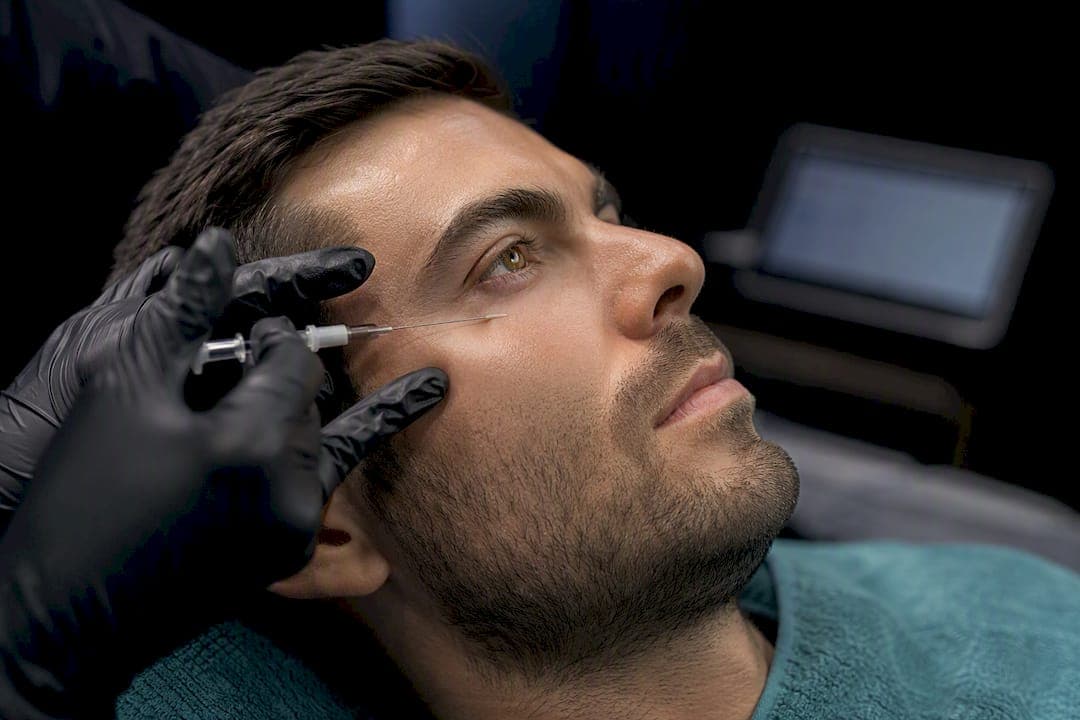
Polynucleotide injections under the eyes improve skin quality, tackling fine lines, crepiness and mild pigmentation, but they will not fill a hollow or shift a fat pad. They suit men whose main complaint is tired, thin or crepey under-eye skin rather than visible bags or deep shadows. A typical course runs two to three sessions, with results building steadily and often peaking around three months. If the problem is volume loss rather than skin texture, filler or surgery is the more appropriate route.
TL;DR:
- Polynucleotide injections improve skin quality by stimulating collagen and elastin production, mainly targeting fine lines, crepiness, and dullness, not volume loss.
- They require two to three sessions spaced two to three weeks apart, with noticeable results typically peaking around three months post-treatment.
- These injections are safe when performed by trained practitioners using cannulas to minimize vascular risks, with mostly mild, short-term side effects.
- They are unsuitable for correcting hollowing or fat bulges under the eyes, which often need fillers or surgical procedures instead.
- Consistent follow-up and maintenance treatments around six months help sustain improvements in skin texture and hydration.
Table of Contents
- How polynucleotide injections under eyes actually work
- What polynucleotides cannot fix under the eyes
- What happens during the injection procedure
- When will you see results, and how long do they last?
- Is it safe? Side effects and how risk is managed
- Are you a good candidate for this treatment?
- Looking after your skin after treatment
- Clinic perspective: how Rivers Edge Skin Studio approaches this
- Booking a polynucleotide consultation at Rivers Edge Skin Studio
- Sources
- FAQ
How polynucleotide injections under eyes actually work
Polynucleotides, often shortened to PNs, are purified fragments of DNA derived from biological sources, most commonly salmon or trout roe. Rather than plumping tissue the way hyaluronic acid does, they work as biostimulators, prompting the skin to rebuild its own collagen and elastin and improving how well tissue holds water. This is a slower, more biological process than filling a line, which is exactly why the periorbital area responds well to it.
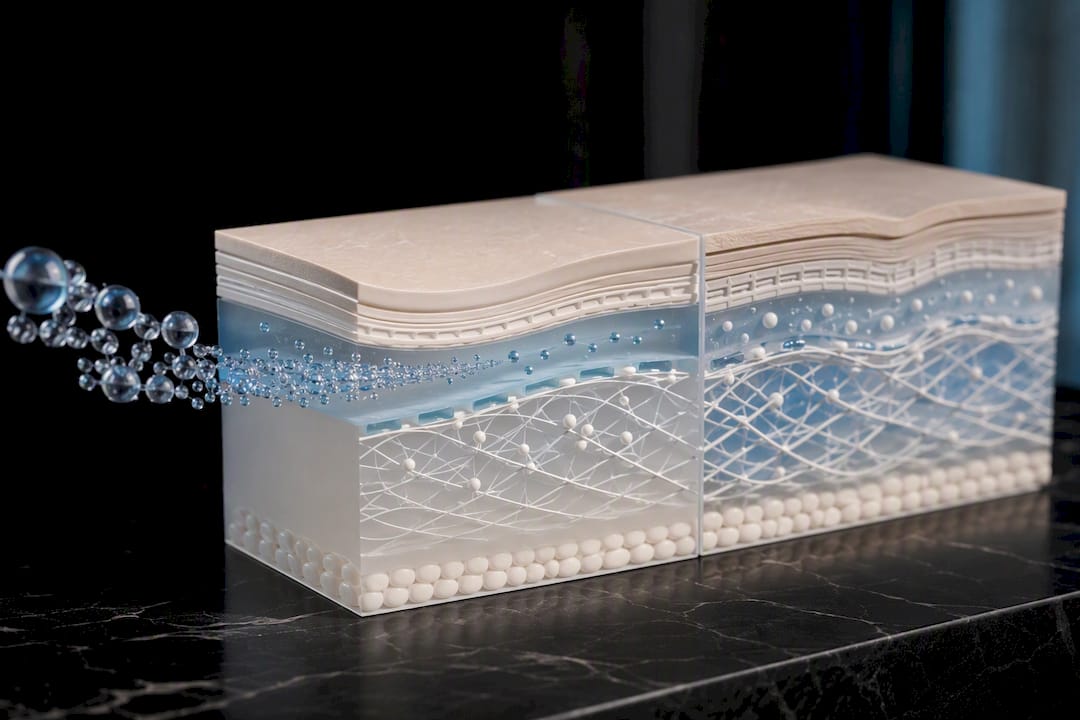
Clinical data on this points in a consistent direction. A prospective observational study of polynucleotide injections for periorbital rhytides followed 42 patients and found measurable, patient-reported gains in appearance and satisfaction, with the strongest improvement showing up around three months after two sessions.
Under-eye skin is thinner than almost anywhere else on the face and prone to swelling, which makes it a poor candidate for heavier, more hydrating fillers. PNs work well here because the mechanism is different: they support tissue quality rather than adding bulk. Men typically see improvement in:
- Fine surface lines and early crepiness
- Overall skin hydration and elasticity
- Mild pigmentation and dullness under the eyes
- Skin texture that has started to look "tired" rather than lined
What polynucleotides cannot fix under the eyes
Skin quality and structural volume are two different problems, and no amount of biostimulation will correct the second. A hollow tear trough, a shadow cast by a sunken area, or a genuine fat pad bulging against thin skin are anatomical issues, not surface texture ones. Reviews comparing the two approaches confirm that PNs improve dermal quality but are not a substitute for hyaluronic acid fillers when actual volume correction is what's needed.
That distinction shapes treatment planning:
- A visible groove or hollow under the eye usually needs HA filler, placed carefully to avoid the Tyndall effect (a bluish discolouration from filler sitting too close to the surface).
- Herniated fat pads, the classic "bags" that don't budge with sleep or skincare, generally require surgical blepharoplasty, not injectables.
- Crepey, fine-lined skin with no real hollow or bulge is the profile where PNs do the most good on their own.
- Where both issues exist together, a combined approach using filler for contour and polynucleotides for texture is commonly recommended for mixed presentations.
Getting this assessment right matters more than the injection technique itself. Expert commentary on periorbital rejuvenation notes that dissatisfaction usually traces back to a mismatch between what the patient actually has (hollow versus poor skin quality) and the treatment chosen to fix it.
What happens during the injection procedure
From there, practitioners choose between a few delivery methods depending on the area and the product being used.
- Microdroplet or serial puncture technique: tiny aliquots, generally 0.01 to 0.04ml per point, are placed across a grid pattern to spread the product evenly and avoid raised bumps in thin skin.
- Microbolus technique: slightly larger deposits placed at set points, sometimes preferred for broader areas of crepiness.
- Needle or cannula choice: fine needles in the 33G to 34G range are common for precise point-by-point work, while blunt cannulas in the 25G to 30G range are often favoured under the eye because they reduce the risk of hitting a blood vessel while distributing product.
Sessions are usually spaced two to three weeks apart across a course of two to three treatments, with a maintenance top-up recommended at around six months.
Pro Tip: Ask your practitioner directly whether they use a cannula or needle under the eyes, and why. Cannula use is generally recommended in this area because it lowers the risk of vascular complications when distributing biostimulatory product close to delicate periorbital vessels.
When will you see results, and how long do they last?
Don't expect an overnight change. The first session tends to bring a subtle brightening, but the meaningful shift, the kind other people actually comment on, tends to show up after the second treatment. Clinical follow-up data backs this up: patient satisfaction and visible improvement in periorbital appearance were greatest around three months after two sessions, not immediately after the first one.
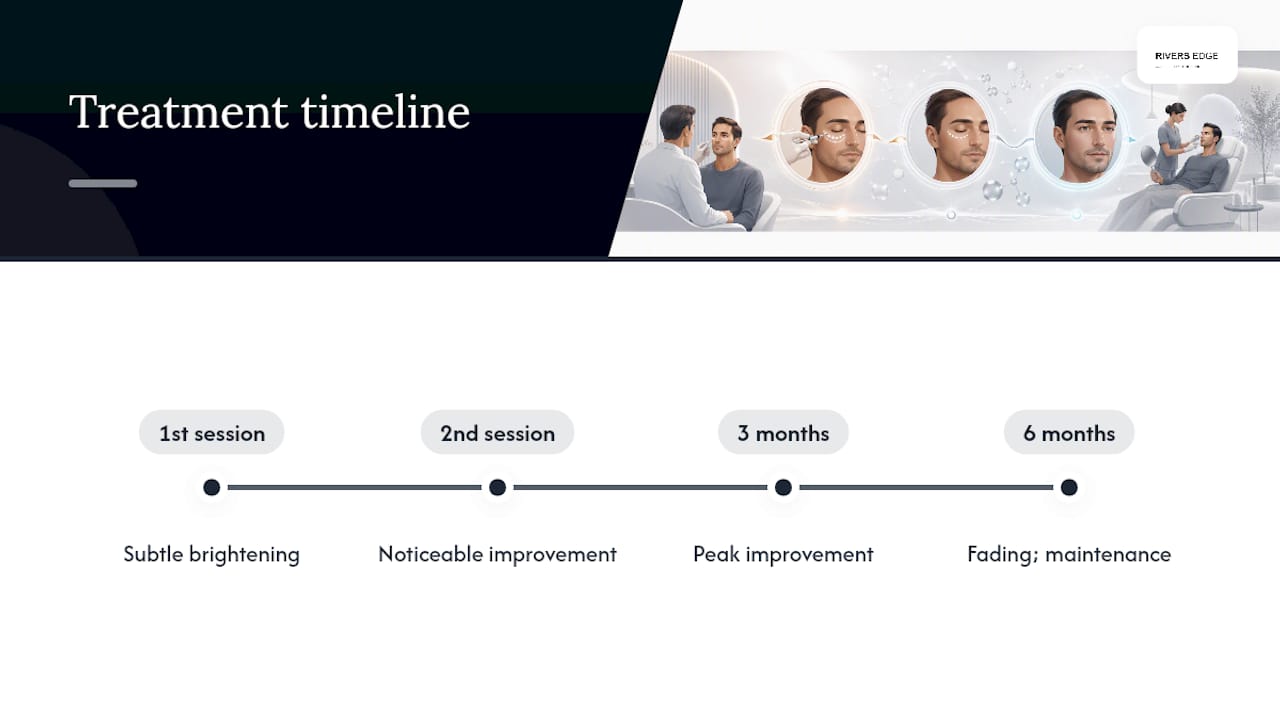
That lag is the point. Polynucleotides work by encouraging your own collagen and elastin production, a biological process that simply takes weeks to months, not a chemical fill that shows results the same day. Skin thickness, hydration levels, sun exposure and how consistently sessions are spaced all affect how fast and how far results go.
Once you've reached that peak, effects tend to hold for several months before gradually fading, which is why most clinics build a maintenance session into the plan around the six-month mark rather than waiting for texture to fully regress.
Is it safe? Side effects and how risk is managed
Polynucleotides are generally well tolerated in the periorbital area. Reviews of clinical series report mostly transient, low-grade reactions rather than serious complications, which is reassuring given how visible and delicate this part of the face is.
Expect one or more of the following in the first few days:
- Redness or mild swelling around the injection points
- Small, localised bruises, particularly with needle technique
- Slight tenderness that settles within a day or two
The majority of patients in observational data report only mild, short-lived local reactions, with minimal adverse events recorded across follow-up at one, three and six months.
Two things reduce risk further. First, cannula technique is often chosen specifically because it lowers the rate of vascular occlusion compared with sharp needles in this vessel-dense area. Second, a competent practitioner will screen for active infection or skin inflammation before treating, since injecting into compromised skin raises risk unnecessarily. This is also where PNs compare favourably with HA filler under the eye, where complications like the Tyndall effect or persistent oedema are more commonly reported.
Are you a good candidate for this treatment?
You're likely a strong candidate if your under-eye skin is thin and crepey, shows early fine lines, or has mild pigmentation or a dull, vascular-looking discolouration, without a pronounced hollow or bulge. If bags or deep hollows are your main concern, a filler or surgical consultation is the more direct route.
At consultation, it's worth asking:
- Where does the polynucleotide product come from, and is it licensed for this use?
- What training and experience does the practitioner have specifically in periorbital injection?
- How many sessions will realistically be needed, and would a combined treatment plan serve you better?
- What does a realistic outcome look like for your specific skin, not a generic promise?
Treat guaranteed results or a reluctance to discuss risk as a warning sign, not reassurance.
Looking after your skin after treatment
Recovery is straightforward if you follow a few basic rules. For the first 24 to 48 hours, avoid touching the treated area beyond gentle cleansing, and skip heavy exercise, sauna use and alcohol, all of which can worsen swelling or bruising.
- Apply SPF and a gentle moisturiser once any pinpoint marks have settled, usually within a day.
- Expect mild swelling or small bruises as normal; contact the clinic if swelling worsens after 48 hours or you notice signs of infection.
- Keep to the recommended session spacing, generally two to three weeks apart for the initial course.
- Book a maintenance appointment around the six-month mark to hold onto results rather than letting skin quality drift back.
Clinic perspective: how Rivers Edge Skin Studio approaches this
The clinic is specialised in men's skin, which influences how they sequence treatments like polynucleotide skin boosters. We don't treat the under-eye area in isolation. A consultation typically looks at how it fits alongside microneedling or wellness injections, since men's skin often carries different oil production and thickness patterns than the generalist protocols most clinics run. The starting point is always an honest read of whether the concern is skin quality or structural volume, because that decision shapes everything that follows.
— David
Booking a polynucleotide consultation at Rivers Edge Skin Studio
If crepey, tired-looking under-eye skin is your main complaint, Riversedgeskinstudio offers polynucleotide skin boosters as part of a personalised treatment plan built specifically for men.
A first appointment focuses on assessment rather than a rushed sales pitch: we look at skin thickness, pigmentation, whether there's genuine hollowing, and whether a combined approach involving other treatments would serve you better than PNs alone. There's nothing specific to bring beyond a clear idea of what bothers you and any recent history of skin treatments or medication. From there, we set out realistic expectations on session count, spacing and likely timeline before anything is booked in. You can see the full range of treatments, including Skin Boosters — Polynucleotides, on the services page, and book a consultation directly from there when you're ready to move forward.
Sources
Key references used in this article include a prospective study on periorbital polynucleotide injections, a PMC review of injection parameters, a comparison of fillers versus polynucleotides, and EyeWiki's technique guidance. For a male-focused view on timelines, see the clinic's own note on results peaking at three months.
- Prospective observational study of polynucleotide injections for periorbital rhytides (PubMed)
- Hyaluronic acid fillers versus polynucleotides for under-eye rejuvenation (PMC review)
FAQ
How many sessions of polynucleotide injections do you need under the eyes?
Most men need two to three sessions spaced two to three weeks apart, followed by a maintenance top-up around six months later. Improvement builds gradually rather than appearing after a single visit.
Do polynucleotide injections fix under-eye bags?
No. Polynucleotides improve skin quality, such as crepiness and fine lines, but they don't correct herniated fat pads or true bags, which usually need filler or surgical treatment instead.
When will I see results from under-eye polynucleotide injections?
Early subtle changes appear after the first session, but visible improvement tends to build after the second, with the strongest effect showing around three months following two sessions.
Are polynucleotide injections under the eyes safe?
They're generally well tolerated, with most reactions limited to mild redness, swelling or small bruises that settle within a few days. Cannula technique is often used specifically to reduce vascular risk in this delicate area.
How much do polynucleotide skin boosters cost at Rivers Edge Skin Studio?
Skin Boosters — Polynucleotides are listed at £240 per treatment at Rivers Edge Skin Studio. Exact treatment plans and session counts are confirmed during your consultation.