
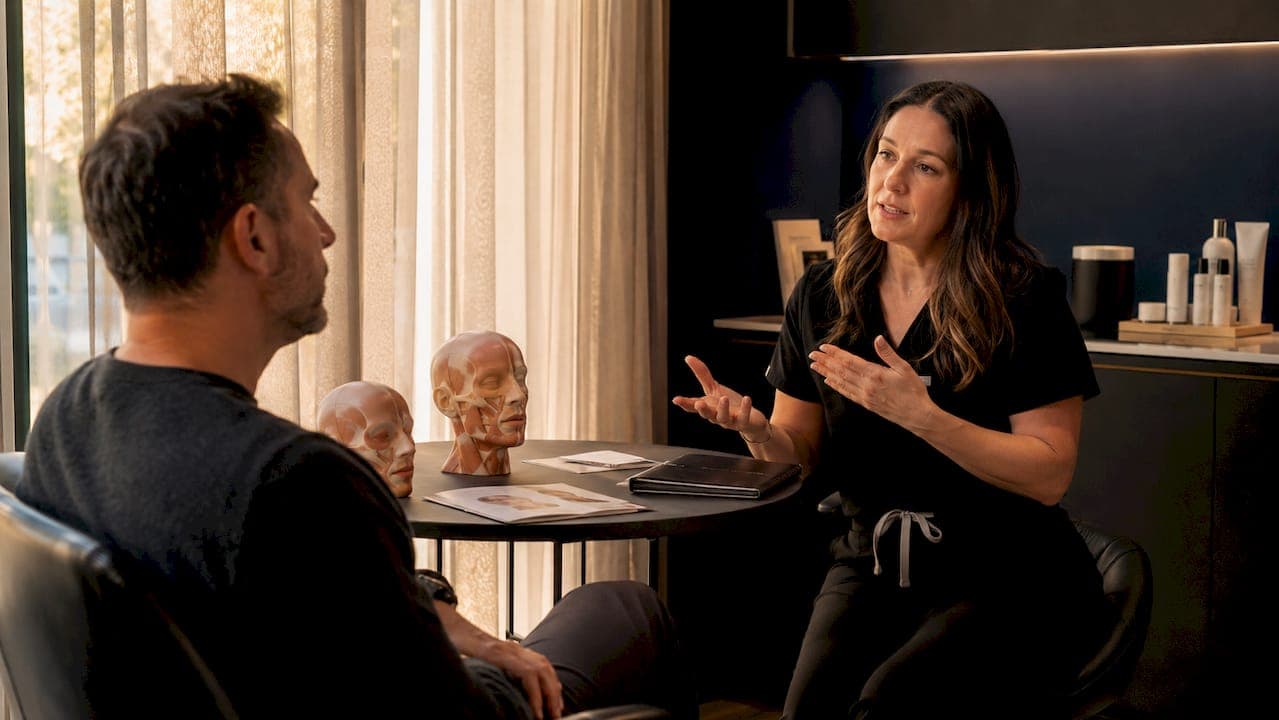
Natural-looking aesthetics is defined as subtle enhancement that preserves a person's facial identity, expression, and proportion while improving skin health and appearance. Understanding what does natural looking mean aesthetics requires separating two ideas that people often confuse: looking better and looking different. The industry consensus, now considered the gold standard, is that undetectable results are preferred over visible markers of treatment. This shift reflects a generational change in what people actually want from aesthetic medicine. Riversedgeskinstudio builds every treatment plan around this principle, focusing on men who want to look refreshed, not altered.
What does natural-looking mean in aesthetic treatments and skincare?
Natural-looking results are defined clinically as refreshed, undetectable enhancements that preserve facial identity, expression, and proportion rather than the absence of treatment. The key word is "undetectable." A natural result means someone notices you look well, not that you have had something done.
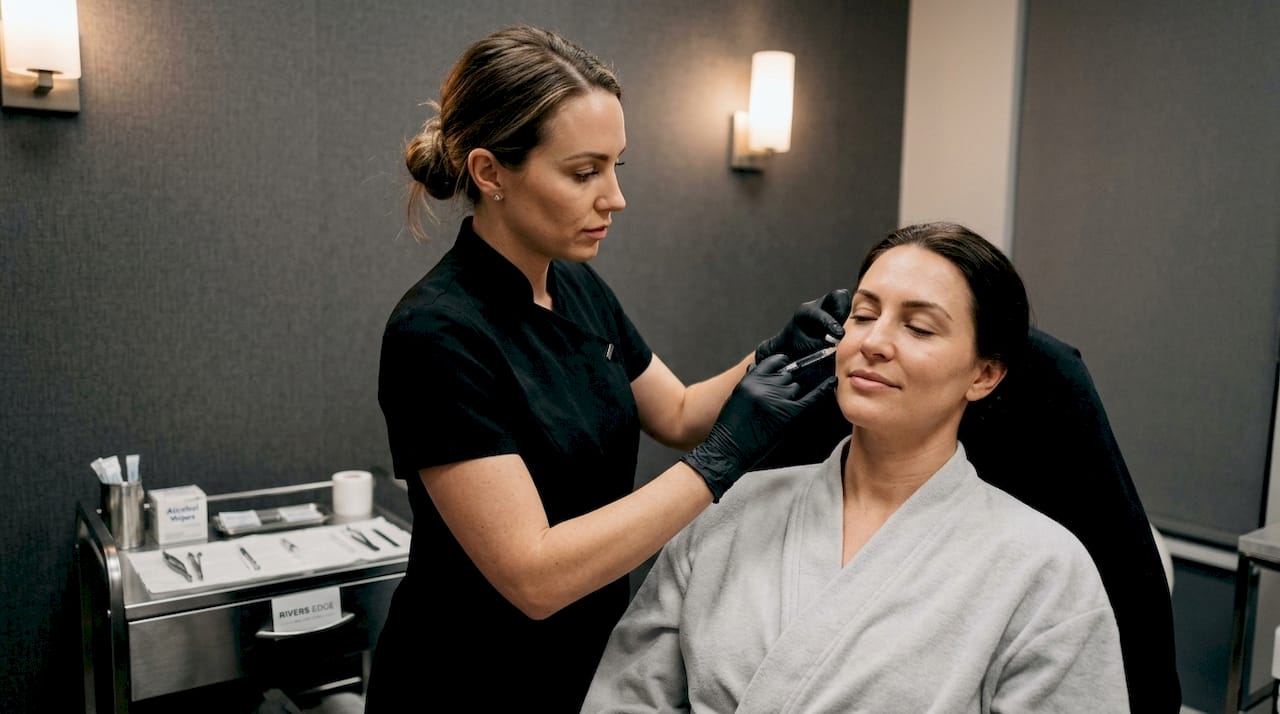
This definition has real clinical weight. Practitioners who specialise in natural aesthetics focus on three core principles: balance, proportion, and the preservation of dynamic movement. A face that looks natural moves naturally. Fillers placed incorrectly can restrict expression, which is one of the clearest signs that something is "off," even when people cannot name exactly what they are seeing.
Natural aesthetic appearance covers a wide range of treatments and outcomes:
- Subtle volume restoration that replaces what age has taken, rather than adding volume beyond a person's baseline
- Skin quality improvement through treatments like microneedling, HydraFacials, and chemical peels that improve texture and luminosity
- Anti-wrinkle injections dosed to soften lines while keeping full facial movement
- Structural balance that addresses proportion across the whole face, not just one isolated area
The distinction between natural and overdone comes down to restraint. Treating the face as a dynamic whole rather than correcting isolated features is what separates skilled aesthetic work from obvious intervention. A practitioner chasing a trend or a single feature risks breaking the proportional harmony that makes a face read as natural.
Pro Tip: When reviewing a practitioner's portfolio, look for results where you cannot immediately identify what was treated. If the treatment is obvious, the outcome is not natural.
Why is achieving a natural look more challenging than dramatic changes?
Natural aesthetics is more technically demanding than obvious transformation. This surprises many people, but the reasoning is straightforward: dramatic changes are easy to see and easy to measure. Subtle improvements require far greater skill, restraint, and anatomical knowledge to execute correctly.
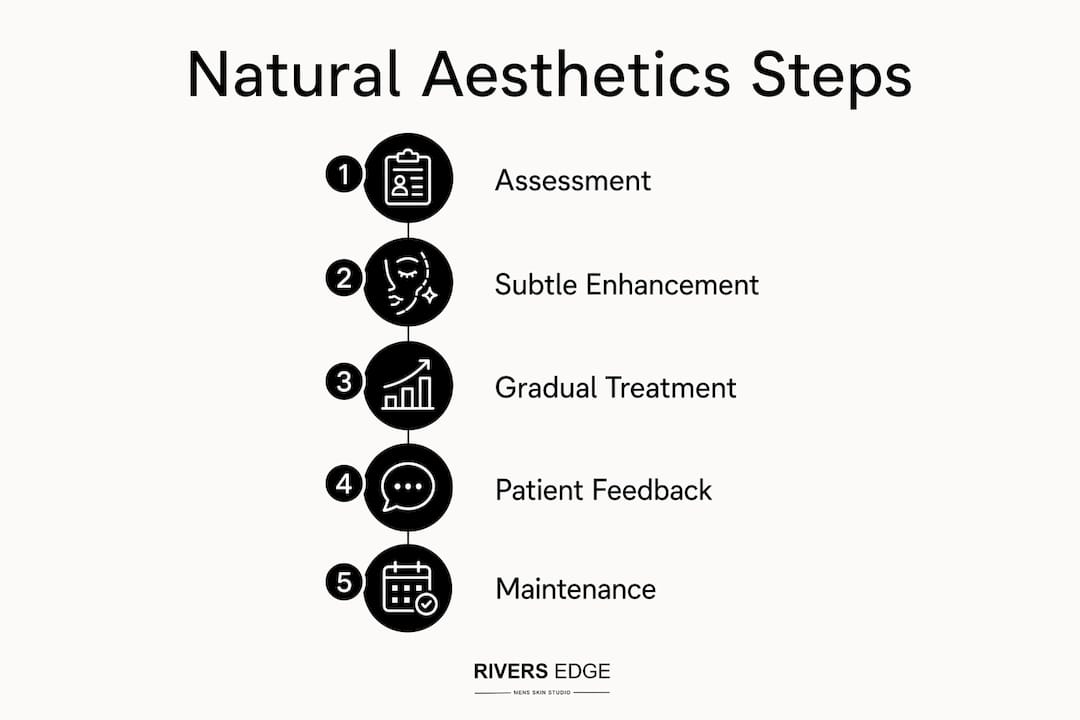
Achieving natural results requires precise product rheology application, correct depth placement, and a gradual, layered approach over time. Product rheology refers to how a filler behaves physically, its thickness, flexibility, and how it integrates with surrounding tissue. A filler suited to the cheeks is not suited to the lips. Using the wrong product in the wrong place produces an unnatural feel and appearance, even if the volume added seems modest.
The technical demands of natural aesthetic work fall into several distinct areas:
- Facial anatomy knowledge. Every face has unique muscle patterns, fat compartments, and bone structure. A practitioner must understand these before placing any product.
- Dynamic movement assessment. Treatments must account for how the face moves during expression, not just how it looks at rest.
- Product selection and placement depth. Different fillers integrate differently at different tissue depths. Superficial placement of a dense filler creates visible lumps; deep placement of a soft filler provides insufficient support.
- Gradual, layered treatment planning. Layered approaches over time produce better natural-looking outcomes than large single sessions and help avoid overcorrection.
- Volume creep awareness. Repeated additive treatments without reassessment lead to cumulative distortion of natural proportions over time.
The "slow beauty" mindset addresses this directly. Rather than maximising volume or correction in one appointment, gradual treatment allows both the practitioner and the person receiving treatment to assess results at each stage. This approach also makes it far easier to course-correct before overcorrection becomes a problem. You can read more about layering treatments safely to understand how this works in practice.
Pro Tip: Ask any prospective practitioner how they approach treatment pacing. A practitioner who suggests treating everything in one session is a red flag. Natural results take time.
How do individual factors influence the definition of natural aesthetics?
The perception of natural differs between individuals due to personality, culture, age, and personal preferences. This means there is no single definition of a natural look that applies to every person. What reads as refreshed and balanced on one face may look overdone on another.
Age is one of the most significant variables. A person in their thirties seeking to address early volume loss has different needs from someone in their fifties managing structural changes across multiple facial zones. Natural outcomes prioritise facial proportion and structural balance over short-term dramatic results, but the starting point for that balance shifts with age. Restoring a 50-year-old face to its 30-year-old state is not natural. Restoring it to a healthy, proportional version of itself at 50 is.
Cultural and personal perception also shape expectations significantly. Some people consider any visible change to be unnatural. Others define natural as looking like the best version of themselves, even if that involves noticeable improvement. Neither position is wrong. The role of a skilled practitioner is to understand where each person sits on that spectrum and plan accordingly.
Key individual factors that shape the natural look definition include:
- Baseline facial anatomy, including bone structure, skin thickness, and existing proportions
- Age-related changes such as volume loss, skin laxity, and shifting fat compartments
- Cultural background and personal aesthetic preferences, which influence what "refreshed" means to each person
- Skin quality, since treatments improving texture and luminosity often produce the most natural-looking improvements of all
- Prior treatment history, which affects what is achievable without overcorrection
A thorough aesthetic clinic consultation is the only reliable way to align goals with what is genuinely achievable for a specific face. Generic treatment plans produce generic results. Personalised plans produce natural ones.
Common misconceptions about natural-looking aesthetics
The most widespread misconception is that natural means untreated. Natural-looking aesthetics does not mean no improvement. It means improvement that harmonises with the existing face rather than overriding it.
A second misconception is that subtle results are not worth the investment. This misunderstands what people actually respond to. 75% of healthcare professionals report that patients specifically request natural-looking outcomes, with fear of an unnatural appearance being the top barrier to accepting treatment. People notice when someone looks well. They rarely notice the specific treatment that produced it. That invisibility is the point.
| Misconception | Reality |
|---|---|
| Natural means no treatment | Natural means undetectable treatment that preserves identity |
| Subtle results are not noticeable | Subtle results are noticed as general wellbeing, not as procedures |
| Natural equals the same for everyone | Natural is highly individual and shaped by anatomy, age, and preference |
| Dramatic results show more skill | Natural results require greater technical precision and restraint |
| More filler equals better results | Repeated additive treatment without reassessment causes volume creep and distortion |
The risk of overcorrection is real and cumulative. Each individual treatment session may seem modest, but without a practitioner who reassesses the whole face regularly, the total effect drifts away from natural over time. The best practitioners act as gatekeepers, willing to decline treatment when it would compromise natural facial character rather than improve it.
Practical tips for choosing treatments and providers for natural results
Choosing the right practitioner is the single most important decision in achieving natural aesthetics. A practitioner's portfolio tells you more than any consultation alone. Look specifically for before-and-after images where the improvement is visible but the treatment is not.
Key questions to ask before committing to any treatment:
- Does the practitioner offer a gradual treatment plan, or do they recommend maximum correction in one session?
- Can they explain their approach to facial proportion and dynamic movement?
- Do they reassess the whole face at each appointment, or do they simply add to previous work?
- Are they willing to recommend doing nothing if that is the right clinical decision?
Red flags include an "additive-only" mindset, where every appointment ends with more product regardless of the current result, and pushy upselling of treatments you did not enquire about. A practitioner who never says "not yet" is not prioritising your natural appearance. They are prioritising volume.
Skincare treatments that improve skin quality, such as microneedling, HydraFacials, and skin brightening treatments, often produce the most natural-looking improvements because they work with the skin's own biology. Improved texture, tone, and luminosity read as health, not intervention. For men in particular, these treatments address common concerns like uneven skin tone, enlarged pores, and dullness without any visible sign of aesthetic work.
Pro Tip: Start with skin quality treatments before injectable treatments. A face with healthy, well-maintained skin responds better to injectables and requires less product to achieve a natural result.
Key takeaways
Natural-looking aesthetics requires technical precision, anatomical knowledge, and a gradual treatment approach to achieve results that enhance without altering a person's core identity.
| Point | Details |
|---|---|
| Natural means undetectable | Results should read as health and wellbeing, not as visible procedures. |
| Subtlety demands more skill | Natural outcomes require greater restraint and anatomical knowledge than obvious changes. |
| Individual factors shape the definition | Age, anatomy, culture, and preference all determine what natural looks like for each person. |
| Gradual treatment prevents overcorrection | Layered approaches over multiple sessions avoid volume creep and cumulative distortion. |
| Practitioner choice is critical | Choose providers who reassess the whole face and are willing to recommend doing nothing when appropriate. |
Why the "done" look is the outcome nobody actually wants
I have spoken with a lot of men who come in saying they want to look better but are terrified of looking like they have had something done. That fear is completely rational. The results that end up on social media or in tabloids are almost always the overcorrected ones. Nobody photographs the person who just looks quietly well.
What I have found, working in this space, is that the men who are happiest with their results are the ones who started with realistic expectations and a practitioner willing to go slowly. The ones who regret treatment almost always had too much done too quickly, often because they were not given the option of a gradual approach.
The technology available now, from advanced microneedling to precisely formulated injectables, genuinely supports natural outcomes in a way that was not possible a decade ago. But technology only matters if the person using it has the restraint to use less of it than they could. The best aesthetic work I have seen is invisible. You look at the person and think they look well. You have no idea why. That is the standard worth aiming for.
The advanced treatments available for men have moved well beyond the blunt instruments of early aesthetic medicine. The question is always whether the practitioner's philosophy matches the technology's capability for subtlety.
— David
Natural results, tailored for men, at Riversedgeskinstudio
Riversedgeskinstudio specialises in men's skin treatments built around one principle: you should look like yourself, only better. Every treatment plan starts with a thorough consultation to understand your facial anatomy, your skin concerns, and your personal definition of a natural result.
From HydraFacials and microneedling to anti-wrinkle injections and chemical peels, every service at Riversedgeskinstudio is selected and dosed for subtlety. The goal is never dramatic change. It is the kind of improvement that makes people ask if you have been on holiday. Explore the full range of men's skin treatments and book a consultation to start building a plan that works with your face, not against it.
FAQ
What does natural-looking mean in aesthetic medicine?
Natural-looking results are clinically defined as refreshed, undetectable enhancements that preserve facial identity, expression, and proportion. The goal is to look well, not to look treated.
Is natural-looking the same as having no treatment?
No. Natural-looking means the treatment is undetectable, not absent. Subtle improvements in skin quality, volume, and proportion can be significant while remaining entirely harmonious with the existing face.
Why do natural results require more skill than obvious ones?
Natural results demand precise product selection, correct placement depth, and a gradual treatment approach. Obvious results are easy to produce; undetectable ones require greater anatomical knowledge and restraint.
How do I know if a practitioner prioritises natural outcomes?
Review their portfolio for results where the treatment is not immediately identifiable. Ask whether they offer gradual treatment plans and whether they are willing to recommend doing nothing when appropriate.
Does the definition of natural differ between people?
The perception of natural varies significantly between individuals due to age, anatomy, culture, and personal preference. A personalised consultation is the only reliable way to align your goals with a genuinely natural outcome for your specific face.