
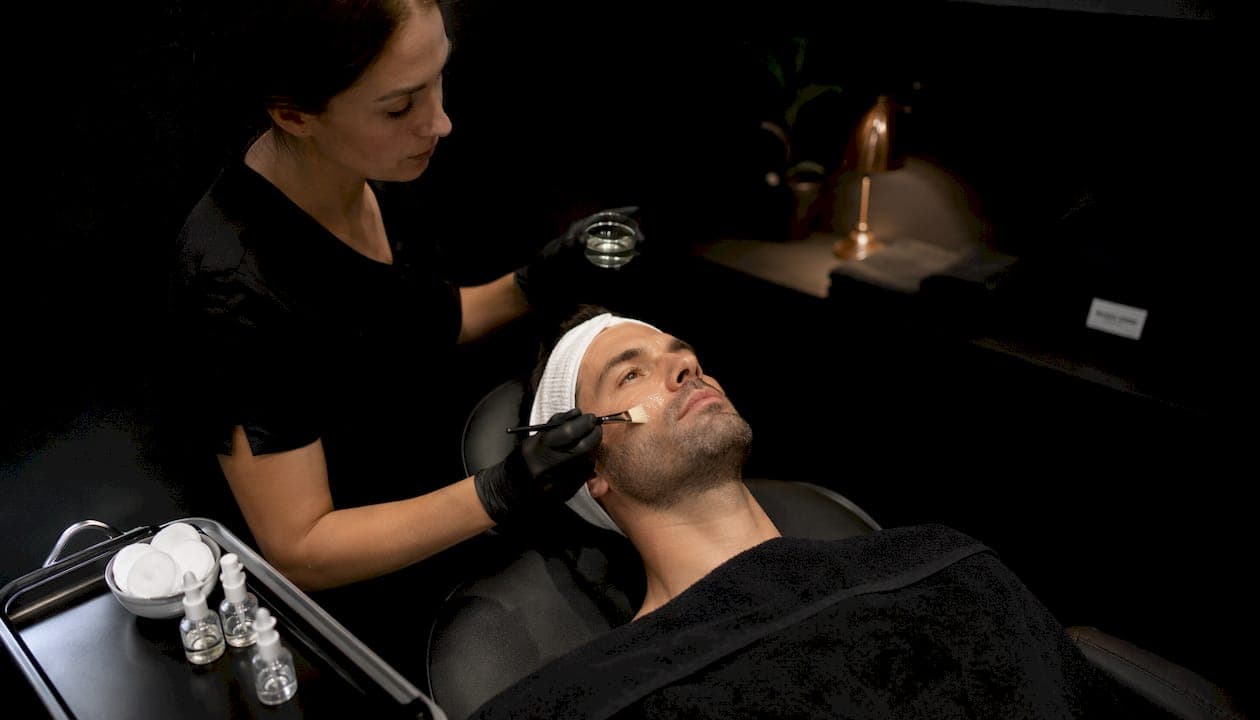
A salicylic acid peel is a professional chemical exfoliation treatment that removes dead skin cells from the surface of the skin and clears congested pores. It works by disrupting the bonds between skin cells, allowing them to shed more efficiently without damaging the deeper layers beneath. The result is cleaner, clearer skin with improved texture, reduced breakouts, and a brighter overall tone. For men dealing with oily skin, blocked pores, or persistent acne, it is one of the most targeted treatments available.
Here is what a salicylic acid peel treatment delivers:
- Exfoliation of dead surface cells to reveal fresher skin underneath
- Pore clearing by dissolving excess oil and debris within follicles
- Reduced acne through anti-inflammatory and comedolytic action
- Fading of pigmentation including post-acne marks and uneven tone
- Improved skin texture and a noticeably brighter complexion
- Oil control that reduces shine and congestion over time
Table of Contents
- What makes salicylic acid so effective on skin?
- Which skin conditions does a salicylic acid peel treat?
- What happens during a salicylic acid peel treatment?
- What are the risks and side effects to know about?
- How should you care for your skin after a salicylic acid peel?
- Professional peels vs at-home salicylic acid products: what actually differs?
- The real benefits of salicylic acid peels
- How salicylic acid actually works on the skin
- Salicylic acid peels at Riversedgeskinstudio
- Key takeaways
What makes salicylic acid so effective on skin?
Salicylic acid is a beta hydroxy acid (BHA), which sets it apart from the alpha hydroxy acids (AHAs) used in treatments like glycolic or lactic acid peels. The key difference is its lipophilic nature. Because it is oil-soluble rather than water-soluble, salicylic acid can penetrate directly into the sebaceous follicles where oil and debris accumulate. That targeted follicular activity makes it especially effective against comedonal acne.
Its primary mechanism is desmolytic action, meaning it disrupts the intercellular junctions that hold skin cells together rather than breaking down keratin protein as classical keratolytics do. This distinction matters: the skin surface is freed of dead cells without compromising the integrity of the epidermis beneath.
Salicylic acid also carries meaningful anti-inflammatory properties. This combination of exfoliation and inflammation reduction is what makes it particularly well-suited to sensitive and acne-prone skin, where harsher acids can cause more harm than good.
Key properties at a glance:
- Beta hydroxy acid (BHA): oil-soluble, penetrates sebaceous follicles directly
- Desmolytic action: frees corneocytes by disrupting desmosomal proteins, not keratin
- Anti-inflammatory: calms redness and reduces swelling around active breakouts
- Comedolytic: dissolves blocked oils and clears comedones
- Exfoliating: removes dead surface cells to improve texture and brightness
- Oil-controlling: reduces excess sebum production over a course of treatments
Which skin conditions does a salicylic acid peel treat?
The clinical range of salicylic acid peels is broader than most people expect. Acne vulgaris is the most common indication, but the treatment addresses several other concerns effectively.
Conditions commonly treated include:
- Acne vulgaris: blackheads, whiteheads, and inflammatory spots
- Post-acne hyperpigmentation: dark marks left after breakouts clear
- Melasma and uneven skin tone: gradual fading with repeated treatments
- Photodamage and freckles: surface-level pigmentation responds well
- Rosacea: the anti-inflammatory action helps calm reactive skin
- Oily and congested skin: reduces sebum and clears blocked follicles
One of the most clinically significant advantages is its suitability across all Fitzpatrick skin types (I through VI). Deeper peels such as trichloroacetic acid (TCA) or phenol carry a higher risk of post-inflammatory hyperpigmentation in darker skin tones. Salicylic acid peels are notably safer in this regard, which broadens their clinical utility considerably.
For optimal results, a course of 4 to 6 treatments spaced approximately four weeks apart is the standard recommendation. Many people notice visible improvements in texture and brightness after the very first session, though the cumulative effect of a full course is where the real difference shows.
What happens during a salicylic acid peel treatment?
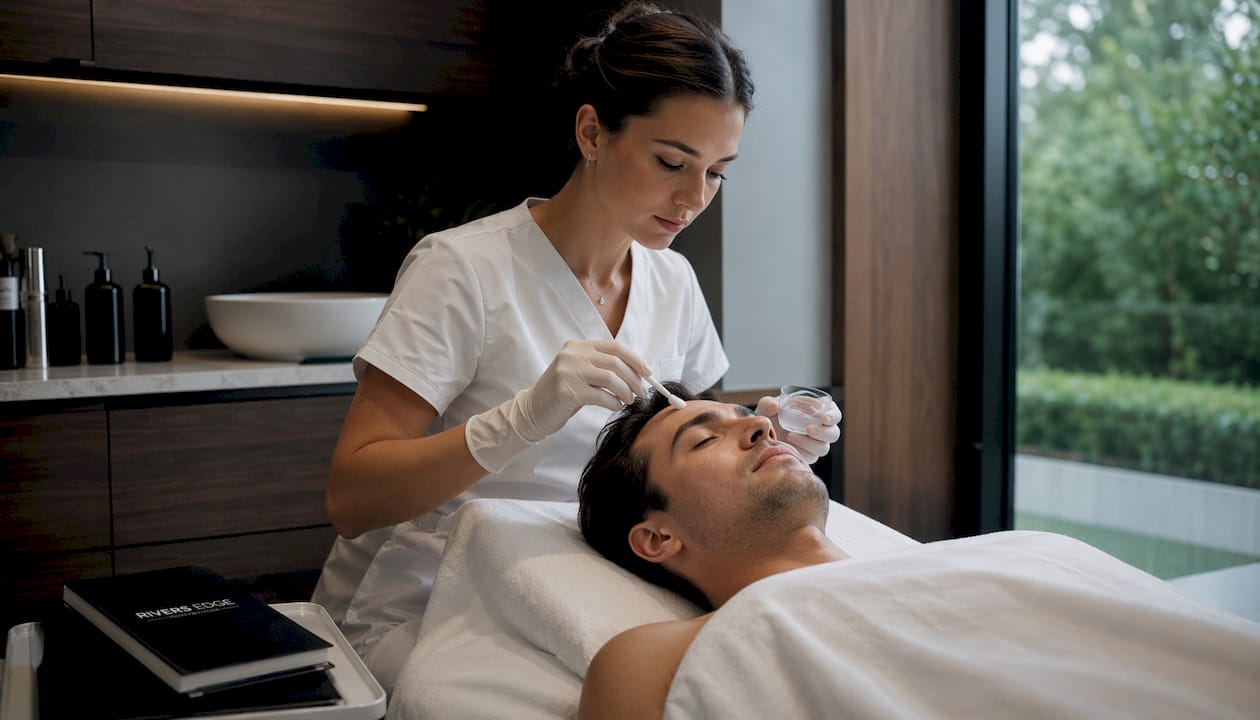
The process is straightforward and typically completed within 30 to 45 minutes in a clinical setting. Here is what to expect at each stage.
Before the peel
Your skin will be thoroughly cleansed to remove any oil, product residue, or surface debris. Some practitioners apply a pre-treatment solution to degrease the skin and improve acid penetration. You may be advised to stop using retinoids or active exfoliants for several days beforehand to reduce sensitivity.
During the application
The salicylic acid solution, typically at a concentration of 20–30%, is applied in controlled passes across the treatment area. You will likely feel a mild stinging or tingling sensation during application. This is normal and usually settles within a minute or two. The solution is left on the skin for a set period before being neutralised or removed, depending on the formulation used.
What you will notice
- Mild stinging or warmth during application
- Possible light frosting or whitening of the skin surface
- Slight redness immediately after the treatment
- Light flaking or peeling in the days that follow
Pro Tip: Do not mistake a subtle glow for a lack of results. Professional salicylic acid peels are designed to produce refined, smooth skin rather than dramatic visible shedding. The goal is quiet, effective resurfacing, not a dramatic peel.
A course of treatments is more effective than a single session. Most practitioners recommend beginning with a lower concentration and building up across the course based on how your skin responds.
What are the risks and side effects to know about?
Salicylic acid peels have a strong safety profile, particularly when administered by a trained professional. That said, being clear-eyed about the potential side effects helps you go into treatment with realistic expectations.
Common, minor side effects:
- Mild stinging or tingling during and immediately after application
- Temporary redness that typically resolves within a few hours
- Light flaking or peeling over the following two to five days
- Temporary dryness as the skin renews itself
Serious complications are rare when the treatment is carried out professionally. The risk of scarring, severe irritation, or prolonged hyperpigmentation is significantly lower than with deeper chemical peels.
Contraindications to be aware of:
- Active skin infections or open wounds in the treatment area
- Pregnancy or breastfeeding (salicylic acid is absorbed through the skin)
- Recent sunburn or significantly compromised skin barrier
- Use of isotretinoin (Roaccutane) within the past six to twelve months
- Known aspirin allergy, as salicylic acid is chemically related
- Very sensitive or reactive skin conditions without prior professional assessment
A note for UK clients: The British climate, with its limited sun exposure for much of the year, is generally favourable for recovery. However, UV sensitivity increases post-peel regardless of season, so sun protection is non-negotiable even on overcast days. For men with darker skin tones, choosing a practitioner experienced in treating a range of Fitzpatrick types reduces the already low risk of post-inflammatory hyperpigmentation further.
How should you care for your skin after a salicylic acid peel?
Post-treatment care is where results are either protected or undermined. The skin is more vulnerable in the days following a peel, and what you apply to it matters.
Key aftercare steps:
- Cleanse gently: use a mild, fragrance-free cleanser twice daily. Avoid anything with active ingredients for at least five to seven days.
- Moisturise consistently: a simple, non-comedogenic moisturiser supports the skin barrier as it renews. Look for ingredients like hyaluronic acid or ceramides.
- Apply SPF daily: UV sensitivity is heightened after a peel. Use a broad-spectrum SPF 30 or higher every morning, even in overcast British weather.
- Avoid harsh exfoliants: do not use scrubs, retinoids, AHAs, or other chemical exfoliants until the skin has fully settled.
- Skip alcohol-based products: toners or aftershaves with high alcohol content will irritate already sensitised skin.
- Do not pick or force peeling: allow any flaking to resolve naturally to avoid scarring or pigmentation.
Post-peel redness and peeling generally last several days, with skin renewal continuing over three to four weeks. The full benefit of a treatment often becomes most visible around the two to three week mark, as the new skin surface settles and brightens.
Professional peels vs at-home salicylic acid products: what actually differs?
This is where a lot of confusion exists, and it is worth being direct about it. The salicylic acid in a professional peel and the salicylic acid in an over-the-counter face wash or serum are the same molecule, but the key differences are clearly explained in the At-Home Skincare Pro Appointment: Your Full Guide. What differs substantially is the concentration, the pH, and the depth of penetration.
Professional-grade peels use higher concentrations at a lower pH than anything available in a retail product. That combination drives the acid deeper into the follicle and produces a more significant correction of the skin's surface. At-home products are formulated to be safe for daily unsupervised use, which means they are intentionally limited in their potency.
The practical consequence is straightforward: at-home salicylic acid products can maintain skin between treatments and manage mild congestion, but they cannot replicate what a clinical peel achieves. Overusing high-street salicylic acid products in an attempt to compensate often leads to irritation and a compromised skin barrier rather than better results.
There is also a common misconception worth addressing. Many people expect a professional peel to produce dramatic visible shedding, like peeling after sunburn. A salicylic acid peel does not work that way. The exfoliation is subtle, and the outcome is a smooth, refined texture rather than sheets of skin coming away. Patients who understand this are far more satisfied with their results.
Pro Tip: Before your first professional peel, tell your practitioner exactly which products you use at home, including any retinoids, vitamin C serums, or prescription topicals. This allows them to adjust the treatment protocol and avoid unnecessary sensitivity.
For men considering professional vs home skincare, the clinical setting also provides something no at-home kit can: a trained eye assessing your skin in real time and adjusting accordingly.
Riversedgeskinstudio specialises in men's skin and understands the specific characteristics that come with it, including thicker skin, higher sebum production, and the effects of regular shaving on the skin barrier.
The real benefits of salicylic acid peels
The benefits of salicylic acid peels extend beyond clearing spots. For men who have never considered a professional skin treatment, the results can be genuinely surprising.
Clearer skin with fewer breakouts. The combination of comedolytic and anti-inflammatory action addresses acne at multiple levels simultaneously. Blocked pores are cleared, existing inflammation is calmed, and the skin's surface is renewed. Over a course of treatments, breakout frequency typically reduces.
More even skin tone. Post-acne marks and mild hyperpigmentation respond well to repeated salicylic acid peels. The exfoliation accelerates cell turnover, bringing fresher, more evenly pigmented skin to the surface faster than it would arrive on its own.
Refined texture and reduced oiliness. Men with naturally oily skin often notice a meaningful reduction in shine and congestion after a course of treatments. The follicular penetration that makes salicylic acid unique among peeling agents is what drives this outcome.
Broad suitability. Unlike deeper peels, salicylic acid treatments are appropriate across all skin tones and types. The lower risk of post-inflammatory hyperpigmentation makes it a reliable option for men with medium to dark skin who might otherwise be advised against chemical peels.
Minimal downtime. A professional salicylic acid peel fits around a working week. The redness settles within hours for most people, and any light flaking is manageable. There is no need to take time off or avoid social situations for days on end.
For a broader look at how salicylic acid compares to other peeling agents, the glycolic acid peel guide on the Riversedgeskinstudio blog covers the key distinctions in detail.
How salicylic acid actually works on the skin
Understanding the mechanism helps explain why this treatment performs so consistently across different skin types and concerns.
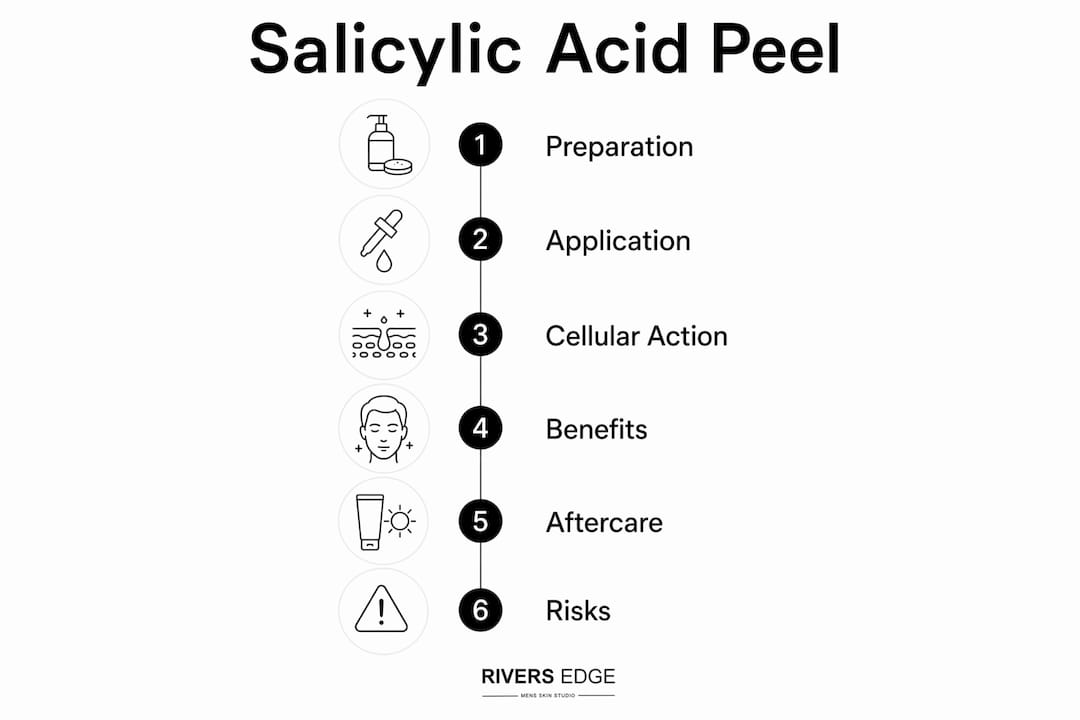
Salicylic acid's lipophilic nature allows it to accumulate within the oil-rich pilosebaceous units, the structures that house hair follicles and sebaceous glands. Most acids work on the skin's surface; salicylic acid works inside the follicle itself. This is why it outperforms AHAs specifically for comedonal acne and oily skin.
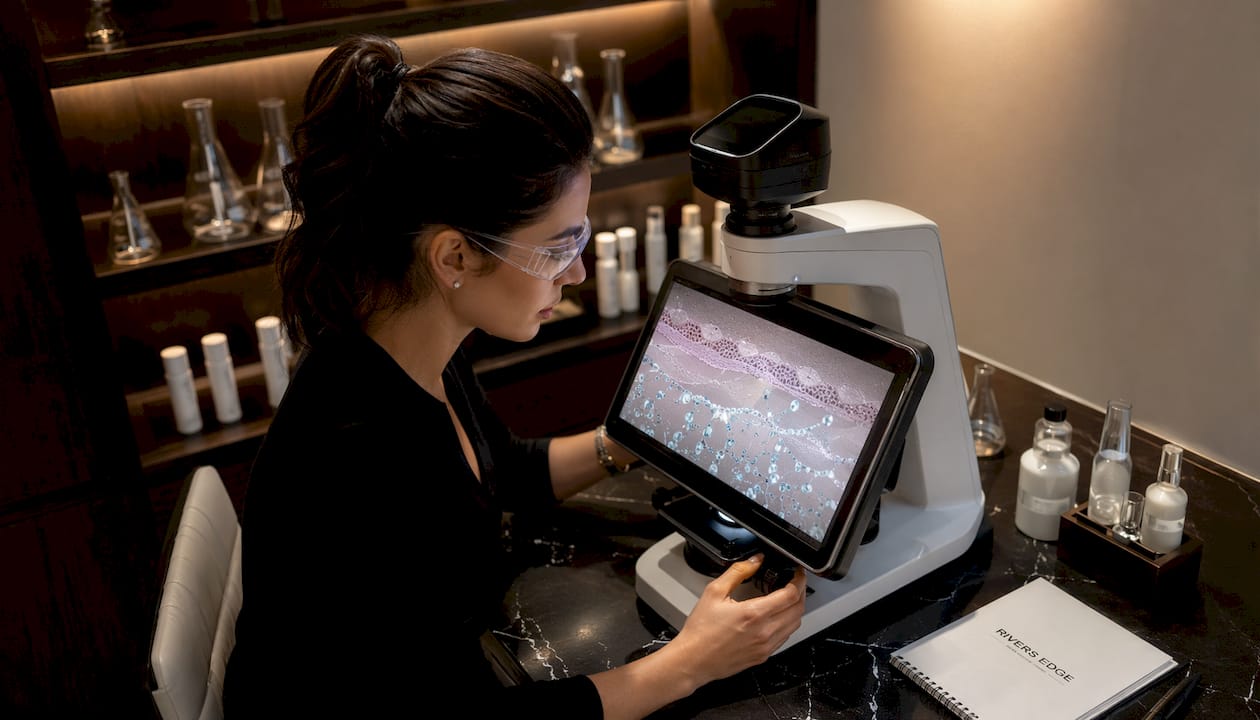
At the cellular level, salicylic acid targets desmosomal proteins, specifically desmogleins, which act as the adhesive holding corneocytes (dead skin cells) together. By disrupting these proteins, it frees the cells to shed naturally without forcing or damaging the layers beneath. This is the desmolytic mechanism that distinguishes it from keratolytic agents, which work by breaking down keratin directly.
The anti-inflammatory pathway runs alongside this. Salicylic acid inhibits the production of prostaglandins, the compounds that drive redness and swelling in inflamed skin. The result is that active spots are calmed at the same time as the skin surface is being renewed. That dual action is what makes it particularly effective for acne-prone skin, where inflammation and congestion typically coexist.
Salicylic acid has been used as a peeling agent for over 2,000 years, though the clinical understanding of its precise mechanisms has sharpened considerably in recent decades. The combination of a well-established safety record and a clear, well-understood mechanism of action is why it remains a first-line choice for dermatologists treating acne and oily skin.
For a full comparison of how different chemical peels work and which suits your skin type, the complete guide to chemical peels for men is worth reading before booking.
Salicylic acid peels at Riversedgeskinstudio
Riversedgeskinstudio offers professional salicylic acid peel treatments designed specifically for men's skin. Men's skin is structurally different from women's: it is thicker, produces more sebum, and is regularly subjected to shaving stress. A generic peel protocol does not account for any of that. At Riversedgeskinstudio, every treatment is tailored to the individual, with concentration and application adjusted based on your skin type, concerns, and how your skin responds in real time.

Whether you are dealing with persistent acne, post-shave congestion, uneven tone, or simply want cleaner, sharper-looking skin, a salicylic acid peel is one of the most direct routes to a visible improvement. The clinic's approach is results-focused and straightforward: no unnecessary complexity, no hard sell, just treatments that work.
To find out which treatment is right for your skin, visit the men's skin treatments page and book a consultation with the team at Riversedgeskinstudio.
Key takeaways
Salicylic acid peels work by penetrating oil-rich follicles and disrupting intercellular bonds, making them the most targeted professional chemical peel for acne-prone and oily skin.
| Point | Details |
|---|---|
| Mechanism of action | Salicylic acid disrupts desmosomal proteins to free dead skin cells without damaging deeper layers. |
| Broad skin type suitability | Safe across all Fitzpatrick skin types (I–VI), with a lower risk of post-inflammatory hyperpigmentation than deeper peels. |
| Recommended treatment course | A series of 4 to 6 professional salicylic acid peels at monthly intervals achieves optimal results with visible improvements typically noticed after the first session. |
| Post-peel downtime | Redness and light peeling last several days; full skin renewal continues over three to four weeks. |
| Riversedgeskinstudio | Offers tailored salicylic acid peel treatments for men, adjusted to skin type and individual concerns. |