
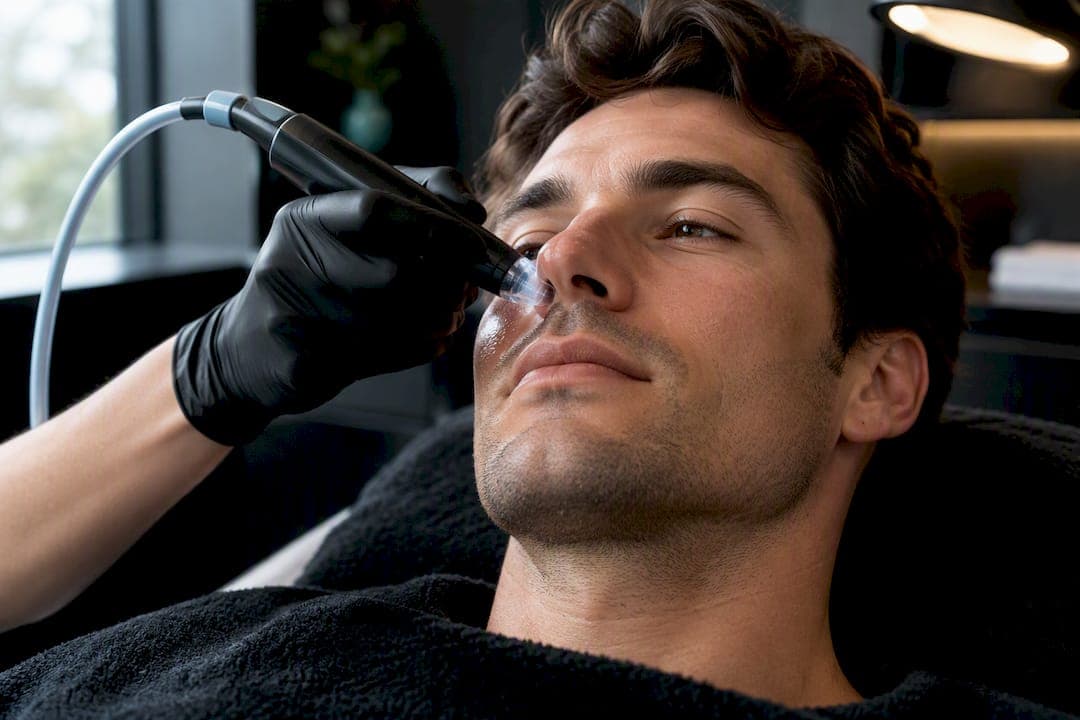
Yes, HydraFacial removes surface blackheads effectively, using vortex suction and a mild chemical peel rather than manual squeezing. A session runs 30 to 45 minutes and most men see visibly clearer pores immediately afterwards. It will not resolve cystic acne, and results need repeat sessions to hold. At Rivers Edge Skin Studio, we treat it as ongoing pore maintenance, not a single fix.
TL;DR:
- HydraFacial uses vortex suction combined with targeted acids to remove blackheads with minimal skin trauma, requiring repeat sessions for maintained results.
- Most men with oily, congested, or sensitive skin see improvements lasting four to six weeks, and regular maintenance is essential to prevent quick relapse.
- Good candidates have blackheads, clogged pores, or comedonal acne, while those with deep cystic or inflamed acne need dermatological treatment instead.
- Post-treatment care involves avoiding intense scrubbing, applying SPF, and delaying shaving to reduce redness and prevent new clogging.
- The procedure is tailored for men's thicker skin and grooming habits, with adjustments made based on skin sensitivity and congestion severity.
Table of Contents
- How HydraFacial removes blackheads, step by step
- Who should get a HydraFacial for blackheads
- What happens during a HydraFacial session
- Results and how often you need HydraFacial
- Aftercare that protects your results
- Where HydraFacial reaches its limits
- Rivers Edge Skin Studio's approach to blackhead treatment
- Treat blackheads as maintenance, not a one-off fix
- Book a HydraFacial at Rivers Edge Skin Studio
- Sources
- FAQ
How HydraFacial removes blackheads, step by step
Manual extraction works by squeezing a plug out sideways, pressing on surrounding tissue that is often already inflamed. That lateral pressure is exactly what triggers the redness, bruising and dark marks men complain about after a rough facial. HydraFacial does something different: a handpiece creates a closed-loop vacuum that pulls debris straight up and out of the follicle, rather than pushing sideways through it.
The suction tip does more than pull. It delivers a solution containing salicylic and glycolic acids at the same time, which softens the keratin and hardened sebum sitting inside a clogged pore. Loosen the plug chemically first, then lift it with vacuum pressure, and you extract far more material with far less trauma to the skin around it. That combination is what separates HydraFacial from a straightforward peel or a basic pore vacuum you might see in a high street salon. HydraFacial's vortex extraction pairs vacuum suction with those acids specifically to reduce inflammation and post-extraction marking, which matters a lot if you are prone to visible redness after a facial.
Once the extraction phase is done, the same device infuses targeted serums, usually antioxidants and hyaluronic acid, back into the now-clear follicle. Some clinics add LED therapy at this stage, using red or blue light to calm inflammation and support the skin's recovery. None of this is guesswork dressed up as science. A clinical protocol tracking patients over six sessions across 12 weeks found a marked drop in both congestion and overall acne severity using this exact peel, extract, and infuse sequence, according to Typology's review of HydraFacial for blackheads.
What actually happens inside the pore, in order:
- Cleanse and exfoliate the skin's surface to remove the top layer of dead cells
- Apply a gentle acid peel to loosen hardened sebum and debris inside the follicle
- Extract with vortex suction, pulling material out vertically rather than pressing sideways
- Infuse serums matched to your skin's needs, sealing in hydration
- Optional LED pass to calm redness and support healing
Statistic Callout: A 12-week protocol of six HydraFacial sessions produced a significant reduction in skin congestion and overall acne severity, per clinical findings reported by Typology. That is the kind of repeat-session evidence that shapes how often we recommend men come back in.
Reviews of hydradermabrasion-style devices back this up more broadly, noting that combining mechanical exfoliation with suction and topical delivery supports safe, effective pore-clearing across various protocols, per research published on PMC.
Who should get a HydraFacial for blackheads
Most men with oily, combination, or congested skin are strong candidates. If your pores fill back up within days of a good cleanse, or you have that classic blackhead scatter across the nose and chin, HydraFacial is built for exactly this problem. It also tends to suit sensitive and darker skin tones well, since the suction method avoids the lateral pressure that raises the risk of post-inflammatory marks.
Good candidates typically have:
- Oily or combination skin with visible blackheads or clogged pores
- Comedonal acne (blackheads and whiteheads, not deep breakouts)
- Sensitive skin that reacts badly to aggressive manual extraction
- Darker skin tones where scarring and pigmentation risk needs managing carefully
Hold off, or tell us before booking, if you:
- Have active cystic or nodular acne with painful, inflamed lumps
- Have taken isotretinoin (Roaccutane) within the last six months
- Have an active skin infection, cold sore, or recent sunburn
- Are on any prescription topical that thins the skin, such as tretinoin
Pregnancy is not an automatic exclusion, but it does change which acids and boosters we can use, so flag it at consultation. The same goes for any medication that affects skin sensitivity. This isn't paperwork for the sake of it; it genuinely changes how we tailor the peel strength for that session.
What happens during a HydraFacial session
A HydraFacial for blackheads follows a fixed sequence, but the settings inside that sequence are adjusted for your skin, not applied identically to everyone.
- Consultation and cleanse (5 minutes). We check your skin, confirm you have avoided strong actives for 48 to 72 hours beforehand, and start with a deep cleanse to remove surface oil and makeup.
- Peel application (5 to 10 minutes). A glycolic or salicylic acid blend goes on to loosen the material sitting inside congested pores. Strength is adjusted based on how oily or reactive your skin is.
- Vortex suction extraction (10 to 15 minutes). The handpiece works across the T-zone and any other congested areas, and suction intensity is tuned up or down depending on how stubborn the blockages are.
- Manual touch-ups (as needed). Genuinely stubborn plugs sometimes get a light manual assist, but only after the peel and suction have done most of the work, which keeps trauma to a minimum.
- Infusion and optional LED (5 to 10 minutes). Serums are pushed into the now-clear follicles, and LED light can be added to settle any redness.
Expect mild tingling during the peel stage and a slight vibration or pulling sensation during extraction, but nothing close to the discomfort of a hard manual squeeze. Most men are in and out within 45 minutes with no downtime, which is why it works well booked around a shave or an event. If you want a fuller breakdown of the full HydraFacial procedure, it walks through each stage in more depth.
Results and how often you need HydraFacial
The change is visible the moment you leave the chair. Pores look smaller, texture feels smoother, and the greyish look of surface blackheads clears noticeably, mostly because the debris causing the discolouration is physically gone. That improvement typically holds for around four to six weeks before oil production and dead skin cells rebuild enough congestion to notice again.
That timeframe is not arbitrary. Clinics commonly build an initial clearing series of closer-together sessions, then shift patients onto a maintenance schedule of typically one treatment every several weeks, based on how quickly congestion returns, according to guidance from Musick Dermatology. Sebum production and skin cell turnover are constant biological processes, so pores that clear this month will not stay clear indefinitely without a repeat treatment. That is not a flaw in the treatment; it is simply how skin behaves.
Statistic Callout: Acne forms through a combination of sebum production, follicular hyperkeratinisation, and bacterial factors, which is exactly why exfoliating and de-clogging the follicle regularly reduces new comedone formation, per Harvard Health.
A practical scheduling pattern looks like:
- Clearing phase: sessions every two to three weeks for the first two to three visits
- Maintenance phase: one session every four to six weeks once congestion is under control
- Combine with prescription therapy if inflammatory breakouts persist alongside blackheads
If breakouts are more inflammatory than comedonal, prescription-strength topicals may need to run alongside HydraFacial, timed carefully to avoid stacking two strong actives at once.
Aftercare that protects your results
What you do in the 72 hours after treatment decides how long the clear look actually lasts. Skip a hot, sweaty gym session the day of treatment if you can, since fresh sweat sitting on freshly extracted pores invites them to reclog fast.
Immediate aftercare (first 48 to 72 hours):
- Use a gentle, fragrance-free cleanser rather than anything with active exfoliants
- Apply a barrier-supporting moisturiser to calm any tightness from the peel
- Wear SPF 30 or higher daily, since freshly treated skin is more sensitive to UV
- Avoid retinoids, strong acid exfoliants, or at-home extraction tools for at least two days
Ongoing routine to hold results between sessions:
- A mild salicylic acid cleanser two to three times a week keeps pores from refilling quickly
- Non-comedogenic moisturisers stop dryness triggering extra oil production
- Reintroduce retinoids gradually, and never on the same day as a peel-based treatment
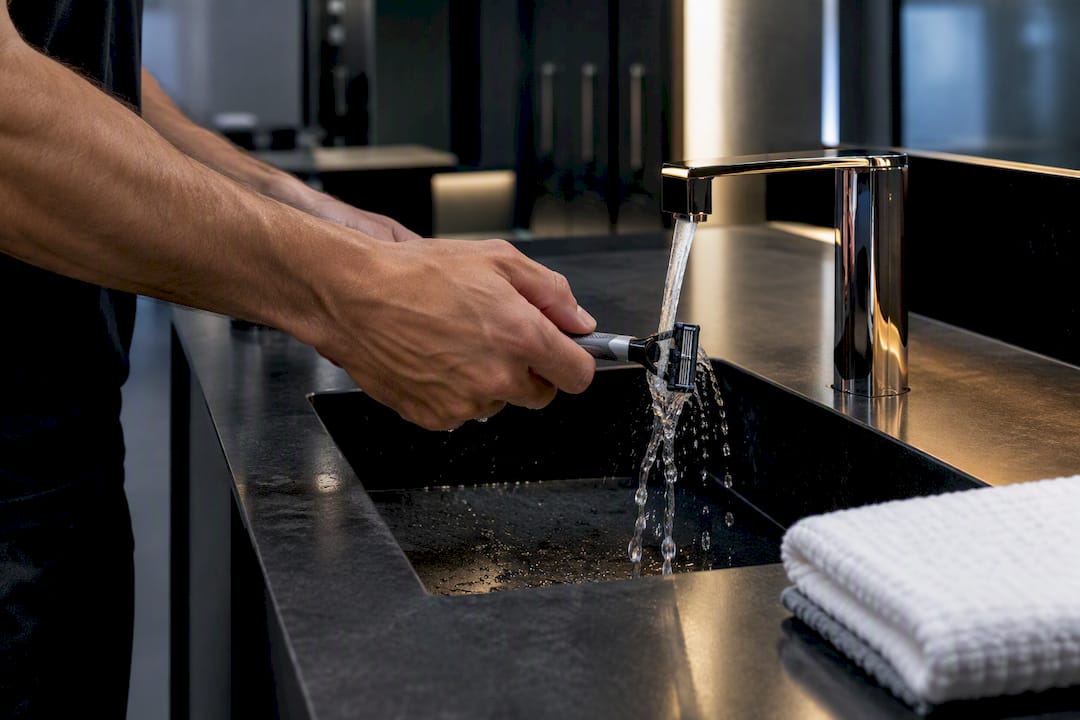
Pro Tip: Shave the day before your appointment rather than the same day. Fresh razor irritation combined with a chemical peel is a common cause of unnecessary redness in men, and it is entirely avoidable with better timing.
Grooming habits matter more than most men realise here. Dirty razors, unwashed towels, and gym kit reused without a wash all reintroduce the bacteria and oil that clog pores right back up. A gym towel harbouring more bacteria than expected is a genuinely underrated cause of repeat breakouts between sessions, according to SPRITZ. For a full week-by-week aftercare timeline, it is worth reading before your first visit.
Where HydraFacial reaches its limits
HydraFacial is not built to fix everything, and it is worth being blunt about that. It clears surface and comedonal congestion very well, but it does not treat deep cystic or nodular acne, and it will not permanently shrink pore size, since pore size is largely genetic. Anyone dealing with painful, inflamed lumps under the skin needs a dermatologist and likely a prescription treatment, not a facial.
Side effects tend to be mild and short-lived:
- Temporary redness or mild tightness for a few hours after treatment
- Slight sensitivity to sun exposure in the day or two following
- Rare risk of breakout flare-up if the peel strength was too aggressive for that skin
The suction-based extraction does carry one real clinical advantage worth flagging directly: it lowers the risk of post-inflammatory hyperpigmentation for darker skin tones compared with forceful manual extraction, since there is no lateral pressure bruising the tissue. If comedonal blackheads sit alongside genuinely inflamed acne, a comparison between HydraFacial and microneedling is worth reading before deciding which treatment fits your skin right now.
Rivers Edge Skin Studio's approach to blackhead treatment
A HydraFacial is not applied the same way to every man who walks in. Peel strength, suction intensity, and any booster serums added at the infusion stage all get adjusted based on how congested and how reactive your skin actually is. Some men need a stronger acid pass; others need the suction turned down because their skin flags up sensitivity fast. Where blackheads sit alongside deeper texture concerns, we sometimes pair HydraFacial with microneedling or a chemical peel course across separate visits, rather than trying to solve everything in one sitting.
Before your first visit, be ready to tell us:
- Any prescription skincare you are currently using, especially retinoids or isotretinoin history
- Any recent cosmetic procedures, including peels or laser treatment
- When you last shaved, so we can time the peel around irritation sensibly
Understanding why HydraFacial suits men's skin specifically helps set expectations before that first consultation, particularly around how thicker, oilier male skin responds differently to standard facials.
Treat blackheads as maintenance, not a one-off fix
The mistake most men make is booking a single HydraFacial before an event, seeing great results, then not coming back until the same problem resurfaces months later. Skin that produces oil constantly needs a maintenance rhythm, not an emergency appointment. Build your bookings around your shaving schedule and any events on the calendar, then let the four to six week maintenance interval do the quiet work in between. If your blackheads keep returning to the same intensity despite regular sessions, that is worth a proper conversation about your specific skin, not just another booking on autopilot.
— David
Book a HydraFacial at Rivers Edge Skin Studio
Rivers Edge Skin Studio is a men's skin clinic, not a generic beauty salon squeezing HydraFacial between women's treatments. That difference shows up in the detail: peel strength, suction pressure and aftercare advice all get tailored around thicker, oilier male skin and grooming habits like daily shaving.

Your first visit starts with a consultation to assess your skin and review factors affecting congestion before the treatment begins. From there, we adjust the protocol on the spot rather than running a fixed script regardless of what your skin needs that day. Full details on the HydraFacial and related treatments are on our services page, along with the rest of what we offer for men serious about their skin. Book a session, tell us about your skin at consultation, and we will build the right pace of visits around you from there.
Sources
- Is Hydrafacial an effective solution for blackheads? — Typology
- HydraFacial for Blackheads & Acne | Perfect B
- Will a HydraFacial Help With Clogged Pores on Oily Skin? - Musick Dermatology & Advanced Clinical Spa
- Acne: what you need to know — Harvard Health
- Review on hydradermabrasion and similar technologies — PMC
FAQ
Does HydraFacial remove blackheads?
Yes, it removes surface and comedonal blackheads by softening plugs with a mild acid peel, then lifting them out with vortex suction. It will not clear deep cystic acne, which needs dermatological treatment instead.
Is a HydraFacial good for clogged pores?
It is one of the more effective non-invasive options for clogged pores, since the suction-based extraction reaches oily, congested pores without the lateral pressure that causes bruising. Most clinics recommend a maintenance session every four to six weeks to keep pores clear.
How long do HydraFacial results last for blackheads?
Visible improvement typically holds for around four to six weeks before natural oil production and skin turnover cause congestion to build back up. That is why the treatment works best on a repeat schedule rather than as a single visit.
How much does a HydraFacial cost?
Pricing depends on the exact facial and add-ons chosen, and current prices for treatments at Rivers Edge Skin Studio are listed on our services page.
Can HydraFacial help with sebaceous filaments as well as blackheads?
It can improve the look of sebaceous filaments alongside true blackheads, though the two are different structures and respond slightly differently to extraction. A comparison of sebaceous filaments and blackheads explains the distinction if you are unsure which one you are dealing with.