
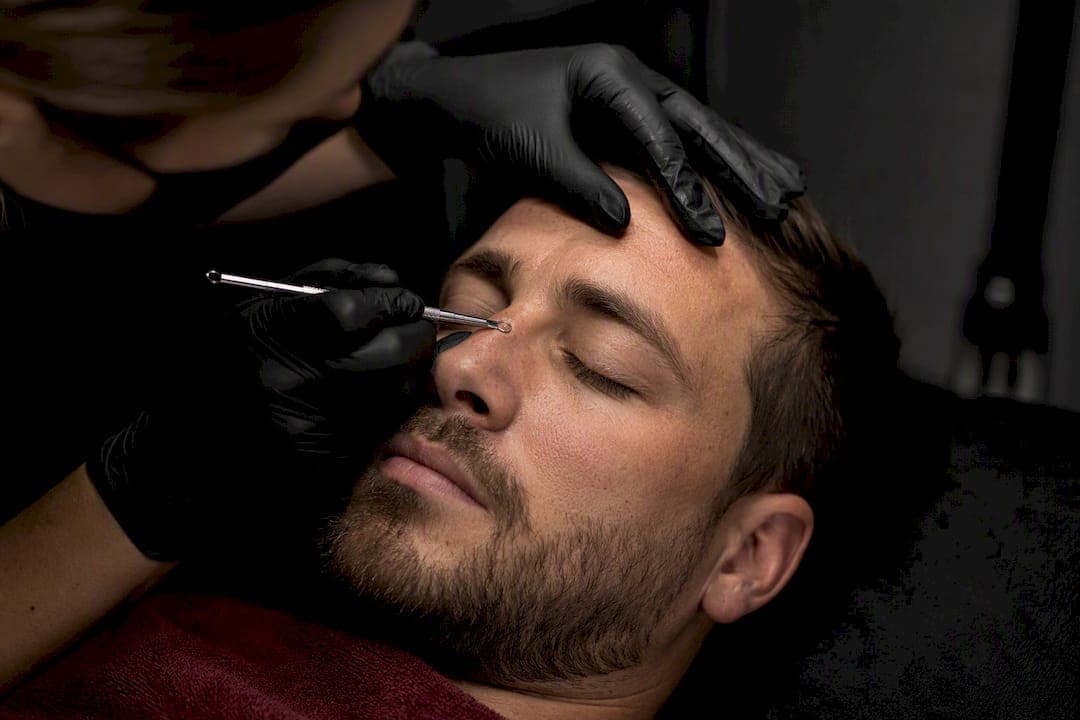
Clinic-grade extraction, HydraFacial and short peel courses clear stubborn blackheads faster and more safely than anything you can do at home, and combining them tends to work best for congested male skin. HydraFacial suits routine maintenance and general pore congestion; professional extraction handles deep, localised blackheads; chemical peels address ongoing texture and marks. A practitioner needs to assess your skin before any extraction takes place, so the sensible first step is booking a clinic consultation rather than guessing which treatment you need.
TL;DR:
- Professional treatments like HydraFacial and clinical extraction are more effective than at-home remedies for deep or stubborn blackheads, especially in oily male skin.
- Men with higher sebum production and thicker skin often require tailored protocols, such as higher peel concentrations or more sessions, to see lasting results.
- Clinic assessments are crucial to determine the appropriate treatment, avoid aggressive squeezing, and consider shaving routines to prevent irritation.
- Maintenance visits every four to six weeks or a short peel course are typically needed to keep pores clear, as congestion will return without proper home care.
- Clinics ensure safe, sterile procedures and personalized advice, reducing risks like pore rupture or scarring, unlike DIY methods.
Table of Contents
- Clinic options for blackheads removal that men can actually rely on
- What happens during a blackheads removal appointment?
- How do you choose the right clinic for blackheads removal?
- How long do results from clinic treatment last?
- Author perspective: what clinics get right that DIY never will
- Book a consultation at Rivers Edge Skin Studio
- Sources
- FAQ
Clinic options for blackheads removal that men can actually rely on
Blackheads form when sebum and dead skin cells oxidise inside an open pore. Men produce more sebum than women do, largely thanks to higher testosterone driving sebaceous gland activity, and that difference changes which professional treatment makes sense for you.
HydraFacial uses vortex suction to lift debris out of pores while infusing serums suited to your skin. It suits routine maintenance and visible congestion across the T-zone, runs for around 30 minutes, and leaves no social downtime. It also tackles shaving-related irritation through gentle exfoliation and calming peptide serums, which is one reason it has become a popular option for men who want quick, visible results without disrupting their week.
Clinical extraction relies on sterile metal comedone extractors, applied by a trained practitioner to remove deep or stubborn blackheads that vortex suction alone will not shift.
Chemical peels work as a course treatment for persistent congestion, rough texture, and post-acne marks. Because male skin has denser sebaceous glands, peel protocols sometimes need higher concentrations or more sessions than a female client would require, with visible texture change building over several weeks.
Microneedling and similar adjuncts refine pore appearance and soften old scarring. Neither is a primary extraction method, but both can support results once the pores themselves are clear.
Thicker dermis, higher sebum output, and daily shaving trauma all mean off-the-shelf DIY products rarely deliver consistent results on male skin.
- HydraFacial: maintenance, general congestion, no downtime
- Clinical extraction: deep, localised comedones needing hands-on removal
- Chemical peels: recurring texture, marks, and stubborn congestion
- Microneedling: pore refinement and scar support, not extraction itself
Pro Tip: If you shave regularly, mention it during your consultation. Practitioners often adjust extraction pressure and aftercare around razor-irritated areas so you are not caught nursing a red patch before a big event.
What happens during a blackheads removal appointment?
Every session starts with a proper look at your skin, not a straight jump to extraction.
- Assessment first. The practitioner reviews your skin history, current medications, and checks for active acne, since inflamed skin changes what can be safely extracted that day.
- Extraction method. For deep or embedded blackheads, expect a rigid metal loop extractor applying even, controlled pressure. For general congestion, a device like HydraFacial uses gentle vortex suction instead. Sessions typically run 30 to 45 minutes, and manual extraction can feel like brief pinching pressure rather than pain.
- Pre-appointment precautions. Stop strong exfoliants and retinoids 48 to 72 hours before your appointment. Irritated, sensitised skin extracts poorly and reacts more to the process.
- Immediate aftercare. Expect soothing serums and strict sun protection straight after treatment. Mild redness for a few hours is normal. Most men can resume normal activities the same day, though shaving is usually best delayed 24 hours if extraction was involved around the jaw or cheeks.
Nothing about this process should feel rushed. A practitioner who skips the assessment and heads straight for extraction tools is skipping a step that matters.
How do you choose the right clinic for blackheads removal?
Not every skin clinic treats male skin the same way, and that gap shows up in results.
Ask about the practitioner's qualifications and how they sterilise tools between clients. A proper consultation should precede any extraction, and there should be a follow-up plan, whether that means a single reset or a booked course of peels.
Watch for warning signs. Aggressive manual squeezing without a metal extractor, no consent conversation before treatment starts, or heavy pressure to buy a large package with no clinical justification are all reasons to walk away.
Look for evidence the clinic actually understands male skin: before-and-after photos of men, protocols that account for higher sebum output and thicker dermis, and staff who ask about your shaving routine unprompted rather than treating it as an afterthought.
- Confirm sterilisation policy and practitioner training before booking
- Ask how many sessions they typically recommend for your skin type
- Check whether appointments can be timed around events or a shaving schedule
- Avoid clinics that push extraction without an assessment first
Practical booking questions worth asking upfront: how long does each session run, how many visits before you should expect a visible change, and can appointments be scheduled to avoid clashing with a big event the next day.
How long do results from clinic treatment last?
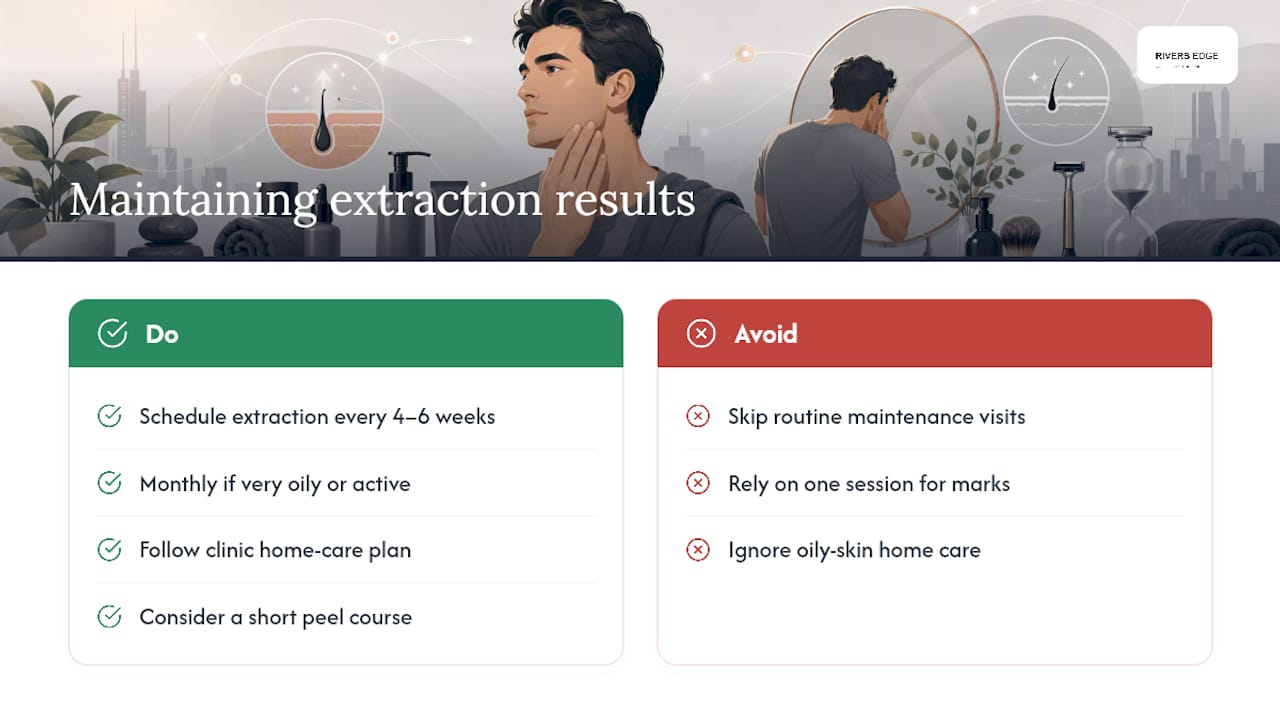
Professional extraction resets your pores. It does not stop your skin producing sebum, so congestion will return over time unless you keep up maintenance and a proper home-care routine between visits.
Most men do well with HydraFacial or targeted extraction every four to six weeks, though oilier skin or a physically demanding lifestyle can push that towards monthly. Persistent congestion, textured skin, or old marks usually call for a short peel course rather than a single session, since benefits build gradually across several treatments.
Whatever the clinic prescribes for home care between appointments, sticking to it is what stretches the gap between visits and keeps oily male skin under control.
Author perspective: what clinics get right that DIY never will
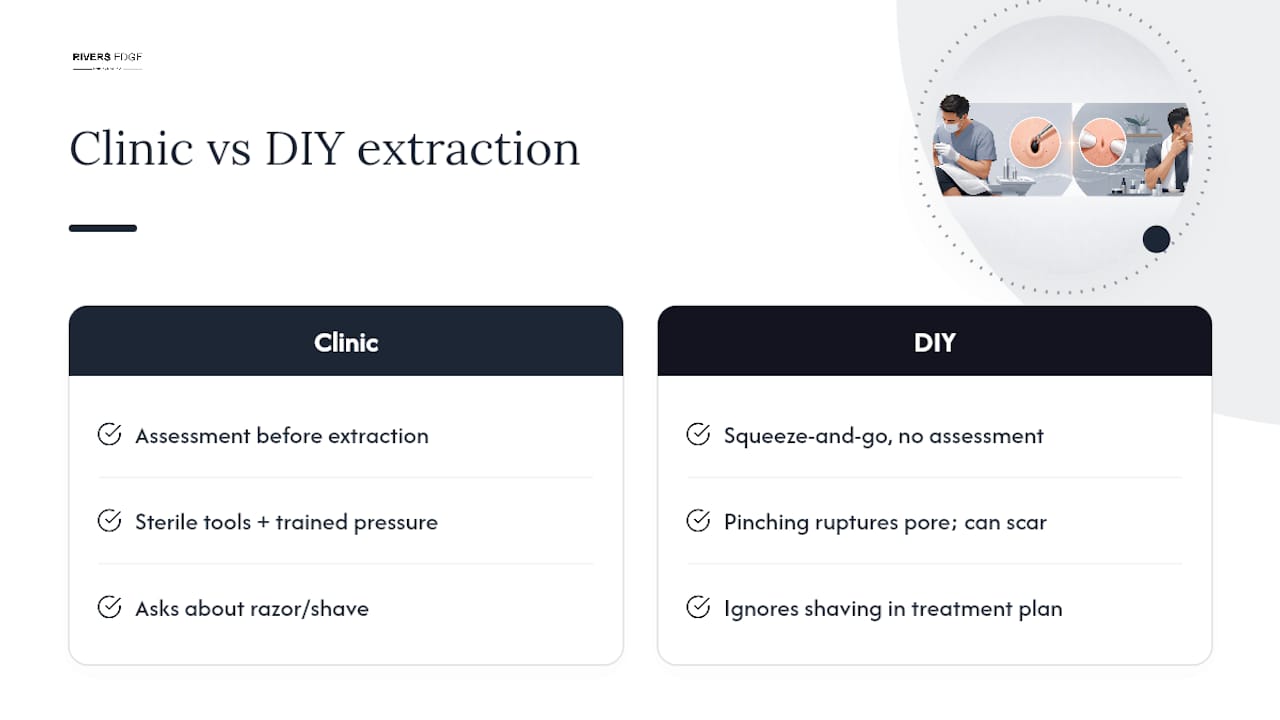
Most men come in expecting a quick squeeze-and-go job. What they actually get is an assessment first, because skipping that step is exactly how DIY extraction goes wrong. Pinching at a blackhead with your fingers can rupture the pore wall and drive bacteria deeper, which is how a blackhead turns into a scar. Sterile tools and trained pressure avoid that outcome almost entirely.
The other thing men underestimate is how much shaving factors into a treatment plan. A good clinic asks about your razor before it asks about your budget.
— David
Book a consultation at Rivers Edge Skin Studio
The clinic offers HydraFacials, clinical extractions, chemical peels, and maintenance plans tailored for male skin, considering factors like sebum output and shaving trauma. Every appointment starts with a proper assessment, so the treatment you get matches what your pores actually need rather than a generic package.

Booking a consultation means one of our practitioners looks at your skin, talks through your shaving routine and lifestyle, and recommends whether a single HydraFacial reset or a short peel course fits your situation better. There is no obligation to commit to a full course on your first visit. If you are ready to deal with congestion properly rather than picking at it in the mirror, view our men's skin treatments and book a time that works for you.
Sources
For further background, see NHS guidance on acne, the Cleveland Clinic on blackheads, and research on male skin physiology.
FAQ
Is professional extraction painful?
Most men describe brief pinching pressure rather than pain, and any redness typically settles within a few hours.
How many sessions will I need?
A single HydraFacial or extraction session works as a reset, but persistent congestion or textured skin usually needs a short course of peels or repeated visits every four to six weeks.
Can I shave before or after my appointment?
Avoid shaving for 24 hours after extraction around treated areas, and mention your shaving schedule during the consultation so the practitioner can plan around it.
What should I avoid before a clinic appointment?
Stop strong exfoliants and retinoids 48 to 72 hours beforehand, since irritated skin extracts poorly and reacts more during treatment.
Are blackhead strips as effective as clinic extraction?
Pore strips only lift surface debris and cannot safely reach deep or embedded blackheads, which is why clinics use sterile metal extractors or HydraFacial suction instead.