

Sebaceous filaments are normal pore structures that carry sebum to the skin's surface; blackheads are a form of acne caused by an oxidised plug blocking the follicle. That distinction changes everything about how you treat them: filaments cannot be permanently removed, only softened in appearance, while blackheads can genuinely clear up with the right approach.
Once you know which one you're looking at in the mirror, the next steps are straightforward.
- Don't squeeze either one. Try a salicylic acid (BHA) routine for filaments.
- For blackheads that won't budge after a few weeks of home care, book a proper extraction or peel rather than reaching for tweezers.
Key Takeaways
Sebaceous filaments are permanent pore structures you manage with BHA, while blackheads are a treatable acne lesion that responds to consistent care or clinic intervention.
| Point | Details |
|---|---|
| Know which one you have | Flat and light-coloured usually means a filament; raised and dark usually means a blackhead. |
| Never squeeze | Squeezing filaments is futile since they refill; squeezing blackheads risks scarring and infection. |
| BHA is the starting point | Salicylic acid two to three times weekly helps both conditions without over-stripping skin. |
| Book a clinic for persistence | Blackheads that don't improve after several weeks respond well to peels or extraction. |
| Start today | Swap any pore strip or scrub in your routine for a gentle salicylic acid product tonight. |
Table of Contents
- Sebaceous filaments vs blackheads: the clinical definitions
- How to tell them apart at a glance
- Why filaments become visible and what causes blackheads
- Should you squeeze them? What the evidence says about extraction
- What actually works: home care and clinic treatments compared
- A simple daily and weekly routine that actually helps
- Myths that keep men stuck with worse-looking pores
- What a men's skin clinic prioritises when assessing pore concerns
- Ready for a proper assessment? Here's what a consultation covers
- Sources
Sebaceous filaments vs blackheads: the clinical definitions
A sebaceous filament is not a blemish. It's a thin, tube-like lining inside a pore that channels sebum from the gland underneath to the skin's surface. Every pore has one. According to Cleveland Clinic, sebaceous filaments become more visible when oil production increases, but they are a normal skin feature, not acne. They tend to look flat, small, and light in colour, usually grey, tan, or yellow, and they cluster most visibly around the nose and centre of the face where oil glands are largest.
A blackhead is different in kind, not just degree. It's an open comedone, meaning the follicle has become clogged with sebum, dead skin cells, and bacteria, and the top of that plug has been exposed to air. Oxidation turns the surface dark brown or black. Medical News Today describes blackheads as typically raised and larger than filaments, and classifies them as a genuine acne lesion.
The practical difference: filaments are permanent architecture and will always be there in some form. Blackheads are a treatable, temporary blockage.
- Sebaceous filaments: normal, structural, present in everyone, more visible with oilier skin.
- Blackheads: a clogged and oxidised pore, classified as acne, and responsive to treatment.
How to tell them apart at a glance
Standing at the mirror with a magnifying lens can make ordinary pores look alarming. A quick comparison usually settles the question faster than any online forum thread.
| Feature | Sebaceous filaments | Blackheads |
|---|---|---|
| Colour | Grey, tan, or yellow | Dark brown to black |
| Texture | Flat, barely raised | Slightly raised, textured |
| Contents on extraction | Soft, threadlike sebum | Firmer plug of oil, dead skin, bacteria |
| Typical location | Nose, cheeks, chin, centre of face | Nose, forehead, back, chest |
| Prognosis | Permanent, refills after removal | Can clear with consistent treatment |
Research from Healthline notes that filaments and blackheads sit on something of a continuum. An overfull filament, left unmanaged, can eventually darken and behave more like a blackhead once the follicle content oxidises.
A few quick visual cues help before you reach for any product:
- Looks flat, sandy, or barely visible in normal light but obvious under strong magnification—that's likely a filament.
- Looks raised, dark, and doesn't fade after a warm cleanse? Likely a blackhead.
- Comes back looking identical within days of extraction, no matter how gently you did it? That's the hallmark of a filament, not a fault of technique.
Why filaments become visible and what causes blackheads
Filaments don't appear out of nowhere; they become noticeable. The main driver is sebum output. Men, in general, produce more oil than women due to higher androgen activity, and that oil volume is precisely what makes filaments stand out against surrounding skin. Larger pores, often genetic, also make filaments easier to spot, as does natural ageing, which loosens pore structure over time. Certain heavy, comedogenic oils and thick moisturisers exaggerate the effect by adding extra sebum-like material to an already busy pore.
Blackheads follow a different chain of events. A follicle becomes physically obstructed by a mixture of excess oil, dead skin cells, and bacteria. Once that plug reaches the surface and meets air, it oxidises and darkens. Hormonal fluctuations increase oil production and raise the odds of blockage, and product choice matters just as much: occlusive, pore-clogging formulas trap debris that would otherwise clear naturally.
A handful of everyday habits make both conditions worse, and it's usually the well-intentioned ones:
- Over-stripping the skin with harsh cleansers, which triggers a rebound in oil production.
- Using pore strips repeatedly, which pulls at pore walls without addressing the underlying oil.
- Layering heavy, occlusive creams that sit on top of already-active pores.
None of these habits treat the actual cause. They just irritate skin that's already working overtime.
Should you squeeze them? What the evidence says about extraction
No. Squeezing sebaceous filaments at home achieves nothing lasting, and squeezing blackheads without proper technique carries real risk of scarring.
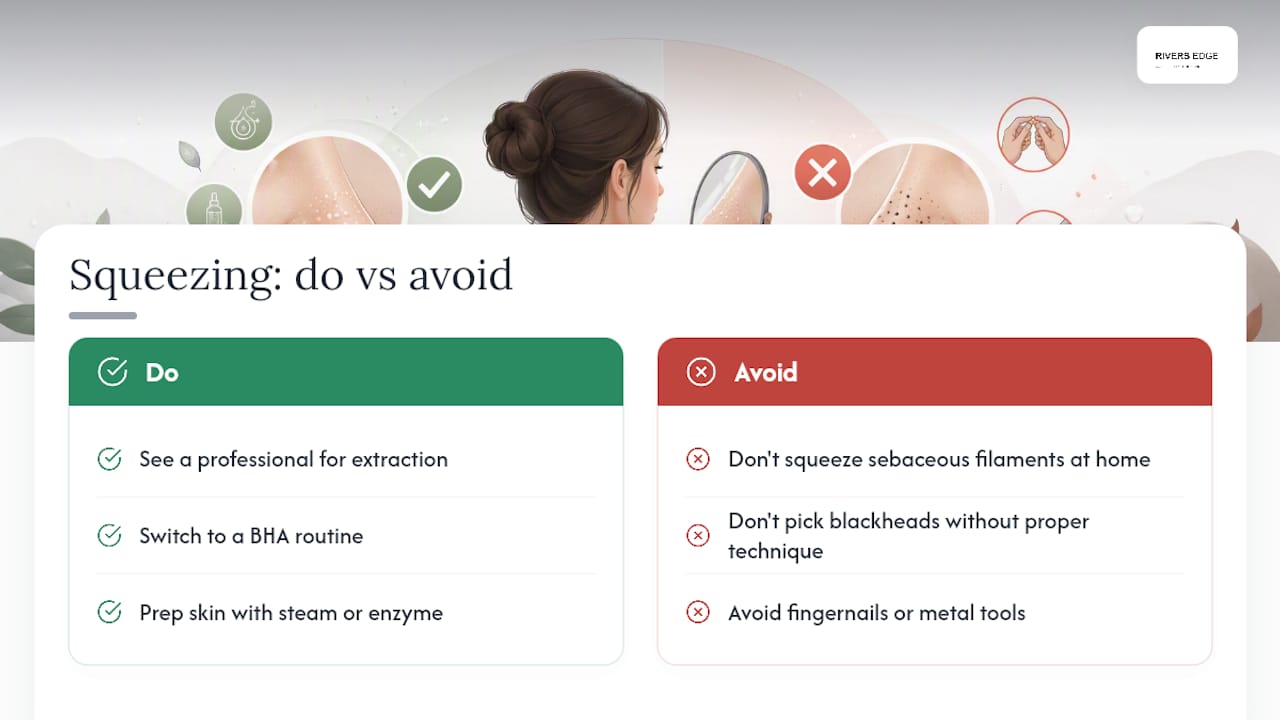
Filaments refill because they're not a foreign blockage, they're a structural feature doing its normal job of transporting oil. The Inkey List notes that expressed filaments typically return to their original appearance within several weeks, which means any satisfaction from a clear pore strip or a squeeze session is temporary at best. Worse, repeated manipulation can inflame the follicle and may prompt a compensatory increase in oil production, the opposite of what most men are trying to achieve.
Blackheads carry a sharper set of risks when handled at home. Fingernails and metal tools introduce bacteria into an already compromised follicle, which can tip a simple blockage into an inflamed, infected lesion. Verywell Health lists scarring, bacterial spread, and prolonged inflammation among the common consequences of amateur picking.
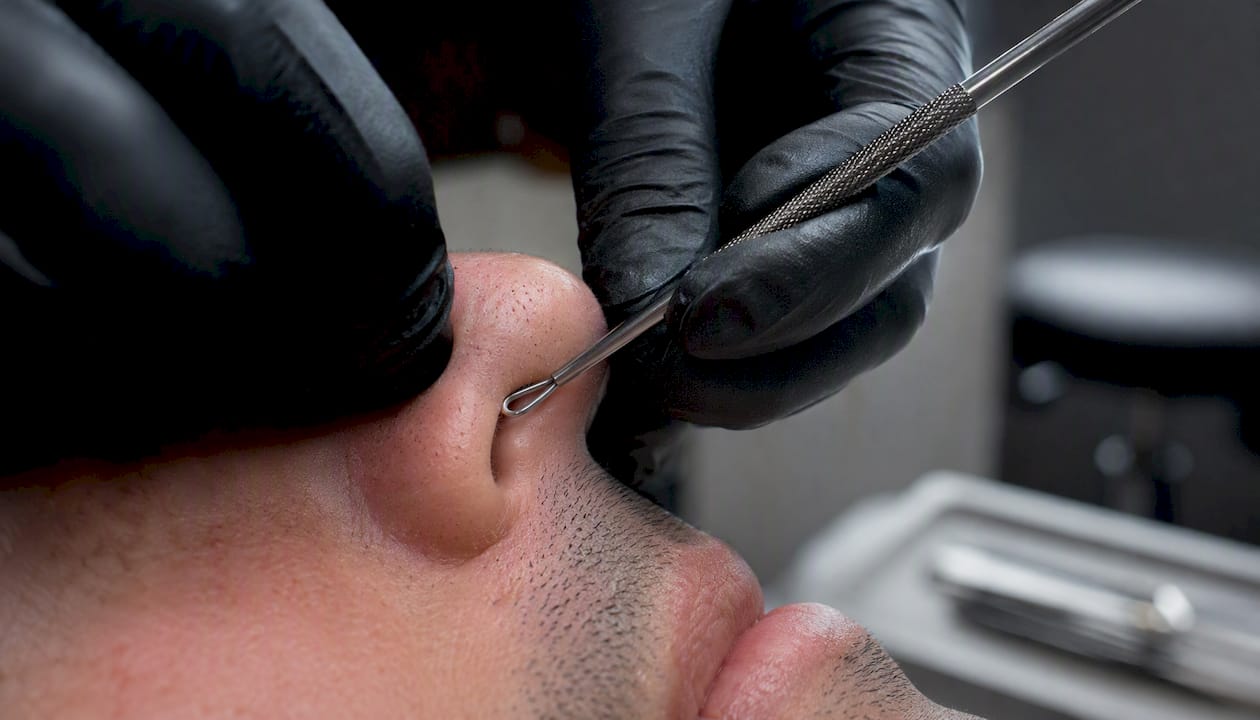
Professional extraction, done correctly, uses sterile tools, controlled pressure, and prior skin preparation, usually after a steam or enzyme step softens the plug, which is precisely what reduces the trauma that home attempts almost always cause.
Pro Tip: If you've been picking at the same spot on your nose for months with no lasting change, that's your body confirming it's a filament, not a blackhead. Stop picking and switch to a BHA routine instead.
What actually works: home care and clinic treatments compared
Treatment strategy depends entirely on which condition you're dealing with, and conflating the two is the most common reason home routines fail to deliver visible change.
For sebaceous filaments, the aim is maintenance, not elimination. Oil-soluble salicylic acid (BHA) penetrates directly into the pore lining and dissolves the sebum accumulation that makes filaments prominent, without disturbing the surrounding skin barrier. Retinoids work differently: they speed up cell turnover at the follicle wall, which keeps pores clearer over time and reduces new blockages from forming. Neither ingredient removes a filament permanently, because there's nothing to remove, but both keep it looking less obvious with consistent use.
For blackheads, the target is the plug itself. Salicylic acid still helps, but higher-strength chemical peels and treatments like HydraFacial go further by combining exfoliation with vacuum-based extraction, clearing established blockages that daily skincare alone won't shift. Benzoyl peroxide earns its place here too, targeting the bacterial component of acne that salicylic acid doesn't directly address. For stubborn or widespread blackheads, laser resurfacing can refine pore appearance over a longer course of treatment, according to Women's Health.
Pore strips deserve a specific caution. They lift surface debris temporarily but do nothing for the follicle lining, and repeated use can stretch pore walls and cause irritation without addressing why the pore looks the way it does. Treat them as an occasional cosmetic quick fix, not a routine step.
| Treatment | Best for | How it works |
|---|---|---|
| Salicylic acid (BHA) | Filaments and blackheads | Oil-soluble exfoliation clears sebum inside the pore |
| Retinoids | Filaments, blackhead prevention | Increases cell turnover, reduces new blockages |
| Benzoyl peroxide | Blackheads and active acne | Targets bacteria contributing to blockage |
| Chemical peels | Blackheads, texture | Deeper exfoliation to lift established plugs |
| HydraFacial | Blackheads, general maintenance | Combines exfoliation with extraction |
| Professional extraction | Blackheads | Sterile, controlled removal of the plug |
| Pore strips | Occasional cosmetic use only | Lifts surface debris, doesn't treat the cause |
Expect blackhead improvement within several weeks of consistent BHA or retinoid use, and further clearance after one or two professional peels. Filament appearance softens gradually with the same ingredients but never disappears entirely, which is the realistic expectation to set from day one.
| Point | Details |
|---|---|
| Different conditions | Filaments are structural pore linings; blackheads are oxidised acne plugs. |
| Don't squeeze | Squeezing filaments is pointless since they refill; squeezing blackheads risks scarring. |
| BHA is the workhorse | Salicylic acid helps both conditions by dissolving sebum inside the pore. |
| Clinic options for blackheads | Chemical peels and HydraFacial clear established plugs faster than home care alone. |
A simple daily and weekly routine that actually helps
Consistency beats intensity here. A rushed weekend of aggressive exfoliation does far less than a steady weekday routine.
- Cleanse morning and evening with a gentle, non-stripping cleanser, ideally starting with an oil-based cleanser at night to break down sebum and sunscreen before a water-based one finishes the job.
- Apply a salicylic acid product two to three evenings a week if you're new to actives, moving up to nightly use only once your skin tolerates it without dryness or flaking.
- Introduce a retinoid on alternate nights from your BHA, never on the same night to start with, to avoid overwhelming the skin barrier.
- Moisturise every morning and evening, even on active nights. Skipping this step is the fastest way to trigger irritation and rebound oiliness.
- Apply sunscreen every morning, since retinoids and BHA both increase sun sensitivity.
On the weekly side, one gentle chemical exfoliation session is enough. Save clay or charcoal masks for once a week at most, and skip pore-stripping masks altogether if you're already using BHA regularly, since the combination tends to over-exfoliate and irritate rather than improve results.
Patch test any new product on your jaw for a few days before applying it to your whole face. Introduce one active ingredient at a time, and give each one two to three weeks before judging whether it's working. Roughly one in five people who try combining strong actives too quickly report irritation that sets their routine back further than starting slowly ever would.
Myths that keep men stuck with worse-looking pores
A surprising amount of bad advice about pores circulates because it feels satisfying, even when it does nothing useful.
- Myth: Pore strips permanently remove sebaceous filaments. Fact: they lift surface debris temporarily; the filament refills within about a month.
- Myth: Scrubbing harder shrinks pores. Fact: pore size is largely genetic, and aggressive scrubbing just irritates the skin and can increase oil production.
- Myth: Visible filaments mean your skin is dirty or poorly cleansed. Fact: everyone has them; they're more visible with higher natural oil output, not poor hygiene.
The practical corrections are simpler than the myths suggest: gentle, oil-soluble exfoliation instead of physical scrubbing, and avoiding heavy, comedogenic oils that add unnecessary bulk to already-active pores.
Social media extraction videos are part of the problem. They present squeezing and pore-strip footage as satisfying "before and after" content, but the camera stops rolling before the filament refills a few weeks later, leaving viewers with a false impression of a permanent fix.
What a men's skin clinic prioritises when assessing pore concerns
When a client comes in worried about "blackheads" across his nose, the first job is establishing which condition we're actually looking at, because the treatment plan depends entirely on that answer. Most of the time, what men assume are stubborn blackheads turn out to be sebaceous filaments made more visible by genetics and skin type, and the honest first step is resetting expectations rather than reaching for the strongest treatment on the shelf.
Our priority is skin health first, appearance second. That means we won't recommend aggressive extraction for structures that will simply refill; instead we look at oil regulation, pore maintenance, and realistic timelines. For clients with genuine blackheads or a mix of both, chemical peels and professional extraction, done with proper preparation and sterile technique, give results that home tools simply can't match. HydraFacial sits well as a maintenance treatment for men who want visible improvement without downtime, and a tailored retinoid plan bridges the gap between clinic visits.
If pore concerns have been bothering you for months without improvement, it's worth reading about the signs it's time to see a professional rather than continuing to experiment alone.
Ready for a proper assessment? Here's what a consultation covers
Riversedgeskinstudio is the alternative to guessing which pore treatment might work, sparing you months of trial-and-error with products that were never suited to your skin in the first place. A first appointment starts with an honest look at your pores under proper lighting, distinguishing filaments from genuine blackheads before recommending anything, so you're never paying for treatment your skin doesn't actually need.

From there, the plan is built around what you actually have. That might mean a tailored retinoid and BHA regimen for filament maintenance, or a short course of chemical peels and professional extraction for entrenched blackheads. Most clients see visible improvement in pore appearance within a few weeks of starting a plan, with blackheads clearing faster than filaments soften, which matches what the evidence on both conditions would predict. Explore the full range of treatments available and book a consultation to get a plan built around your actual skin, not a generic routine pulled from a forum.
Sources
The claims in this guide draw on established dermatological sources rather than skincare marketing copy, which matters given how much misinformation circulates about pores online.
- Sebaceous Filaments: Difference From Blackheads & Treatment (Cleveland Clinic)
- Sebaceous filaments: Vs. blackheads, treatments, and more (Medical News Today)
- Sebaceous Filaments: Difference From Blackheads & Treatment (The Inkey List)
- Sebaceous Filaments vs. Blackheads: What Dermatologists Want You to Know (Women’s Health)
Are sebaceous filaments the same as blackheads? No. Sebaceous filaments are normal pore linings that carry sebum, while blackheads are open comedones, a form of acne caused by an oxidised plug.
Can you get rid of sebaceous filaments permanently? Not permanently. You can minimise their appearance with regular salicylic acid or retinoid use, but the structure itself is a normal, lasting feature of the pore.
Why do sebaceous filaments look worse on my nose specifically? The nose has more and larger oil glands than most of the face, which means more sebum flow and more visible filaments as a result.
Is it safe to use pore strips on sebaceous filaments? Occasional use won't cause lasting harm, but repeated use can irritate and stretch pore walls without treating the underlying oil, so it's best kept as a rare cosmetic step rather than a routine.
When should I see a clinician about blackheads? If blackheads persist for more than four to six weeks despite consistent salicylic acid or retinoid use, a professional extraction or chemical peel usually clears what home care alone cannot.
This article is general information, not a substitute for advice from a qualified doctor. Consult a qualified healthcare professional about your own circumstances before acting on anything here.