
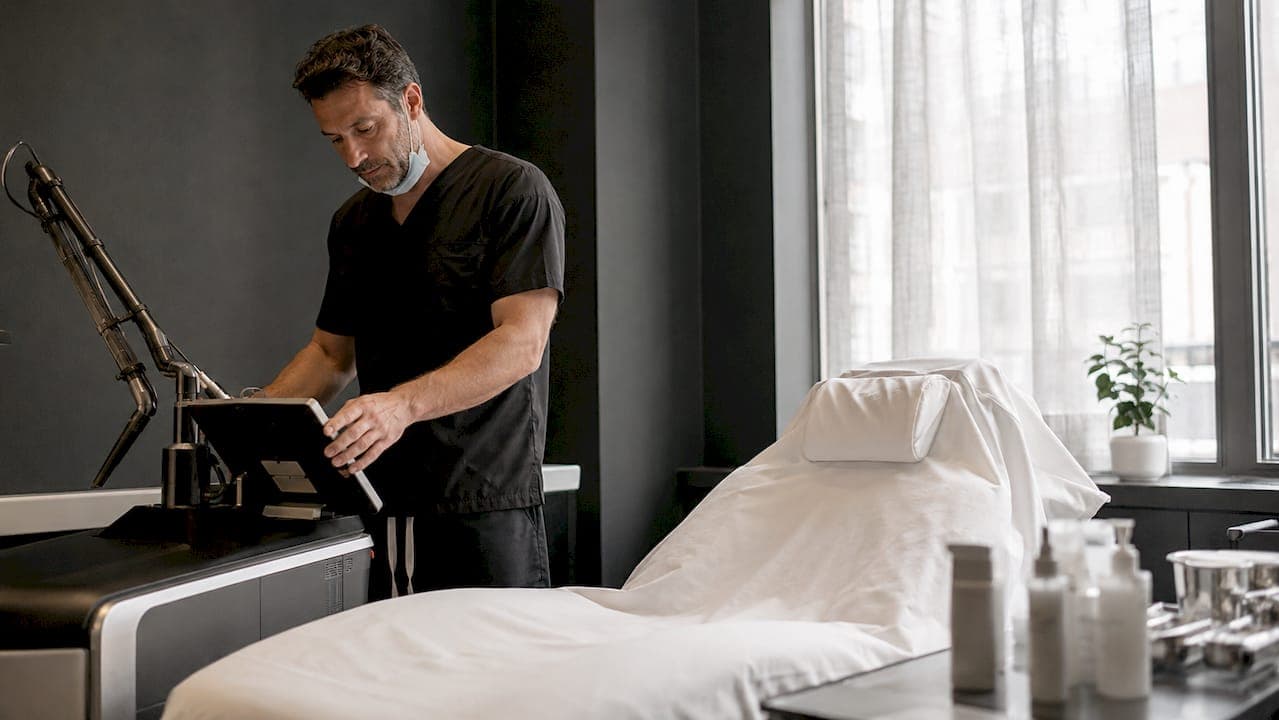
Laser skin resurfacing is defined as a procedure that uses concentrated pulses of light to remove or remodel damaged skin layers, stimulating collagen production and improving texture, tone, and clarity. The treatment addresses fine lines, wrinkles, sun damage, acne scars, and uneven pigmentation by triggering the skin's natural renewal process. Both ablative and non-ablative laser types can be tailored to individual skin concerns and goals. Riversedgeskinstudio offers this treatment as part of a wider range of results-driven skin rejuvenation services designed specifically for men.
What is laser skin resurfacing and how does it work?
Laser skin resurfacing uses pulses of light to stimulate collagen and remove damaged skin, improving texture and pigmentation with minimal invasiveness. The core mechanism is called selective photothermolysis. The laser delivers energy at a specific wavelength, targeting water or pigment in the skin without harming surrounding tissue.
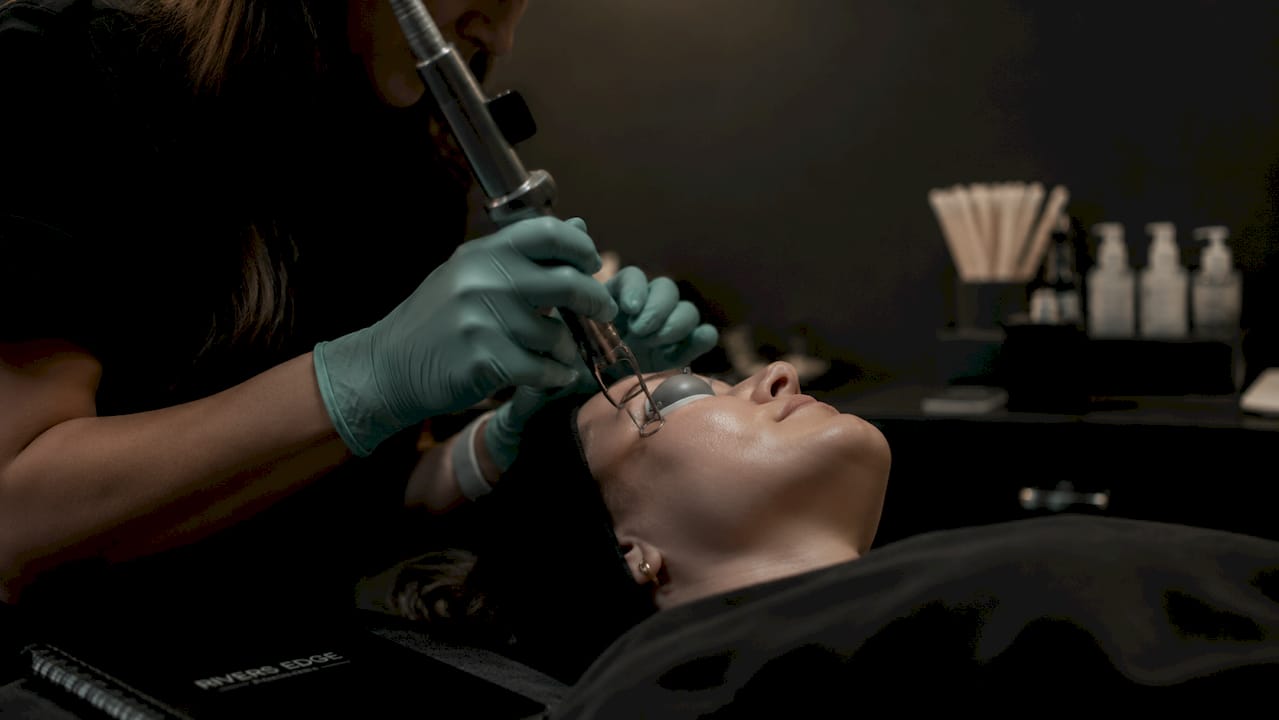
Ablative lasers
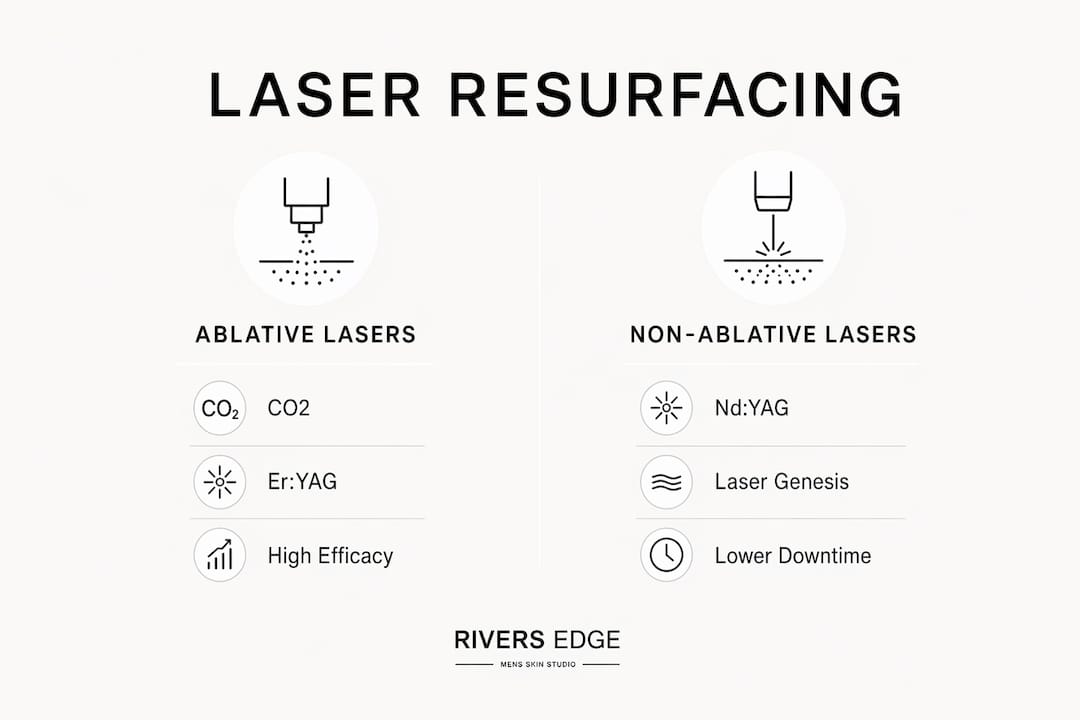
Ablative lasers physically remove the outer skin layer. The two most common types are CO2 and Er:YAG. CO2 lasers penetrate deeply and produce significant collagen remodelling. Er:YAG lasers remove tissue more precisely and with less thermal damage, making recovery slightly faster. Both types are effective for deeper wrinkles and pronounced scarring.
Non-ablative lasers
Non-ablative lasers heat the deeper dermis without removing the surface. Laser Genesis, which uses a 1064 nm Nd:YAG wavelength, is a well-known example. It delivers rapid pulses of gentle heat to stimulate collagen safely, with low risk of pigmentation changes. Because the epidermis stays intact, downtime is minimal. Non-ablative treatments suit men who cannot afford extended recovery time.
Fractional technology
Fractional lasers, whether ablative or non-ablative, treat only a grid of microscopic zones rather than the entire surface. This approach preserves surrounding tissue, which accelerates healing. Fractional ablative lasers allow faster recovery by treating microzones while still penetrating deeper skin layers. The result is a meaningful improvement with less downtime than fully ablative methods.
Pro Tip: Ask your practitioner about the Fitzpatrick scale before booking. This six-point classification system rates skin tone from very fair to very dark, and it directly determines which laser type is safest for you. CO2 ablative lasers carry a higher risk of hypopigmentation on darker skin tones.
What are the benefits and potential side effects of laser skin resurfacing?
Laser treatments improve fine lines, wrinkles, sun damage, acne scars, and uneven pigmentation by triggering the skin's renewal processes. Results are not instant. Collagen remodelling continues for several months after treatment, meaning the full benefit becomes visible gradually.
Benefits you can expect
- Reduction in fine lines and wrinkles around the eyes, mouth, and forehead
- Improved texture and tone from sun damage or uneven pigmentation
- Visible improvement in atrophic acne scars and surgical scars
- Tighter, firmer skin as new collagen forms in the treated area
- Long-lasting results compared with topical skincare alone
Common side effects
Redness, swelling, and a sensation similar to mild sunburn are normal after treatment. These typically resolve within a few days for non-ablative procedures. Ablative treatments produce more pronounced redness and peeling, which can last one to two weeks.
Pigment changes are the most clinically significant risk. CO2 ablative lasers are not recommended for darker skin tones due to hypopigmentation risk. Non-ablative options like Laser Genesis carry a much lower risk of this complication and are suitable for all skin tones.
Pro Tip: Sun exposure after treatment is the single biggest threat to your results. Apply a broad-spectrum SPF 30 or higher every morning during recovery, even on overcast days. UV exposure on freshly treated skin can cause permanent pigmentation changes.
Serious complications are rare when treatment is performed by a qualified professional. A thorough pre-treatment assessment is the most effective way to reduce risk. Self-assessment is not sufficient. A board-certified practitioner will evaluate your skin type, medical history, and treatment goals before recommending a laser modality.
How to choose the right laser resurfacing treatment for your skin
The right laser treatment depends on three factors: your skin concern, your skin tone, and how much downtime you can accept. There is no single best option. Each laser type offers a different balance of results and recovery.
| Treatment type | Best for | Downtime | Typical cost (USD) | Skin tone suitability |
|---|---|---|---|---|
| Ablative CO2 | Deep wrinkles, pronounced scars | 7–10 days | Higher end | Fair to medium |
| Ablative Er:YAG | Moderate wrinkles, surface scars | 5–7 days | Mid-range | Fair to medium |
| Fractional ablative | Scars, texture, wrinkles | 3–5 days | Mid to high | Fair to medium |
| Non-ablative (Nd:YAG) | Mild lines, pigmentation, all tones | Minimal | Lower end | All skin tones |
The average cost of laser skin resurfacing in 2026 is roughly $1,800, though pricing varies significantly with laser type and the size of the treatment area. Less intensive non-ablative sessions start at several hundred pounds. Ablative treatments cost more because they require greater clinical skill and longer aftercare.
For scar treatment specifically, timing matters. Ablative CO2 and Er:YAG lasers promote collagen production and improve atrophic and surgical scars, with treatment ideally starting 6–10 weeks post-trauma. Treating too early can disrupt the natural healing process.
Men with facial rejuvenation goals beyond laser resurfacing should also consider how treatments can be layered. Combining laser with microneedling or chemical peels at different intervals can produce better outcomes than any single treatment alone.
- For deeper wrinkles or significant scarring: ablative or fractional ablative laser
- For pigmentation, mild lines, or darker skin tones: non-ablative Nd:YAG
- For men with no downtime available: non-ablative treatments only
- For scar revision: fractional ablative is preferred over fully ablative methods due to superior outcomes and reduced downtime
Preparing for and recovering from laser skin resurfacing
A pre-treatment consultation is not optional. It is the step that determines whether your treatment is safe and effective. Your practitioner will assess your skin type using the Fitzpatrick scale, review any medications that may affect healing, and recommend a pre-treatment skincare routine.
Before your appointment
- Avoid sun exposure for at least two weeks before treatment.
- Stop using retinoids, AHAs, and BHAs at least one week prior, as directed by your practitioner.
- Inform your practitioner of any history of cold sores. Ablative treatments can trigger outbreaks, and antiviral medication may be prescribed preventatively.
- Stay well hydrated and avoid alcohol in the days before your session.
- Arrange transport home. Ablative procedures often involve topical anaesthetic or mild sedation.
On the day
Laser skin resurfacing is carried out as an outpatient procedure with local anaesthesia, sometimes with sedation for more extensive treatments. The session itself typically lasts between 30 minutes and two hours depending on the area treated and the laser used.
After your treatment
Post-procedure care determines the quality of your results. Post-procedure protocols include moisturisation, sun protection, and avoiding irritants to support optimal healing. For ablative treatments, recovery takes 7–10 days for re-epithelialisation. Non-ablative procedures typically require no significant downtime.
- Cleanse gently with a non-foaming, fragrance-free wash twice daily
- Apply a barrier moisturiser to keep the skin hydrated throughout healing
- Use SPF 30 or higher every morning without exception
- Avoid makeup, saunas, and strenuous exercise for at least one week after ablative treatment
- Contact your practitioner immediately if you notice unusual swelling, oozing, or signs of infection
For a detailed breakdown of what to apply and when, the post-treatment skincare steps guide from Riversedgeskinstudio covers the full recovery routine for men.
Key takeaways
Laser skin resurfacing is the most clinically supported method for improving skin texture, reducing scars, and reversing visible signs of ageing, provided the correct laser type is matched to your skin tone and concern.
| Point | Details |
|---|---|
| Two main laser categories | Ablative lasers remove skin; non-ablative lasers heat the dermis without surface removal. |
| Skin tone determines safety | CO2 ablative lasers carry hypopigmentation risk on darker tones; Nd:YAG is safe for all. |
| Scar treatment timing | Begin laser scar revision 6–10 weeks after injury for best collagen remodelling results. |
| Recovery varies by method | Ablative treatments require 7–10 days of healing; non-ablative procedures have minimal downtime. |
| Cost reflects intensity | Ablative treatments cost more than non-ablative sessions due to greater clinical complexity. |
What I've learned from watching men approach laser treatment
Most men who come in for a consultation have already decided they want the most powerful option available. They assume more intensity means better results. That instinct is understandable, but it is often wrong.
The best outcome comes from matching the laser to the skin, not from choosing the most aggressive setting. I have seen men with medium to darker skin tones push for CO2 ablative treatment because they read about its results online. The risk of permanent hypopigmentation on those skin tones is real and not reversible. A non-ablative approach, done consistently over several sessions, produces excellent results without that risk.
The other thing men consistently underestimate is recovery. Ablative treatment on the face is not something you can schedule on a Friday and return to work on Monday. The redness and peeling are visible. Planning around that reality is part of getting a good result. Men who rush the recovery phase, skip sun protection, or return to the gym too soon compromise their outcomes.
My strongest advice is this: choose your practitioner before you choose your treatment. A qualified professional will guide you to the right laser type. Someone who agrees to whatever you request without a thorough skin assessment is not someone you want near your face with a laser.
— David
Laser skin treatments at Riversedgeskinstudio
Riversedgeskinstudio specialises in men's skin treatments designed around real results and honest advice. The clinic offers a range of laser skin treatments alongside microneedling, chemical peels, and HydraFacials, all delivered in a premium environment built for male clients.
Every treatment at Riversedgeskinstudio begins with a thorough consultation. Skin type, treatment goals, and recovery availability all shape the plan. The team uses advanced technology and applies current clinical standards to every session. If you are considering laser skin treatment for the first time or want to understand which option suits your skin, booking a consultation is the right starting point.
FAQ
What is laser skin resurfacing used for?
Laser skin resurfacing treats fine lines, wrinkles, acne scars, sun damage, and uneven pigmentation by removing or remodelling damaged skin layers and stimulating collagen production.
How long does recovery from laser resurfacing take?
Ablative laser treatments require 7–10 days for the skin to re-epithelialise. Non-ablative procedures such as Laser Genesis have minimal downtime and most men return to normal activity the same day.
Is laser skin resurfacing safe for darker skin tones?
Non-ablative lasers, particularly the 1064 nm Nd:YAG used in Laser Genesis, are safe for all skin tones. CO2 ablative lasers carry a risk of hypopigmentation on medium to darker skin and require careful professional assessment before use.
How much does laser skin resurfacing cost?
The average cost of laser skin resurfacing in 2026 is roughly $1,800, though prices vary widely depending on the laser type, treatment area, and number of sessions required.
When is the best time to treat a scar with laser?
Laser scar revision produces the best results when started 6–10 weeks after the initial injury or surgery, once the skin has completed its primary healing phase.